
Brewing Delicious Coffee With Microground Beans
Quick answer
- Use a brewing method that handles fine grounds well, like espresso, Aeropress, or a tightly woven filter.
- Start with a very fine grind, but be prepared to adjust slightly based on your brew.
- Keep your coffee-to-water ratio tight; microgrounds extract fast.
- Brew time is critical. Shorter is usually better with these super-fine grinds.
- Always use filtered water. It makes a huge difference.
- Keep your gear spotless. Fine grounds clog things up fast.
Who this is for
- Home baristas looking to experiment with ultra-fine coffee grinds.
- Anyone who loves a strong, intense coffee flavor and wants to dial it in.
- Folks who already own an espresso machine or an Aeropress and want to push their limits.
What to check first
Brewer type and filter type
Some brewers just can’t handle super-fine grinds. Think about your setup. A standard drip machine with a paper filter might clog. Espresso machines, Aeropress, and Moka pots are usually built for this. Metal filters can work, but sometimes let too much through.
If you’re looking to experiment with microgrounds, the Aeropress is an excellent choice as it’s designed to handle fine grinds effectively.

- The Brewer That Started It All – AeroPress Original was the first single cup coffee maker to combine 3 brew methods in one compact, portable device for a faster brew and better extraction giving coffee lovers a smooth, rich cup bursting with coffee bean flavor—without the bitterness or acidity found in other methods.
- A New Standard in Coffee Flavor – Equal parts French press, pour-over, and espresso, AeroPress patented 3 in 1 technology distills the best of all three brewing methods into one sleek, portable device. The result? A rich, full-bodied cup in under two minutes—free of bitterness and grit, and full of delicious coffee bean flavor.
- The Secret to AeroPress Superior Flavor – Air Pressure and micro-filtration work together to speed up extraction for less bitterness than other methods, so you can finally enjoy the full spectrum of coffee bean flavor, from smooth tasting notes to level of roast and country of origin
- Brew and Clean in 2 Minutes – To brew, simply add coffee and water, wait 30 seconds, then press for a clean, well-balanced cup. The AeroPress coffee maker includes 50 paper micro-filters, ensuring smooth, grit-free coffee. To clean, just pop out the grinds and rinse! Fast, easy brewing at home or on the go.
- Brew Like a Pro, Wherever You Go – One of the only coffee makers that offers full control over brew time, temperature and grind size so you can personalize your favorites faster - from classics to cold brew and iced coffee to espresso-style drinks like cappuccino and lattes. Built for travel, AeroPress is compact, lightweight and shatterproof. Fits in your backpack, carry-on or bag, so you can make exceptional coffee on the road, at the office, while camping or wherever your brew takes you.
Water quality and temperature
This is non-negotiable for good coffee, especially with microgrounds. If your tap water tastes funky, your coffee will too. Use filtered water. For temperature, aim for around 195-205°F. Too hot and you’ll scorch those delicate grounds.
Grind size and coffee freshness
You’re here for microgrounds, so that’s the starting point. Think powder, almost like flour. Freshness is key. Grind your beans right before brewing. Pre-ground coffee, especially at this fineness, goes stale in a flash.
Coffee-to-water ratio
Microgrounds extract flavor super efficiently. You won’t need as much coffee as you might think for a given amount of water. A good starting point is often around 1:15 or even tighter, like 1:12. You’ll adjust this based on taste.
Cleanliness/descale status
Fine coffee particles are sticky. They cling to everything. If your brewer isn’t clean, you’re brewing with old coffee oils and mineral buildup. That’s a recipe for bitter, off-tasting coffee. A quick rinse isn’t enough; deep clean regularly.
Step-by-step (brew workflow)
1. Weigh your coffee beans.
- What to do: Measure your whole beans precisely. For example, start with 18 grams.
- What “good” looks like: A consistent weight every time.
- Common mistake: Guessing the amount. This leads to inconsistent brews. Use a scale.
To ensure consistency with microgrounds, which extract rapidly, using a precise coffee scale is crucial for accurate measurements.

- Barista-Level Precision: A 0.1g high-precision sensor with a rapid refresh rate responds instantly to changes in weight, helping you achieve consistent results across espresso, pour over, drip coffee, Chemex, V60, and filter coffee brewing.
- Integrated Brew Timer: A built-in count-up and count-down timer tracks bloom, extraction, and espresso shots. Ideal for dialing in espresso, timing Chemex and V60 pour over recipes, or steeping tea. Auto-shutoff helps preserve battery life between brews.
- Durable Waterproof Silicone Cover: The heat-resistant, dishwasher-safe silicone cover helps protect the coffee scale's spacious 5.25" x 5.25" weighing surface from splashes, spills, and hot equipment. The grooved surface provides added stability and makes cleanup quick and easy.
- Versatile Measurement Options: Quick-tare and 6 unit options make it easy to weigh coffee beans, espresso shots, matcha portions, and more. Choose from g, ml, lb, lb:oz, oz, and fl oz for added flexibility in the kitchen and coffee bar.
- Intuitive Design: A bright dual-color LCD display clearly separates weight and timer readings, while simple controls make daily brewing easy. Includes 3 AAA batteries and is backed by 5 years of coverage, with support from our St. Louis-based team whenever you need a hand.
2. Grind your beans to a microfine consistency.
- What to do: Set your grinder to its finest setting, aiming for a powdery texture.
- What “good” looks like: The coffee looks like fine flour or cornstarch.
- Common mistake: Grinding too coarse. This will lead to weak coffee. If your grinder can’t go fine enough, this method isn’t for you.
3. Prepare your brewing device.
- What to do: Rinse your filter (if paper) and preheat your brewer and mug.
- What “good” looks like: Everything is warm, ready to go, and any paper taste is gone.
- Common mistake: Not preheating. Cold equipment steals heat from your brew, leading to under-extraction.
4. Add the ground coffee to your brewer.
- What to do: Carefully transfer the microground coffee into the filter or chamber.
- What “good” looks like: An even bed of coffee grounds.
- Common mistake: Clumping or uneven distribution. This can cause channeling, where water bypasses some grounds.
5. Bloom the coffee.
- What to do: Pour just enough hot water (about twice the weight of the coffee) to saturate all the grounds. Wait 30 seconds.
- What “good” looks like: The coffee bed expands and bubbles, releasing CO2.
- Common mistake: Pouring too much water or skipping the bloom. This can lead to uneven extraction and a sour taste.
6. Begin pouring the main brew water.
- What to do: Slowly pour the remaining hot water over the grounds in a controlled manner. For Aeropress, this might be a steady pour. For espresso, it’s the machine’s pressure.
- What “good” looks like: A steady flow, avoiding disturbing the coffee bed too much.
- Common mistake: Pouring too fast or aggressively. This can agitate the grounds and lead to over-extraction or channeling.
7. Control the brew time.
- What to do: Pay close attention to how long the water is in contact with the coffee. For Aeropress, this might be 60-90 seconds total. For espresso, it’s much shorter.
- What “good” looks like: A brew that finishes within the target time for your method.
- Common mistake: Letting it brew too long. Microgrounds extract very quickly, so over-extraction is a major risk.
8. Press or finish the brew.
- What to do: For Aeropress, press the plunger. For espresso, the machine finishes. For Moka pot, remove from heat.
- What “good” looks like: A clean separation of liquid from grounds.
- Common mistake: Applying too much pressure on an Aeropress, which can force fines through.
9. Serve and taste immediately.
- What to do: Pour your coffee into your preheated mug and enjoy.
- What “good” looks like: A rich, intense, and flavorful cup.
- Common mistake: Letting it sit too long. Coffee flavor degrades quickly.
Common mistakes (and what happens if you ignore them)
| Mistake | What it causes | Fix |
|---|---|---|
| Using a grind that’s too coarse | Weak, watery coffee (under-extracted) | Grind finer. Ensure your grinder can produce a microfine consistency. |
| Brewing for too long | Bitter, astringent coffee (over-extracted) | Shorten brew time significantly. Microgrounds extract fast. |
| Using stale coffee beans | Dull, flat, lifeless flavor | Use freshly roasted beans and grind right before brewing. |
| Not preheating equipment | Cooler brew temperature, leading to under-extraction | Warm up your brewer, portafilter, and mug before starting. |
| Clogged filter or brewer | Slow drawdown, potential overflow, uneven extraction | Clean your equipment thoroughly. Consider a coarser grind if persistent. |
| Uneven coffee bed | Channeling, leading to both under and over-extraction | Distribute grounds evenly. Tap the brewer gently. |
| Using tap water with off-flavors | Unpleasant taste in your final cup | Use filtered or bottled water for brewing. |
| Pouring water too aggressively | Agitation, channeling, uneven extraction | Pour slowly and controlled, especially during the bloom. |
| Incorrect coffee-to-water ratio | Coffee too strong/weak, unbalanced flavor | Use a scale and start with a tighter ratio (e.g., 1:15 or 1:12). |
| Not cleaning the grinder | Old coffee oils and fines contaminating fresh grounds | Clean your grinder regularly according to manufacturer instructions. |
| Using the wrong filter for the grind | Fines passing through, muddy cup | Use filters designed for fine grinds or methods that contain grounds. |
Decision rules (simple if/then)
- If your coffee tastes sour, then you likely under-extracted it because the water temperature was too low or the brew time was too short for the grind size.
- If your coffee tastes bitter, then you likely over-extracted it because the brew time was too long or the grind was too fine for your brew method.
- If your Aeropress press is very hard to push, then your grind is likely too fine or you have too much coffee, which can lead to channeling.
- If your drip machine clogs immediately, then your grind is definitely too fine for that filter and brewer combination.
- If you’re using a metal filter and get a lot of sediment, then your grind might be too fine for that filter, or the filter holes are too large.
- If your espresso shot pulls too fast (under 20 seconds), then your grind is likely too coarse.
- If your espresso shot chokes the machine (won’t pull at all), then your grind is likely too fine or you have too much coffee.
- If your coffee tastes muddy, then fines are likely passing through your filter, suggesting a filter issue or grind that’s too fine.
- If your bloom is weak or non-existent, then your coffee might be stale, or your water isn’t hot enough.
- If you’re tasting stale flavors, then your beans are old, or your grounds have been exposed to air for too long.
FAQ
Is microground coffee the same as espresso grind?
It’s similar, often even finer. Espresso grind is very fine, but microground goes beyond that, almost like powder. You’ll need to adjust based on your specific espresso machine.
Can I use microground coffee in a standard drip coffee maker?
Generally, no. Standard paper filters will clog almost instantly, leading to overflow and a mess. Some specialized cone filters might work, but it’s risky.
How long should I brew microground coffee?
Brew times are significantly shorter. For methods like Aeropress, you might be looking at 60-90 seconds total. Espresso is even faster, usually 20-30 seconds. Always err on the side of shorter.
What kind of coffee beans work best for microgrinding?
Lighter to medium roasts often show off the nuances better when brewed with microgrounds. Darker roasts can become overwhelmingly bitter if over-extracted.
Will microground coffee taste stronger?
Yes, it can. Because the surface area is so much larger, microgrounds extract flavor compounds very quickly and efficiently, leading to a more intense cup.
For those seeking an intensely flavorful cup, high-quality microground coffee beans offer a significantly more potent taste experience due to their increased surface area.
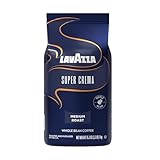
- SUPER CREMA: A 2.2 lb whole bean coffee bag ideal for espresso preparation
- INTENSITY AND ROAST: This full-bodied medium roast offers a bold and creamy finish
- BLEND: Made from Arabica and Robusta beans, this naturally caffeinated blend is sourced from 15 coffee-growing countries around the world
- PREPARATION: Ideal for espresso preparation.
- BREWING GUIDE FOR SINGLE ESPRESSO: 0.28 oz of ground espresso delivers a 1 oz espresso shot
What’s the biggest risk with microground coffee?
Over-extraction. These grounds release their flavor so fast that it’s easy to go from delicious to bitter in a matter of seconds.
How do I avoid sediment in my cup?
Use a filter method that can handle fine particles, like an Aeropress with its paper filters or an espresso machine’s fine basket. Ensure your filter is clean and properly seated.
Can I grind my coffee this fine at home?
It depends on your grinder. A high-quality burr grinder with a very fine setting is essential. Blade grinders won’t achieve this consistency.
What this page does NOT cover (and where to go next)
- Specific grinder recommendations. (Next: Research high-end burr grinders.)
- Detailed descaling procedures for specific brewer models. (Next: Consult your brewer’s manual.)
- Advanced espresso extraction techniques beyond basic grind adjustment. (Next: Explore resources on latte art and puck preparation.)
- The impact of bean origin on flavor profiles when using microgrounds. (Next: Learn about single-origin coffees and regional tasting notes.)
- Recipes for coffee drinks using microground coffee as a base. (Next: Look for specialty coffee recipe blogs.)