
Brewing a Single Cup: A Guide to One-Cup Coffee Makers
Quick answer
- Always start with fresh, quality beans.
- Use filtered water for the best taste.
- Grind your coffee right before brewing.
- Dial in your coffee-to-water ratio. It’s usually around 1:15 to 1:17.
- Keep your brewer clean. Descale it regularly.
- Experiment! Small adjustments make a big difference.
- Don’t rush the bloom. Let those gases escape.
Who this is for
- The solo coffee drinker who doesn’t want to brew a whole pot.
- Anyone looking to save time in the morning without sacrificing quality.
- People who want to explore different coffee origins and brewing methods with minimal waste.
What to check first
Brewer type and filter type
Know what you’re working with. Is it a pour-over cone, an AeroPress, a French press, or a fancy single-serve pod machine? Each has its own requirements. For pour-overs, paper filters are common, but metal or cloth are options. French presses use a built-in metal filter. Pod machines, well, they use their own proprietary pods.
For versatility and a quick, clean brew, the AeroPress coffee maker is a popular choice among enthusiasts.

- The Brewer That Started It All – AeroPress Original was the first single cup coffee maker to combine 3 brew methods in one compact, portable device for a faster brew and better extraction giving coffee lovers a smooth, rich cup bursting with coffee bean flavor—without the bitterness or acidity found in other methods.
- A New Standard in Coffee Flavor – Equal parts French press, pour-over, and espresso, AeroPress patented 3 in 1 technology distills the best of all three brewing methods into one sleek, portable device. The result? A rich, full-bodied cup in under two minutes—free of bitterness and grit, and full of delicious coffee bean flavor.
- The Secret to AeroPress Superior Flavor – Air Pressure and micro-filtration work together to speed up extraction for less bitterness than other methods, so you can finally enjoy the full spectrum of coffee bean flavor, from smooth tasting notes to level of roast and country of origin
- Brew and Clean in 2 Minutes – To brew, simply add coffee and water, wait 30 seconds, then press for a clean, well-balanced cup. The AeroPress coffee maker includes 50 paper micro-filters, ensuring smooth, grit-free coffee. To clean, just pop out the grinds and rinse! Fast, easy brewing at home or on the go.
- Brew Like a Pro, Wherever You Go – One of the only coffee makers that offers full control over brew time, temperature and grind size so you can personalize your favorites faster - from classics to cold brew and iced coffee to espresso-style drinks like cappuccino and lattes. Built for travel, AeroPress is compact, lightweight and shatterproof. Fits in your backpack, carry-on or bag, so you can make exceptional coffee on the road, at the office, while camping or wherever your brew takes you.
If you enjoy a more hands-on approach, a pour over coffee maker offers control and a nuanced cup.

- Pour Over Coffee: Manual Pour Over Coffee Maker allows you to brew an excellent cup of Coffee in minutes
- Stainless steel: Includes a new and improved permanent, stainless steel mesh filter that helps extract your coffee's aromatic oils and subtle flavors instead of being absorbed by a paper filter
- Coffee Carafe: Made of durable, heat-resistant borosilicate glass with Cork Band detailing that is both functional and elegant; single wall
- Quick and Easy: Simply add coarse ground Coffee to filter, pour a small amount of water in a circular motion over ground Coffee until soaked then add the remaining water and let drip
- Servings: Pour Over Coffee Maker makes 8 cups of Coffee, 4 oz each; dishwasher safe
When choosing a brewer, consider a dedicated single cup coffee maker for ultimate convenience.
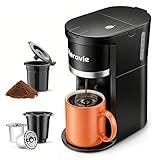
- Brew in Two Ways: Horavie single serve coffee maker supports both k pod and ground coffee, offering flexible brew sizes from 6 to 12oz to meet your varying coffee needs. Whether you want a quick cup or to savor a slow drink, it handles both with ease
- Safe and High-Quality Materials: Made from BPA-free and heat-resistant materials, this single cup coffee maker ensures durability and safety. The built-in water tank with view window allows you to monitor the water level at any time, preventing issues during brewing
- One-Touch Quick Brewing: This coffee machine combines fast brewing technology with one button operation mode that is simple and fast for any user. Simply press the button and enjoy hot coffee in just 120s, perfect for busy mornings or office use
- Compact Size fits Anywhere: Whether at home, in the office, or while traveling, the Horavie small coffee maker seamlessly fits into your lifestyle. Its compact design and light weight make it ideal for small kitchens, office or RVs, especially in space-limited environments
- Descaling Reminder & Self-Cleaning: The mini one cup coffee maker features an automatic descaling reminder that illuminates in red when cleaning is needed. Simply add a descaling solution and press the buttons for 2 seconds to initiate the self-cleaning process. This feature helps prevent clogging and ensures optimal performance, significantly extending the lifespan of your K-Pod coffee maker
Water quality and temperature
Your coffee is mostly water, so good water matters. Tap water can have off-flavors. A simple Brita filter can make a world of difference. For brewing temp, aim for 195-205°F (90-96°C). Too hot and you’ll scald the grounds; too cool and you won’t extract enough flavor. A thermometer is your friend here.
Grind size and coffee freshness
This is huge. Pre-ground coffee loses its zing fast. Get a burr grinder. For most single-cup methods, a medium to medium-fine grind is a good starting point. Think coarse sand. Freshly roasted beans, used within a few weeks of their roast date, will give you the best aroma and flavor.
Coffee-to-water ratio
This is your recipe. A good starting point for a single cup is about 15-17 grams of coffee for every 8 ounces (1 cup) of water. So, if you’re using 10 oz of water, you’d use roughly 15-17 grams of coffee. You can adjust this to your taste. More coffee means stronger; less means weaker.
Cleanliness/descale status
A dirty brewer makes bad coffee. Period. Rinse your brewer after every use. For machines with heating elements, descaling is crucial. Mineral buildup messes with temperature and flow. Check your brewer’s manual for specific cleaning and descaling instructions. It’s usually a simple vinegar or citric acid solution.
Step-by-step (brew workflow)
1. Heat your water.
- What it looks like: Water is steaming, just off the boil. A thermometer reads 195-205°F (90-96°C).
- Common mistake: Boiling water straight from the kettle. This can scorch your coffee. Let it sit for 30-60 seconds after boiling.
2. Grind your beans.
- What it looks like: Uniform particles, appropriate for your brewer (e.g., medium-fine for pour-over).
- Common mistake: Using pre-ground coffee. It’s stale. Grind only what you need, right before brewing.
3. Prepare your filter (if applicable).
- What it looks like: For paper filters, rinse them with hot water. This removes papery taste and preheats the brewer.
- Common mistake: Skipping the rinse. That papery taste is a buzzkill.
4. Add coffee grounds.
- What it looks like: Grounds are evenly distributed in the filter or brewer.
- Common mistake: Tamping grounds too hard (in some methods) or not leveling them. This leads to uneven extraction.
5. Bloom the coffee.
- What it looks like: Pour just enough hot water (about twice the weight of the coffee) to saturate all the grounds. Wait 30 seconds. You’ll see bubbles – that’s CO2 escaping.
- Common mistake: Pouring all the water at once. You miss out on the bloom, which releases gases and prepares the grounds for better extraction.
6. Pour the remaining water.
- What it looks like: Pour slowly and steadily in a circular motion, keeping the water level consistent. Aim for your target brew time.
- Common mistake: Pouring too fast or all at once. This can lead to channeling (water finding easy paths) and under-extraction.
7. Let it drip/brew.
- What it looks like: The coffee is finishing its flow. For pour-overs, the last few drips should be slow.
- Common mistake: Leaving the grounds in too long (French press) or stopping too early. This affects strength and bitterness.
8. Serve immediately.
- What it looks like: Freshly brewed coffee in your favorite mug.
- Common mistake: Letting it sit on a hot plate. It gets burnt and bitter. Enjoy it right away.
Common mistakes (and what happens if you ignore them)
| Mistake | What it causes | Fix |
|---|---|---|
| Using stale, pre-ground coffee | Weak, flat, or bitter coffee | Buy whole beans and grind them just before brewing. |
| Using tap water | Off-flavors (chlorine, minerals) | Use filtered or bottled water. |
| Water temperature too high | Scorched, bitter coffee | Let boiling water sit for 30-60 seconds before brewing. |
| Water temperature too low | Sour, weak, under-extracted coffee | Use a thermometer to ensure 195-205°F (90-96°C). |
| Incorrect grind size (too fine) | Bitter, over-extracted, clogged filter | Coarsen your grind. |
| Incorrect grind size (too coarse) | Weak, sour, under-extracted, watery coffee | Fine your grind. |
| Not rinsing paper filters | Papery taste in coffee | Rinse with hot water before adding grounds. |
| Not blooming the coffee | Uneven extraction, less flavor development | Pour a small amount of water to wet grounds, wait 30 seconds. |
| Over-extraction | Bitter, harsh, astringent coffee | Reduce brew time, coarsen grind, or use less coffee. |
| Under-extraction | Sour, weak, watery, lacking sweetness | Increase brew time, fine grind, or use more coffee. |
| Dirty equipment | Stale, bitter, or rancid coffee flavors | Clean your brewer thoroughly after each use and descale regularly. |
| Inconsistent pouring (pour-over) | Channeling, uneven extraction | Pour slowly and steadily in a circular motion. |
Decision rules (simple if/then)
- If your coffee tastes bitter, then try a coarser grind because a finer grind can over-extract.
- If your coffee tastes sour, then try a finer grind because a coarser grind can under-extract.
- If your coffee is too weak, then increase your coffee dose or decrease your water amount because you’re not using enough coffee for the water.
- If your coffee is too strong, then decrease your coffee dose or increase your water amount because you’re using too much coffee for the water.
- If your coffee has a papery taste, then rinse your paper filter thoroughly with hot water before brewing because this removes residual paper taste.
- If your coffee tastes burnt, then check your water temperature; it might be too hot because boiling water can scorch the grounds.
- If your brewer is slow to drain, then check your grind size; it might be too fine because fine grounds can clog the filter.
- If your coffee has sediment, then check your filter or grind size; a coarse grind or a filter with larger pores can let fines through.
- If your single-serve machine is taking longer to brew, then it likely needs descaling because mineral buildup can impede water flow.
- If your coffee lacks aroma, then ensure you’re using freshly roasted beans and grinding them right before brewing because aroma is a key indicator of freshness.
- If your brew time is too short, then your grind might be too coarse or your pour rate too fast because these lead to quick draining and under-extraction.
- If your brew time is too long, then your grind might be too fine or your pour rate too slow because these can lead to over-extraction.
FAQ
Q: How much coffee do I need for one cup?
A: A good starting point is 15-17 grams of coffee for every 8 ounces (1 cup) of water. Adjust this to your personal taste preference for strength.
Q: What’s the best water temperature for brewing?
A: Aim for water between 195°F and 205°F (90°C to 96°C). Water that’s too hot can burn the coffee, while water that’s too cool won’t extract enough flavor.
Q: Why does my coffee taste bitter?
A: Bitterness often comes from over-extraction. This can be caused by grinding too fine, brewing too long, or water that’s too hot. Try adjusting one of these variables.
Q: My coffee tastes sour. What did I do wrong?
A: Sourness is usually a sign of under-extraction. Your grind might be too coarse, your brew time too short, or your water temperature too low.
Q: Should I use filtered water or tap water?
A: Filtered water is highly recommended. Tap water can contain minerals and chemicals that negatively affect your coffee’s flavor.
Q: How often should I clean my one-cup coffee maker?
A: Rinse it thoroughly after every use. For machines with heating elements, descale it according to the manufacturer’s instructions, usually every 1-3 months depending on usage and water hardness.
Q: Is a burr grinder really necessary?
A: While not strictly mandatory, a burr grinder is essential for consistent grind size, which is key to good extraction. Blade grinders produce inconsistent particle sizes, leading to uneven brewing.
Q: What is the “bloom” phase?
A: The bloom is when you first wet the coffee grounds with a small amount of hot water. It allows trapped CO2 gas to escape, which prepares the grounds for a more even extraction and better flavor development.
Q: Can I reuse coffee grounds?
A: No, you generally cannot reuse coffee grounds for brewing. Once brewed, most of the desirable flavor compounds have been extracted. Reusing them will result in a weak, unpleasant cup.
What this page does NOT cover (and where to go next)
- Specific cleaning solutions or detailed descaling guides for every machine type. (Check your brewer’s manual.)
- Advanced brewing techniques like controlled pouring patterns or specific immersion times. (Explore pour-over or AeroPress guides.)
- The science of coffee bean roasting and its impact on flavor profiles. (Look into coffee roasting resources.)
- Comparisons of different single-cup brewing devices. (Research reviews for specific brewer types.)
- Water chemistry and its precise effects on extraction. (Dive into coffee science literature.)