
Authentic Jordanian Coffee Recipe
Quick Answer
- Use a fine grind for your coffee.
- Employ a traditional dallah pot for brewing.
- Add cardamom and sometimes cloves for authentic flavor.
- Brew slowly over low heat, allowing flavors to meld.
- Serve in small, handleless cups.
- Don’t let it boil vigorously; a gentle simmer is key.
Who This Is For
- Anyone craving an authentic taste of Jordanian culture.
- Coffee enthusiasts looking to explore unique brewing traditions.
- Home cooks wanting to impress with a distinctive beverage.
What to Check First
Brewer Type and Filter Type
For Jordanian coffee, the classic tool is the dallah. It’s a traditional Arabic coffee pot, often made of brass or copper, with a distinctive long spout. You won’t typically use paper filters here. The grounds settle to the bottom of the pot. If you don’t have a dallah, a small saucepan can work in a pinch, but it’s not the same vibe.
For Jordanian coffee, the classic tool is the dallah. If you’re looking to achieve that authentic brewing experience, consider investing in a traditional dallah pot, often made of brass or copper, with a distinctive long spout.
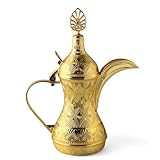
- Authentic Middle Eastern Design – Inspired by traditional Ottoman and Arabian dallah pitchers.
- Premium Zamac Construction – Made entirely of durable zamac, ensuring long-lasting elegance.
- Intricately Engraved Details – Features stunning engravings and fine craftsmanship.
- Decorative Use Only – Designed for display purposes, not intended for liquid storage.
- Removable Lid for Realistic Design – Comes with a functional decorative lid.
Water Quality and Temperature
Start with good water. Filtered water is best. Tap water can sometimes have off-flavors that will mess with your delicate spice notes. You’re aiming for water that’s just off the boil, around 200°F (93°C), when you add the coffee and spices. Don’t use boiling water straight on the grounds; it can scorch them.
Grind Size and Coffee Freshness
This is crucial for how to make Jordanian coffee. You need a very fine grind, almost like powder. Think Turkish coffee grind. Freshly ground beans make a huge difference. If your coffee is old, the aroma and flavor will be weak. Grind your beans right before you brew for the best results.
Coffee-to-Water Ratio
This can be a bit to taste, but a good starting point is about 1 to 1.5 tablespoons of finely ground coffee per 6 oz of water. You’ll also be adding spices, so adjust accordingly. It’s a strong, flavorful brew, so you don’t need a ton of coffee.
Cleanliness/Descale Status
Make sure your dallah or saucepan is spotless. Any residue from previous brews or cleaning agents can ruin the delicate flavors. If you’re using a metal pot, check for any tarnish or buildup. A clean pot means a clean taste.
Step-by-Step Jordanian Coffee Brew Workflow
1. Measure Your Water: Pour cold, filtered water into your dallah or saucepan. A good starting point is about 6 oz per serving.
- Good looks like: Clear water, measured accurately.
- Common mistake: Guessing the water amount. Avoid this by using a measuring cup.
2. Add Coffee Grounds: Add your very finely ground coffee to the cold water. Use about 1 to 1.5 tablespoons per 6 oz of water.
- Good looks like: Evenly distributed grounds in the water.
- Common mistake: Adding coffee to hot water. This can lead to bitterness.
3. Add Spices: This is where the magic happens. Add ground cardamom (about 1/4 teaspoon per serving) and optionally a tiny pinch of ground cloves.
- Good looks like: Visible spice particles mixed with the grounds.
- Common mistake: Using too many spices. Start light; you can always add more next time.
4. Stir Gently: Give the mixture a gentle stir to combine the coffee and spices. Don’t over-stir.
- Good looks like: A light swirl, no vigorous mixing.
- Common mistake: Aggressively stirring. This can cause grounds to break down too much.
5. Place on Heat: Put the dallah or saucepan on low to medium-low heat. The key is slow, gentle heating.
- Good looks like: The heat source is controlled, not blasting.
- Common mistake: High heat. This will scorch the coffee and spices quickly.
6. Watch for Foam: As the coffee heats, a foam will start to rise to the top. This is called the “crown.”
- Good looks like: A steady, gentle foam forming.
- Common mistake: Letting it boil over. Keep a close eye on it.
7. Remove from Heat (First Rise): When the foam reaches the rim, carefully remove the pot from the heat. Let the foam subside for a moment.
- Good looks like: The foam recedes without boiling over.
- Common mistake: Ignoring the foam and letting it boil. This burns the coffee.
8. Return to Heat (Second Rise): Put the pot back on low heat. Allow it to heat up again until foam starts to rise a second time.
- Good looks like: Another gentle foam formation.
- Common mistake: Boiling vigorously. You want a simmer, not a rolling boil.
9. Remove from Heat (Final): Remove the pot from the heat one last time after the second foam rise. Some traditions do a third rise, but two is common.
- Good looks like: The brew is complete, ready to settle.
- Common mistake: Over-brewing. Too many heat cycles can make it bitter.
10. Let it Settle: Allow the coffee to sit for a minute or two. This lets the fine grounds settle to the bottom.
- Good looks like: The liquid is mostly clear at the top.
- Common mistake: Pouring immediately. You’ll get a mouth full of grounds.
11. Serve Carefully: Gently pour the coffee into small, handleless cups (finjan). Pour slowly to avoid disturbing the grounds at the bottom.
- Good looks like: A clear pour into the cups, leaving the last bit of liquid behind.
- Common mistake: Pouring too quickly. This disturbs the sediment.
12. Enjoy: Sip slowly and savor the rich, spiced flavor. It’s meant to be enjoyed with conversation.
- Good looks like: Relaxing and appreciating the moment.
- Common mistake: Rushing the experience. This coffee is about slowing down.
Common Mistakes (and What Happens If You Ignore Them)
| Mistake | What It Causes | Fix |
|---|---|---|
| Using coarse coffee grounds | Weak flavor, grounds in the cup | Use a very fine, powder-like grind. |
| Using stale coffee beans | Flat, uninspired taste | Use freshly roasted beans and grind them just before brewing. |
| High heat during brewing | Bitter, burnt taste, scorched spices | Brew slowly over low heat, controlling foam carefully. |
| Boiling vigorously | Bitter taste, loss of delicate aromas | Aim for a gentle simmer and remove from heat when foam rises. |
| Not letting grounds settle | Gritty texture, grounds in every sip | Allow the coffee to rest for a couple of minutes before pouring. |
| Using tap water with strong mineral taste | Off-flavors that mask the coffee and spices | Use filtered or spring water for a cleaner taste. |
| Too many spices | Overpowering flavor, masks the coffee | Start with small amounts of cardamom and cloves; adjust to taste. |
| Aggressive stirring | Grounds break down, harder to settle, bitter taste | Stir gently only to combine ingredients initially. |
| Pouring too fast | Grounds disturbed, muddy coffee | Pour slowly and steadily, leaving the last bit of liquid in the pot. |
| Over-brewing (too many heat cycles) | Bitter, astringent taste | Stick to two or three gentle heat cycles for the foam rise. |
Decision Rules
- If your coffee tastes bitter, then you likely used too high of a heat or let it boil too long because high temperatures degrade delicate flavors.
- If your coffee is weak, then you might have used too little coffee or too coarse a grind because less surface area means less extraction.
- If your coffee is gritty, then you probably poured too quickly or didn’t let it settle enough because the grounds need time to sink.
- If you can’t taste the cardamom, then you may need to increase the amount or ensure your spices are fresh because stale spices lose their potency.
- If the foam boils over, then you need to watch the pot more closely and remove it from the heat sooner because the foam rises quickly.
- If you want a richer flavor, then try a slightly finer grind or a touch more coffee, but be careful not to overdo it because balance is key.
- If your tap water tastes off, then switch to filtered water because impurities can significantly affect the final taste.
- If you’re using pre-ground coffee, then check the grind size; it needs to be as fine as possible for this method because it mimics Turkish coffee.
- If the coffee tastes muddy, then let it sit a minute longer after brewing before pouring because sediment needs time to settle.
- If you’re experimenting with spices, then start with cardamom and add cloves or cinnamon very sparingly because they are potent.
- If your dallah is old and tarnished, then give it a good scrub or consider a new one because off-flavors can linger on dirty surfaces.
FAQ
What kind of coffee beans should I use?
Medium to dark roasts work well. The key is the fine grind, not necessarily the bean origin, though a smooth, rich bean will shine.
Can I make this without a dallah?
Yes, a small saucepan will work. Just be extra careful with heat control and pour gently. The dallah adds a traditional touch, though.
How much cardamom is too much?
Start with about 1/4 teaspoon per 6 oz of water. Too much can make the coffee taste perfumey and overpower everything else.
What does the foam mean?
The foam, or “crown,” indicates the coffee is heating properly and releasing its aromas. It’s a sign of a well-brewed cup.
Is this coffee supposed to be strong?
Yes, Jordanian coffee is typically strong and flavorful, meant to be sipped slowly. It’s not usually drunk in large quantities.
Can I add sugar?
Traditionally, sugar isn’t added during the brewing process. If you like it sweet, you can add a small amount to your cup afterward, but it’s best enjoyed plain to appreciate the spices.
How do I store leftover coffee?
It’s best enjoyed fresh. If you have leftovers, let them cool completely, then store in an airtight container in the refrigerator for a day or two. Reheat gently.
What if I don’t have ground cardamom?
You can grind whole cardamom pods yourself. Remove the seeds from the pods and grind them finely. This gives a fresher, more potent flavor.
What This Page Does Not Cover (and Where to Go Next)
- The history of Arabic coffee traditions.
- Detailed discussions on specific regional variations beyond Jordanian style.
- Advanced techniques for roasting your own coffee beans.
- Comparisons of different dallah pot materials and their impact on flavor.
- Recipes for sweets or pastries typically served with Jordanian coffee.