
Using A Coffee Maker To Filter Water
Quick Answer
- A coffee maker is designed to brew coffee, not to filter water.
- While some coffee makers have a basic charcoal filter in the carafe or brew basket, this is primarily for improving the taste of water used for brewing, not for comprehensive water purification.
- These built-in filters can remove chlorine and some impurities that affect flavor.
- They are not effective at removing bacteria, viruses, heavy metals, or dissolved solids.
- For safe drinking water, use certified water filters or boiling.
- Relying on a coffee maker for significant water filtration is not recommended for health and safety.
While a coffee maker’s filter offers minimal improvement for brewing, for truly safe drinking water, consider a dedicated water purifier bottle like this one.

- LifeStraw Go Series is the ULTIMATE SIDEKICK. The BPA-Free bottle filters out nasties so you can fill up from airport bathrooms, a tap in Mexico, or a gas station while road-tripping
- IMPROVES TASTE: the Carbon filter reduces chlorine, odors + organic chemical matter
- FILTERS OUT CONTAMINANTS: the Membrane microfilter protects against 99.999999% Bacteria (including E.coli + Salmonella), 99.999% Parasites (including Giardia and Cryptosporidium), 99.999% Microplastics, sand, dirt, and cloudiness
- LONG LASTING: The membrane microfilter lasts up to 1,000 gal (4,000 L) - about five years of daily use. Carbon filter lasts up to 26 gallons (100 L) - about two months
- SAVES WASTE: The membrane microfilter lasts up to 4,000 liters. That’s 8,000 single use plastic water bottles out of our parks, our oceans, and our communities
Key Terms and Definitions
- Filtration: The process of separating solids from liquids or gases using a filter medium that allows the fluid to pass through but not the solid.
- Purification: The process of removing contaminants from water to make it safe for consumption. This goes beyond simple filtration.
- Charcoal Filter: A type of filter that uses activated charcoal (carbon) to absorb impurities and chemicals, improving taste and odor.
- Activated Carbon: Carbon that has been processed to be extremely porous, increasing its surface area for better absorption.
- Chlorine: A common disinfectant added to municipal water supplies, which can impart an unpleasant taste and smell.
- Sediment: Solid particles suspended in water, such as dirt, sand, or rust.
- Microbial Contaminants: Organisms like bacteria, viruses, and protozoa that can cause illness.
- Heavy Metals: Toxic elements such as lead, mercury, and arsenic that can be present in water.
- Dissolved Solids (TDS): Minerals, salts, and organic matter that are dissolved in water.
How It Works
- Designed for Brewing: Coffee makers are engineered to heat water and pass it through coffee grounds to extract flavor.
- Water Flow Path: Water is heated in a reservoir and then flows through a tube to the brew basket, where it drips onto coffee grounds and into the carafe.
- Integrated Filters (Optional): Some models include a small charcoal filter, often placed in the brew basket or sometimes within the water reservoir.
- Absorption, Not Removal: Activated charcoal filters work by adsorption, where impurities adhere to the surface of the charcoal.
- Chlorine and Taste: The primary function of these built-in charcoal filters is to reduce chlorine and other substances that negatively impact the taste and smell of coffee.
- Limited Capacity: These filters have a finite capacity and need regular replacement to remain effective.
- No Microbial Barrier: The pore size of typical charcoal filters in coffee makers is too large to trap bacteria or viruses.
- No Heavy Metal Removal: While some advanced carbon filters can reduce certain heavy metals, the filters in most standard coffee makers are not designed for this purpose.
- Mechanical Filtration (Minimal): Any physical barrier in the brew basket might catch larger coffee grounds, but it’s not a fine sieve for water contaminants.
What Affects the Result
- Type of Filter: If your coffee maker has a filter, its material (usually activated carbon) and design are critical. Standard charcoal filters are best for taste.
- Filter Age and Condition: An old, saturated filter will be ineffective and could even release absorbed impurities back into the water.
- Water Flow Rate: The speed at which water passes through the filter impacts how much contact time impurities have with the filtering material.
- Water Pressure (if applicable): While not common for home brewing, some advanced systems might utilize pressure, which can influence filtration efficiency.
- Water Chemistry: The specific contaminants present in your source water will determine what, if anything, a coffee maker’s filter can affect.
- Temperature of Water: While not directly a filtration factor, water temperature is crucial for coffee extraction, but it doesn’t enhance the filter’s ability to purify.
- Grind Size of Coffee: This affects brewing but has no bearing on the water filtration capabilities of the machine itself.
- Coffee Bean Freshness: Similar to grind size, this is about coffee quality, not water quality.
- Maintenance of the Machine: Scale buildup within the coffee maker can affect water flow and potentially introduce unwanted particles.
- The Coffee Maker’s Design: The overall construction and sealing of the water pathways can influence how effectively water is channeled through any integrated filter.
- Source Water Quality: The initial state of your tap water (e.g., high chlorine, sediment levels) will determine how noticeable any minor filtering effect might be.
Pros, Cons, and When It Matters
- Pro: Improved Coffee Taste: If your tap water has a strong chlorine taste, the built-in charcoal filter can make your coffee taste better.
- Con: Inadequate for Drinking Water: These filters are not designed to make unsafe water safe to drink.
- Pro: Convenience for Brewing: It’s a simple, integrated solution if your primary goal is better-tasting coffee.
- Con: Limited Filtration Scope: They do not remove bacteria, viruses, heavy metals, or dissolved solids.
- Pro: Easy Maintenance (for coffee): Replacing a charcoal filter is usually straightforward for those who already own a coffee maker.
- Con: Cost of Replacement Filters: You’ll need to purchase replacement filters periodically, adding to the cost of ownership.
- When It Matters (for coffee): If you live in an area with municipally treated water that has a noticeable chlorine smell or taste, a coffee maker with a filter can be beneficial for your morning brew.
- When It Matters (for drinking water): It does NOT matter for making questionable water safe to drink.
- Pro: Reduced Odors: Can help eliminate unpleasant smells from your water before brewing.
- Con: Not a Water Purifier: It cannot perform the essential functions of a dedicated water purification system.
- When It Matters (for coffee): If you are an enthusiast who values the nuances of coffee flavor, minimizing off-tastes from water is important.
- Con: False Sense of Security: Users might mistakenly believe their water is cleaner or safer for drinking than it actually is.
The limitations of coffee maker filters for drinking water are clear; for reliable purification on the go, a portable water filter is a much better option.
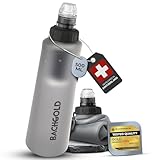
- DUAL-STAGE FILTRATION BUILT FOR BACKCOUNTRY DEMANDS — The Bachgold Squeeze runs an electro-adsorptive nanofiber layer alongside a 0.2-micron hollow fiber membrane — lab-tested, field-ready filtration that goes beyond what single-stage systems can do. Engineered to intercept what standard membranes miss. Whether you're on a thru-hike, a bushcraft expedition, or building an emergency kit — this is the portable water filter that earns its place from day one.
- ULTRALIGHT & POCKET-READY — WEIGHS JUST 83g — At 80g (500ml) and 95g (1000ml), the Squeeze folds flat when empty and disappears into any pocket, hip belt, or go-bag. Built for backpackers, hikers, and survival-ready adventurers who refuse to carry dead weight. Designed and manufactured in Switzerland — where every gram and every millimeter is deliberate. The backpacking water filter that fits everywhere and lets you down nowhere.
- SQUEEZE-TO-DRINK — NO SETUP, NO WAITING — Fill the flexible TPU pouch from any freshwater source and squeeze directly into your mouth or any bottle. No pumps, no gravity bags, no assembly. The squeeze-activated flow puts you in control of speed and pressure — ideal whether you're filtering fast on a trail or rationing carefully in a camping or emergency situation. Gear that just works when it needs to.
- YOUR COMPACT BACKUP FOR SURVIVAL, TRAVEL & EMERGENCIES — From backcountry camping to international travel to emergency go-bags, the Bachgold Squeeze delivers reliable filtration when access to clean water isn't guaranteed. Lightweight enough to forget it's there — dependable enough to bet on when it matters. Compatible with standard 28mm bottle threads for seamless integration into any outdoor setup.
- SWISS-MADE, LONG-LASTING & WORTH EVERY PENNY — Designed and manufactured in Switzerland by a brand trusted by over 50,000 customers worldwide. The electro-adsorptive layer filters up to 500L; the hollow fiber membrane extends to 1,000L — making this one of the best-value camping and hiking water filters on the market. Includes squeeze pouch, filter unit, and lid. No extras needed. Everything you need, nothing you don't.
Common Misconceptions
- Misconception: Coffee makers purify water. They are designed for brewing coffee, and any filtration is a secondary, limited function.
- Misconception: The filter removes all impurities. Built-in filters typically only address taste and odor issues, primarily chlorine.
- Misconception: The water is safe to drink after brewing. The brewing process does not sterilize the water; if the water isn’t safe to begin with, it won’t be safe after brewing.
- Misconception: The filter removes bacteria and viruses. The pore size of these filters is generally too large to trap microscopic pathogens.
- Misconception: Any coffee maker filter is the same. While most use activated carbon, the quality, size, and effectiveness can vary between models.
- Misconception: You don’t need to replace the filter. Like any filter, it has a lifespan and becomes ineffective or even detrimental once saturated.
- Misconception: The heating element sterilizes the water. While heat can kill some microbes, the temperatures reached in a coffee maker are often not high enough for complete sterilization, especially for a sufficient duration.
- Misconception: Running water through the machine without coffee filters it. If there’s no dedicated water filter in the machine, no filtration occurs.
- Misconception: The coffee grounds themselves filter the water. Coffee grounds can trap some sediment, but this is not a systematic or effective water filtration method.
FAQ
Can I use my coffee maker to filter tap water for drinking?
No, it is not recommended. Coffee maker filters are designed to improve the taste of water for brewing coffee, not to purify it for drinking. They do not remove harmful bacteria, viruses, or heavy metals.
What does the filter in my coffee maker actually do?
Most coffee maker filters contain activated charcoal. This type of filter is effective at absorbing chlorine and other chemicals that can affect the taste and odor of water, leading to a better-tasting cup of coffee.
How often should I replace the water filter in my coffee maker?
You should replace the filter according to the manufacturer’s instructions, typically every 30-60 days or after a certain number of brew cycles. An old filter will lose its effectiveness and can even harbor bacteria.
Will running plain water through my coffee maker filter it?
If your coffee maker has a dedicated water filter (usually charcoal), running plain water through it will pass that water through the filter, imparting the same taste-improving effects as it would for brewing coffee. However, it still won’t purify the water.
Is the water from my coffee maker sterile?
No, the water is not sterile. While the heating process can kill some microorganisms, coffee makers do not operate at temperatures or for durations sufficient to guarantee sterilization.
Can a coffee maker remove sediment from water?
A coffee maker’s filter might catch some larger sediment particles, but it is not designed as a sediment filter. For effective sediment removal, you would need a dedicated sediment filter.
What if my coffee maker doesn’t have a filter?
If your coffee maker does not have a built-in water filter, then it is not performing any water filtration at all. The water is heated and passed through without any additional treatment.
Is it safe to drink water that has been run through a coffee maker without coffee grounds?
If the water source is already safe to drink and your coffee maker has a functional filter, the water will taste slightly better. However, it does not add any safety features beyond what the original water source provided.
What This Page Does NOT Cover (and Where to Go Next)
- Specific Water Contaminant Removal: This page doesn’t detail which specific contaminants a coffee maker filter can or cannot remove beyond general taste and odor improvement. For detailed water testing and contaminant-specific filtration, consult water quality reports or specialized filtration guides.
- Advanced Water Purification Systems: This article focuses solely on coffee makers. For information on reverse osmosis, UV purification, or multi-stage filtration systems, seek resources dedicated to home water treatment.
- Commercial Water Filtration Technologies: The mechanisms and standards for industrial or large-scale water purification are beyond the scope of this discussion.
- Water Testing Methods: This guide does not explain how to test your water for specific contaminants. Information on water testing kits and professional lab analysis is available from environmental health resources.
- Building Custom Filtration Systems: This page does not provide instructions or advice on creating DIY water filters.