
Does a Coffee Maker Purify Water?
Quick answer
- No, a standard coffee maker does not purify water in the way a dedicated water filter or purification system does.
- While brewing involves heating water, this process alone isn’t sufficient to remove all contaminants.
- Some coffee makers include basic carbon filters, which can improve taste and odor but don’t purify.
- For truly purified water, consider a separate filtration system before brewing.
- Using filtered water can significantly enhance the taste of your coffee.
- A coffee maker’s primary function is to extract flavor from coffee grounds, not to make water safe or clean.
For truly purified water, consider a separate filtration system before brewing. A pitcher water filter is a simple and effective way to improve your coffee’s taste.
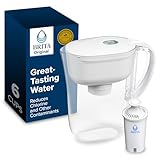
- CERTIFIED WATER FILTRATION: WQA NSF/ANSI certified Brita Metro water filter pitcher reduces chlorine taste and odor, copper, mercury, cadmium and more — delivering great-tasting filtered water right from your tap
- SMARTLIGHT FILTER INDICATOR: Brita's most accurate and precise pitcher filter change indicator tells you exactly when to replace your Standard filter — every 40 gallons or about 2 months for best results
- MINI-FRIDGE-FRIENDLY DESIGN: This 6-cup BPA-free water pitcher is space-efficient and fits in most mini-fridges; easy-fill lid makes refilling simple; perfect for dorm rooms
- REPLACE UP TO 300 PLASTIC BOTTLES: One Standard filter replaces up to 300 single-use 16.9 oz plastic bottles — save money and reduce plastic waste when you switch to Brita
- STANDARD FILTER COMPATIBILITY: Standard filters work with all Brita pitchers and dispensers except Stream; *substances reduced may not be in all users' water — for use with potable water only. See certifications
Key terms and definitions
- Purification: The process of removing chemical compounds, contaminants, and other undesirable substances from water.
- Filtration: The process of passing water through a medium to remove suspended solids and some dissolved substances.
- Chlorine: A common disinfectant used in municipal water supplies, often contributing to off-flavors.
- Sediment: Undissolved particles like rust, sand, and dirt found in water.
- Hardness: Refers to the concentration of dissolved minerals, primarily calcium and magnesium, in water.
- Boiling Point: The temperature at which water changes from a liquid to a gas (212°F or 100°C at sea level).
- Activated Carbon Filter: A filter type that uses a bed of activated carbon to remove contaminants through adsorption.
- Distillation: A purification method involving boiling water and collecting the condensed steam, leaving impurities behind.
- Reverse Osmosis (RO): A water purification technology that uses a semi-permeable membrane to remove ions, molecules, and larger particles from drinking water.
- Brewing Temperature: The optimal temperature range for extracting flavors from coffee grounds, typically 195-205°F.
How a Coffee Maker Works
- A reservoir holds cold water, which is then heated.
- A heating element, often an aluminum tube, warms the water to brewing temperature.
- The heated water is typically pumped or siphoned through a tube to a spray head.
- The spray head disperses hot water evenly over the coffee grounds in a filter basket.
- Hot water saturates the grounds, extracting soluble compounds that create coffee’s flavor and aroma.
- The brewed coffee then drips through the filter and into a carafe or serving vessel.
- Some models include a warming plate to keep the brewed coffee hot.
- The process is designed for optimal coffee extraction, not for water treatment.
- Any water treatment capabilities are secondary features, usually via an integrated filter.
What affects the result of your brew
- Water Quality: The most significant factor; water containing chlorine, sediment, or high mineral content can negatively impact taste.
- Grind Size: Too fine can lead to over-extraction and bitterness; too coarse results in under-extraction and weak coffee.
- Coffee-to-Water Ratio: Affects strength and flavor; a common starting point is 1:15 to 1:18 (coffee grams to water grams).
- Water Temperature: Ideal brewing temperature is between 195-205°F for optimal extraction.
- Brewing Time: How long the water is in contact with the grounds influences extraction; varies by brew method.
- Coffee Freshness: Freshly roasted and ground coffee yields the best flavor and aroma.
- Brewer Type: Different coffee makers (drip, pour-over, French press) have unique extraction dynamics.
- Filter Type: Paper filters remove more sediment and oils than metal filters, affecting mouthfeel and clarity.
- Mineral Content (Hardness): Optimal water has some dissolved minerals to aid extraction, but too much can cause scale buildup and off-flavors.
- Cleanliness of Brewer: Residue from old coffee oils can impart stale or bitter tastes to new brews.
Pros, cons, and when it matters for water purification
- Pro (Taste Improvement): If your coffee maker has an activated carbon filter, it can remove chlorine and some odors, improving coffee taste.
- Con (Limited Scope): These filters do not remove heavy metals, bacteria, viruses, or dissolved solids.
- Pro (Convenience): Integrated filters mean one less step if you’re only concerned with basic taste improvement.
- Con (Cost & Maintenance): Filters need regular replacement, adding to ongoing costs and maintenance.
- When it matters (Tap Water Quality): If your tap water tastes or smells bad, even a basic coffee maker filter can make a difference.
- When it matters (Brewer Longevity): Reducing scale-forming minerals can extend the life of your coffee maker.
- Con (False Sense of Security): Relying on a coffee maker to purify water for health reasons is dangerous and ineffective.
- When it matters (Optimal Coffee Flavor): For serious coffee enthusiasts, using truly filtered or purified water is essential for showcasing coffee’s nuances.
- Pro (Sediment Reduction): Some filters can trap larger sediment particles, preventing them from entering your brew.
- Con (No Health Protection): A coffee maker will not make unsafe water safe to drink.
Common misconceptions about whether a coffee maker will purify water
- “Boiling water purifies it completely.” While boiling kills most bacteria and viruses, it doesn’t remove chemical contaminants, heavy metals, or sediment.
- “The filter in my coffee maker purifies the water.” Most coffee maker filters are carbon filters designed for taste and odor, not comprehensive purification.
- “Coffee makers remove all minerals from water.” They do not; some minerals are desirable for coffee extraction, but excessive hardness is problematic.
- “If the water tastes good, it must be pure.” Taste is subjective and doesn’t indicate the absence of harmful, odorless, or tasteless contaminants.
- “My coffee maker is self-cleaning, so the water is pure.” “Self-cleaning” usually refers to descaling or rinsing cycles, not water purification.
- “The coffee grounds act as a filter for impurities.” Coffee grounds are for flavor extraction; they are not designed to filter water contaminants.
- “All coffee makers with filters offer the same level of water improvement.” Filter effectiveness varies widely by type and quality.
- “Using a coffee maker makes tap water safe to drink.” If your tap water isn’t safe before brewing, it likely won’t be safe after, regardless of the coffee maker.
FAQ
Q: Will a coffee maker purify water that isn’t safe to drink?
A: No, a standard coffee maker is not designed to make unsafe water safe. While the brewing process involves heating, this isn’t sufficient to remove all harmful contaminants like heavy metals, pesticides, or certain bacteria and viruses.
Q: Do coffee maker filters actually do anything for water quality?
A: Yes, many coffee maker filters, typically activated carbon, can improve water quality by reducing chlorine taste and odor, and sometimes trapping some sediment. This can lead to better-tasting coffee.
Q: Does boiling water in the coffee maker remove all impurities?
A: Boiling water primarily kills biological contaminants like bacteria and viruses. It does not remove chemical pollutants, heavy metals, pesticides, or dissolved solids that can affect water purity and taste.
Q: Can I use distilled water in my coffee maker?
A: While distilled water is pure, it lacks the minerals necessary for optimal coffee extraction, which can result in a flat-tasting brew. It’s generally better to use filtered tap water with some mineral content.
Q: How often should I change the water filter in my coffee maker?
A: This depends on the manufacturer’s recommendations and your water usage. Typically, coffee maker filters should be changed every 1-2 months or after a certain number of brews. Check your specific model’s manual.
Q: What kind of water is best for making coffee?
A: Filtered tap water is often ideal. It should be free of strong odors and tastes (like chlorine), but contain some beneficial minerals for extraction. A dedicated home water filter can achieve this.
Q: Can hard water damage my coffee maker?
A: Yes, hard water, which contains high levels of calcium and magnesium, can lead to mineral buildup (scale) inside your coffee maker. This can reduce efficiency, affect taste, and shorten the appliance’s lifespan. Regular descaling is necessary.
What this page does NOT cover (and where to go next)
- Detailed comparisons of various home water purification systems (e.g., reverse osmosis vs. activated carbon).
- Specific health risks associated with various water contaminants.
- Step-by-step guides for descaling or cleaning your specific coffee maker model.
- Advanced water chemistry for coffee brewing and mineral content optimization.
- The environmental impact of different water filtration methods.
- Comprehensive reviews of specific coffee maker brands or models.