
Grinding Beans: Coffee Powder at Home
Quick answer
- Use a burr grinder for consistency. Blade grinders are a no-go.
- Match grind size to your brew method. Coarse for French press, fine for espresso.
- Grind just before brewing for peak freshness. Pre-ground coffee goes stale fast.
- Weigh your beans and water. It’s the most reliable way to get it right.
- Keep your grinder clean. Old coffee oils mess with flavor.
- Experiment! Small tweaks make a big difference.
Who this is for
- Anyone who just bought a bag of whole beans and wants to make a decent cup.
- Home baristas looking to dial in their grind for better coffee flavor.
- Coffee lovers tired of bland, pre-ground stuff.
What to check first
Brewer type and filter type
Your coffee maker dictates a lot. Is it a drip machine? A pour-over cone? A French press? Each needs a different grind. Paper filters, metal filters, or no filter at all all play a role. This sets the stage for your grind size.
Water quality and temperature
Good coffee starts with good water. Tap water can have off-flavors. Filtered water is usually best. For temperature, aim for 195-205°F (90-96°C). Too hot can scorch the grounds; too cool leaves them under-extracted.
Grind size and coffee freshness
This is the core of how to make coffee beans into powder. The size of your coffee particles matters. Freshness is king. Whole beans stay fresh way longer than ground coffee. Grind only what you need, right before you brew.
Coffee-to-water ratio
A common starting point is 1:15 to 1:18. That means 1 gram of coffee to 15-18 grams of water. Measuring by weight is way more accurate than by volume. Get this wrong, and your coffee will be weak or too strong.
Cleanliness/descale status
Old coffee oils build up. They go rancid and make your coffee taste bitter or stale. Regularly clean your grinder and brewer. If you have a machine, descale it according to the manufacturer’s instructions. A clean setup is a happy setup.
Step-by-step (brew workflow)
1. Measure your whole beans.
- What “good” looks like: You have the exact amount of coffee needed for your brew.
- Common mistake: Guessing the amount. This leads to inconsistent results. Use a scale.
2. Select your grinder.
- What “good” looks like: You’re using a burr grinder.
- Common mistake: Using a blade grinder. It chops beans unevenly, creating dust and boulders.
For the best consistency, we highly recommend investing in a quality burr grinder. This will make a significant difference in your coffee’s flavor.
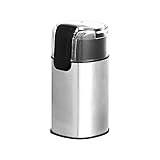
- Electric coffee bean grinder appliance for home use
- Can grind 30 grams/1 ounce of beans for drip coffee brewing in 10 seconds
- Grind coffee beans, herbs, spices, grains, nuts, and more
- Clear safety lid allows you to easily see the results in progress
- Heavy-duty stainless steel grind blade
3. Set your grind size.
- What “good” looks like: The grinder is set for your specific brew method. Coarse for French press, medium for drip, fine for espresso.
- Common mistake: Using the same grind for everything. This is a fast track to bad coffee.
4. Grind your beans.
- What “good” looks like: You have a consistent powder or particle size, smelling fresh and aromatic.
- Common mistake: Grinding too fine or too coarse for your method. Check your brewer’s manual if unsure.
5. Prepare your brewer and filter.
- What “good” looks like: Your brewer is clean, and your filter is properly seated (rinsed if paper).
- Common mistake: Using a dirty brewer or a dry paper filter. Rinse paper filters to remove papery taste.
6. Add ground coffee to the brewer.
- What “good” looks like: The grounds are evenly distributed.
- Common mistake: Tamping down the grounds too hard or leaving them uneven. This can lead to channeling.
7. Heat your water.
- What “good” looks like: Water is between 195-205°F (90-96°C).
- Common mistake: Using boiling water. It burns the coffee. Let it sit for 30-60 seconds after boiling.
8. Start the brew.
- What “good” looks like: Water is introduced to the grounds evenly, allowing them to bloom (release CO2).
- Common mistake: Pouring all the water at once. A controlled pour, especially for pour-over, is key.
9. Complete the brew.
- What “good” looks like: The brew finishes within the recommended time for your method.
- Common mistake: Letting it brew too long or too short. This leads to over or under-extraction.
10. Serve and enjoy.
- What “good” looks like: A delicious cup of coffee that tastes just right.
- Common mistake: Letting the coffee sit on a hot plate for too long. It cooks the coffee and ruins the flavor.
Common mistakes (and what happens if you ignore them)
| Mistake | What it causes | Fix |
|---|---|---|
| Using a blade grinder | Inconsistent particle sizes (dust and boulders), leading to uneven extraction. | Invest in a burr grinder. It’s the single best upgrade for home coffee. |
| Grinding too fine for your brew method | Clogged filters, over-extraction, bitter or muddy coffee. | Adjust your grinder to a coarser setting. Check brew guides for your specific brewer. |
| Grinding too coarse for your brew method | Under-extraction, weak, sour, or watery coffee. | Adjust your grinder to a finer setting. Aim for a consistent, even particle size. |
| Using pre-ground coffee | Stale flavor, loss of aromatic compounds, dull taste. | Buy whole beans and grind them right before brewing. It’s a night-and-day difference. |
| Incorrect coffee-to-water ratio | Coffee too weak or too strong, unbalanced flavor profile. | Use a scale to measure both coffee and water. Start with a 1:16 ratio and adjust to your taste. |
| Using stale or low-quality beans | Flat, lifeless coffee, even with perfect grinding and brewing. | Buy fresh, whole beans from a reputable roaster. Store them in an airtight container away from light. |
| Brewing with water that’s too hot or cold | Scorched coffee (bitter) or under-extracted coffee (sour). | Use a thermometer or let boiling water sit for 30-60 seconds to reach the optimal 195-205°F range. |
| Not cleaning your grinder | Rancid coffee oils contaminating fresh grounds, leading to bitter flavors. | Clean your grinder regularly. Many grinders have specific cleaning instructions in their manual. |
| Not rinsing paper filters | Papery taste in your final cup. | Briefly rinse paper filters with hot water before adding coffee grounds. Discard the rinse water. |
| Inconsistent pouring technique (pour-over) | Uneven saturation of grounds, leading to channeling and uneven extraction. | Practice a slow, circular pouring motion. Aim for even coverage of all grounds. |
Decision rules (simple if/then)
- If your French press coffee tastes muddy, then try a coarser grind because larger particles won’t pass through the metal filter as easily.
- If your drip coffee tastes weak and sour, then try a finer grind because under-extraction means the water didn’t pull enough flavor out.
- If your espresso is gushing out too fast and tastes watery, then try a finer grind because a faster flow indicates the grounds are too coarse.
- If your pour-over coffee tastes bitter and burnt, then try a slightly coarser grind or cooler water because over-extraction can happen with too much contact time or heat.
- If you’re using a blade grinder, then consider upgrading to a burr grinder because consistency is key for good extraction.
- If your coffee tastes stale, then grind your beans right before brewing because pre-ground coffee loses flavor rapidly.
- If your automatic drip machine brews inconsistently, then check the cleanliness and descale status because buildup affects temperature and flow.
- If you want to replicate a great cup, then start weighing your coffee and water because ratios are more reliable than volume measurements.
- If your coffee has an off-flavor you can’t quite place, then check your water quality and consider using filtered water because water makes up 98% of your coffee.
- If your coffee is consistently too strong, then use less coffee or more water (adjust your ratio) because the strength is determined by how much coffee you use relative to water.
- If your coffee bloom is weak or non-existent, then check your coffee’s freshness or grind size because older coffee degasses less, and a grind that’s too coarse might not hold CO2 as well.
FAQ
What’s the difference between a burr grinder and a blade grinder?
A burr grinder uses two abrasive surfaces to grind beans into consistent particle sizes. A blade grinder uses a spinning blade, which chops beans unevenly, creating dust and large chunks. Burr grinders are superior for coffee.
How do I know if my grind is too fine or too coarse?
If your coffee tastes bitter, burnt, or muddy, it’s likely too fine or over-extracted. If it tastes weak, sour, or watery, it’s probably too coarse or under-extracted.
Can I use a coffee grinder for other spices?
It’s generally not recommended. Spices have strong oils and aromas that can transfer to your coffee beans, affecting the taste. It’s best to have separate grinders for coffee and spices.
How often should I clean my grinder?
You should clean your grinder regularly, ideally after every few uses or at least weekly. Coffee oils build up quickly and can go rancid, impacting flavor. Check your grinder’s manual for specific cleaning instructions.
Does the type of bean affect the grind?
Yes, to some extent. Denser beans might require slight adjustments, but the primary factor is always your brew method. Always start with the recommended grind for your brewer.
What does “bloom” mean in coffee brewing?
The bloom is the initial phase when hot water hits fresh coffee grounds. The grounds release carbon dioxide gas, causing them to puff up. A good bloom indicates fresh coffee.
How important is the freshness of the beans themselves?
Extremely important. Even with the perfect grind, stale beans won’t produce a flavorful cup. Look for roast dates on bags and buy from roasters who provide them.
Can I grind coffee in advance and store it?
No, you really shouldn’t. Ground coffee loses its aromatic compounds and flavor very quickly. Always grind your beans right before you brew for the best taste.
What this page does NOT cover (and where to go next)
- Specific grind settings for every single coffee maker model. (Check your brewer’s manual for recommendations.)
- Detailed explanations of different extraction theories (e.g., channeling, bypass). (Look into advanced brewing guides.)
- Comparisons of specific grinder brands or models. (Research reviews for your budget and needs.)
- The science behind coffee bean roasting and its impact on grind. (Explore resources on coffee roasting.)
- Advanced techniques like espresso tamping or latte art. (Seek out specialized espresso or barista training.)