
Water Temperature In Bunn Coffee Makers
Quick answer
- Bunn coffee makers aim for a specific brewing temperature range for optimal extraction.
- Most Bunn models are designed to reach water temperatures between 195°F and 205°F.
- This temperature range is crucial for unlocking the best flavors from your coffee grounds.
- Factors like water quality and machine maintenance can influence the actual temperature.
- For precise temps, check your specific Bunn model’s manual.
Key terms and definitions
- Brewing Temperature: The ideal heat of the water when it comes into contact with coffee grounds. Too hot, and you scorch; too cool, and it’s weak.
- Extraction: The process of dissolving soluble compounds from coffee grounds into water. Temperature is a huge player here.
- Bloom: The initial release of CO2 from fresh coffee grounds when hot water first hits them. It’s a sign of freshness.
- Pre-infusion: Some advanced brewers wet the grounds before the main brew cycle. Bunn’s focus is usually on consistent, hot water delivery.
- Thermoblock Heater: A common heating element design that rapidly heats water as it flows through. Many Bunn machines use variations of this.
- Thermostat: A device that regulates temperature, switching the heating element on and off to maintain a set point.
- Carafe: The pot that holds the brewed coffee. Thermal carafes keep coffee hot longer without a warming plate.
- Water Hardness: The mineral content in your water. High hardness can affect brewing and machine health.
- Descaling: The process of removing mineral buildup (scale) from your coffee maker. Essential for performance.
- Burr Grinder: A type of grinder that crushes beans between two revolving abrasive surfaces. Generally preferred for consistency.
Regular descaling is crucial for maintaining optimal performance and temperature. You can find various Bunn coffee maker parts, including descaling solutions, to keep your machine running smoothly.
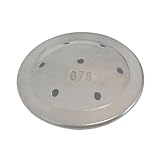
OCS Parts High Flow Stainless Steel Replacement Spray Head | Replaces Bunn 01082.0003 Spray Head on Bunn Coffee Machines and Hot Beverage Dispensers (7-Hole)
- High quality construction: Made from industrial grade stainless steel, providing a durable, rust-resistant spray head for a superior coffee brewing experience. Replace our original plastic spray head with our stainless steel version for a longer-lasting, quality coffee experience.
- Direct replacement: This is designed to fit seamlessley with GR (GRX), BX, and BT (BTN) series coffee makers.
- High flow functionality: Features 7 spray holes for maximum brewing efficiency while preventing filter overflows.
- Easy to Clean: Its distinctive silver finish aids in quickly locating it in coffee grounds if dislodged from the machine, promoting cleanliness and a hygienic brewing process.
- OCS Parts Assured Quality: At OCS parts, our products undergo meticulous examination to ensure unmatched performance and reliability. Trust OCS Parts for genuine, direct sourcing, and secure packaging, delivering a product that meets the highest standards of quality and customer satisfaction.
How it works
- Bunn coffee makers are built with heating elements designed to get water hot.
- They typically use a reservoir system where water is kept at a ready temperature.
- When you flip the brew switch, hot water is released from the reservoir.
- This hot water then flows through the brew basket, over the coffee grounds.
- The goal is to deliver this water efficiently within the optimal brewing temperature window.
- Bunn machines are known for their fast brew cycles, often because the water is already hot.
- Some models might have a thermostat to fine-tune the temperature.
- The design prioritizes getting the water to the right temperature quickly and consistently.
- It’s a straightforward, effective approach to making a good pot of coffee.
- My old Bunn could brew a whole pot before I even finished my first sip. Game changer.
What affects the result
- Water Temperature: This is the big one. Too cool, and your coffee is sour. Too hot, and it’s bitter. Bunn aims for that sweet spot.
- Water Quality: Tap water with chlorine or minerals can mess with taste and scale up your machine. Filtered water is usually best.
- Coffee Grind Size: Too fine, and water flows too slow, over-extracting. Too coarse, and it’s weak. A medium grind is typical for most drip brewers.
- Coffee-to-Water Ratio: The golden ratio is often cited as 1:15 to 1:18 (coffee to water by weight). Too little coffee, and it’s weak. Too much, and it’s overpowering.
- Coffee Bean Freshness: Stale beans lose their aromatic oils and flavor. Buy whole beans and grind them just before brewing.
- Brewer Type: Drip brewers like Bunn have specific heating and water delivery mechanisms. Other types, like pour-over or French press, have different dynamics.
- Machine Maintenance: A clean machine brews better coffee. Scale buildup can affect water flow and temperature.
- Ambient Temperature: While less of a factor for the brewing water itself, extreme cold could theoretically affect initial heating slightly.
- Altitude: Higher altitudes can slightly lower the boiling point of water, but most home brewers operate well within the effective brewing range.
- Filter Type: Paper filters can absorb some oils, affecting mouthfeel. Metal filters let more oils through.
- Brew Time: How long the water is in contact with the grounds. This is influenced by grind size and brewer design.
- Water Flow Rate: How quickly the water passes through the coffee bed. Bunn machines are generally designed for a consistent flow.
Pros, cons, and when it matters
- Pro: Consistent Hot Water: Bunn machines are engineered to deliver water at the right temperature, which is crucial for good extraction. This matters for anyone who wants a reliably good cup.
- Con: Limited Temperature Control: Most standard Bunn models don’t offer user-adjustable temperature settings. You get what they designed. This matters if you’re a temperature-tinkering enthusiast.
- Pro: Speed: Because the water is often pre-heated in a reservoir, Bunn brewers can make a pot fast. This matters for busy mornings.
- Con: Potential for Over-Extraction: If the machine runs too hot or the grind is too fine, you can get bitter coffee. This matters if you’re sensitive to bitter flavors.
- Pro: Durability: Bunn machines are often built like tanks, designed for commercial use. This matters if you want a brewer that lasts.
- Con: Simplicity: Lack of advanced features means less customization. This matters if you like to dial in every variable.
- Pro: Ease of Use: Generally, Bunn brewers are plug-and-play. This matters if you just want a good pot of coffee without fuss.
- Con: Reservoir Heating: Keeping water hot in a reservoir can be less energy efficient than on-demand heating. This matters if you’re hyper-conscious about energy use.
- Pro: Known Brewing Standards: Bunn’s design is based on established coffee brewing science. This matters for predictable results.
- Con: Cleaning: Like any coffee maker, regular cleaning is needed to maintain performance. This matters for machine longevity and taste.
- Pro: Good for Medium Roasts: The typical temperature range is excellent for medium roasts, bringing out their balanced flavors. This matters if that’s your go-to roast.
- Con: May Not be Ideal for Very Light or Very Dark Roasts: Some specialty roasters might prefer slightly different temperatures, which you can’t adjust here. This matters if you’re chasing the absolute peak flavor from extreme roasts.
Common misconceptions
- Myth: All coffee makers brew at the same temperature. Nope. Quality varies wildly. Bunn aims for a specific, good range.
- Myth: Boiling water is best for coffee. Absolutely not. Boiling water scorches the grounds, leading to bitter coffee. That’s why Bunn machines heat below boiling.
- Myth: My Bunn coffee maker is too hot. While they run hot, they’re calibrated for optimal extraction, not scorching. If it tastes burnt, check your grind and freshness.
- Myth: You need a fancy, expensive machine for good coffee. Not entirely true. A good, well-maintained Bunn can make a fantastic pot. Technique matters more than price sometimes.
- Myth: Water temperature doesn’t matter that much. It’s one of the most important factors. Get it wrong, and your coffee will taste off.
- Myth: Bunn coffee makers are only for restaurants. Nah, they make great home models too. Built tough.
- Myth: The hotter the water, the stronger the coffee. Not necessarily. More heat can lead to more bitter compounds, not just more strength. It’s about balance.
- Myth: Keeping water constantly hot in the reservoir is bad. It’s how they achieve speed. For energy efficiency, an on-demand heater might be better, but Bunn prioritizes speed and consistent temp delivery.
- Myth: You should always use the hottest setting. There’s an optimal range. Bunn machines are designed to hit that range consistently.
- Myth: My Bunn brewer is broken if it doesn’t reach 212°F. It’s supposed to be below boiling for brewing. Check the manual for your specific model’s target range, but it won’t be 212°F.
FAQ
How hot does a Bunn coffee maker get?
Most Bunn coffee makers are designed to heat water to a temperature between 195°F and 205°F, which is the industry-standard sweet spot for brewing coffee.
Is 195-205°F the ideal coffee brewing temperature?
Yes, this range is widely accepted by coffee experts as ideal for extracting the best flavors from coffee grounds without scorching them.
Why does Bunn keep the water so hot?
They keep it hot to ensure that when the water hits the coffee grounds, it’s immediately within the optimal brewing temperature range, leading to a faster and more consistent extraction.
Can I adjust the water temperature on my Bunn coffee maker?
Standard home models typically do not have user-adjustable temperature controls. The temperature is factory set for optimal brewing.
What happens if my Bunn coffee maker’s water is too hot or too cold?
If the water is too hot (above 205°F), it can scorch the coffee, making it taste bitter. If it’s too cold (below 195°F), it won’t extract enough flavor, resulting in weak, sour coffee.
Does water quality affect the temperature?
While water quality primarily affects taste and machine health (scale), it doesn’t directly change the set brewing temperature of the machine. However, scale buildup can eventually impede heating.
How do I know if my Bunn coffee maker is brewing at the correct temperature?
The best way is to trust the design of the machine. If your coffee consistently tastes good, it’s likely brewing correctly. For precise measurement, you’d need a thermometer.
Should I worry about my Bunn coffee maker getting “too hot”?
Bunn machines are engineered to operate within a safe and effective brewing temperature range. If you’re concerned about taste, focus on grind size, coffee freshness, and cleaning.
What about thermal carafes vs. warming plates?
Thermal carafes keep coffee hot for hours without a warming plate, which can “cook” coffee and make it taste stale. Bunn offers models with both.
Is it normal for a Bunn coffee maker to brew so quickly?
Yes, their design, often involving a pre-heated water reservoir, allows for very rapid brewing compared to many other drip coffee makers.
See also: Keeping Your Nuvera Coffee Maker Clean For Optimal Performance.
See also: Troubleshooting Eo Error On Your Cuisinart Coffee Maker.
See also: Troubleshooting Your Coffee Maker Isnt Working.
What this page does NOT cover (and where to go next)
- Specific model troubleshooting for Bunn coffee makers. (Check your Bunn manual or manufacturer support.)
- Detailed comparisons of Bunn models versus other brands. (Look for product reviews and comparison guides.)
- Advanced coffee science beyond water temperature. (Explore resources on coffee extraction and flavor profiles.)
- Commercial Bunn coffee maker specifications. (Consult Bunn’s commercial product documentation.)
- Recipes for specialty coffee drinks. (Search for barista guides and coffee recipe sites.)