
Using Your Mr. Coffee Iced Coffee Maker
Quick answer
- Use the right amount of coffee grounds.
- Don’t overfill the water reservoir.
- Use fresh, cold water for best results.
- Make sure the brew basket is seated correctly.
- Always brew over ice, that’s the point.
- Clean it regularly. Seriously, do it.
Who this is for
- You just got a Mr. Coffee Iced Coffee Maker and want to make your first cup.
- You’ve had one for a while but feel like your coffee could be better.
- You’re looking for simple, no-fuss iced coffee at home.
What to check first
Brewer type and filter type
This is a Mr. Coffee Iced Coffee Maker. That means it’s designed to brew hot coffee directly over ice. It usually uses a reusable coffee filter, but some models might come with paper filters. Check your manual if you’re not sure which one came with yours. The reusable filter is great for saving money and the planet, but it needs a good scrub after each use.
Water quality and temperature
Tap water can have a funky taste. If yours does, your coffee will too. Filtered water is your friend here. For iced coffee, you want that brew to be cold as soon as possible, so the ice is key. Make sure your water is fresh and cold before you start.
Grind size and coffee freshness
This machine usually works best with a medium grind. Too fine, and it might clog or over-extract, making it bitter. Too coarse, and the flavor won’t come through. Freshly ground beans are always a win. Buy whole beans and grind them right before you brew. It makes a world of difference.
Coffee-to-water ratio
This is where a lot of people go wrong. Too little coffee, and it’s weak. Too much, and it’s a bitter mess. For a standard 22 oz brew (that’s the max capacity), start with about 4 tablespoons of grounds. You can adjust from there. Remember, you’re brewing hot coffee that will melt ice, so you want it a little stronger than you might normally brew hot.
Cleanliness/descale status
If your machine isn’t clean, your coffee won’t taste great. Mineral buildup from water can affect performance and flavor. Run a descaling cycle every month or two, depending on your water hardness. A simple vinegar and water mix usually does the trick, but always check your manual for the exact instructions.
Step-by-step (brew workflow)
1. Fill the water reservoir.
- What to do: Pour cold, filtered water into the reservoir up to the desired cup marking.
- What “good” looks like: The water level is clear and within the marked lines. Don’t go over the “Max” line.
- Common mistake: Overfilling. This can lead to overflow during brewing. Keep it below the max mark.
2. Add coffee grounds.
- What to do: Place the reusable filter or a paper filter into the brew basket. Add your desired amount of medium-ground coffee.
- What “good” looks like: The grounds are evenly distributed in the filter. For a 22 oz brew, try about 4 tablespoons.
- Common mistake: Using too much or too little coffee. This directly impacts flavor strength. Measure your grounds.
3. Place the brew basket.
- What to do: Securely insert the brew basket into its designated spot in the machine.
- What “good” looks like: The basket clicks or sits firmly in place. It shouldn’t be wobbly.
- Common mistake: Not seating the basket properly. This can cause grounds to spill or water to bypass the grounds.
4. Add ice to the collection cup.
- What to do: Fill the included collection cup with ice cubes up to the “Fill” line.
- What “good” looks like: The cup is filled with ice, ready to chill the hot coffee.
- Common mistake: Not enough ice. You need enough ice to cool the brew quickly and prevent it from becoming watered down.
Make sure you have plenty of ice on hand for the best results. Consider getting some extra ice cube trays to ensure you’re never short.
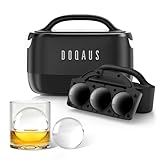
- ✅ Achieve Bar-Quality Clarity with Directional Freezing: Stop settling for cloudy, bubble-filled ice. Our clear ice cube maker utilizes advanced physics to push impurities away, creating 3 crystal-clear spheres and 4 cubes per cycle. It is the secret weapon for the home mixologist wanting presentation-ready drinks without expensive machinery.
- ✅ Preserve Complex Flavors with Slow Dilution: Designed for the purist, this whiskey ice cubes mold produces dense, 2.5-inch ice that melts 40% slower than standard ice. Enjoy your single malt or bourbon chilled but undiluted, ensuring the aromatic profile remains distinct from the first sip to the last.
- ✅ Effortless Release with Premium Hybrid Design: Unlike rigid plastic trays that crack, our flexible silicone ice ball maker mold ensures smooth removal. The non-stick material lets you pop out perfect shapes instantly, making drink preparation seamless for relaxing solo evenings or busy gatherings.
- ✅ Versatile 2-in-1 Capacity for Entertaining: Hosting a cocktail night? This round ice cube mold creates 7 pieces simultaneously, catering to different glass styles. Whether serving an Old Fashioned (sphere) or a Negroni (cube), you will have the right ice shape ready for every guest's preference.
- ✅ The Sophisticated Choice for Gifting: More than just a standard ice mold, this clear ice system is an essential upgrade for any wet bar. Packaged to impress, it creates a tangible experience, making it an ideal gift for fathers, partners, or enthusiasts who value the ritual of a perfectly poured drink.
5. Place the collection cup on the warming plate.
- What to do: Set the ice-filled collection cup onto the machine’s warming plate.
- What “good” looks like: The cup is centered and stable.
- Common mistake: Forgetting to put the cup there. Coffee will go everywhere. Trust me, I’ve learned this lesson.
6. Close the brew lid.
- What to do: Ensure the lid over the brew basket is closed securely.
- What “good” looks like: The lid is shut, creating a proper brewing environment.
- Common mistake: Leaving the lid open. This can affect brewing temperature and steam.
7. Plug in and select brew strength (if applicable).
- What to do: Plug the machine into a power outlet. If your model has a strength selector, choose your preferred setting (Regular or Strong).
- What “good” looks like: The machine powers on, and your selection is made.
- Common mistake: Forgetting to plug it in. Happens more often than you’d think after a long day.
8. Press the Brew button.
- What to do: Press the “Brew” button to start the brewing cycle.
- What “good” looks like: The indicator light comes on, and you hear the machine start to heat up and brew.
- Common mistake: Not pressing the button firmly. Double-check that it’s engaged.
9. Wait for brewing to complete.
- What to do: Let the machine finish its cycle. It will stop dripping.
- What “good” looks like: All the water has passed through the grounds and into the collection cup.
- Common mistake: Trying to remove the cup too early. You’ll get hot coffee everywhere, and it won’t be fully brewed.
10. Remove collection cup and stir.
- What to do: Carefully remove the collection cup. Stir the coffee to ensure it’s fully mixed and chilled.
- What “good” looks like: You have a full cup of cold, delicious iced coffee.
- Common mistake: Not stirring. The coffee at the bottom might be more concentrated than the top.
11. Add toppings and enjoy.
- What to do: Add your favorite milk, cream, sweetener, or enjoy it black.
- What “good” looks like: You’re about to sip on a refreshing iced coffee.
- Common mistake: Not enjoying it! That’s the biggest mistake.
Common mistakes (and what happens if you ignore them)
| Mistake | What it causes | Fix |
|---|---|---|
| Using stale coffee beans | Flat, lifeless, or bitter coffee | Use freshly roasted beans and grind them right before brewing. |
| Incorrect grind size (too fine) | Slow brewing, overflow, bitter taste | Use a medium grind. Check your manual for specific recommendations. |
| Incorrect grind size (too coarse) | Weak, watery coffee | Use a medium grind. |
| Too much coffee | Over-extracted, bitter, and overpowering flavor | Measure your coffee grounds. Start with the recommended ratio. |
| Not enough coffee | Under-extracted, weak, and watery coffee | Measure your coffee grounds. |
| Using hot water in the reservoir | Can damage the machine, affect brewing temperature | Always use cold, filtered water. |
| Not enough ice in the collection cup | Coffee melts ice too fast, becomes watered down | Fill the collection cup to the marked line with ice. |
| Not cleaning the brew basket | Bitter residue, affects taste | Rinse and wash the brew basket after every use. |
| Not descaling regularly | Slow brewing, off-flavors, potential machine damage | Descale your machine every 1-2 months. Check your manual for instructions. |
| Forgetting to put the collection cup | Coffee spills all over the machine and counter | Always double-check that the cup is in place before brewing. |
| Brewing without coffee grounds | Just hot water in your cup | Make sure you add coffee grounds to the filter. |
| Using tap water with strong flavors | Coffee tastes like tap water | Use filtered water for a cleaner taste. |
Decision rules (simple if/then)
- If your coffee tastes bitter, then reduce the amount of coffee grounds or check your grind size.
- If your coffee tastes weak, then increase the amount of coffee grounds or try a finer grind.
- If the brew is taking too long, then check for a clogged filter or a grind that’s too fine.
- If the machine is overflowing, then you’ve likely used too much water or coffee, or the grind is too fine.
- If the coffee tastes like plastic or chemicals, then it’s time to clean or descale the machine.
- If you’re brewing a full pot, then make sure you’ve filled the ice to the “Fill” line.
- If you’re using a paper filter, then ensure it’s the correct size and seated properly.
- If the coffee is too acidic, then try a slightly coarser grind or a darker roast.
- If the coffee is too muted, then try a slightly finer grind or a lighter roast.
- If you notice mineral buildup, then descale the machine according to the manual.
- If the coffee is not cold enough, then add more ice to the collection cup.
- If you want a stronger brew, then use the “Strong” setting if available, or add a little more coffee grounds.
FAQ
How much coffee should I use?
For a full 22 oz brew, start with about 4 tablespoons of medium-ground coffee. You can adjust this based on your taste preference.
Can I use any type of coffee filter?
This machine typically comes with a reusable filter. You can also use standard basket-style paper filters if you prefer, but check your manual to confirm the size.
Why is my iced coffee watery?
This usually means you didn’t use enough coffee grounds, or you didn’t use enough ice. Make sure the collection cup is filled with ice before you brew.
How often should I clean my Mr. Coffee Iced Coffee Maker?
It’s best to rinse the brew basket and collection cup after each use. Descale the machine every 1-2 months, or more often if you have hard water.
Can I brew hot coffee without ice?
While you can, it’s not recommended. The machine is designed to brew hot coffee directly over ice to create a concentrated brew that doesn’t get watered down. Brewing without ice might result in a weaker or hotter-than-desired coffee.
What kind of water should I use?
Filtered water is best. It prevents mineral buildup and ensures your coffee tastes clean and fresh, without any off-flavors from your tap water.
My coffee tastes bitter. What’s wrong?
A bitter taste often comes from over-extraction. This can be caused by a grind that’s too fine, too much coffee, or brewing at too high a temperature. Try a coarser grind or less coffee.
How do I descale the machine?
Typically, you’ll fill the reservoir with a 1:1 mix of white vinegar and water, run a brew cycle, then run a couple of plain water cycles to rinse. Always check your specific model’s manual for the exact procedure.
What this page does NOT cover (and where to go next)
- Specific troubleshooting for error codes or mechanical failures. (Check your manual or contact Mr. Coffee support.)
- Advanced brewing techniques like pour-over or espresso. (Explore specialized brewing guides.)
- Detailed comparisons of different coffee bean origins and roasts. (Look for coffee tasting notes and origin guides.)
- Recipes for complex coffee drinks beyond basic iced coffee. (Search for iced coffee recipes.)
- Information on commercial or industrial coffee brewing equipment. (Consult professional barista resources.)