
Using RO Water For Brewing The Perfect Cup Of Coffee
Quick answer
- Yes, you can use RO water to make coffee, but it’s often not ideal on its own.
- RO water is highly purified, meaning it lacks the minerals that contribute to coffee’s flavor.
- To improve coffee brewed with RO water, you’ll need to reintroduce specific minerals.
- You can achieve this by adding mineral packets designed for coffee brewing or by blending RO water with tap water.
- The goal is to find a balance of minerals that enhances, rather than detracts from, your coffee’s taste.
- Without mineral adjustment, coffee brewed with pure RO water may taste flat or dull.
To improve coffee brewed with RO water, you’ll need to reintroduce specific minerals. Consider using dedicated coffee brewing water minerals to achieve the perfect balance.

- Enhance Coffee flavor:Advanced activated carbon technology effectively reduces chlorine, impurities, and odors from tap water. Experience the true, nuanced flavor of your coffee beans with every smoother and richer brew
- Extends Coffee Maker Lifespan:Significantly reduces scale and mineral buildup inside your coffee maker. This safeguards vital components from wear and tear, extending the lifespan of your machine and reducing maintenance needs
- Wide Compatibility for Seamless Fit: Features a high-density micro-mesh layer that encapsulates the carbon, preventing granules from escaping into your machine. This design accelerates water flow while ensuring thorough impurity removal
- Economical & Convenient:This 12-pack offers exceptional long-term value. The easy snap-in installation requires no tools. For optimal performance, it is recommended to replace the filter cartridge every 2 to 3 months
- Upgraded Filtration Design :Features a high-density micro-mesh layer that encapsulates the carbon, preventing granules from escaping into your machine. This design accelerates water flow while ensuring thorough impurity removal
Key terms and definitions
- RO Water: Water that has undergone Reverse Osmosis, a process that removes most impurities, including minerals.
- Total Dissolved Solids (TDS): A measure of the combined content of all inorganic and organic substances dissolved in a liquid. In coffee brewing, certain TDS levels are desirable for flavor extraction.
- Minerals: Naturally occurring elements in water, such as calcium and magnesium, which play a crucial role in extracting desirable flavor compounds from coffee grounds.
- Acidity: A flavor component in coffee, often described as bright or tart. Minerals in water can influence how acidity is perceived.
- Bitterness: Another flavor component, which can be balanced by the right water mineral content.
- Extraction: The process of dissolving soluble compounds from coffee grounds into water. Water composition significantly impacts extraction efficiency and flavor.
- SCA Standards: The Specialty Coffee Association provides guidelines for ideal brewing water, including ranges for TDS and mineral content, to achieve optimal coffee flavor.
- pH: A measure of the acidity or alkalinity of water. The ideal pH for coffee brewing is typically slightly acidic.
- Alkalinity: The capacity of water to neutralize acids. In coffee, alkalinity can buffer perceived acidity.
- Mineral Packets: Commercially available products containing specific mineral blends designed to be added to purified water for coffee brewing.
How it works
- Reverse Osmosis Process: RO systems force water through a semipermeable membrane, leaving behind dissolved salts, minerals, and other impurities.
- Mineral Depletion: The rigorous purification of RO water strips away nearly all naturally occurring minerals.
- Flavor Extraction Mechanism: Coffee grounds contain hundreds of aromatic and flavor compounds. Water acts as the solvent to extract these compounds.
- Role of Minerals in Extraction: Specific minerals, like magnesium and calcium, are essential for binding with and extracting certain flavor compounds from coffee. They help to create a more balanced and nuanced extraction.
- Impact of Pure Water: Without these minerals, the water is less effective at dissolving the desirable flavor compounds, leading to a less vibrant taste.
- The “Flat” Taste: When RO water is used without adjustment, the coffee can taste muted, lacking the complexity and brightness that minerals help to unlock.
- Reintroducing Minerals: To compensate, one must add back the right types and amounts of minerals to the RO water.
- Balancing Act: The goal is not to make the water “hard” but to provide the necessary components for optimal flavor extraction, as recommended by coffee industry standards.
- TDS as an Indicator: The TDS level in your brewing water serves as a general indicator of its mineral content and its potential to extract flavor.
To compensate for the mineral depletion in RO water, one must add back the right types and amounts of minerals. Mineral packets for coffee are a convenient way to do this.

- Electrolytes: Advanced hydration formula with essential electrolytes powder packets delivers instant hydration and optimal electrolyte balance for endurance athletes and daily hydration needs, featuring trace minerals.
- Immunity: 1,200 mg vitamin C plus elderberry, zinc, and vitamin D3 create a powerful immune health blend that supports your body's natural defenses while providing daily electrolyte supplementation for overall wellness.
- Convenience: 30 single-serve hydration packets make it easy to add electrolyte powder to water anywhere - perfect for travel electrolytes, running electrolytes, and on-the-go hydration support for active lifestyles.
- Recovery: Comprehensive electrolyte drink mix with magnesium electrolytes and trace minerals supports muscle recovery, reduces dehydration, and helps maintain proper sodium potassium magnesium electrolyte blend after workouts.
- Quality: Sustainably harvested trace electrolytes powder from America's leading mineral brand, third-party tested for purity and maximum absorption to ensure you get the best hydration supplement available.
What affects the result
- Water Purity: RO water is extremely pure, which is why it needs adjustment.
- Mineral Content: The presence and balance of minerals like calcium and magnesium are critical for flavor.
- TDS Level: Aiming for a TDS between 75-250 ppm (parts per million) is often recommended for good coffee flavor. RO water typically has a TDS close to 0 ppm.
- Water Hardness: Refers to the concentration of dissolved minerals, primarily calcium and magnesium. Too little or too much can negatively impact taste.
- Water Alkalinity: Affects the buffering capacity of the water, influencing how acidity is perceived.
- Water Acidity (pH): While coffee itself is acidic, the water’s pH can influence the final taste profile. A slightly acidic water is generally preferred.
- Coffee Bean Freshness: Freshly roasted and ground beans will yield better results regardless of water, but water quality becomes more apparent with high-quality beans.
- Grind Size: The fineness or coarseness of your coffee grounds affects the surface area exposed to water, influencing extraction speed and flavor.
- Coffee-to-Water Ratio: The proportion of coffee grounds to water directly impacts the strength and flavor concentration of your brew.
- Brewing Temperature: Water temperature is crucial for proper extraction. Too cool, and you get underdeveloped flavors; too hot, and you risk over-extraction and bitterness.
- Brewing Method: Different brewing methods (drip, pour-over, French press, espresso) have varying sensitivities to water composition.
- Water Temperature Stability: Maintaining a consistent brewing temperature throughout the process is important for even extraction.
Pros, cons, and when it matters
- Pro: Consistency: RO water, when properly treated, can offer a highly consistent brewing base, eliminating variations from tap water.
- Con: Flavor Loss: On its own, RO water lacks the minerals needed for optimal flavor extraction, leading to a dull or flat cup.
- Pro: Reduced Scale Buildup: RO water is free of the minerals that cause limescale in coffee makers, potentially extending their lifespan.
- Con: Cost and Effort: Treating RO water requires additional steps, either through mineral packets or blending, adding to the cost and complexity.
- Pro: Control Over Flavor: By adjusting the mineral content, you gain precise control over how your coffee tastes, allowing for fine-tuning.
- Con: Potential for Over-Correction: It’s possible to add too many or the wrong types of minerals, negatively impacting flavor.
- When it Matters (Flavor): If you’re striving for the absolute best flavor from high-quality coffee beans, water composition becomes a significant factor.
- When it Matters (Equipment): If you have very hard tap water that causes rapid scale buildup in your coffee maker, using RO water can be beneficial for maintenance.
- When it Matters (Health Concerns): If you have specific health concerns about minerals or contaminants in your tap water, RO water provides a purified base.
- When it Matters (Taste Preference): Some individuals may simply prefer the taste profile achieved with adjusted RO water.
- When it Matters (Cost): For casual coffee drinkers, the effort and potential cost of treating RO water might not be worth the marginal improvement.
- When it Matters (Simplicity): If you prefer a simple, straightforward brewing process, using your regular tap water (if it tastes good) is often sufficient.
While RO water itself prevents scale buildup, if your tap water is causing issues, a good coffee water filter can be a simpler solution for improving your brew.
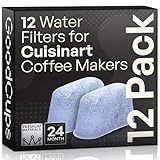
- Universal Compatibility: These premium replacement charcoal water filters are designed to fit all Cuisinart coffee maker models, ensuring a perfect fit for both newer and older models, including Cuisinart coffee maker 12 cup, Grind and Brew, and coffee maker with grinder.
- Enhanced Beverage Flavor: GoodCups charcoal water filters for Cuisinart coffee maker remove calcium, chlorine, and odors, giving you fresh, great-tasting coffee with every brew.
- Superior Filtration: Our charcoal boasts a strong absorption capacity and maximizes filtration efficiency. These water filters for Cuisinart coffee makers protect your brewer, extend its lifespan, and improve every coffee cycle.
- Optimal Water Flow Design: GoodCups filters feature a carefully crafted design that allows for optimal water flow, preventing clogs while ensuring your Cuisinart coffee maker operates smoothly and efficiently.
- Environmentally Conscious: These Cuisinart replacement water filters are made from recyclable materials, demonstrating our commitment to environmental responsibility.
Common misconceptions
- Misconception: RO water is always better for coffee.
- Reality: While pure, RO water lacks the minerals essential for extracting coffee’s complex flavors. It’s often too “clean” for optimal taste.
- Misconception: All tap water is bad for coffee.
- Reality: Many municipal water supplies have a good mineral balance for brewing. If your tap water tastes good, it likely brews good coffee.
- Misconception: Adding any minerals back is fine.
- Reality: The type and concentration of minerals matter. Too much of certain minerals, or the wrong ones, can make coffee taste metallic or bitter.
- Misconception: You need expensive equipment to treat RO water.
- Reality: Simple mineral packets or carefully blending with tap water are effective and relatively inexpensive solutions.
- Misconception: RO water will damage your coffee maker.
- Reality: RO water itself won’t damage your machine. In fact, its lack of minerals can prevent scale buildup. The issue is the coffee it produces.
- Misconception: Coffee flavor is solely determined by beans and roast.
- Reality: Water accounts for about 98% of a brewed cup of coffee, making its quality and composition a major flavor determinant.
- Misconception: You can just boil RO water to make it better for coffee.
- Reality: Boiling water doesn’t add back the necessary dissolved minerals that were removed during the RO process.
- Misconception: TDS meters are only for advanced brewers.
- Reality: A simple TDS meter can be an affordable tool to help you understand your water and ensure it’s within a good range for brewing.
- Misconception: Blending RO water with tap water is complicated.
- Reality: It can be as simple as mixing a specific ratio, like 50/50, or using a small amount of tap water to dilute pure RO water.
FAQ
Can I use RO water if my tap water is bad?
Yes, RO water provides a clean slate. You’ll just need to reintroduce minerals to achieve good flavor, as it’s not ideal on its own.
How do I add minerals back to RO water for coffee?
You can use commercially available mineral packets designed for coffee brewing, or blend your RO water with a small amount of good-tasting tap water.
What happens if I brew coffee with pure RO water?
The coffee may taste flat, dull, or lacking in complexity. The extraction of desirable flavor compounds is less efficient without minerals.
Is RO water safe to drink?
Yes, RO water is generally safe to drink and is often purer than tap water. However, for optimal coffee flavor, it requires mineral adjustment.
How much mineral content is ideal for coffee brewing water?
The Specialty Coffee Association suggests a Total Dissolved Solids (TDS) range of 75-250 ppm, with specific recommendations for calcium and magnesium hardness.
Will adding minerals to RO water make it taste different?
Yes, adding the correct minerals will significantly improve the taste of your coffee by allowing for better flavor extraction. The water itself might have a slightly different mouthfeel.
What are the best minerals to add to RO water for coffee?
The most important minerals are calcium and magnesium, as they are key to extracting desirable flavor compounds from coffee.
How can I test my water’s mineral content?
You can use a Total Dissolved Solids (TDS) meter to get a general reading. For more precise analysis, laboratory testing is available, but usually not necessary for home brewing.
Is it better to use filtered tap water or treated RO water?
Filtered tap water is often a good compromise if your tap water tastes good. Treated RO water offers more control but requires more effort.
What this page does NOT cover (and where to go next)
- Specific brand recommendations for RO systems or mineral packets. (Next: Research product reviews for your specific needs.)
- Detailed chemical analysis of water beyond TDS and general mineral types. (Next: Explore resources on water chemistry for coffee.)
- Troubleshooting specific taste defects in coffee related to water. (Next: Consult guides on coffee tasting and defect identification.)
- Advanced water filtration techniques beyond standard RO. (Next: Look into specialized water treatment for brewing.)
- Legal or health regulations regarding drinking water quality. (Next: Refer to your local water authority or health guidelines.)