
Using Peppermint Mocha Creamer for Frothy Drinks
Quick answer
- Peppermint mocha coffee creamer can be used for frothing, but results vary significantly by brand and type.
- Dairy-based creamers generally froth better than non-dairy alternatives due to protein and fat content.
- Look for creamers with higher fat content for the best frothing potential.
- Expect a sweeter, minty flavor profile in your frothed milk.
- Frothing may be less stable and the foam less dense compared to plain milk or specialized frothing liquids.
- Always check the ingredients list for additives that might hinder frothing.
Who this is for
- Home baristas experimenting with flavored coffee drinks.
- Anyone looking to add a festive peppermint mocha twist to their lattes and cappuccinos.
- Those who prefer the convenience of flavored creamers over syrups and powders.
What to check first
Brewer type and filter type
While this article focuses on using flavored creamer, the brewing method of your coffee will still influence the final drink. A well-brewed, balanced coffee will better complement the creamer. Ensure your coffee maker is appropriate for the type of coffee you enjoy (e.g., drip for a standard cup, espresso machine for lattes). The filter type (paper, metal, cloth) can affect the clarity and body of your coffee, indirectly impacting how the creamer integrates.
Water quality and temperature
The quality of your water is paramount for any coffee beverage. Use filtered water to avoid off-flavors from tap water. For frothing, the temperature of the milk or creamer mixture is critical. Overheating can scald the milk, creating an unpleasant taste and destroying the foam structure. Aim for temperatures around 140-155°F (60-68°C) for optimal frothing and flavor.
Grind size and coffee freshness
The grind size of your coffee beans should match your brewing method. For espresso-based drinks where you’ll be adding frothed creamer, a fine grind is essential for proper extraction. Freshly roasted and ground coffee beans will provide the best flavor base. Stale coffee can make even the most perfectly frothed drink taste flat.
Coffee-to-water ratio
While not directly related to frothing the creamer, the coffee-to-water ratio determines the strength and flavor balance of your base coffee. A standard starting point for drip coffee is about 1:15 to 1:18 (coffee to water by weight). For espresso, it’s typically much more concentrated. Adjust this ratio to ensure your coffee isn’t too weak or too bitter, which could clash with the sweet, minty creamer.
Cleanliness/descale status
A clean brewer and frothing wand are non-negotiable for good-tasting drinks. Coffee oils can build up and turn rancid, imparting off-flavors. If you use a steam wand for frothing, ensure it’s purged and wiped down after each use. Regularly descaling your coffee maker and any other equipment is also crucial for performance and taste.
Step-by-step (brew workflow)
1. Brew your coffee: Prepare your coffee as usual, ensuring it’s brewed to your preferred strength and temperature.
- What “good” looks like: A hot, flavorful cup of coffee or a shot of espresso ready to be paired with frothed creamer.
- Common mistake: Brewing coffee too weak or too strong, which can create an unbalanced final drink. Avoid this by using a consistent coffee-to-water ratio.
2. Prepare the creamer mixture: In a separate pitcher or frothing cup, combine your peppermint mocha coffee creamer with milk or a milk alternative. A common starting point is a 1:1 ratio, but you may adjust based on desired flavor intensity and frothability.
- What “good” looks like: A homogenous mixture of creamer and milk, ready for heating and frothing.
- Common mistake: Using only creamer. Most creamers are too thick to froth well on their own and benefit from dilution with milk.
When preparing your creamer mixture, using a quality peppermint mocha creamer like this one is key. A common starting point is a 1:1 ratio with milk, but feel free to adjust based on your desired flavor intensity and frothability.
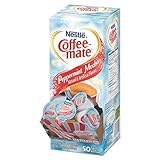
3. Heat the mixture: Gently heat the creamer-milk mixture. If using a stovetop, use low to medium heat, stirring occasionally. If using a microwave, heat in short intervals, checking temperature frequently.
- What “good” looks like: The mixture is warm to the touch, around 140-150°F (60-65°C), but not boiling or steaming vigorously.
- Common mistake: Overheating the mixture. This can scald the milk and creamer, negatively impacting flavor and foam quality.
4. Froth the mixture:
- If using a steam wand: Purge the wand briefly before inserting it into the heated mixture. Submerge the tip just below the surface to introduce air and create foam. Once enough foam has formed, submerge the wand deeper to heat the liquid and create a smooth microfoam.
- What “good” looks like: A pitcher filled with glossy, velvety microfoam and heated liquid.
- Common mistake: Keeping the steam wand tip too deep, which only heats the milk without creating foam, or keeping it too high, which creates large, unstable bubbles.
- If using a handheld frother: Insert the frothing wand into the heated mixture and whisk until desired foam consistency is achieved.
- What “good” looks like: A pitcher with light, airy foam.
- Common mistake: Over-whisking, which can create dry foam that dissipates quickly.
- If using a French press: Pour the heated mixture into a French press. Pump the plunger up and down vigorously for 30-60 seconds until foamy.
- What “good” looks like: A pitcher with a good volume of foam.
- Common mistake: Not heating the mixture enough beforehand, which can result in thinner foam.
If you’re aiming for that perfect microfoam, a good latte art pitcher can make all the difference. This one is designed for creating smooth, glossy microfoam, essential for both heating and aerating your creamer mixture.

- Full Control & Precision: The patented handleless design improves pouring control for more flexible latte art creation
- Sharp Spout for Advanced Latte Art: The sharp spout enables a slower, more controlled pour, perfect for intricate patterns and precise pouring
- Perfect for Latte Art: The wide spout balances the steam wand while the exposed metal base allows you to test the milk’s heat
- Heat-Resistant Silicone Grip: The silicone grip ensures a secure, comfortable hold, giving you the freedom to hold the pitcher any way you want
- Premium Quality Construction: Made with 1mm thick premium stainless steel for durability and long-lasting performance
5. Tap and swirl: Gently tap the pitcher on the counter to break any large bubbles and swirl the mixture to integrate the foam with the liquid.
- What “good” looks like: A smooth, glossy texture with a consistent foam.
- Common mistake: Skipping this step, leaving large, unsightly bubbles in your foam.
6. Pour into coffee: Carefully pour the frothed creamer mixture over your brewed coffee or espresso. Start by pouring the liquid milk first, then tilt the pitcher to allow the foam to flow over the top.
- What “good” looks like: A layered drink with a distinct coffee base and a topping of peppermint mocha foam.
- Common mistake: Pouring too quickly, which can cause the foam and liquid to separate unevenly.
7. Garnish (optional): Add a sprinkle of cocoa powder, cinnamon, or a dollop of whipped cream if desired.
- What “good” looks like: A visually appealing and aromatic finished drink.
- Common mistake: Over-garnishing, which can overpower the delicate flavors.
Common mistakes (and what happens if you ignore them)
| Mistake | What it causes | Fix |
|---|---|---|
| Using only peppermint mocha creamer | Poor foam quality, thick texture, difficulty frothing | Mix creamer with milk (dairy or non-dairy) in a 1:1 ratio or to your preference. |
| Overheating the creamer-milk mixture | Scalded flavor, bitter notes, foam collapses quickly | Heat gently to 140-155°F (60-68°C); do not boil. Use a thermometer if unsure. |
| Not aerating enough during frothing | Thin or no foam, watery texture | Ensure the steam wand or frothing whisk is at the correct depth to introduce air. |
| Aerating for too long or too aggressively | Dry, bubbly foam that dissipates quickly, lacks silkiness | Froth until the desired volume is reached, then submerge the wand/whisk to heat and create microfoam. |
| Not purging the steam wand before/after | Watery first few seconds of steam, milk residue buildup on the wand | Always purge for a second or two before and after frothing. Wipe wand clean immediately. |
| Using old or stale coffee beans | Flat, bitter, or off-tasting coffee base that clashes with the creamer | Use freshly roasted and ground coffee beans for the best flavor profile. |
| Improperly cleaning frothing equipment | Rancid coffee oils and milk residue imparting unpleasant flavors | Clean all frothing equipment thoroughly after each use. |
| Using a creamer with too many stabilizers | Can prevent proper foam formation or create an artificial texture | Check ingredients; creamers with fewer additives may froth better. |
| Incorrect coffee grind size for brewing | Under-extracted (weak, sour) or over-extracted (bitter) coffee base | Match grind size to your brewing method (e.g., fine for espresso, medium for drip). |
| Not integrating the foam and milk | Separated layers, foamy head that dissipates leaving only liquid | Tap and swirl the pitcher to create a homogenous, velvety texture before pouring. |
Decision rules (simple if/then)
- If the frothed foam is too bubbly and dissipates quickly, then you likely introduced too much air for too long. Try frothing for a shorter duration or at a slightly deeper level.
- If the frothed mixture tastes burnt or scalded, then it was heated too high. Always aim for a temperature below boiling.
- If the foam is thin and watery, then not enough air was introduced, or the mixture was not heated sufficiently before frothing.
- If the creamer mixture is difficult to froth, then it may have a low fat content or too many stabilizers. Try mixing it with a higher-fat milk or a different creamer brand.
- If your coffee tastes bitter, then the grind might be too fine for your brewing method or the coffee was over-extracted. Adjust your grind size or brew time.
- If your coffee tastes weak and sour, then the grind might be too coarse or the coffee was under-extracted. Adjust your grind size or brew time.
- If the final drink has an unpleasant aftertaste, then check the cleanliness of your brewing and frothing equipment.
- If the peppermint flavor is too strong, then use less creamer in your mixture, or dilute it with more milk.
- If the foam is not holding its shape, then the creamer-milk mixture may have been too hot or contained ingredients that prevent stable foam.
- If you’re aiming for a latte-like texture (microfoam), then a steam wand on an espresso machine is generally best, though some handheld frothers can achieve a decent result.
FAQ
Can I use any peppermint mocha creamer for frothing?
While you can attempt to froth any peppermint mocha creamer, results will vary. Dairy-based creamers with higher fat content tend to froth better than non-dairy or low-fat options. Always test a small batch first.
How much creamer should I mix with milk?
A good starting point is a 1:1 ratio of creamer to milk. You can adjust this based on how strong you want the peppermint mocha flavor and how well the mixture froths. More milk can help improve frothability.
What kind of milk works best with peppermint mocha creamer for frothing?
Whole milk generally provides the best froth due to its fat and protein content. However, 2% milk can also work reasonably well. Non-dairy milks like oat or soy milk can be used, but their frothing capabilities vary by brand and formulation.
Will the peppermint mocha creamer make my coffee taste too sweet?
Yes, peppermint mocha creamers are typically quite sweet. If you prefer less sweetness, you can reduce the amount of creamer used or mix it with a less sweet milk alternative.
How do I avoid a scalded taste in my frothed creamer?
Heat the creamer-milk mixture gently over low to medium heat, stirring occasionally, or use short bursts in the microwave. Aim for a temperature between 140-155°F (60-68°C). Do not let it boil.
What if my frothed foam dissipates too quickly?
This can happen if the mixture was overheated, if there wasn’t enough fat or protein, or if too much air was introduced initially. Try to create foam by submerging the frothing wand just below the surface for a few seconds, then deepen it to heat and integrate.
Can I use a handheld frother or a French press for this?
Yes, both handheld frothers and French presses can be used to froth the creamer-milk mixture. A steam wand on an espresso machine typically produces the finest, most stable foam, but other methods can still yield enjoyable results.
What is the difference between frothing creamer and frothing regular milk?
Creamers often contain more stabilizers and emulsifiers than milk, which can affect their frothing properties. They are also typically pre-sweetened and flavored, meaning the final drink will have those characteristics inherently.
What this page does NOT cover (and where to go next)
- Detailed comparisons of specific peppermint mocha creamer brands for frothing performance. (Next: Research product reviews for specific brands.)
- Recipes for homemade peppermint mocha syrups or sauces. (Next: Explore DIY syrup recipes for more control over ingredients.)
- Advanced latte art techniques with flavored frothed milk. (Next: Look for guides on latte art fundamentals and practice.)
- The science behind milk protein and fat interactions in frothing. (Next: Investigate the emulsification and aeration processes in dairy science.)
- Nutritional information or ingredient breakdowns for specific creamer products. (Next: Check product packaging or manufacturer websites for detailed nutritional data.)