
Tea Nausea vs. Coffee Tolerance: Understanding Differences
Quick answer
- Nausea from tea, but not coffee, often points to specific chemical compounds or brewing methods.
- Tannins in tea can irritate sensitive stomachs, especially when steeped too long or on an empty stomach.
- Caffeine content and absorption rates differ between tea and coffee, affecting individual tolerance.
- Some teas contain compounds like catechins that can cause stomach upset in higher concentrations.
- Underlying digestive sensitivities, such as to acidity or certain plant compounds, play a role.
- Brewing strength and additions (milk, sugar) can significantly influence how tea affects you.
What this problem usually is (and is not)
- This problem is usually related to the specific chemical composition of tea and how it interacts with your digestive system.
- It is often about the concentration of compounds like tannins or catechins, rather than a general caffeine intolerance.
- It is not typically a sign of a severe allergic reaction, though discomfort can be significant.
- It is not necessarily an indication that all teas will cause the same reaction; different types have varying compositions.
- This issue is usually not about the quality of the tea itself, but rather your body’s response to it.
- It is not a universal experience; many people consume tea without any digestive issues.
Likely causes (triage list)
- Tannins: High concentrations of tannins, particularly in black or strongly steeped teas, can irritate the stomach lining. To confirm, try a lightly steeped white or green tea.
- Caffeine sensitivity (specific to tea): While coffee might have more caffeine overall, tea’s caffeine can be absorbed differently due to other compounds. To confirm, try a decaffeinated tea and note the difference.
- Empty stomach: Drinking tea, especially strong tea, on an empty stomach can exacerbate digestive upset. To confirm, try drinking tea after a meal.
- Specific tea compounds: Certain teas, like some green teas, are rich in catechins which can cause nausea in sensitive individuals. To confirm, try different types of tea (e.g., herbal vs. true tea).
- Brewing strength/time: Over-steeping tea significantly increases the concentration of compounds like tannins and caffeine. To confirm, reduce steeping time to the minimum recommended.
- Water temperature: Brewing with water that’s too hot for delicate teas (like green tea) can extract more bitter and irritating compounds. To confirm, use slightly cooler water for green and white teas.
- Additives: Artificial sweeteners or certain flavorings in some packaged teas might contribute to nausea. To confirm, try plain, unflavored tea.
- Underlying digestive sensitivity: Conditions like acid reflux or IBS can make you more susceptible to stomach upset from certain beverages. To confirm, consult a healthcare professional.
Certain teas, like some green teas, are rich in catechins which can cause nausea in sensitive individuals. To confirm, try different types of tea (e.g., herbal vs. true tea), perhaps starting with a gentle green tea like this one.

- MATCHA TEA BAGS: These matcha tea bags are perfect hot or iced. Drink hot as a substitute for your morning coffee, or brew & ice for a refreshing, afternoon beverage for the tea drinker on the go.
- GRAB A QUICK CUP: When life is too hectic for a leisurely cup of loose leaf tea, we offer this line of tea bag products for the same delicious flavor, conveniently packaged in individual tea bags.
- TRY THEM ALL: We make a wide variety of delicious tea blends with chamomile, matcha, oolong, mint, peach, hibiscus & more. You can enjoy them as loose leaf teas, tea bags, bottled teas & powders.
- SUSTAINABLE TEAS: We partner with the Japanese farming community to preserve the art & craft of tea harvesting. It's a part of our responsibility to the planet that starts in the fields of Japan.
- THE ITO EN PHILOSOPHY: We believe green tea is a gift nature has given to us to share with others. Our premium quality teas always deliver good taste & unmatched health properties, from the ground up.
Fix it step-by-step (brew workflow)
1. Choose the right tea type:
- What to do: Start with lighter teas like white tea, herbal infusions (peppermint, ginger), or lightly oxidized green teas. Avoid strong black teas initially.
- What “good” looks like: A mild flavor and no immediate stomach discomfort.
- Common mistake: Jumping straight to dark, robust teas. Avoid by gradually experimenting with different types.
2. Use appropriate water temperature:
- What to do: For green and white teas, use water around 160-180°F. For black or herbal teas, use boiling water (200-212°F).
- What “good” looks like: A balanced flavor without excessive bitterness.
- Common mistake: Using boiling water for all teas. Avoid by checking the recommended temperature for your specific tea.
3. Control steeping time precisely:
- What to do: Follow recommended steeping times carefully, often 1-3 minutes for green/white, 3-5 minutes for black/herbal. Use a timer.
- What “good” looks like: A pleasant aroma and taste, not overly strong or astringent.
- Common mistake: Letting the tea steep “until it looks right.” Avoid by always using a timer to prevent over-extraction.
4. Consider the tea-to-water ratio:
- What to do: Use the recommended amount of tea leaves per cup (e.g., 1 teaspoon per 8 oz). Don’t use too much.
- What “good” looks like: A well-balanced flavor that isn’t overwhelmingly concentrated.
- Common mistake: Using too much tea for a given amount of water. Avoid by measuring your tea leaves.
5. Drink tea with or after food:
- What to do: Always consume tea after you’ve eaten something, even a small snack, especially if you’re prone to nausea.
- What “good” looks like: No stomach upset or discomfort after drinking.
- Common mistake: Drinking strong tea on an empty stomach. Avoid by having a small meal or snack beforehand.
6. Dilute if necessary:
- What to do: If a tea still feels too strong, try adding a bit more hot water after steeping to dilute it.
- What “good” looks like: A less intense flavor and improved tolerance.
- Common mistake: Assuming tea must be consumed at full strength. Avoid by adjusting to your personal preference.
7. Try decaffeinated or herbal options:
- What to do: If caffeine is suspected, switch to decaffeinated versions of your favorite teas or explore naturally caffeine-free herbal infusions.
- What “good” looks like: Enjoying the flavor and warmth without any stimulant-related side effects.
- Common mistake: Assuming all tea has the same caffeine impact. Avoid by exploring the wide range of tea options.
8. Listen to your body:
- What to do: Pay attention to how different teas and brewing methods affect you. Keep a mental note or journal.
- What “good” looks like: Consistently finding teas and methods that bring enjoyment without discomfort.
- Common mistake: Ignoring subtle signs of discomfort. Avoid by adjusting your habits based on your body’s feedback.
Control steeping time precisely. Using a timer and a good tea infuser can help you avoid over-extraction, which is a common cause of tea-induced nausea.
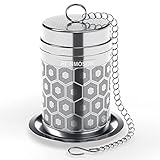
- Upgraded Micron Mesh: loose leaf tea steeper is Ideal to hold tea leaves, particles, or ground coffee. Compared to traditional tea strainer, our tea ball features 50% more ultra fine, half-sized holes for optimal tea flavor and minimal sediment leak. Ideal for rooibos, herbs, green tea, Chai, ground coffee, small tea leaves and etc.
- High-Quality Materials: Made of 304 food-grade stainless steel, tea ball infuser for loose tea is easier to be cleaned. Besides, loose tea steeper ensures no metallic taste on your tea or coffee and never rust for years of use. Money-saving and eco-friendly alternative to disposable tea bags and paper filters.
- Easy to Open and Close: With the design of thread top, the lids screw easily and are much more secure than the traditional twist lid, so the tea leaves will be held tightly and the lid never escapes during the process of brewing.
- Wide Application: tea steeper is not only for loose tea leaves but also a spice filter, infusing spices, herbs, and seasonings in soups, sauce, broths, and stews. Extended 4.3” chain with S-handle makes tea infusers can catch securely on any rim of mugs, cups, teapots, kettles, bottles, and pitchers.
- Package: Comes with 1.5” diameter and 2.2” high tea balls for loose tea and 1 saucer. The saucer is helpful for avoiding making a mess when you take out the loose leaf tea infusers after brewing.
Prevent it next time
- Choose lower-tannin teas: Opt for white, yellow, or certain green teas, or herbal infusions.
- Mind your steeping time: Always use a timer and stick to recommended times to avoid over-extraction.
- Never drink on an empty stomach: Have a snack or meal before enjoying your tea.
- Use correct water temperature: Avoid scorching delicate teas with boiling water, which can release more bitter compounds.
- Consider caffeine content: If sensitive, choose naturally decaffeinated herbal teas or true teas labeled as decaf.
- Maintain proper tea-to-water ratio: Too much tea can lead to an overly concentrated and irritating brew.
- Basic safety checks: Ensure your kettle is clean and that you’re using fresh, filtered water for optimal taste and health.
- Stay hydrated: Drink plenty of plain water throughout the day, not just tea, to support digestion.
Common mistakes (and what happens if you ignore them)
| Mistake | What it causes | Fix |
|---|---|---|
| Over-steeping tea | Excessive tannin and caffeine extraction, leading to bitterness, astringency, and nausea. | Use a timer; stick to recommended steeping times (e.g., 1-3 min for green, 3-5 min for black). |
| Drinking strong tea on an empty stomach | Direct irritation of the stomach lining by tannins, leading to nausea, heartburn, or stomach ache. | Always have a snack or meal before drinking tea, especially strong varieties. |
| Using boiling water for delicate teas (e.g., green tea) | Scorching tea leaves, releasing more bitter and irritating compounds. | Use water at the recommended temperature (e.g., 160-180°F for green tea). |
| Consuming too much tea too quickly | Overloading the digestive system with tea compounds, leading to discomfort. | Drink tea slowly, in moderation, and spread consumption throughout the day. |
| Ignoring individual sensitivities to specific tea types | Repeatedly experiencing nausea from a particular tea type (e.g., certain green teas). | Experiment with different tea varieties; avoid types that consistently cause discomfort. |
| Not using fresh, filtered water | Off-flavors and potential contaminants that can affect taste and digestion. | Always use fresh, filtered water for brewing. |
| Assuming all tea caffeine is the same as coffee caffeine | Different absorption rates and accompanying compounds can make tea caffeine feel different. | If caffeine is an issue, try decaffeinated teas or herbal infusions. |
| Adding too much sugar or artificial sweeteners | Can contribute to digestive upset and discomfort for some individuals. | Reduce or eliminate added sweeteners; try natural alternatives like a tiny bit of honey if needed. |
| Re-steeping tea leaves too many times | Extracting increasingly bitter and unpleasant compounds, especially from lower quality leaves. | Know when to discard spent leaves; some high-quality teas can be re-steeped a few times. |
Decision rules (simple if/then)
- If you feel nauseous after drinking tea but not coffee, then consider that specific compounds in tea, like tannins, might be the culprit, because coffee has different chemical properties.
- If your nausea occurs after drinking strong, dark tea, then try a lighter, less oxidized tea like white or green tea, because they generally have lower tannin levels.
- If you drink tea on an empty stomach and feel sick, then always have a small snack or meal before your tea, because food can buffer the stomach lining from irritating compounds.
- If you consistently experience nausea from green tea, then reduce the steeping time and water temperature, because over-extraction of catechins can cause stomach upset.
- If you suspect caffeine is the issue, then switch to decaffeinated tea or herbal infusions, because these options provide the flavor without the stimulant.
- If your tea tastes very bitter or astringent, then you are likely over-steeping it, because prolonged steeping extracts too many harsh compounds.
- If adding milk or sugar to your tea helps, then it might be tempering the effects of the tea’s compounds, because these additions can dilute or mask strong flavors.
- If you only experience nausea with certain brands or types of tea, then those specific teas might contain ingredients or compounds that don’t agree with you, because not all teas are created equal.
- If you’ve tried all adjustments and still feel unwell, then consult a healthcare professional, because there might be an underlying digestive issue.
FAQ
Q: Can the quality of tea affect nausea?
A: Yes, to some extent. Lower quality teas might contain more fannings or dust, which can release more bitter compounds quickly. However, even high-quality teas can cause nausea if brewed incorrectly or consumed by a sensitive individual.
Q: Is it okay to add milk or sugar to my tea to prevent nausea?
A: Adding milk can help bind to some tannins, potentially reducing stomach irritation. Sugar might mask the bitterness but doesn’t necessarily prevent the root cause of nausea. It’s worth trying if it helps you.
Q: Does cold brew tea cause less nausea?
A: Cold brewing extracts compounds more slowly and often results in a less bitter, smoother taste with fewer tannins. This method might be a good option if hot-brewed tea causes you discomfort.
Q: Why does coffee not make me nauseous if it has more caffeine?
A: While coffee generally has more caffeine per serving, the presence of other compounds in tea (like tannins and catechins) and how they interact with your digestive system can be the key. Coffee’s acidity and different chemical profile may simply be better tolerated by your stomach.
Q: How much tea is too much if I’m prone to nausea?
A: This varies greatly by individual. Start with one cup and see how you feel. If you’re sensitive, spreading out your tea consumption and keeping portions moderate is a good strategy.
Q: Are herbal teas less likely to cause nausea?
A: Generally, yes. Many herbal infusions (like peppermint, ginger, chamomile) are naturally caffeine-free and often contain compounds known to soothe the stomach, making them a good alternative if true teas cause issues.
What this page does NOT cover (and where to go next)
- Specific medical diagnoses for digestive issues; consult a doctor for personalized health advice.
- Detailed chemistry of every tea compound; further research on tea science can provide more depth.
- Brand-specific tea recommendations or reviews; explore different tea vendors and types based on your preferences.
- Advanced brewing techniques like gongfu cha; focus here is on basic home brewing for comfort.
- The history or cultural significance of tea; resources on tea culture can offer fascinating insights.