
Sweet and Strong: How to Make Vietnamese Coffee
Quick answer
- Use a Vietnamese coffee filter (phin).
- Medium-fine to medium grind is usually best.
- Pre-heat your phin and mug.
- Use dark roast coffee, often with chicory.
- Add sweetened condensed milk to the phin first.
- Bloom the coffee grounds for about 30 seconds.
- Slowly add hot water for a controlled drip.
- Stir well after brewing.
Who this is for
- Anyone craving that rich, sweet Vietnamese coffee flavor.
- Home brewers looking to try a new, unique brewing method.
- Coffee lovers who enjoy bold, dark roasts with a sweet kick.
What to check first
Brewer type and filter type
This is key. You need a Vietnamese coffee filter, often called a phin. It’s a small metal cylinder with a plunger and a filter screen. Different sizes exist, but they all work on the same principle. If you don’t have one, that’s your first stop.
If you don’t have one, consider picking up a quality Vietnamese coffee filter to start your brewing journey.

- This Vietnamese Coffee Filter is made in Vietnam out of HIGH QUALITY stainless steel
- The Ca Phe Phin is 8 oz. Enjoy with traditional ground coffee such as by Trung Nguyen
- The GRAVITY INSERT on this Vietnamese Coffee Filter is easier than the screw down type
- This Viet filter comes with a LIFETIME WARRANTY and is DISHWASHER SAFE. Satisfaction guaranteed!
- Slow dripper brews a perfect hot or iced coffee (cafe sua da) with this Vietnamese Coffee Filter
Water quality and temperature
Good water makes good coffee. Use filtered water if your tap water has off flavors. For brewing, you want hot water, just off the boil. Aim for around 195-205°F (90-96°C). Too cool and you get weak coffee; too hot can scorch it.
Grind size and coffee freshness
For a phin, a medium-fine to medium grind works well. It should be finer than drip but coarser than espresso. Freshly ground beans are always better. If your coffee smells stale, it’s probably past its prime for optimal flavor.
For the best results, invest in a good coffee grinder that can achieve a consistent medium-fine to medium grind.
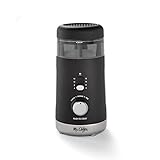
- Hands-free Grinding: Automatic settings for efficient, stress-free use
- Chamber Cleaning System: Twists to clean grounds from chamber walls
- Versatile Uses: 5 grind settings to customize your grind - fine to coarse
- Easy to Clean: Removable grinding chamber ensures mess-free cleaning
- Brew Control: 4-12 cup selector to grind only what you need
Coffee-to-water ratio
This can vary, but a good starting point is about 1:7 to 1:10 coffee to water. For a typical phin, that might mean 1-2 tablespoons of coffee grounds for about 4-6 oz of water. Adjust to your taste, but don’t go too heavy or too light.
Cleanliness/descale status
Make sure your phin is clean. Old coffee oils can make your brew taste bitter or rancid. If you use an electric kettle, descale it regularly according to the manufacturer’s instructions. Buildup affects water temperature and taste.
Step-by-step (brew workflow)
1. Gather your gear. You’ll need your phin, a mug, your coffee, sweetened condensed milk, and hot water.
- Good looks like: Everything is within reach and ready to go.
- Common mistake: Forgetting a key ingredient or tool, forcing you to stop mid-brew. Have it all laid out.
2. Add condensed milk. Spoon about 1-2 tablespoons of sweetened condensed milk into the bottom of your mug. Adjust to your sweetness preference.
- Good looks like: A nice layer of creamy sweetness waiting at the bottom.
- Common mistake: Adding milk after brewing. This makes it hard to mix and can result in uneven sweetness.
3. Assemble the phin. Place the filter chamber on top of the phin’s lid, then place the perforated filter plate inside the chamber.
- Good looks like: The phin is ready for coffee grounds.
- Common mistake: Forgetting the filter plate. Your coffee grounds will just fall through.
4. Place phin on mug. Set the assembled phin (without the plunger yet) on top of your mug, over the condensed milk.
- Good looks like: A secure fit, ready to brew.
- Common mistake: Phin wobbling or not sitting straight. This can lead to leaks and uneven extraction.
5. Add coffee grounds. Spoon your medium-fine to medium ground coffee into the filter chamber. Fill it up to about 1/4 inch from the top.
- Good looks like: A neat bed of coffee grounds.
- Common mistake: Overfilling the phin. This can cause grounds to escape into your coffee.
6. Gently tamp grounds. Place the screw-down plunger (or the press) on top of the grounds and twist it down gently until it just meets the coffee. Don’t press hard.
- Good looks like: A light, even pressure on the grounds.
- Common mistake: Tamping too hard. This restricts water flow and leads to over-extraction and bitterness.
7. Pre-heat the phin (optional but recommended). Pour a little hot water over the phin and grounds, let it sit for 10-15 seconds, then discard the water. This warms the metal and prepares the grounds.
- Good looks like: A quick rinse that gets the phin warm.
- Common mistake: Skipping this step. A cold phin can shock the grounds and affect extraction.
8. Bloom the coffee. Pour just enough hot water over the grounds to saturate them. Wait about 30 seconds. You’ll see the grounds puff up.
- Good looks like: The coffee grounds swell and release CO2.
- Common mistake: Pouring too much water too soon. This can lead to channeling and weak coffee.
9. Add remaining water. Slowly pour the rest of your hot water into the phin, filling it up. Place the lid on top to retain heat.
- Good looks like: A steady, slow drip into the mug.
- Common mistake: Pouring too fast. This rushes the extraction and can result in a weak, sour cup.
10. Wait for the drip. Let the coffee slowly drip through the phin. This can take 4-5 minutes.
- Good looks like: A consistent, slow stream of dark coffee.
- Common mistake: Getting impatient and removing the phin too early. You won’t get all the good stuff.
11. Remove phin. Once the dripping stops, carefully lift the phin off the mug.
- Good looks like: A clean removal, leaving only brewed coffee and condensed milk.
- Common mistake: Leaving the phin on too long. This can lead to over-extraction of the last few drops, adding bitterness.
12. Stir and enjoy. Stir the brewed coffee and condensed milk together thoroughly until well combined.
- Good looks like: A uniform, creamy, dark beverage.
- Common mistake: Not stirring enough. You’ll get pockets of sweetness and bitter coffee.
Common mistakes (and what happens if you ignore them)
| Mistake | What it causes | Fix |
|---|---|---|
| Using stale coffee | Flat, dull, or bitter taste | Use freshly roasted and ground beans. |
| Incorrect grind size (too fine) | Slow drip, over-extraction, bitter coffee | Use a medium-fine to medium grind. Check your grinder settings. |
| Incorrect grind size (too coarse) | Fast drip, under-extraction, weak/sour coffee | Use a medium-fine to medium grind. |
| Tamping grounds too hard | Restricted water flow, over-extraction | Tamp gently, just enough to level the grounds. |
| Not blooming the coffee | Uneven extraction, weak spots | Let grounds saturate for 30 seconds before adding more water. |
| Pouring water too quickly | Channeling, under-extraction, weak coffee | Pour slowly and steadily. |
| Using water that’s too cool | Under-extraction, weak, sour taste | Ensure water is just off the boil (195-205°F). |
| Not cleaning the phin regularly | Rancid or bitter off-flavors | Wash phin thoroughly after each use. |
| Skipping the pre-heat | Inconsistent extraction temperature | Briefly rinse the phin with hot water before adding grounds. |
| Not stirring the condensed milk | Uneven sweetness, bitter coffee | Stir vigorously until fully combined. |
| Using regular milk instead of condensed | Lacks characteristic sweetness and body | Sweetened condensed milk is essential for the classic flavor. |
Decision rules (simple if/then)
- If your coffee tastes too bitter, then try a coarser grind or a slightly lower water temperature because over-extraction is likely.
- If your coffee tastes weak or sour, then try a finer grind or a slightly longer brew time because under-extraction is likely.
- If the water is dripping too slowly, then the grind is probably too fine or you tamped too hard because you’re restricting flow.
- If the water is dripping too fast, then the grind is probably too coarse or you didn’t tamp enough because there’s no resistance.
- If your coffee has sediment, then your filter might be damaged or the grind is too fine, allowing particles to pass through.
- If your coffee has an oily sheen and tastes off, then your phin needs a good cleaning because old coffee oils have gone rancid.
- If you want it sweeter, then add more sweetened condensed milk next time because it’s the primary sweetener.
- If you want it stronger, then use a bit more coffee grounds or a slightly longer drip time because you need more coffee solids in solution.
- If the phin leaks around the edges, then ensure it’s seated properly on the mug and the filter plate is snug because a good seal is important.
- If you’re using a pre-ground coffee labeled for drip, then try grinding it a bit finer yourself because pre-ground coffee is often too coarse for a phin.
FAQ
What kind of coffee beans are used for Vietnamese coffee?
Traditionally, dark roasts are used, often with a blend that includes robusta beans for a stronger, bolder flavor. Many also include chicory for added depth.
Can I use regular milk instead of condensed milk?
No, sweetened condensed milk is crucial for the authentic flavor and texture of Vietnamese coffee. Regular milk won’t provide the same sweetness or creamy body.
How do I know if my phin is clean enough?
It should look shiny and smell neutral. If you detect any stale coffee aromas or see dark residue, it needs a more thorough cleaning with soap and hot water.
What is “blooming” and why is it important?
Blooming is when you add a small amount of hot water to saturate the grounds. This releases trapped CO2 gas, allowing for more even water contact during the main brew, leading to better flavor extraction.
My coffee is dripping too fast. What’s wrong?
This usually means your coffee grind is too coarse or you didn’t tamp the grounds enough. Try a finer grind setting or ensure you gently tamp the grounds before brewing.
My coffee is dripping too slowly. What’s wrong?
This indicates your grind is too fine or you tamped the grounds too hard. Try a slightly coarser grind or tamp less aggressively.
Can I make iced Vietnamese coffee (cà phê sữa đá)?
Absolutely! Brew it as usual, stir in the condensed milk, then pour it over a glass full of ice. It’s incredibly refreshing.
Do I have to use a dark roast?
While dark roasts are traditional and provide that signature bold flavor, you can experiment with other roasts. Just be aware that lighter roasts might yield a different, less intense profile.
What this page does NOT cover (and where to go next)
- Detailed history of Vietnamese coffee culture.
- Specific brand recommendations for phins or coffee beans.
- Advanced techniques for dialing in espresso-style Vietnamese coffee.
- Recipes for Vietnamese coffee-based desserts or cocktails.
- Comparison of different types of Vietnamese coffee filters (e.g., screw-down vs. press).