
Strategies to Increase Profitability in Your Coffee Shop
Quick answer
- Focus on high-margin items like specialty drinks and pastries.
- Optimize your staffing for peak hours to control labor costs.
- Implement a loyalty program to encourage repeat business.
- Streamline your inventory management to reduce waste.
- Consider strategic partnerships with local businesses.
- Analyze your sales data to identify trends and opportunities.
- Upsell and cross-sell effectively at the point of sale.
Who this is for
- Coffee shop owners looking to boost their bottom line.
- Managers aiming to improve their location’s financial performance.
- Aspiring entrepreneurs planning their coffee shop business model.
What to check first
Your Menu and Pricing
Take a hard look at what you’re selling and what it costs you. Are your prices reflecting the value and quality you offer? Some drinks might be a huge hit but barely move the needle on profit. Others might have a better margin but need a little marketing push.
Your Costs (Food, Labor, Overhead)
This is the nitty-gritty. Track your ingredient costs. How much are you spending on milk, beans, syrups, and pastries? Then, look at your labor. Are you overstaffed during slow times? Finally, don’t forget overhead – rent, utilities, insurance. These add up fast.
Customer Flow and Sales Data
When are your customers coming in? What are they buying? Simple point-of-sale data can tell you a lot. Identifying your busiest hours helps with staffing. Knowing your best-sellers and worst-sellers helps with menu planning and inventory.
Simple point-of-sale data can tell you a lot about your customers and sales trends. Investing in a reliable coffee shop POS system can streamline operations and provide valuable insights.
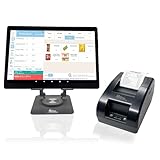
- 10.1" 8-core tablet with Wi-Fi and Bluetooth support, equipped with a 2" Bluetooth receipt printer and a stable aluminum alloy tablet stand that rotates 360°. Compatible with optional label printers, receipt printers, kitchen ticket printers, order ticket printers, barcode scanners, and electronic scales. Runs on a reliable Android operating system with built-in POS software. Hardware comes with a 1-year limited warranty
- You can download our mobile app in iOS and Android for settings, charts, reports, and storage management. We provide a online food ordering system. You or your customers can simply scan a QR code to place food orders via phone for to go delivery dine in
- LIFETIME SOFTWARE - Fast checkout, easy ordering and setup. User-friendly interface. The POS APP comes pre-installed and configured. The software is available for life and includes 1 year of customer service, 3 months of remote support, and 3 months of iCloud. No contract required, no mandatory fees
- We support payment terminals and Visa, Mastercard, Google Pay, and Apple Pay. If you sign up for our merchant services and begin accepting credit card payments after three months, we will refund you $200 for your business. Once your application is approved, you will receive a free EMV & credit card terminal
- Multifunctional-POS system, inventory management, tip tracking, membership system, reporting app, multi-region tax rate calculation, and more
Marketing and Customer Retention
Are you actively bringing new people in and keeping the regulars coming back? A great shop is one thing, but people need to know about it and have a reason to return beyond just the coffee.
Step-by-step (brew workflow)
1. Analyze Your Top Sellers
What to do: Review your sales reports for the last quarter. Identify your top 5-10 highest-selling items by volume and by profit margin.
What “good” looks like: You have a clear list of your most popular and most profitable products.
Common mistake: Only looking at sales volume and ignoring profit margin. A high-volume item might have a very low profit.
How to avoid it: Always cross-reference sales volume with your cost of goods sold to understand true profitability.
2. Identify High-Margin Opportunities
What to do: Look for items on your menu that have a high perceived value but relatively low ingredient cost. Think specialty espresso drinks with unique syrups or house-made pastries.
What “good” looks like: You’ve pinpointed specific menu items that can significantly boost your profit per transaction.
Common mistake: Overestimating the demand for a new, high-margin item without testing the market.
How to avoid it: Start by offering a limited-time special or a seasonal item to gauge customer interest before making it a permanent fixture.
3. Optimize Staffing Schedules
What to do: Map out your average customer traffic by hour and by day. Adjust your staffing levels to match these peaks and troughs.
What “good” looks like: You have enough staff to handle rush periods efficiently without having too many people on the clock during slow times.
Common mistake: Keeping a fixed staffing schedule regardless of customer volume, leading to overspending on labor during quiet periods.
How to avoid it: Use historical sales data and observe customer traffic patterns to create a dynamic schedule that flexes with demand.
4. Control Inventory and Reduce Waste
What to do: Implement a “first-in, first-out” (FIFO) system for all perishable ingredients. Conduct regular inventory counts.
What “good” looks like: You’re using older stock first, minimizing spoilage, and accurately tracking what you have on hand.
Common mistake: Over-ordering ingredients because you’re unsure of current stock levels, leading to spoilage and wasted money.
How to avoid it: Establish clear ordering par levels based on sales velocity and conduct daily checks of high-turnover items.
5. Enhance Upselling and Cross-selling
What to do: Train your baristas to suggest complementary items. For example, “Would you like a croissant with your latte?” or “Have you tried our new seasonal syrup?”
What “good” looks like: Customers are frequently adding extra items to their orders, increasing the average ticket size.
Common mistake: Baristas being too pushy or not knowing what to suggest, making the interaction awkward.
How to avoid it: Provide simple, natural prompts and offer incentives for baristas who successfully upsell.
6. Implement a Loyalty Program
What to do: Set up a system where customers earn rewards for frequent purchases, like a punch card or a digital app.
What “good” looks like: You see an increase in repeat customers and higher overall purchase frequency.
Common mistake: Making the loyalty program too complicated or the rewards too difficult to earn, deterring participation.
How to avoid it: Keep it simple – “buy 9, get the 10th free” is a classic for a reason. Ensure the rewards are desirable.
7. Review and Adjust Pricing
What to do: Periodically review your menu prices against your costs and competitor pricing. Consider small, incremental price increases on less price-sensitive items.
What “good” looks like: Your prices are competitive yet reflect your costs and desired profit margins.
Common mistake: Drastic price hikes that alienate customers, or never adjusting prices despite rising costs.
How to avoid it: Make small, strategic adjustments. If you increase the price of a popular item, ensure the quality remains high.
8. Explore Strategic Partnerships
What to do: Collaborate with complementary local businesses. For example, partner with a bakery for pastries or a local artist to display work.
What “good” looks like: You gain exposure to new customer bases and potentially reduce some operational costs or gain unique offerings.
Common mistake: Partnering with businesses that don’t align with your brand or customer base.
How to avoid it: Choose partners whose clientele overlaps with yours and whose values match your own.
Common mistakes (and what happens if you ignore them)
| Mistake | What it causes | Fix |
|---|---|---|
| Ignoring profit margins on menu items | You might be selling a lot of something that barely makes you money. This can mask underlying issues with profitability. | Analyze your Cost of Goods Sold (COGS) for every item and price accordingly. |
| Overstaffing during slow hours | High labor costs eat into your profits. You’re paying for people when there aren’t enough sales to justify it. | Use sales data to create dynamic staffing schedules that match customer flow. |
| Poor inventory management leading to waste | Spoilage and expired goods are direct financial losses. You’re throwing away money. | Implement FIFO, conduct regular counts, and set par levels for ordering. |
| Not training staff on upselling | You’re missing opportunities to increase the average ticket size and boost revenue per customer. | Train baristas on simple, natural suggestions for add-ons and complementary items. |
| Neglecting customer loyalty programs | You’re not incentivizing repeat business, meaning customers might choose competitors for their next coffee fix. | Implement a simple, rewarding loyalty program to encourage return visits. |
| Outdated or unappealing menu | Customers might be bored or not see the value in your offerings, leading to fewer sales. | Regularly review and refresh your menu, highlighting high-margin items and seasonal specials. |
| Inconsistent product quality | If the coffee or food isn’t consistently good, customers won’t return, regardless of price or service. | Standardize recipes and brewing methods, and provide ongoing staff training. |
| Not tracking key financial metrics | You’re flying blind. Without knowing your numbers, it’s impossible to make informed decisions about improving profitability. | Regularly review P&L statements, COGS, labor costs, and average ticket value. |
| Underpricing products | You might be leaving money on the table. Your prices should reflect the quality and experience you provide. | Research competitor pricing and calculate your costs to set appropriate prices. |
| Failing to market effectively | Even the best coffee shop needs to tell people it exists and why they should visit. | Develop a marketing plan that includes social media, local outreach, and in-store promotions. |
Decision rules (simple if/then)
- If your labor costs are consistently over 30% of revenue, then review your staffing schedule and cross-train employees to handle multiple roles.
- If a specific menu item has high sales volume but low profit margin, then consider adjusting its price or re-evaluating its ingredient costs.
- If customer feedback indicates long wait times during peak hours, then analyze staffing levels and workflow efficiency to speed up service.
- If your inventory spoilage rate is high, then implement stricter inventory tracking and adjust ordering quantities based on sales velocity.
- If your average ticket value is declining, then train staff on effective upselling and cross-selling techniques for higher-margin items.
- If you’re seeing a drop in repeat customers, then re-evaluate your loyalty program or introduce new incentives for regulars.
- If a competitor is consistently undercutting your prices on similar quality items, then analyze your cost structure or differentiate your product/experience.
- If your overhead costs (rent, utilities) are disproportionately high compared to revenue, then explore options for increasing sales volume or renegotiating leases.
- If a new menu item is not selling well after a trial period, then consider removing it or revamping its presentation and marketing.
- If customer complaints about product inconsistency arise, then conduct immediate retraining for baristas on brewing and preparation standards.
- If your marketing efforts aren’t generating new customer traffic, then analyze your current channels and explore more targeted local advertising or social media strategies.
FAQ
How can I increase my coffee shop’s revenue without raising prices?
Focus on increasing sales volume and average ticket size. Train your staff to upsell and cross-sell effectively. Implement a loyalty program to encourage repeat visits and consider offering bundled deals or promotions.
What’s the most important metric for a coffee shop’s profitability?
While many metrics are important, tracking your Cost of Goods Sold (COGS) and labor costs as a percentage of revenue is crucial. These two often represent your biggest variable expenses and directly impact your profit margin.
How often should I update my coffee shop’s menu?
It’s good practice to review your menu at least quarterly. Consider introducing seasonal specials or limited-time offers to keep things fresh and test new items. A full menu overhaul might happen once or twice a year.
What are some low-cost marketing ideas for a coffee shop?
Leverage social media with engaging content, run local contests or giveaways, partner with other local businesses for cross-promotion, and encourage customer reviews online. Word-of-mouth is powerful.
How can I reduce waste in my coffee shop?
Implement a strict inventory management system like FIFO, track ingredient usage closely, and train staff on proper portioning. Consider composting coffee grounds and food scraps if feasible.
Is it worth it to offer food items beyond pastries?
It can be, but carefully. Food items often have higher ingredient costs and require more labor and kitchen space. Analyze your target market and operational capacity before expanding your food menu.
How do I know if my staffing levels are right?
Observe your shop during different times of the day. If lines are consistently long during peak hours and staff seem overwhelmed, you might need more people. If staff are often idle during slow periods, you might have too many.
What’s the best way to handle rising ingredient costs?
Explore alternative suppliers, negotiate better terms with existing ones, or consider slightly adjusting prices on less price-sensitive items. Sometimes, reformulating a recipe to use a less expensive but comparable ingredient can also help.
What this page does NOT cover (and where to go next)
- Detailed financial accounting and tax preparation. (Look into small business accounting software or consult with an accountant.)
- Specific legal requirements for food service businesses in your locality. (Research local health department regulations and business licensing.)
- Advanced marketing strategies like SEO or paid advertising campaigns. (Explore digital marketing resources for small businesses.)
- Interior design and ambiance optimization for customer experience. (Consult with interior designers or research retail design principles.)