
Restaurant Coffee: Tap Water vs. Filtered Water
Quick Answer
- The water used in restaurant coffee makers can vary significantly.
- Some establishments use filtered water for better taste and to protect equipment.
- Others may use tap water, especially if their local supply is already of good quality.
- The decision often comes down to cost, equipment maintenance, and desired coffee quality.
- There’s no universal standard; it depends on the individual restaurant’s practices.
Key Terms and Definitions
- Tap Water: Water supplied directly from a municipal water system or a private well.
- Filtered Water: Water that has passed through a filtration system designed to remove impurities like sediment, chlorine, and minerals.
- Water Hardness: A measure of the mineral content in water, primarily calcium and magnesium. Hard water can affect coffee flavor and scale up brewing equipment.
- Total Dissolved Solids (TDS): The total concentration of all dissolved substances in water, including minerals, salts, and organic compounds.
- Chlorine: A common disinfectant added to municipal water supplies that can impart an unpleasant taste and odor to coffee.
- Minerals: Naturally occurring elements in water that can contribute to coffee’s flavor profile, but too many can lead to scale buildup.
- Scale Buildup: Deposits of minerals that accumulate inside coffee brewing equipment, potentially affecting performance and longevity.
- Specialty Coffee: Coffee that is graded highly by industry professionals and is often brewed with meticulous attention to detail, including water quality.
- Acidity (in coffee): A desirable bright, tangy flavor component in coffee, which can be influenced by water chemistry.
- Extraction: The process of dissolving soluble compounds from coffee grounds into water to create brewed coffee.
How It Works
- Coffee brewing is fundamentally a process of extraction, where hot water dissolves soluble compounds from roasted coffee beans.
- The water acts as the solvent, carrying flavor compounds, oils, and aromatics from the coffee grounds into the final beverage.
- The quality and composition of the water directly impact what compounds are dissolved and how efficiently they are extracted.
- Minerals in water can aid in extracting certain desirable flavor compounds, contributing to a more complex taste.
- However, excessive minerals, especially calcium and magnesium (hard water), can lead to over-extraction of bitter compounds and scale buildup.
- Chlorine present in tap water can react with coffee compounds, creating off-flavors and masking the coffee’s natural characteristics.
- Water temperature is crucial; it affects the rate at which compounds are extracted from the coffee grounds.
- The pH of the water can also influence the extraction process and the final taste of the coffee.
- Even the dissolved gases in water can play a minor role in the brewing process and the perceived freshness of the coffee.
- Filtration systems aim to remove unwanted elements like chlorine and excess minerals while ideally leaving behind beneficial ones.
What Affects the Result
- Water Source: Whether the water is municipal tap water, well water, or pre-bottled, its original mineral content and purity vary.
- Filtration Method: Different filters (e.g., activated carbon, reverse osmosis) remove varying levels and types of impurities.
- Water Hardness: High mineral content can lead to a duller flavor and scale buildup in equipment. Too little can result in a flat, lifeless cup.
- Chlorine Levels: Even small amounts of chlorine can negatively impact the delicate flavors of coffee.
- pH Balance: Water that is too acidic or too alkaline can affect extraction and taste. An ideal range is typically between 6.5 and 7.5.
- Water Temperature: For optimal extraction, water should generally be between 195°F and 205°F.
- Coffee-to-Water Ratio: The proportion of coffee grounds to water significantly influences the strength and flavor.
- Coffee Bean Freshness: Stale beans will produce less flavorful coffee regardless of water quality.
- Grind Size: The fineness or coarseness of the coffee grounds affects how easily water can extract flavor.
- Brew Time: The duration water is in contact with coffee grounds impacts extraction levels.
- Brewer Type: Different brewing methods (drip, pour-over, French press) have varying sensitivities to water quality.
- Mineral Content for Flavor: Some dissolved minerals, in the right balance, can enhance coffee’s perceived sweetness and complexity.
Pros, Cons, and When It Matters
- Using Tap Water (Pros):
- Cost-Effective: Generally the cheapest option for restaurants.
- Convenience: Readily available without extra equipment or supply chains.
- Environmental Impact: Reduces plastic waste associated with bottled or filtered water jugs.
- Using Tap Water (Cons):
- Inconsistent Flavor: Local tap water quality can fluctuate, affecting coffee taste.
- Equipment Damage: Hard water can lead to significant scale buildup, requiring frequent descaling.
- Off-Flavors: Chlorine or other impurities can impart undesirable tastes and aromas.
- Suboptimal Extraction: Water chemistry may not be ideal for extracting the best flavors from coffee.
- Using Filtered Water (Pros):
- Consistent Quality: Provides a more stable and predictable water composition for brewing.
- Improved Taste: Removes chlorine and other off-flavors, allowing coffee’s natural notes to shine.
- Equipment Protection: Reduces scale buildup, extending the life of coffee machines and reducing maintenance.
- Optimal Extraction: Water chemistry can be optimized for better flavor extraction.
- Using Filtered Water (Cons):
- Increased Cost: Requires investment in filtration systems and ongoing maintenance/filter replacement.
- Maintenance: Filters need regular changing, and systems require occasional cleaning.
- Potential for Over-Filtering: If filters remove too many beneficial minerals, coffee can taste flat.
- When It Matters Most:
- Specialty Coffee Shops: Where the focus is on showcasing the nuances of single-origin beans, water quality is paramount.
- Restaurants with High Coffee Volume: Consistent quality is key for customer satisfaction when serving many cups.
- Areas with Poor Tap Water Quality: If local tap water has a strong taste or is very hard, filtration becomes essential.
- Maintaining Expensive Equipment: Protecting brewing machines from scale damage is a significant consideration.
- Customer Perception: Providing a superior coffee experience can enhance a restaurant’s reputation.
For a consistently better tasting cup and to protect your equipment, consider using a quality coffee water filter. These filters can remove impurities like chlorine and excess minerals that negatively impact flavor and can cause scale buildup.
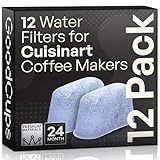
- Universal Compatibility: These premium replacement charcoal water filters are designed to fit all Cuisinart coffee maker models, ensuring a perfect fit for both newer and older models, including Cuisinart coffee maker 12 cup, Grind and Brew, and coffee maker with grinder.
- Enhanced Beverage Flavor: GoodCups charcoal water filters for Cuisinart coffee maker remove calcium, chlorine, and odors, giving you fresh, great-tasting coffee with every brew.
- Superior Filtration: Our charcoal boasts a strong absorption capacity and maximizes filtration efficiency. These water filters for Cuisinart coffee makers protect your brewer, extend its lifespan, and improve every coffee cycle.
- Optimal Water Flow Design: GoodCups filters feature a carefully crafted design that allows for optimal water flow, preventing clogs while ensuring your Cuisinart coffee maker operates smoothly and efficiently.
- Environmentally Conscious: These Cuisinart replacement water filters are made from recyclable materials, demonstrating our commitment to environmental responsibility.
Common Misconceptions
- “All restaurants use tap water because it’s cheaper.” While cost is a factor, many higher-end establishments prioritize taste and equipment longevity by using filtered water.
- “Tap water is bad for coffee, period.” This isn’t entirely true. If tap water is already clean, low in minerals, and free of chlorine, it can make perfectly good coffee.
- “Filtered water always tastes better.” The quality of filtration matters. Over-filtered water can strip away beneficial minerals, leading to a less flavorful cup than good tap water.
- “Minerals in water are always bad for coffee.” Some minerals, in moderation, are essential for proper coffee extraction and can enhance flavor complexity.
- “You can’t tell the difference between tap and filtered water in coffee.” Experienced baristas and coffee enthusiasts can often detect subtle differences in flavor and aroma.
- “Once water is filtered, it stays perfect forever.” Filters have a lifespan and need regular replacement to remain effective.
- “Hard water is only bad for your pipes, not your coffee.” Hard water significantly impacts coffee flavor and is a primary cause of scale buildup in coffee makers.
- “Boiling tap water removes all impurities.” Boiling kills microorganisms but does not remove dissolved minerals or chemicals like chlorine.
- “The coffee beans are the only thing that matters for taste.” Water is a significant component of coffee, making up over 98% of the final beverage.
FAQ
Q: Do restaurants use tap water to make coffee?
A: Some do, especially if their local tap water is of good quality and free from strong tastes or odors. Others opt for filtered water to ensure consistency and quality.
Q: Why would a restaurant choose filtered water over tap water for coffee?
A: Filtered water is often chosen to remove chlorine and other impurities that can negatively affect coffee flavor. It also helps prevent scale buildup in expensive brewing equipment, reducing maintenance costs and extending machine life.
Q: Does the type of filter matter for coffee brewing?
A: Yes, different filters remove different things. Activated carbon filters are common for removing chlorine and improving taste, while others might target specific mineral content.
Q: Can hard tap water ruin coffee?
A: Hard water can lead to a duller, less vibrant coffee flavor by affecting extraction. It also causes mineral deposits (scale) to build up inside coffee machines, which can impact their performance and longevity.
If your tap water is particularly hard, it can significantly affect coffee flavor and lead to scale buildup. A water softener designed for coffee makers can help mitigate these issues, ensuring better taste and prolonging the life of your brewing equipment.

- Water softener for espresso machines, ice machines, and any other equipment that requires a connection to a main water supply.
- Reduces the amount of calcium and magnesium dissolved in water, preventing scale formation on pipes, water heaters, tea kettles, and other appliances.
- Improves the taste and quality of water by removing minerals that can affect the flavor and aroma of beverages.
- STAINLESS STEEL cylinder capacity 8 L
Q: How can a restaurant ensure good coffee quality if they use tap water?
A: They can test their tap water for quality and mineral content. If it’s suitable, they might use it directly. If not, they might use a specific type of filter designed to balance the water’s properties for brewing.
Q: Is it possible for filtered water to taste bad in coffee?
A: Yes, if the filtration process removes too many beneficial minerals, the coffee can taste flat or lifeless. The goal is often to find a balance that removes undesirable elements while retaining or adding back certain minerals that enhance flavor.
Q: Does water temperature affect coffee taste when using tap water?
A: Water temperature is crucial for proper extraction regardless of the water source. If the water isn’t heated to the correct temperature (typically 195-205°F), the coffee may taste weak or bitter, even with good quality water.
Q: What about the impact of coffee ratios on water choice?
A: While the coffee-to-water ratio is vital for strength, the water’s composition can still affect how well flavors are extracted at that ratio. Even with the perfect ratio, poor water quality can lead to an unappealing cup.
What This Page Does NOT Cover (and Where to Go Next)
- Specific Water Testing Kits: This article doesn’t detail how to test your own water or specific home testing products. You can research water testing kits designed for home use.
- Detailed Filtration System Reviews: We haven’t reviewed specific brands or models of water filters or coffee makers. Look for reviews and comparisons from reputable consumer product testing organizations.
- Advanced Water Chemistry for Baristas: This page provides a general overview, not in-depth scientific analysis of water chemistry for professional brewing. For that, explore resources on water science for coffee professionals.
- Regional Water Quality Variations: While we discuss tap water, we don’t cover the specific mineral profiles of water in different cities or states. Local water reports can provide this information.
- DIY Water Blending Recipes: This article doesn’t offer formulas for creating custom brewing water. Resources for advanced home brewers might explore this topic.