
Pour Over Iced Coffee: A Step-by-Step Guide
Quick answer
- Use a concentrated brew ratio for pour over iced coffee.
- Chill your coffee quickly to lock in flavor.
- Start with good beans and a consistent grind.
- Dial in your water temperature – not boiling, but hot.
- Don’t skimp on the ice; it’s part of the dilution.
- Taste and adjust; it’s a process, not a one-and-done.
Who this is for
- Coffee lovers who dig the ritual of pour over.
- Folks wanting a cleaner, brighter iced coffee than what a cold brew offers.
- Anyone tired of watery iced coffee from just pouring hot coffee over ice.
What to check first
Brewer type and filter type
You’re using a pour over, so that’s set. Most cone-style brewers (like V60, Chemex, Kalita Wave) work great. Paper filters are standard, but metal or cloth filters are options if you’re feeling adventurous. Paper filters catch more oils, giving a cleaner cup, which is often preferred for iced coffee.
If you’re looking to get started with pour over iced coffee, a quality pour over coffee maker is essential. Many cone-style brewers work wonderfully for this method.

- Pour Over Coffee: Manual Pour Over Coffee Maker allows you to brew an excellent cup of Coffee in minutes
- Stainless steel: Includes a new and improved permanent, stainless steel mesh filter that helps extract your coffee's aromatic oils and subtle flavors instead of being absorbed by a paper filter
- Coffee Carafe: Made of durable, heat-resistant borosilicate glass with Cork Band detailing that is both functional and elegant; single wall
- Quick and Easy: Simply add coarse ground Coffee to filter, pour a small amount of water in a circular motion over ground Coffee until soaked then add the remaining water and let drip
- Servings: Pour Over Coffee Maker makes 8 cups of Coffee, 4 oz each; dishwasher safe
Water quality and temperature
This is huge. If your tap water tastes funky, your coffee will too. Filtered water is your friend. For iced coffee, you want your brewing water hot, but not scorching. Aim for around 195-205°F (90-96°C). Too hot and you risk bitterness; too cool and you get weak, underdeveloped flavor. I usually let my kettle sit for about 30 seconds after it boils.
Grind size and coffee freshness
Freshly roasted, whole bean coffee is key. Grind it right before you brew. For pour over, a medium-fine grind is usually the sweet spot. It should look like coarse sand. If it’s too fine, it’ll clog and over-extract. Too coarse, and the water rushes through, leading to weak coffee. I check my grind against a picture of sand, simple as that.
Coffee-to-water ratio
This is where iced coffee gets a little different. You’re brewing a concentrate. A common starting point is a 1:10 ratio (e.g., 30g coffee to 300g water). This concentrate will be diluted by ice. You can adjust this based on your preference. More coffee to water means a stronger concentrate.
Cleanliness/descale status
Your brewer and kettle need to be clean. Old coffee oils can go rancid and ruin your brew. If you have hard water, scale can build up in your kettle, affecting heating and taste. Descale your kettle regularly. A quick rinse of your brewer and filter before use is a good habit.
Step-by-step (brew workflow)
1. Heat your water: Get your filtered water to your target temperature, around 195-205°F (90-96°C).
- Good looks like: Water steaming but not violently boiling.
- Common mistake: Using boiling water. Avoid by letting the kettle rest briefly.
2. Prepare your brewer: Place your filter in the pour over cone and rinse it thoroughly with hot water. This removes paper taste and preheats the brewer. Discard the rinse water.
- Good looks like: A wet filter that sits snugly in the cone.
- Common mistake: Not rinsing the filter. This leaves a papery taste.
3. Add your coffee: Grind your fresh beans to a medium-fine consistency and add them to the rinsed filter. Gently shake the brewer to level the coffee bed.
- Good looks like: An even layer of coffee grounds.
- Common mistake: Uneven grounds. This causes inconsistent extraction. Tap it gently.
4. Start the bloom: Pour just enough hot water to saturate all the grounds (about twice the weight of the coffee). Wait 30-45 seconds for the coffee to “bloom.”
- Good looks like: The coffee bed puffing up and releasing CO2.
- Common mistake: Pouring too much water. This can wash grounds away from the filter.
5. Begin the main pour: Slowly and steadily pour the remaining water in concentric circles, starting from the center and working outwards, avoiding the very edges of the filter. Aim for a consistent flow.
- Good looks like: A steady stream of water, keeping the coffee bed submerged but not flooded.
- Common mistake: Pouring too fast or all at once. This leads to channeling and under-extraction.
6. Maintain a consistent flow rate: Continue pouring in stages, keeping the water level relatively consistent. Aim to finish pouring within 2-3 minutes for a typical brew.
- Good looks like: A controlled drip rate.
- Common mistake: Letting the water level drop too low, then flooding it again.
7. Let it drain: Once you’ve poured all your water, let the brewer drain completely. You want a nice, even puck of coffee grounds.
- Good looks like: A mostly dry coffee bed with no standing water.
- Common mistake: Stopping the pour too early or too late. This affects the final brew strength.
8. Prepare your serving vessel: Fill a glass or carafe with plenty of ice. This is where the dilution happens.
- Good looks like: A glass packed with ice, ready to receive the hot brew.
- Common mistake: Not using enough ice. This leads to watery coffee.
To ensure your iced coffee is perfectly chilled and diluted, make sure you have the right serving vessel. Filling a tall glass with plenty of ice is key to avoiding watery coffee.
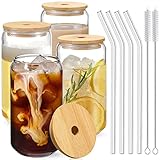
- PRODUCT CONFIGURATION: Drinking glass set includes 4 glass cups [ Diameter - 3 inches, Height - 5.6 inches ],4 nature bamboo lids, 4 reusable glass straws and 2 cleaning brushes, Classic design tumbler
- DURABLE and SAFE: The glasses are made of high-quality durable clear glass, Lead-free and BPA-free. It can be used safely for a long time. This thick clear glass can withstand the sudden changes in the temperature difference between -68°F to 212°F, making them dishwasher safe. If you want to decorate this glass, you can do DIY easily without breakage
- MULTI-PURPOSE: The glassware Great for any Occasion, any hot and cold drinks, home essentials. It is widely loved by families, kitchen, breweries, cafes, bars and restaurants. You can use it to make perfect tea, bubble Pearl Milk Tea, soda, water, iced coffee, smoothie, fruit juice or any other interesting holiday drinks
- AMAZING GIFT: This jar is very fashionable, aesthetic and characteristic. Excellent workmanship. Perfect Gifts for Women, House warming gifts, Tea mug Sets, Highball Glasses, Home Bar Accessories, Birthdays, Graduation, Weddings and Christmas Gifts
- SATISFIED SERVICE: This glass set is packaged in the heavy bubble holder and thick carton box to prevent damage while in transport. If the glass set you received was damaged or imperfect or you are not satisfied, we will offer a satisfactory solution
9. Combine brew and ice: Immediately after the pour over finishes dripping, pour the hot coffee concentrate directly over the ice.
- Good looks like: The hot coffee hitting the ice and rapidly chilling.
- Common mistake: Letting the concentrate sit too long. It can oxidize and lose flavor.
10. Stir and serve: Stir the iced coffee well to ensure it’s fully chilled and diluted. Taste it. Adjust with a bit more water or a touch of sweetener if needed.
- Good looks like: A perfectly chilled, flavorful iced coffee.
- Common mistake: Not stirring enough. The bottom might be too strong, the top too weak.
Common mistakes (and what happens if you ignore them)
| Mistake | What it causes | Fix |
|---|---|---|
| Using stale coffee beans | Flat, dull, uninspired flavor | Buy fresh, whole beans and grind just before brewing. |
| Grinding too fine | Bitter taste, clogged brewer, slow drip | Use a coarser grind. Check your grinder settings. |
| Grinding too coarse | Weak, sour, watery coffee | Use a finer grind. Ensure consistency. |
| Incorrect water temperature | Under-extracted (sour) or over-extracted (bitter) | Use a thermometer or let kettle rest 30 seconds after boiling. |
| Not rinsing the paper filter | Papery, unpleasant taste | Always rinse paper filters with hot water before brewing. |
| Uneven coffee bed | Inconsistent extraction, some parts weak, some bitter | Gently shake brewer to level grounds after adding them. |
| Pouring water too fast or erratically | Channeling, weak spots, over-extraction | Pour slowly and steadily in concentric circles. |
| Not using enough ice | Watery, diluted flavor | Fill your serving glass generously with ice. |
| Letting the concentrate sit too long | Oxidized flavor, loss of aroma and brightness | Pour the hot concentrate over ice immediately after brewing. |
| Not stirring the final drink | Uneven temperature and dilution | Stir vigorously to combine the concentrate and melted ice. |
Decision rules (simple if/then)
- If your iced coffee tastes too bitter, then try a coarser grind because coarser grounds allow water to pass through more quickly, reducing extraction.
- If your iced coffee tastes too sour or weak, then try a finer grind because finer grounds increase contact time and extraction.
- If your brew is dripping too slowly and the bed looks muddy, then your grind is likely too fine because it’s clogging the filter.
- If your brew is dripping too fast and the coffee tastes weak, then your grind is likely too coarse because the water isn’t spending enough time with the coffee.
- If your coffee tastes flat even with fresh beans, then check your water quality because impurities can mute flavors.
- If you’re getting a papery taste, then you probably skipped rinsing your filter because that removes the paper taste.
- If your coffee tastes dull after brewing, then you might be using water that’s too cool because it’s not extracting enough of the good stuff.
- If your iced coffee is watery, then you’re likely not using enough ice or brewing a strong enough concentrate because dilution is key.
- If your pour over is overflowing, then you’re either pouring too much water at once or your grind is too fine and causing a blockage.
- If you want a richer, more full-bodied iced coffee, then consider using a metal filter or a brewer that allows more oils through because paper filters remove them.
FAQ
How much coffee should I use for iced pour over?
A good starting point is a 1:10 ratio of coffee to water (e.g., 30 grams of coffee to 300 grams of water). This creates a concentrate that gets diluted by ice. Adjust based on your taste.
Can I use any pour over brewer for iced coffee?
Yes, most pour over brewers work well. The key is brewing a concentrate. Brewers that allow for a bit more control over flow, like a V60 or Kalita Wave, can be very forgiving.
How long should the pour over process take?
For a concentrate, aim for a total brew time of around 2 to 3 minutes for the water to pass through the grounds. This can vary slightly depending on your brewer and grind size.
What kind of coffee beans are best for iced pour over?
Medium to dark roasts often shine in iced coffee, as their bolder flavors hold up well. However, don’t shy away from lighter roasts if you prefer a brighter, fruitier iced coffee. Freshness is paramount for any roast.
How do I avoid bitter iced coffee?
Bitterness usually comes from over-extraction. Check your grind size (make it coarser), water temperature (ensure it’s not too hot), and pour rate (slow down if needed).
My iced coffee tastes weak. What did I do wrong?
Weakness often means under-extraction. Try a finer grind, ensure your water is hot enough (195-205°F), and make sure you’re using a good coffee-to-water ratio for a concentrate. Also, don’t forget enough ice!
Can I make iced coffee ahead of time?
It’s best to brew it fresh and chill it quickly over ice. Pre-brewed coffee can lose its aroma and develop off-flavors if it sits for too long.
What this page does NOT cover (and where to go next)
- Specific pour over brewer recommendations (check out reviews for V60, Chemex, Kalita Wave, etc.).
- Detailed explanations of coffee varietals and their impact on flavor.
- Advanced techniques like different pour patterns or agitation methods.
- How to troubleshoot specific grinder issues.
- Recipes for flavored iced coffee drinks.