
Matcha Latte with Coffee Beans: A Flavor Fusion
Quick Answer
- Brew your favorite coffee strong.
- Prepare your matcha properly.
- Combine them with steamed milk.
- Sweeten to taste.
- It’s a bold morning kick.
Who This Is For
- Adventurous coffee drinkers.
- Folks who love matcha but want more.
- Anyone looking for a unique caffeine boost.
What to Check First
Brewer Type and Filter Type
Make sure your coffee maker is clean. Whether it’s a drip machine, pour-over, or French press, it needs to be in good shape. Dirty equipment makes for bitter coffee.
Water Quality and Temperature
Use filtered water if your tap water tastes off. For coffee, aim for water around 195-205°F. Too hot burns the grounds; too cool under-extracts.
Grind Size and Coffee Freshness
Freshly ground beans are key. Grind them just before brewing. The grind size depends on your brewer – finer for espresso, coarser for French press.
Coffee-to-Water Ratio
A good starting point for coffee is 1:15 or 1:17 (coffee to water by weight). So, for 30 grams of coffee, use about 450-510 grams of water. Adjust this based on how strong you like it.
Cleanliness/Descale Status
This is huge. Limescale build-up in your coffee maker can mess with temperature and flow. Check your brewer’s manual for descaling instructions. A clean machine makes a clean cup.
Step-by-Step: How to Make Coffee Bean Matcha Latte
1. Brew Your Coffee:
- What to do: Brew a strong shot of espresso or a very concentrated drip coffee. Use your preferred method.
- What “good” looks like: A rich, dark liquid with a nice aroma. It should be potent.
- Common mistake: Brewing weak coffee. This will get lost in the matcha and milk. Use less water or more grounds.
2. Prepare Your Matcha:
- What to do: Sift 1-2 teaspoons of ceremonial grade matcha powder into a bowl. Add about 2 oz of hot water (around 175°F).
- What “good” looks like: A vibrant green, smooth paste or liquid with no clumps.
- Common mistake: Not sifting the matcha. This leads to a clumpy, gritty drink. Use a fine-mesh sieve.
3. Whisk the Matcha:
- What to do: Use a bamboo whisk (chasen) or a small frother to vigorously whisk the matcha and water. Aim for a smooth, frothy consistency.
- What “good” looks like: A light foam on top, with no dry powder left at the bottom.
- Common mistake: Not whisking enough. You’ll end up with clumps and a bitter taste. Keep whisking until it’s smooth.
For the perfect frothy texture, a bamboo matcha whisk (chasen) is highly recommended. It helps create that smooth, clump-free consistency.
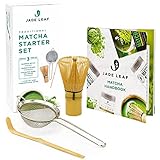
- Everything You Need to Begin – Includes traditional bamboo chasen (whisk), chashaku (scoop), stainless-steel sifter, and an easy-to-follow full-color preparation guide—ideal for both newcomers and matcha aficionados.
- Complete Beginner-Friendly Kit – Inspired by best-selling matcha sets on Amazon, this starter set mirrors the completeness of top kits—providing all core tools for a seamless preparation experience.
- Perfect Gift for Matcha Tea Lovers – With elegant packaging and thoughtful inclusions, this starter set makes a meaningful, stylish gift—combining tradition, beauty, and utility.
- Expert-Guided, No Guesswork – With our step-by-step handbook, creating smooth, whisked matcha becomes easy and enjoyable—even if it’s your first time.hose discovering matcha
- JADE LEAF MATCHA: Jade Leaf is proudly the #1 Matcha brand in the US*. We source our matcha directly from family owned partner farms across the Uji and Kagoshima regions. Our tea masters fuse traditional and modern techniques to cultivate leaves brimming with flavor and nutrients, creating well rounded flavor blends, not found anywhere else.
4. Sweeten (Optional):
- What to do: Add your preferred sweetener to the matcha mixture. This could be simple syrup, honey, agave, or sugar.
- What “good” looks like: The sweetener is fully dissolved and evenly distributed.
- Common mistake: Adding sweetener to the whole drink later. It’s harder to dissolve in cold milk. Mix it into the hot matcha.
5. Warm Your Milk:
- What to do: Heat about 6-8 oz of your milk of choice (dairy or non-dairy) until it’s hot but not boiling.
- What “good” looks like: Steamed milk with a nice microfoam.
- Common mistake: Overheating the milk. This can scald it and ruin the flavor. Aim for 140-150°F.
6. Froth the Milk (Optional):
- What to do: If you have a frother or steam wand, froth the hot milk to create a nice foam.
- What “good” looks like: Silky, glossy milk with a layer of fine foam.
- Common mistake: Creating big, bubbly foam. You want microfoam for a smooth latte texture.
7. Combine Coffee and Matcha:
- What to do: Pour your brewed coffee into your serving glass. Then, pour the prepared matcha mixture over the coffee.
- What “good” looks like: A layered effect or a marbled blend of the two liquids.
- Common mistake: Pouring too fast. This can cause them to mix too quickly, losing the visual appeal.
8. Add Milk:
- What to do: Gently pour the steamed milk into the glass, over the coffee and matcha.
- What “good” looks like: A beautiful gradient or distinct layers, depending on how you pour.
- Common mistake: Dumping the milk in. Pour slowly and steadily to maintain any layering.
9. Garnish (Optional):
- What to do: Top with a sprinkle of matcha powder or a drizzle of syrup if desired.
- What “good” looks like: A visually appealing finish.
- Common mistake: Overdoing the garnish. Keep it simple and elegant.
10. Taste and Adjust:
- What to do: Take a sip. If it’s not sweet enough or too strong, adjust accordingly.
- What “good” looks like: A balanced flavor profile that hits your preferences.
- Common mistake: Not tasting. You might miss the chance to perfect the balance.
Common Mistakes (and What Happens If You Ignore Them)
| Mistake | What It Causes | Fix |
|---|---|---|
| Using stale coffee beans | Flat, bitter, or weak coffee flavor | Use freshly roasted beans and grind just before brewing. |
| Using low-quality matcha | Grassy, chalky, or bitter taste, poor color | Opt for ceremonial grade matcha for the best flavor and color. |
| Incorrect water temperature | Burnt taste (too hot) or sourness (too cool) | Use a thermometer or let boiling water sit for 30-60 seconds. |
| Improperly whisked matcha | Clumps, gritty texture, uneven flavor | Sift matcha first, then whisk vigorously until frothy. |
| Using tap water with off-flavors | Metallic or chemical notes in the final drink | Use filtered or bottled water for a cleaner taste. |
| Over-steaming or boiling milk | Scalded, flat milk flavor, large bubbles | Heat milk gently and aim for 140-150°F; froth to microfoam. |
| Not cleaning brewing equipment | Lingering old flavors, reduced performance | Rinse and clean your brewer and accessories after each use. |
| Incorrect coffee-to-water ratio | Too weak (too much water) or too bitter (too little) | Weigh your coffee and water for consistency. Start with 1:17. |
| Forgetting to sift matcha | Lumps and an unpleasant texture | Always sift matcha powder through a fine-mesh sieve. |
| Over-extraction of coffee | Bitter, astringent taste | Ensure correct grind size and brew time for your method. |
Decision Rules
- If your matcha tastes bitter, then you likely used water that was too hot or didn’t whisk it enough because high temperatures and poor whisking lead to bitterness.
- If your coffee tastes weak, then you need to use more coffee grounds or less water because the ratio is off.
- If your latte has a gritty texture, then you probably didn’t sift your matcha or whisk it properly because clumps form when powder isn’t dispersed.
- If the flavors don’t blend well, then your coffee might be too weak or your matcha too overpowering because the balance is off.
- If your milk tastes burnt, then you overheated it because milk proteins break down at high temperatures.
- If you want a sweeter drink, then add more sweetener to your matcha before combining because it dissolves better in hot liquid.
- If you want a stronger coffee flavor, then brew a double shot of espresso or use a coarser grind for a French press because this increases the coffee extraction.
- If your drink has an off-flavor, then check your water quality because tap water impurities can significantly impact taste.
- If you’re seeing large bubbles in your milk foam, then you’re likely incorporating too much air or frothing too long because you want a smooth microfoam.
- If the color of your matcha isn’t vibrant green, then it might be older or lower quality because fresh, good matcha has a bright, emerald hue.
FAQ
What kind of coffee should I use?
Use a coffee you enjoy, but brew it extra strong. Espresso works great, or a very concentrated drip coffee.
Can I use any type of matcha?
Ceremonial grade matcha is best for lattes. It has a smoother, less bitter flavor than culinary grade.
How do I get the layers in my latte?
Pour the liquids gently and in the right order. Start with coffee, then matcha, then slowly add steamed milk.
What milk works best?
Whole milk froths well and adds creaminess. Oat milk or almond milk are also popular non-dairy options that can froth nicely.
Is this drink good for you?
Both coffee and matcha have antioxidants. It’s a potent mix of caffeine and other beneficial compounds.
How much caffeine is in this?
It depends on the amount of coffee and matcha used. It will likely be higher than a standard latte due to the strong coffee and matcha.
Can I make this iced?
Absolutely. Brew your strong coffee, prepare your matcha, and pour over ice with cold milk.
What if I don’t have a whisk?
A small electric frother or even a fork can work in a pinch to break up matcha clumps.
What This Page Does Not Cover (And Where to Go Next)
- Specific coffee bean origins and their flavor profiles.
- Advanced latte art techniques.
- Detailed explanations of different matcha grades.
- The science behind caffeine extraction.
- Recipes for homemade syrups or sweeteners.