
Making Lattes With A De’Longhi Coffee Machine
Quick answer
- Use fresh, quality whole beans and grind them just before brewing for optimal flavor.
- Ensure your De’Longhi machine is clean and descaled regularly for consistent performance.
- Master the art of steaming milk to achieve a creamy, velvety texture with microfoam.
- Adjust your grind size and tamp pressure for a perfect espresso shot with good crema.
- Practice your pouring technique for latte art, if desired, or simply enjoy a well-mixed drink.
- Choose appropriate milk (dairy or non-dairy) for best steaming results.
Who this is for
- Anyone who owns a De’Longhi espresso machine and wants to learn how to make lattes.
- Home baristas looking to improve their espresso and milk steaming techniques.
- Coffee enthusiasts who desire cafe-quality lattes in the comfort of their own home.
What to check first
Before you begin brewing, a quick check of your equipment and ingredients can prevent common issues.
Brewer type and filter type
De’Longhi offers various machine types, from super-automatic to semi-automatic espresso machines. Understand your specific model. Semi-automatic machines typically use portafilters with pressurized or non-pressurized baskets. Pressurized baskets are more forgiving of grind size. Non-pressurized baskets require a very precise grind for optimal extraction. Ensure your portafilter basket is clean and free of old coffee grounds.
Water quality and temperature
Water is over 98% of your coffee, so its quality matters. Use filtered water to avoid mineral buildup in your machine and to allow the coffee’s true flavors to shine. Tap water, especially if hard, can introduce off-flavors and damage your machine over time. Your De’Longhi machine is designed to heat water to the ideal espresso brewing temperature, typically around 195-205°F.
Grind size and coffee freshness
For espresso, a fine grind resembling powdered sugar or table salt is usually required. If your grind is too coarse, your espresso will be under-extracted and watery. If it’s too fine, it will be over-extracted and bitter. Always use freshly roasted coffee beans (ideally within 2-3 weeks of roast date) and grind them just before brewing. Pre-ground coffee loses its aroma and flavor rapidly.
For the best espresso, always use freshly roasted coffee beans, ideally within 2-3 weeks of the roast date. Investing in quality whole beans like these will make a noticeable difference in your latte’s flavor.
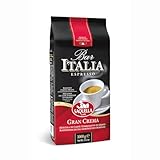
- AUTHENTIC ITALIAN ESPRESSO EXPERIENCE: From Saquella Caffè, family coffee roasters in Italy since 1856 — blending heritage, passion, and quality in every bean.
- FULL-BODIED & CREAMY FLAVOR: A signature Arabica and Robusta blend that delivers a bold espresso with a thick, velvety crema and lingering chocolate notes.
- MEDIUM-DARK ROAST: Carefully roasted for a rich aroma and balanced taste — smooth yet intense, ideal for espresso, cappuccino, or macchiato.
- CONSISTENT QUALITY: Beans are slow-roasted and expertly blended to ensure uniform extraction and a true Italian café-style experience at home.
- MADE IN ITALY: Imported directly from Italy — Saquella Bar Italia Gran Crema is the choice of professional baristas and espresso lovers worldwide.
Coffee-to-water ratio
For espresso, the standard ratio is typically 1:2. This means for every 1 gram of ground coffee, you’ll aim for 2 grams of liquid espresso. For example, if you use 18 grams of coffee, you’ll want to extract about 36 grams of espresso. This ratio can be adjusted slightly to taste.
Cleanliness/descale status
A clean machine is crucial for good-tasting coffee and machine longevity. Regularly clean your portafilter, brew head, and steam wand. Descale your De’Longhi machine according to the manufacturer’s recommendations, typically every 1-3 months depending on water hardness and usage. Descaling removes mineral buildup that can affect heating elements and water flow, impacting shot quality.
Step-by-step how to make a latte with a delonghi coffee machine
Crafting a delicious latte involves precise steps for both espresso and milk.
1. Prepare your De’Longhi machine.
- What to do: Turn on your De’Longhi machine and allow it to fully heat up. This usually takes 15-30 minutes, depending on the model. Ensure the water reservoir is filled with filtered water.
- What “good” looks like: The machine’s indicator lights confirm it’s at brewing temperature, and the portafilter is warm to the touch.
- Common mistake: Not allowing the machine to fully heat. This leads to cold espresso and poor extraction. How to avoid it: Wait for the machine to signal it’s ready, and consider running a blank shot of hot water through the portafilter to pre-heat it and the cup.
2. Grind your coffee beans.
- What to do: Measure your whole coffee beans (typically 18-20g for a double shot) and grind them fresh to a fine espresso consistency.
- What “good” looks like: The grind resembles fine table salt or powdered sugar, clumping slightly when squeezed, but not overly powdery or gritty.
- Common mistake: Using pre-ground coffee or an incorrect grind size. This results in stale flavor or poor extraction. How to avoid it: Invest in a quality burr grinder and grind immediately before brewing. Adjust grind size as needed based on your shot time.
3. Dose and tamp the portafilter.
- What to do: Distribute the ground coffee evenly in your portafilter basket. Then, tamp firmly and level with consistent pressure (around 30 lbs).
- What “good” looks like: A perfectly flat, dense puck of coffee with no loose grounds around the edges.
- Common mistake: Uneven distribution or tamping. This causes “channeling,” where water finds paths of least resistance, leading to uneven extraction. How to avoid it: Use a distribution tool if desired, and practice consistent, level tamping.
4. Insert portafilter and brew espresso.
- What to do: Securely lock the portafilter into the group head. Place your pre-heated espresso cup(s) underneath and immediately start the brew cycle.
- What “good” looks like: A steady, even stream of dark, honey-like espresso with a rich, reddish-brown crema layer forming on top. The shot should extract in 25-30 seconds for a double shot.
- Common mistake: Delaying brewing after tamping. This can cause the coffee to lose freshness and temperature. How to avoid it: Brew immediately after tamping.
5. Purge the steam wand.
- What to do: Before steaming milk, open the steam valve briefly to release any condensed water inside the wand.
- What “good” looks like: A short burst of steam, followed by no water droplets.
- Common mistake: Not purging the wand. This introduces water into your milk, diluting it and hindering foam quality. How to avoid it: Make it a habit to purge every time.
6. Steam the milk.
- What to do: Fill a cold stainless steel pitcher about 1/3 to 1/2 full with cold milk. Submerge the steam wand tip just below the surface, open the steam valve fully, and incorporate air until the volume increases by about 15-20% and it feels lukewarm. Then, submerge the tip deeper to create a “whirlpool” effect, heating the milk to 140-155°F.
- What “good” looks like: Velvety, glossy milk with tiny, uniform bubbles (microfoam), resembling wet paint. It should be hot but not scalding.
- Common mistake: Over-aerating (too much air, big bubbles) or under-aerating (not enough air, flat milk). This results in foamy, dry milk or thin, watery milk. How to avoid it: Listen for a gentle “kissing” sound during the aeration phase, then switch to heating. Use a thermometer or touch the pitcher to gauge temperature.
7. Clean the steam wand.
- What to do: Immediately after steaming, wipe the steam wand thoroughly with a damp cloth to remove any milk residue. Then, purge the wand again to clear any milk from inside.
- What “good” looks like: A clean, clear steam wand with no visible milk residue.
- Common mistake: Letting milk dry on the wand. This creates hard-to-remove buildup and can harbor bacteria. How to avoid it: Clean immediately, every single time.
8. Combine espresso and milk.
- What to do: Swirl the steamed milk gently in the pitcher to incorporate the foam. Pour the milk into the center of your espresso shot, starting high and then lowering the pitcher to create a pattern if desired.
- What “good” looks like: A harmonious blend of rich espresso and creamy milk, with a thin layer of microfoam on top.
- Common mistake: Pouring too quickly or not swirling the milk. This can separate the foam from the milk or create a messy drink. How to avoid it: Swirl the milk well before pouring and pour steadily.
9. Serve and enjoy.
- What to do: Serve your freshly made latte immediately.
- What “good” looks like: A warm, inviting latte ready to be savored.
- Common mistake: Letting the latte sit too long. The temperature will drop, and the milk and espresso may separate. How to avoid it: Serve promptly.
Common mistakes (and what happens if you ignore them)
| Mistake | What it causes | Fix |
|---|---|---|
| Using stale coffee beans | Flat, lifeless flavor; weak crema | Buy freshly roasted beans, store in an airtight container, grind just before brewing. |
| Incorrect grind size (too coarse) | Under-extracted, sour, watery espresso; fast shot time | Adjust grinder to a finer setting; shot should take 25-30 seconds for 2 oz. |
| Incorrect grind size (too fine) | Over-extracted, bitter, burnt espresso; slow or no flow | Adjust grinder to a coarser setting; shot should take 25-30 seconds for 2 oz. |
| Uneven tamping | Channeling, inconsistent extraction, weak crema | Tamp level and with consistent pressure; use a distribution tool. |
| Not purging steam wand | Watery, diluted milk; poor foam quality | Always purge the steam wand before and after steaming. |
| Overheating milk | Scalded taste, loss of sweetness, large bubbles | Use a thermometer or stop heating when pitcher is too hot to hold comfortably (140-155°F). |
| Not cleaning steam wand immediately | Dried milk buildup, hygiene issues, blockages | Wipe and purge the wand immediately after every use. |
| Not descaling machine | Mineral buildup, slow heating, poor water flow, machine damage | Follow De’Longhi’s descaling instructions regularly (e.g., every 1-3 months). |
| Using tap water | Off-flavors in coffee, scale buildup in machine | Use filtered or purified water for both brewing and the reservoir. |
| Not pre-heating cups/machine | Cold espresso, rapid temperature loss | Allow machine to fully heat; rinse cups with hot water or place on cup warmer. |
Decision rules how to make a latte with a delonghi coffee machine
- If your espresso shot runs too fast (under 20 seconds) then your grind is too coarse because water is flowing through too easily.
- If your espresso shot runs too slow (over 35 seconds) or drips then your grind is too fine or you’ve overdosed/over-tamped because water cannot pass through effectively.
- If your steamed milk has large, airy bubbles then you incorporated too much air at the beginning because the wand was too shallow for too long.
- If your steamed milk is thin and watery then you didn’t incorporate enough air because the wand was too deep from the start.
- If your latte tastes sour or weak then your espresso is likely under-extracted because of a coarse grind or insufficient brew time.
- If your latte tastes bitter or burnt then your espresso is likely over-extracted or your milk was overheated because of a fine grind, long brew time, or scalding milk.
- If your De’Longhi machine is making unusual noises or has slow water flow then it likely needs descaling because mineral buildup is obstructing internal components.
- If your espresso has no crema or very little crema then your coffee is stale, your grind is off, or your machine isn’t hot enough because these factors prevent proper emulsification.
- If you want to make latte art then aim for very smooth, velvety microfoam because this texture allows for precise pouring and pattern formation.
- If your steam wand is sputtering water then you need to purge it longer because condensed water is still trapped inside.
FAQ
Q: What kind of milk is best for lattes?
A: Whole milk generally steams best due to its fat content, creating a rich, creamy microfoam. Many non-dairy options like oat milk or barista-blend almond milk also steam well, but results can vary by brand. Experiment to find your favorite.
Q: How much coffee should I use for a latte?
A: For a standard double shot of espresso, which forms the base of most lattes, use about 18-20 grams of finely ground coffee. This will yield approximately 36-40 grams (or roughly 2 fluid ounces) of liquid espresso.
Q: How do I know if my espresso shot is good?
A: A good espresso shot should have a rich, reddish-brown crema, pour like warm honey, and extract around 2 fluid ounces in 25-30 seconds. It should taste balanced, not too sour or too bitter.
Q: Can I use pre-ground coffee in my De’Longhi machine?
A: While you can, it’s highly recommended to use freshly ground whole beans for the best flavor and crema. Pre-ground coffee loses its freshness very quickly, leading to a duller, less aromatic latte.
Q: My milk isn’t getting hot enough, or it’s too foamy. What am I doing wrong?
A: If the milk isn’t hot, ensure your De’Longhi machine is fully heated and the steam pressure is strong. If it’s too foamy, you’re incorporating too much air. Keep the steam wand tip just below the surface for aeration, then submerge it deeper to heat and texturize.
Q: How often should I descale my De’Longhi espresso machine?
A: The frequency depends on your water hardness and how often you use the machine. Generally, De’Longhi recommends descaling every 1-3 months. Your machine might have an indicator light that tells you when it’s time. Refer to your specific model’s manual for precise instructions.
What this page does NOT cover (and where to go next)
- Specific De’Longhi model troubleshooting (check your machine’s manual)
- Advanced latte art techniques (look for dedicated tutorials)
- Roasting your own coffee beans (explore home roasting guides)
- In-depth coffee bean varietals and origins (delve into coffee education resources)
- Detailed grinder calibration (consult grinder-specific instructions)
- Cold brew or other alternative coffee preparation methods (research different brewing guides)