
Making Great Iced Americanos At Home
Quick answer
- Use a good espresso. It’s the base, so quality matters.
- Chill your glass beforehand. Nobody likes a watered-down drink.
- Use a strong coffee-to-water ratio for your espresso. More flavor, less ice melt.
- Don’t over-dilute. Add just enough water to balance the espresso.
- Fresh ice is key. Old ice can taste funky.
- Experiment with coffee beans. Different beans bring different notes to the party.
Who this is for
- The coffee lover who craves a refreshing, bold drink without the dairy.
- The home barista looking to elevate their iced coffee game beyond simple cold brew.
- Anyone who finds themselves spending too much at coffee shops for this specific beverage.
What to check first
Brewer type and filter type
Your espresso machine is the star here. Whether it’s a lever, semi-automatic, or super-automatic, make sure it’s dialed in. For filter methods that can produce concentrated coffee (like a Moka pot or AeroPress used with a fine filter), ensure you’re using the right filter – paper, metal, or cloth – as it impacts the final taste and clarity.
Water quality and temperature
Tap water can sometimes have off-flavors that mess with your coffee. Filtered water is usually best. For espresso, the water temperature is critical for extraction. Most machines aim for around 195-205°F. If you’re using a manual method, aim for that range.
Grind size and coffee freshness
This is HUGE for espresso. You need a fine, consistent grind. Too coarse, and your shot will be weak and sour. Too fine, and it’ll be bitter and choked. Always use freshly roasted beans, ideally within a few weeks of the roast date. Grind right before you brew.
Coffee-to-water ratio
For espresso, a common starting point is a 1:2 ratio. That means for every gram of coffee grounds, you get two grams of liquid espresso. For an iced americano, you might want to go a little stronger, say 1:1.5, to account for ice melt.
Cleanliness/descale status
Gunk and mineral buildup are enemies of good coffee. Regularly clean your espresso machine’s portafilter, group head, and steam wand. Descale your machine according to the manufacturer’s instructions. A clean machine makes clean-tasting coffee.
Step-by-step (brew workflow)
1. Chill your serving glass.
- What to do: Fill a tall glass with ice and let it sit while you prepare the coffee.
- What “good” looks like: The glass is frosty on the outside.
- Common mistake and how to avoid it: Rushing. If you don’t chill the glass, your drink will be lukewarm and dilute faster. Just fill it and forget it for a few minutes.
For an even better experience, consider using dedicated iced coffee glasses that are designed to keep your drink colder for longer.
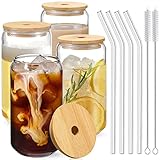
- PRODUCT CONFIGURATION: Drinking glass set includes 4 glass cups [ Diameter - 3 inches, Height - 5.6 inches ],4 nature bamboo lids, 4 reusable glass straws and 2 cleaning brushes, Classic design tumbler
- DURABLE and SAFE: The glasses are made of high-quality durable clear glass, Lead-free and BPA-free. It can be used safely for a long time. This thick clear glass can withstand the sudden changes in the temperature difference between -68°F to 212°F, making them dishwasher safe. If you want to decorate this glass, you can do DIY easily without breakage
- MULTI-PURPOSE: The glassware Great for any Occasion, any hot and cold drinks, home essentials. It is widely loved by families, kitchen, breweries, cafes, bars and restaurants. You can use it to make perfect tea, bubble Pearl Milk Tea, soda, water, iced coffee, smoothie, fruit juice or any other interesting holiday drinks
- AMAZING GIFT: This jar is very fashionable, aesthetic and characteristic. Excellent workmanship. Perfect Gifts for Women, House warming gifts, Tea mug Sets, Highball Glasses, Home Bar Accessories, Birthdays, Graduation, Weddings and Christmas Gifts
- SATISFIED SERVICE: This glass set is packaged in the heavy bubble holder and thick carton box to prevent damage while in transport. If the glass set you received was damaged or imperfect or you are not satisfied, we will offer a satisfactory solution
2. Prepare your espresso.
- What to do: Grind your fresh coffee beans to an espresso fineness. Dose your portafilter and tamp evenly. Pull your shot.
- What “good” looks like: A rich, dark liquid with a nice crema on top, flowing steadily for about 25-30 seconds.
- Common mistake and how to avoid it: Inconsistent tamping or incorrect grind. This leads to channeling or over/under-extraction. Dial in your grind and tamp firmly and level.
3. Measure your espresso.
- What to do: Weigh or measure the espresso you pulled directly into your chilled glass.
- What “good” looks like: The correct volume or weight of espresso for your desired strength.
- Common mistake and how to avoid it: Guessing. Eyeballing it leads to inconsistent drinks. Use a scale or a shot glass for accuracy.
4. Add a splash of cold water.
- What to do: Add a small amount of cold, filtered water to the espresso in the glass. This is the “americano” part.
- What “good” looks like: The espresso is slightly diluted, creating a base that’s less intense than straight espresso but still strong.
- Common mistake and how to avoid it: Adding too much water too early. This can mute the espresso flavors before the ice even has a chance to melt. Start with just an ounce or two.
5. Add fresh ice.
- What to do: Fill the glass with fresh ice cubes, leaving a little room at the top.
- What “good” looks like: The glass is full of ice, ready to chill your drink.
- Common mistake and how to avoid it: Using old, smelly ice. This will ruin your drink. Always use fresh ice from your filtered water.
6. Top with cold water (if needed).
- What to do: If you prefer a more diluted drink, add more cold water to reach your desired strength.
- What “good” looks like: The drink is at your preferred balance of coffee flavor and refreshment.
- Common mistake and how to avoid it: Adding too much water and making it weak. Taste as you go. You can always add more water, but you can’t take it out.
7. Stir gently.
- What to do: Stir the mixture to combine the espresso, water, and ice.
- What “good” looks like: The drink is evenly chilled and mixed.
- Common mistake and how to avoid it: Over-stirring, which can melt the ice too quickly and dilute the drink excessively. A few gentle stirs are all you need.
8. Taste and adjust.
- What to do: Take a sip. If it’s too strong, add a tiny bit more water. If it’s too weak, well, you might need to pull another shot next time!
- What “good” looks like: A perfectly balanced, refreshing, and flavorful iced americano.
- Common mistake and how to avoid it: Not tasting! You won’t know if it’s right for you if you don’t try it. Your taste buds are the final judge.
Common mistakes (and what happens if you ignore them)
| Mistake | What it causes | Fix |
|---|---|---|
| Using stale coffee beans | Flat, lifeless flavor, lack of crema | Buy freshly roasted beans and grind just before brewing. |
| Incorrect grind size for espresso | Sour (under-extracted) or bitter (over-extracted) taste | Dial in your grinder; aim for a fine, consistent espresso grind. |
| Uneven tamping | Channeling, uneven extraction, weak shot | Tamp with consistent pressure, ensuring the puck is level. |
| Using old or filtered tap water | Off-flavors, mineral buildup in machine | Use filtered or bottled water. Clean your machine regularly. |
| Not chilling the serving glass | Drink dilutes too quickly, tastes watery | Fill your glass with ice and let it sit while you prep. |
| Using old ice | Unpleasant, stale flavors in your drink | Always use fresh ice made from filtered water. |
| Over-diluting with water | Weak, watery coffee, loss of espresso character | Start with less water and add more to taste. |
| Not cleaning the espresso machine | Bitter, burnt, or stale tastes | Follow a regular cleaning and descaling schedule for your machine. |
| Using a pre-ground coffee | Inconsistent extraction, lack of freshness and flavor | Invest in a good burr grinder and grind fresh beans per brew. |
| Pulling a shot too fast/slow | Under-extracted (sour) or over-extracted (bitter) | Time your shots and adjust grind size or dose accordingly. |
Decision rules (simple if/then)
- If your espresso tastes sour, then grind finer because the water is passing through too quickly.
- If your espresso tastes bitter, then grind coarser because the water is taking too long to extract.
- If your iced americano tastes weak, then use less water in the dilution step or pull a stronger shot next time because you’re over-diluting.
- If your iced americano dilutes too fast, then use a colder, denser glass and more ice because the drink isn’t staying cold enough.
- If your coffee has no crema, then check your bean freshness and grind size because these are the primary factors.
- If your machine is dispensing water slowly, then it’s time to descale because mineral buildup is restricting flow.
- If you’re using a Moka pot for concentrated coffee, then aim for a medium-fine grind because too fine can clog the filter.
- If your drink tastes “off,” then check your water quality and ice freshness first because these are often overlooked culprits.
- If you want a bolder flavor, then slightly increase your coffee dose or decrease your water-to-coffee ratio for the espresso shot.
- If your espresso shot runs too fast, then your grind is likely too coarse or you didn’t tamp firmly enough.
- If your espresso shot runs too slow, then your grind is likely too fine or you tamped too hard.
FAQ
What kind of coffee beans are best for an iced americano?
You can use almost any whole bean you enjoy. Medium to dark roasts often provide a bolder flavor that stands up well to ice. Single origins can also be fun to explore for unique flavor notes.
How much espresso should I use?
A standard double shot (about 1.5 to 2 oz) is a good starting point for a tall glass. You can always adjust the amount based on your preference for strength.
Do I need a special espresso machine?
While a dedicated espresso machine is ideal for true espresso, you can make a strong, concentrated coffee using a Moka pot or an AeroPress with a fine filter. It won’t be true espresso, but it can be a great base for an iced americano.
How much water should I add?
This is entirely up to you. Start with about 2-3 oz of cold water for a double shot, then add more incrementally until you reach your desired balance.
Why is my iced americano watery?
This usually happens if your glass wasn’t cold enough, you used too little ice, or you added too much water. Ensure your glass is chilled and use plenty of fresh ice.
Can I use hot water to dilute the espresso?
While you can, it’s generally recommended to use cold water for an iced americano to keep the drink colder for longer and avoid further dilution from steam.
What’s the difference between an iced latte and an iced americano?
An iced latte includes milk or cream, whereas an iced americano is simply espresso, water, and ice. It’s a lighter, more coffee-forward drink.
How can I make my iced americano taste less bitter?
Bitterness often comes from over-extraction. Ensure your grind size is correct for espresso, your tamping is even, and your shot isn’t pulling too long. Also, check that your machine is clean.
What this page does NOT cover (and where to go next)
- Detailed troubleshooting for specific espresso machine brands. (Check your machine’s manual or manufacturer support.)
- Advanced espresso extraction techniques like blooming or pressure profiling. (Look for resources on manual espresso brewing.)
- Making flavored syrups or custom additions. (Search for DIY syrup recipes.)
- The science of coffee bean roasting and sourcing. (Explore coffee education websites or books.)
- Comparisons of different types of ice makers. (This is a whole other rabbit hole!)