
Dairy-Free Iced Coffee: Simple Recipes Without Milk
Quick answer
- Use a strong, cold brew concentrate for the best flavor.
- Experiment with different non-dairy milks like oat, almond, or soy.
- Sweeten your coffee with simple syrup or agave nectar.
- Add flavorings like vanilla extract or cinnamon for a personal touch.
- Chill your brewed coffee thoroughly before adding ice.
- Don’t over-dilute; use less ice or a stronger brew.
Who this is for
- Anyone who’s lactose intolerant or prefers plant-based drinks.
- Coffee lovers looking for refreshing, dairy-free alternatives.
- Home baristas wanting to explore new iced coffee creations.
What to check first
Brewer type and filter type
Your brew method matters. A French press or pour-over gives you control. Paper filters catch fine particles, while metal ones let more oils through. For iced coffee, a stronger brew is usually better, so consider methods that lend themselves to that.
Water quality and temperature
Filtered water is key. Tap water can have off-flavors that mess with your coffee. For hot brewing before chilling, use water that’s around 195-205°F (90-96°C). For cold brew, it’s room temperature water, plain and simple.
Grind size and coffee freshness
Use freshly roasted beans. Grind them right before brewing. A coarser grind is usually best for cold brew, while a medium grind works for hot methods. Stale coffee just won’t cut it for good iced coffee.
Coffee-to-water ratio
This is where you dial in strength. For hot brewing, a common starting point is 1:15 to 1:17 (coffee to water by weight). For cold brew concentrate, you might go as strong as 1:4 to 1:8. You can always dilute it later.
Cleanliness/descale status
A dirty brewer is the enemy of good coffee. Scale buildup can affect temperature and flow. Give your brewer a good clean. It makes a massive difference, trust me. I learned that the hard way once with a funky-tasting batch.
Step-by-step (brew workflow)
Here’s a solid way to get started, focusing on a concentrated hot brew that you’ll chill.
1. Gather your gear. You’ll need your brewer (pour-over, Aeropress, or even a strong drip machine), filters, fresh coffee beans, a grinder, a kettle, and a container to chill your brew.
- What “good” looks like: Everything is clean and ready to go. No last-minute scrambling.
- Common mistake: Forgetting to preheat your brewer or mug. This can shock the coffee grounds.
- Avoid it: Take a minute to warm up your equipment before you start.
2. Weigh your coffee beans. Aim for a ratio that will give you a concentrated brew. For example, 30 grams of coffee to 200 grams (about 7 oz) of water.
- What “good” looks like: Precise measurement for consistent results.
- Common mistake: Guessing the amount of coffee. This leads to weak or overly bitter brews.
- Avoid it: Use a kitchen scale. It’s a game-changer for coffee.
3. Grind your beans. Use a medium-coarse grind, similar to sea salt.
- What “good” looks like: Uniform particle size.
- Common mistake: Using a pre-ground coffee that’s too fine or too old.
- Avoid it: Grind just before brewing. If you must buy pre-ground, look for medium grinds for pour-over or drip.
4. Heat your water. Bring filtered water to about 200°F (93°C).
- What “good” looks like: Water at the right temperature, not boiling.
- Common mistake: Using boiling water, which can scorch the coffee.
- Avoid it: Let boiling water sit for about 30 seconds to a minute before pouring.
5. Bloom the coffee. Pour just enough hot water to saturate the grounds. Let it sit for 30 seconds.
- What “good” looks like: The coffee bed expands and releases CO2, looking bubbly.
- Common mistake: Skipping the bloom. This traps gases and leads to uneven extraction.
- Avoid it: Be patient. The bloom is crucial for flavor.
6. Pour the remaining water. Slowly pour the rest of the water over the grounds in stages, using a circular motion.
- What “good” looks like: A steady, controlled pour that keeps the grounds saturated.
- Common mistake: Pouring too fast or all at once. This can lead to channeling and under-extraction.
- Avoid it: Use a gooseneck kettle for better control.
7. Let it drip. Allow all the water to pass through the coffee grounds.
- What “good” looks like: The brew finishes in a reasonable time (e.g., 2.5-4 minutes for pour-over).
- Common mistake: The brew takes too long or finishes too quickly. This indicates grind size issues.
- Avoid it: Adjust your grind size for the next brew if the timing is off.
8. Chill the concentrate. Pour the hot, concentrated coffee into a heat-safe container and let it cool on the counter for a bit, then refrigerate.
- What “good” looks like: The coffee is completely cooled before you add ice.
- Common mistake: Pouring hot coffee directly over ice. It melts the ice too fast, diluting your drink.
- Avoid it: Patience is key. Let it cool down first.
9. Prepare your serving glass. Fill a tall glass with ice.
- What “good” looks like: Plenty of ice to keep your drink cold.
- Common mistake: Not using enough ice. Your coffee will warm up too quickly.
- Avoid it: Don’t skimp on the ice.
Fill a tall glass with ice. Using the right glassware can make your iced coffee experience even better, and you can find stylish iced coffee glasses on Amazon.
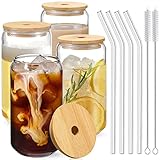
- PRODUCT CONFIGURATION: Drinking glass set includes 4 glass cups [ Diameter - 3 inches, Height - 5.6 inches ],4 nature bamboo lids, 4 reusable glass straws and 2 cleaning brushes, Classic design tumbler
- DURABLE and SAFE: The glasses are made of high-quality durable clear glass, Lead-free and BPA-free. It can be used safely for a long time. This thick clear glass can withstand the sudden changes in the temperature difference between -68°F to 212°F, making them dishwasher safe. If you want to decorate this glass, you can do DIY easily without breakage
- MULTI-PURPOSE: The glassware Great for any Occasion, any hot and cold drinks, home essentials. It is widely loved by families, kitchen, breweries, cafes, bars and restaurants. You can use it to make perfect tea, bubble Pearl Milk Tea, soda, water, iced coffee, smoothie, fruit juice or any other interesting holiday drinks
- AMAZING GIFT: This jar is very fashionable, aesthetic and characteristic. Excellent workmanship. Perfect Gifts for Women, House warming gifts, Tea mug Sets, Highball Glasses, Home Bar Accessories, Birthdays, Graduation, Weddings and Christmas Gifts
- SATISFIED SERVICE: This glass set is packaged in the heavy bubble holder and thick carton box to prevent damage while in transport. If the glass set you received was damaged or imperfect or you are not satisfied, we will offer a satisfactory solution
10. Add non-dairy milk and sweetener (optional). Pour your chilled coffee concentrate over the ice. Add your preferred non-dairy milk and a sweetener like simple syrup or agave.
- What “good” looks like: A balanced mix of coffee, milk, and sweetener.
- Common mistake: Adding too much non-dairy milk, which can dilute the coffee flavor.
- Avoid it: Start with a little milk and add more to taste.
Experiment with different non-dairy milks like oat, almond, or soy to find your perfect creamy base. You can find a great selection of dairy-free milk options on Amazon.

- NO OILS, NO GUMS: Califia Organic Almondmilk is made with just three simple ingredients without the need for oils or gums. Just shake it up and enjoy!
- CERTIFIED USDA ORGANIC: Califia Organic Almondmilk is USDA certified organic with zero additives. No dairy, oil, gums, gluten, soy, and carrageenan. It’s everything you want in dairy-free almond milk and nothing you don’t.
- THREE SIMPLE INGREDIENTS: Purified water, organic almonds, and sea salt. This is plant-based dairy-free goodness in its purest form. No oils and no gums. It’s deliciously simple.
- PLANT-BASED: Califia Farms products are made with plant-based ingredients to acheive irresistible goodness in every way––taste, versatility, and all the benefits of being dairy-free.
- DON'T FORGET TO SHAKE: Settling is natural in high-quality plant-based milks so remember to shake well!
11. Stir and enjoy. Give it a good stir to combine everything.
- What “good” looks like: A perfectly blended, refreshing iced coffee.
- Common mistake: Not stirring well enough, leaving pockets of sweetener or milk.
- Avoid it: Make sure all the ingredients are fully mixed.
Common mistakes (and what happens if you ignore them)
| Mistake | What it causes | Fix |
|---|---|---|
| Using stale coffee beans | Flat, dull, or bitter taste | Use freshly roasted beans (within 2-3 weeks of roast date). |
| Incorrect grind size | Under-extracted (sour) or over-extracted (bitter) | Adjust grind: finer for too sour, coarser for too bitter. |
| Using tap water | Off-flavors, metallic or chlorine taste | Use filtered or bottled water for a clean coffee profile. |
| Brewing with boiling water | Scorched, bitter coffee | Use water 195-205°F (90-96°C); let boiling water rest briefly. |
| Skipping the bloom | Uneven extraction, gassy taste | Always bloom grounds for 30 seconds to release CO2. |
| Pouring hot coffee directly over ice | Rapid melting, watery, diluted coffee | Chill coffee concentrate thoroughly before serving over ice. |
| Using too much non-dairy milk | Weak coffee flavor, muddy taste | Start with less milk and add more to taste. |
| Not cleaning the brewer regularly | Rancid oils, bad taste, potential clogs | Descale and clean your brewer after every few uses. |
| Incorrect coffee-to-water ratio | Too weak or too strong, overpowering bitterness | Use a scale to measure coffee and water; adjust ratio as needed. |
| Not chilling coffee thoroughly | Watery drink, lost flavor | Ensure coffee is cold before it hits the ice. |
Decision rules (simple if/then)
- If your iced coffee tastes sour, then try a finer grind because a finer grind increases extraction.
- If your iced coffee tastes bitter, then try a coarser grind because a coarser grind decreases extraction.
- If your iced coffee tastes weak, then increase your coffee-to-water ratio (use more coffee) because a higher ratio yields a stronger brew.
- If your iced coffee tastes too strong, then decrease your coffee-to-water ratio (use less coffee) or dilute it more because a lower ratio yields a weaker brew.
- If your iced coffee has off-flavors, then check your water quality and clean your equipment because impurities can significantly impact taste.
- If your iced coffee is watery, then use less ice or a stronger coffee concentrate because too much ice dilutes the drink.
- If your hot-brewed coffee tastes flat, then check the freshness of your beans and grind them just before brewing because freshness is paramount.
- If your cold brew tastes weak, then try a coarser grind and a higher coffee-to-water ratio because cold brew requires a stronger starting point.
- If you want a smoother, less acidic iced coffee, then consider cold brewing because it naturally produces a smoother, less acidic result.
- If your non-dairy milk curdles, then ensure it’s fresh and try a different brand because some milks are more sensitive to temperature changes.
FAQ
What’s the best non-dairy milk for iced coffee?
Oat milk is popular for its creamy texture and neutral flavor. Almond milk is lighter, while soy milk offers a bit more body. Experiment to find your favorite!
Can I just pour hot coffee over ice?
You can, but it’s not ideal. The hot coffee melts the ice too quickly, leading to a watered-down drink. It’s better to brew a concentrate and chill it first.
How do I make my iced coffee sweeter without dairy?
Simple syrup (equal parts sugar and water, heated until dissolved, then cooled) is great because it mixes easily. Agave nectar, maple syrup, or even a bit of honey (if you’re not strictly vegan) work too.
What’s the difference between iced coffee and cold brew?
Iced coffee is typically brewed hot and then chilled. Cold brew is brewed with cold water over a long period (12-24 hours), resulting in a smoother, less acidic concentrate.
How long does homemade iced coffee last?
Once brewed and chilled, it’s best consumed within 3-4 days. Store it in an airtight container in the refrigerator. Flavor can degrade over time.
Can I use flavored coffee beans?
Absolutely! Using flavored beans can add an extra layer of complexity to your dairy-free iced coffee. Just be mindful of how the flavors will interact with any added sweeteners or non-dairy milks.
How can I make my iced coffee less bitter?
Ensure your grind size is appropriate and your water temperature isn’t too high if brewing hot. For cold brew, a longer steep time or a coarser grind can help. Sweeteners and non-dairy milk can also balance bitterness.
What if I don’t have a fancy brewer?
You can still make great iced coffee! Use a French press, a simple drip machine, or even a moka pot for a strong brew. The key is fresh beans, good water, and proper ratios.
What this page does NOT cover (and where to go next)
- Specific brand recommendations for coffee beans or non-dairy milks.
- Detailed guides on advanced brewing techniques like siphon or espresso-based iced drinks.
- Recipes for complex layered or blended iced coffee beverages.
- Information on the health benefits or nutritional profiles of different ingredients.