
Making a Gallon of Cold Brew Coffee at Home
Quick answer
- Use a coarse grind. This is key for cold brew.
- Aim for a 1:4 coffee-to-water ratio. It’s a good starting point.
- Let it steep for 12-24 hours. Longer means stronger.
- Filter it well. Twice is often better than once.
- Dilute to taste. Cold brew concentrate is potent.
- Store it in the fridge. It lasts about 2 weeks.
Who this is for
- The person who loves iced coffee but hates the bitterness.
- Anyone looking to save money by brewing their own large batch.
- Campers or folks who need a big caffeine hit ready to go.
What to check first
Brewer type and filter type
Cold brew can be made with just about anything. Think a large pitcher, a French press, or a dedicated cold brew maker. The filter is where it gets serious. Paper filters work, but cloth or fine mesh strainers are often better for a gallon batch. You don’t want sediment.
When making a large batch like a gallon, a sturdy glass pitcher is a great brewing vessel. Ensure it has a wide enough opening for easy stirring and filtering.
No products found.
Water quality and temperature
Use filtered water. Tap water can add off-flavors. For cold brew, room temperature water is standard. No need for fancy heating here. It’s the slow extraction that does the work.
Grind size and coffee freshness
Coarse is king. Think breadcrumbs, not powder. Too fine, and you’ll get sludge and over-extraction. Freshly roasted beans are always best. Grind right before you brew.
For the best flavor, start with freshly roasted whole coffee beans. Grinding them right before you brew makes a significant difference in the final taste.
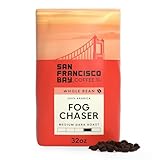
- Our iconic Fog Chaser is a blend of dark and medium roasted beans which results in a enjoyable medium dark roast coffee. It's a great combination of flavor, balance and smoothness that will chase away even the thickest morning fog.
- For finest taste, store in a cool, dark place and grind beans just berfore brewing
- QUALITY COFFEE: San Francisco Bay Coffee uses only 100% arabica coffee and certified Kosher coffee beans. Hand picked and grown in high altitude. We're so confident you'll love it, we back it with a satisfaction guarantee.
- SUSTAINABLY AND ECO- FARMED COFFEE: We offer a wide selection of sustainably grown, sourced, and packaged coffee from whole bean to ground, flavored to decaf, and much more.
- SF BAY COFFEE is a family owned, American made company with a rich tradition. Our reputation reflects on us as a family so if you're ever not happy with your purchase, call us and we'll make it right.
Coffee-to-water ratio
A good starting point for a gallon (128 oz) is around 1 lb (16 oz) of coffee. This is a 1:4 ratio by weight. You can adjust this later. Less coffee means a weaker brew. More coffee means a stronger concentrate.
Cleanliness/descale status
Your brewer and storage container need to be spotless. Any leftover oils or residue will make your cold brew taste stale or bitter. If you use a machine, make sure it’s descaled.
Step-by-step (how to make cold brew coffee 1 gallon)
1. Weigh your coffee. For a gallon batch, start with about 16 oz of whole beans.
- Good looks like: Precise measurement.
- Common mistake: Guessing. This throws off your ratio. Use a scale.
2. Grind your coffee. Grind the beans to a coarse consistency, like sea salt.
- Good looks like: Even, coarse particles. No dust.
- Common mistake: Grinding too fine. This leads to bitter coffee and a muddy mess.
3. Combine coffee and water. Place the ground coffee in your brewing vessel. Add 128 oz of filtered water.
- Good looks like: All the grounds are saturated.
- Common mistake: Not fully saturating the grounds. This causes uneven extraction. Stir gently to ensure all coffee is wet.
4. Stir gently. Give it a good, but gentle, stir to make sure all grounds are wet.
- Good looks like: A consistent slurry.
- Common mistake: Over-stirring or agitating too much. This can break up the grounds and lead to bitterness.
5. Cover and steep. Cover your container tightly. Let it sit at room temperature.
- Good looks like: A sealed container.
- Common mistake: Leaving it uncovered. This can let in dust or fridge odors.
6. Wait (12-24 hours). The longer it steeps, the stronger it gets. 18 hours is a sweet spot for many.
- Good looks like: Patience.
- Common mistake: Rushing it. Cold brew needs time.
7. Strain the coffee. Pour the mixture through a fine-mesh sieve lined with cheesecloth or a paper filter.
- Good looks like: Clear liquid, minimal sediment.
- Common mistake: Not filtering enough. This leaves gritty bits in your final brew.
8. Filter again (optional but recommended). For an extra-clean brew, filter it a second time.
- Good looks like: Crystal clear concentrate.
- Common mistake: Skipping this if the first filter wasn’t perfect. A second pass really cleans it up.
9. Dilute to taste. Your concentrate is strong. Mix it with water or milk, usually 1:1 or 1:2.
- Good looks like: A balanced flavor, not too strong or weak.
- Common mistake: Drinking it straight. It’s like rocket fuel.
10. Store properly. Pour the diluted cold brew into an airtight container and refrigerate.
- Good looks like: A clean, sealed container.
- Common mistake: Leaving it out or in an open container. It spoils faster.
Common mistakes (and what happens if you ignore them)
| Mistake | What it causes | Fix |
|---|---|---|
| Using a fine grind | Muddy, bitter, over-extracted coffee | Use a coarse grind. Check your grinder settings. |
| Not enough steeping time | Weak, watery, underdeveloped flavor | Steep for at least 12 hours. Experiment with longer times. |
| Too much steeping time | Bitter, astringent, unpleasant taste | Stick to the 12-24 hour range. Taste test at 12, 18, and 24 hours. |
| Inadequate filtering | Gritty, sediment-filled coffee | Use a fine-mesh sieve and consider a paper or cloth filter. Filter twice. |
| Using tap water | Off-flavors, metallic or chemical notes | Use filtered or bottled water for a cleaner taste. |
| Not stirring gently | Uneven extraction, some grounds under-brewed | Stir gently to saturate all grounds, then leave it alone. |
| Storing at room temperature | Spoilage, off-flavors, potential mold | Refrigerate immediately after brewing and dilution. |
| Incorrect coffee-to-water ratio | Too weak or too strong concentrate | Start with 1:4 (coffee:water by weight) and adjust to your preference. |
| Using stale beans | Dull, flat, uninspired coffee flavor | Use freshly roasted beans. Grind right before brewing. |
Decision rules (simple if/then)
- If your cold brew tastes bitter, then try a coarser grind because fine particles over-extract.
- If your cold brew is too weak, then increase the coffee-to-water ratio or steep longer because more coffee or time means more extraction.
- If you have sediment in your cup, then filter it again using a finer filter because the grounds didn’t get caught.
- If your cold brew has an off-flavor, then check your water quality and cleanliness of your equipment because those are common culprits.
- If you want a stronger concentrate, then use more coffee relative to water because that’s how you boost the intensity.
- If you’re short on time and need cold brew fast, then start a batch now for tomorrow because cold brew is a waiting game.
- If your cold brew tastes sour, then it might not have steeped long enough or the water temperature was too low because under-extraction causes sourness.
- If you prefer a smoother, less acidic coffee, then cold brew is the way to go because the cold water extraction method is naturally less acidic.
- If you’re making a big batch for a party, then plan ahead and make it the day before because it needs ample steeping and chilling time.
- If you find the dilution ratio tricky, then start with 1:1 (concentrate to water/milk) and adjust because it’s easy to add more liquid.
FAQ
How long does cold brew last?
Your cold brew concentrate, stored in an airtight container in the fridge, will typically last about two weeks. Diluted cold brew might have a slightly shorter shelf life.
Can I use any coffee beans?
Yes, you can use most coffee beans. However, medium to dark roasts often lend themselves well to cold brew, offering richer, chocolatey notes. Lighter roasts can also work but might have a more delicate flavor profile.
What’s the best way to filter cold brew?
A multi-step approach is best. Start with a coarse sieve to remove the bulk of the grounds. Then, follow up with a fine-mesh sieve lined with cheesecloth or a paper coffee filter for a cleaner brew.
Why is my cold brew bitter?
Bitterness usually comes from over-extraction. This can be caused by grinding your beans too fine, steeping for too long, or using water that’s too hot (though cold brew uses cold water).
How much caffeine is in a gallon of cold brew?
Caffeine content varies widely based on the beans, roast, and brew ratio. Generally, cold brew has more caffeine than hot coffee due to the higher coffee-to-water ratio and longer extraction time.
Can I make cold brew in a French press?
Absolutely. A French press is a popular method for cold brew. Just follow the steps for adding coarse grounds and water, steeping, and then pressing the plunger slowly to separate the grounds.
What’s the difference between cold brew and iced coffee?
Iced coffee is typically hot coffee that’s been cooled down, often leading to a more bitter or acidic taste. Cold brew is brewed with cold water over many hours, resulting in a smoother, less acidic, and often sweeter flavor.
How do I store my cold brew concentrate?
Keep your concentrate in a clean, airtight container in the refrigerator. This prevents oxidation and keeps it fresh for as long as possible.
What this page does NOT cover (and where to go next)
- Specific cold brew maker reviews. (Look for reviews of popular brands and models.)
- Detailed bean origin and roast profile analysis for cold brew. (Explore coffee blogs and roaster websites for bean recommendations.)
- Advanced techniques like nitro cold brew. (Search for guides on infusing nitrogen.)
- Troubleshooting specific flavor defects beyond common issues. (Consult coffee forums or barista resources.)
- Commercial-scale cold brew production. (Look into food science or commercial brewing guides.)