
Key Ingredients for Delicious Coffee Jelly
Quick Answer
- Coffee is king. Use good quality, strong brewed coffee.
- Gelatin or agar-agar sets the jelly. Gelatin gives a softer texture. Agar is firmer.
- Sugar is for sweetness. Adjust to your taste.
- Water helps dissolve everything and control consistency.
- Optional: A splash of cream or milk for richness.
- A pinch of salt can surprisingly boost the coffee flavor.
For the best flavor, use good quality, strong brewed coffee. This is the foundation of delicious coffee jelly.
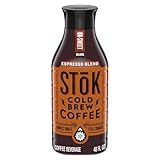
- Plenty to Go Around: One 48 fl oz bottle of ready to drink Unsweetened, Black, SToK Espresso Blend Cold Brew Coffee with 195 mg caffeine per 12 oz serving
- Brewed Low and Slow: SToK Espresso Blend Cold Brew Coffee drinks are steeped for at least 10 hours to bring you a dialed-in smoothness that’s never bitter
- Still Smooth: SToK's boldest brew with nutty, chocolaty, caramelized, smoky and dried fruit flavor notes
- Flavor Inspiration: Check out all the SToK cold brew coffee flavors, like Bright & Mellow and Not Too Sweet, so you can turn your passion for cold brew into action
- Make a Difference: SToK Cold Brew Coffee is made with responsibly-grown, Rainforest Alliance Certified beans
Key Ingredients and Coffee Jelly Definitions
- Brewed Coffee: The flavorful liquid base. Stronger is better for jelly.
- Gelatin: An animal-derived gelling agent. Creates a jiggly, melt-in-your-mouth texture.
- Agar-Agar: A plant-based gelling agent from seaweed. Produces a firmer, more brittle jelly.
- Sweetener: Usually sugar, but can be honey, maple syrup, or artificial sweeteners. Controls the overall taste.
- Water: Used to bloom gelatin or dissolve agar-agar, and to dilute coffee if needed.
- Salt: A small amount enhances other flavors, including coffee.
- Cream/Milk: Adds richness and a creamy mouthfeel, if desired.
- Coffee Extract/Flavoring: Can be used to boost coffee intensity without adding more liquid.
- Bloom: The process of soaking gelatin in cold liquid to hydrate it before heating.
How Coffee Jelly Is Made
- First, you brew some seriously strong coffee. Think double strength, or espresso if you’re feeling fancy.
- Next, you prepare your gelling agent. For gelatin, that means blooming it in cold water.
- If using agar-agar, you’ll typically dissolve it in water and bring it to a simmer.
- Then, you combine the bloomed gelatin or dissolved agar with your hot coffee.
- Sweetener is added at this stage to dissolve properly. Stir it in well.
- Some folks add a tiny pinch of salt here. Trust me on this one.
- If you’re going for a creamy version, you’ll add milk or cream now.
- Give it all a good stir to make sure everything is incorporated.
- Pour the mixture into your desired mold or serving dishes.
- Chill it until it’s firm. This can take a few hours in the fridge.
- Once set, you can slice it, scoop it, or serve it as is.
What Affects Coffee Jelly Results
- Coffee Strength: This is the big one. Weak coffee means bland jelly. Go bold.
- Type of Coffee: Espresso, cold brew concentrate, or strongly brewed drip coffee all work. Each adds a slightly different nuance.
- Gelling Agent Choice: Gelatin gives a softer, more delicate wobble. Agar-agar is firmer and holds its shape better, especially at warmer temps.
- Gelling Agent Amount: Too little, and it won’t set. Too much, and it’ll be rubbery. Follow the package directions closely.
- Sweetness Level: This is totally personal. Taste your mixture before chilling.
- Water-to-Coffee Ratio: Affects both the coffee flavor intensity and the final jelly texture.
- Temperature of Liquids: Hot liquids are needed to dissolve sugar and activate the gelling agents properly.
- Freshness of Coffee: Like any coffee drink, stale beans won’t give you the best flavor.
- Add-ins: Cream, milk, or even a touch of liqueur can change the texture and flavor profile.
- Chilling Time: Undeniably important. Give it enough time to fully set. Patience, grasshopper.
- Serving Temperature: Jelly can firm up or soften depending on how cold it is.
Pros, Cons, and When Coffee Jelly Matters
- Pro: Intense Coffee Flavor: When done right, it’s a coffee lover’s dream.
- Con: Texture Can Be Tricky: Getting the perfect wobble takes practice.
- Pro: Refreshing Dessert: Great for a light, cool treat, especially in warmer weather.
- Con: Requires Specific Ingredients: You need to have coffee and a gelling agent on hand.
- Pro: Customizable: Adjust sweetness, add cream, or even a hint of spice.
- Con: Can Be Too Firm: Overdoing the agar-agar can make it tough.
- Pro: Visually Appealing: The dark, translucent cubes look pretty darn neat.
- Con: Not for Everyone: Some folks just don’t dig jelly texture.
- Pro: Great with Other Desserts: Serve it alongside ice cream, whipped cream, or in parfaits.
- Con: Can Be Time-Consuming: Brewing, mixing, and chilling all take time.
- Pro: Uses Up Leftover Coffee: A good way to avoid wasting that last bit of pot.
- Con: Might Not Satisfy a “Hot Coffee” Craving: It’s a dessert, not a morning pick-me-up.
Common Coffee Jelly Misconceptions
- Myth: Any coffee will do. Nope. You need strong, good-tasting coffee for the flavor to come through.
- Myth: Gelatin and agar-agar are interchangeable. Not really. They behave differently and give distinct textures.
- Myth: You can just mix coffee, sugar, and gelatin and chill. You usually need to bloom the gelatin first and heat the mixture.
- Myth: Coffee jelly is always sweet. You control the sugar. You can make it less sweet or even unsweetened.
- Myth: It has to be served cold. While best chilled, some variations can be enjoyed at room temperature if using agar-agar.
- Myth: Adding milk will curdle the coffee. If you add milk to hot coffee before it’s set, it can sometimes separate. Best to add it to a slightly cooled mixture or use condensed milk.
- Myth: Coffee jelly is a health food. It’s a dessert. Sugar and calories are involved.
- Myth: You need fancy equipment. A pot, a whisk, and some patience are usually all you need.
- Myth: It’s a difficult recipe. It’s pretty straightforward once you understand the gelling agent.
- Myth: It’s just a novelty. It’s a classic dessert in many parts of the world for a reason.
FAQ
- What’s the best coffee to use for jelly?
Strongly brewed coffee, like a double-strength drip or espresso, works best. Cold brew concentrate is also a great option. The key is a bold flavor that won’t get lost.
- Can I use instant coffee?
You can, but the flavor won’t be as rich or nuanced as with brewed coffee. If you do, make sure to dissolve it very well.
- What’s the difference between gelatin and agar-agar jelly?
Gelatin creates a softer, more jiggly texture that melts in your mouth. Agar-agar, being plant-based, results in a firmer, sometimes slightly more brittle jelly.
- How much sugar should I add?
This depends on your preference. Start with a moderate amount and taste the mixture before chilling. You can always add more, but you can’t take it out.
- My jelly didn’t set. What went wrong?
Likely, not enough gelling agent was used, or it wasn’t activated properly (e.g., gelatin not bloomed, or agar-agar not simmered). Ensure you followed the package instructions for the gelling agent.
- Can I make coffee jelly without sugar?
Yes, you can. You can use sugar substitutes like stevia or erythritol, or simply omit the sugar if you prefer a less sweet, more coffee-forward taste.
- How long does coffee jelly last?
When stored in an airtight container in the refrigerator, coffee jelly typically lasts for 3-5 days.
- Can I add alcohol to coffee jelly?
Sure, a splash of coffee liqueur or rum can be a nice addition. Add it after the mixture has cooled slightly, but before it sets, to prevent the alcohol from evaporating too much.
What This Page Does Not Cover (and Where to Go Next)
- Specific brand recommendations for coffee beans or gelling agents. (Look for reviews on quality and flavor profiles.)
- Precise measurements for every possible coffee-to-gelling agent ratio. (Consult individual recipe guides for starting points.)
- Advanced flavor pairings or complex dessert constructions. (Explore pastry blogs or dessert recipe sites.)
- The history of coffee jelly or its cultural significance. (Search for culinary history articles.)
- Detailed information on the chemical properties of gelling agents. (Look for food science resources.)