
How To Make Frothy Coffee Easily At Home
Quick answer
- Use a whisk or frother for instant froth.
- Steam milk with a good machine for classic froth.
- Consider milk alternatives for different froth textures.
- Don’t overheat your milk; aim for 140-150°F.
- Freshness matters, for both coffee and milk.
- Experiment with ratios until it tastes right to you.
Who this is for
- The home barista who wants cafe-style drinks.
- Anyone tired of flat, uninspired coffee.
- Folks looking to elevate their morning routine without a fancy setup.
What to check first
Brewer type and filter type
Whatever you’re brewing with, make sure it’s clean. A dirty brewer can impart funky flavors that mess with your froth game. Paper filters are common, but metal ones let more oils through, which can affect texture. For frothing itself, the “brewer” is often just a milk pitcher or a separate frothing device.
Water quality and temperature
If you’re using an espresso machine with a steam wand, water quality is key. Hard water can build up scale. For the coffee itself, good water makes good coffee, period. Temperature is crucial for frothing, too. Too hot, and you’ll scald the milk. Too cool, and you won’t get much froth.
Grind size and coffee freshness
This one’s more about the coffee base for your frothy drink. If you’re making an espresso-based drink, a fine, consistent grind is non-negotiable. Freshly roasted beans, ground right before brewing, make a world of difference. Stale coffee just tastes… tired.
Coffee-to-water ratio
For espresso, this is critical. A common starting point is 1:2 – one part coffee grounds to two parts espresso liquid. If you’re just adding froth to drip coffee, the ratio is less strict, but don’t drown out your coffee flavor.
Cleanliness/descale status
Seriously, clean your equipment. Milk residue is a breeding ground for bacteria and tastes awful. If you have a steam wand, purge it before and after every use. Descaling your machine regularly keeps it running smoothly and prevents funky tastes.
Step-by-step (brew workflow)
Here’s a general workflow for making a latte or cappuccino at home.
1. Prepare your espresso: Grind your beans finely. Dose your portafilter and tamp evenly.
- What “good” looks like: A nice, compact puck of coffee ready for extraction.
- Common mistake: Tamping too hard or too soft. Too hard chokes the machine; too soft leads to watery espresso. Aim for firm and level.
2. Brew the espresso: Lock the portafilter into your machine and start the shot.
- What “good” looks like: A steady stream of rich, dark liquid that gradually lightens to a caramel color. Aim for about 25-30 seconds for a double shot (roughly 2 oz).
- Common mistake: Running the shot too long (bitter) or too short (sour). Watch the color and flow.
3. Prepare your milk pitcher: Pour cold milk into a clean, stainless steel pitcher. Don’t fill it more than halfway.
- What “good” looks like: A pitcher filled to about the halfway mark. You need room for expansion.
- Common mistake: Overfilling the pitcher. This makes it impossible to create good foam and will likely spill.
Pour cold milk into a clean, stainless steel pitcher. Don’t fill it more than halfway, as you need room for expansion.

- This milk frothing pitcher is made of food grade 304 (18/8) stainless steel with stylish look, resists odor retention, stain-proof, rust-proof, crash-proof and heat-resistant. It is solid and durability. Easy to clean & Dishwasher safe. After our repeated adjustments, this Espresso Milk Frothing Pitcher is almost a perfect size. Every curve of it looks so elegant. For those who like latte art or Cappuccino, you will love it.
- For perfect latte art, the magic is in the spout. Dripless Eagle Spout Design, you can focus entirely on the latte art without worrying about drips. Diversion trough makes milk flow more smoothly, help you make latte-art more delicate
- Ergonomically designed handle. We also deliberately made the handle larger to make it more comfortable to hold. Even if you hold it for a long time every day, you will not feel tired. For you obsessed with latte art, isn't this what you want?
- For better drinks, Measurements on the Inside. We place U.S. and metric measurements up to 12 oz./350 mL right on the inside of our lovely Milk Frothing Jug. It is easy to read, you have to pay attention to the numbers for truly delicious drinks. Use with Espresso coffee Machines, to steam your milk or cream to be silky smooth with few bubbles, create perfect and personal latte art for your coffee or cappuccino.
- We provide 100% satisfied customer service, just to ensure that you get the perfect milk frothing pitcher. If you have any questions, just contact us through your order. We will provide you with a 100% satisfactory solution.
4. Purge the steam wand: Briefly turn on the steam wand to clear out any condensation.
- What “good” looks like: A short burst of steam and water.
- Common mistake: Skipping this. You’ll just inject water into your milk, ruining the texture.
5. Steam the milk (aeration): Submerge the tip of the steam wand just below the surface of the milk. Turn on the steam fully. Listen for a gentle “kissing” or “tearing paper” sound.
- What “good” looks like: Tiny, consistent bubbles being introduced. The milk volume should increase slightly.
- Common mistake: Burying the wand too deep (no foam) or holding it too high (big, unstable bubbles). Get that gentle hiss.
6. Steam the milk (texturing): Once you’ve added enough air (usually 5-10 seconds), submerge the wand deeper into the milk, off-center. Create a whirlpool motion.
- What “good” looks like: The milk is swirling rapidly. The sound changes from a hiss to a gentler rumble. The pitcher will get warm.
- Common mistake: Not submerging the wand enough, leading to too much foam. You want silky microfoam, not stiff meringue.
7. Stop steaming: Turn off the steam before removing the wand from the milk. Wipe the wand immediately with a damp cloth.
- What “good” looks like: A pitcher of milk that’s warm to the touch (around 140-150°F). The milk should look glossy and have a paint-like consistency.
- Common mistake: Leaving the wand in the milk after turning off steam. This sucks milk back into the wand. Clean it fast!
8. Polish the milk: Gently swirl the milk in the pitcher to integrate the foam and liquid. Tap the pitcher on the counter a couple of times to break any larger bubbles.
- What “good” looks like: Smooth, glossy milk with no visible large bubbles. It should look like wet paint.
- Common mistake: Not swirling or tapping. This leaves you with separate layers of foam and milk.
9. Pour the milk: Pour the steamed milk into your espresso. Start with a steady stream from a bit higher up to mix the milk and espresso, then bring the pitcher closer to the surface to create latte art if you’re feeling fancy.
- What “good” looks like: A smooth, integrated drink with a nice layer of microfoam on top.
- Common mistake: Pouring too fast or too aggressively, which can disrupt the crema and foam.
Common mistakes (and what happens if you ignore them)
| Mistake | What it causes | Fix |
|---|---|---|
| Using stale coffee beans | Weak, flat, or bitter coffee flavor; poor crema. | Use freshly roasted beans (within 2-3 weeks of roast date) and grind right before brewing. |
| Incorrect grind size (too coarse) | Under-extracted espresso (sour, watery), weak coffee. | Adjust grinder to a finer setting. Check your brewer’s manual for recommended grind sizes. |
| Incorrect grind size (too fine) | Over-extracted espresso (bitter, burnt), machine channeling, slow drip. | Adjust grinder to a coarser setting. Ensure your tamp is consistent. |
| Not purging the steam wand | Watery milk, poor foam quality, potential for milk clogs in the wand. | Always turn on steam briefly before and after steaming milk. |
| Overheating milk | Scalded milk flavor (burnt, rubbery), destroys sweetness, poor foam texture. | Use a thermometer or touch the pitcher. Stop steaming when it’s too hot to hold comfortably for more than a second (140-150°F). |
| Not enough aeration during steaming | Flat milk, no froth, more like hot milk than a latte. | Keep the steam wand tip just at the surface, listen for that “kissing” sound, and allow the milk volume to increase slightly. |
| Too much aeration during steaming | Large, bubbly foam (like dish soap), separates quickly, not silky. | Submerge the wand deeper after initial aeration to create a whirlpool and integrate foam into the milk. |
| Not cleaning the steam wand immediately | Milk residue hardens, clogs wand, harbors bacteria, unpleasant taste. | Wipe the wand with a damp cloth <em>immediately</em> after steaming. Purge again to clear any internal residue. |
| Using old or poor-quality milk | Difficulty frothing, off-flavors, poor texture. | Use cold, fresh milk. Whole milk froths best, but alternatives can work with practice. |
| Not swirling/tapping milk | Separated foam and liquid, inconsistent texture in the cup. | Gently swirl the pitcher and tap it on the counter to create smooth, integrated microfoam. |
| Using tap water with high mineral content | Scale buildup in machine, affects coffee flavor, can clog components. | Use filtered water or bottled spring water. Check your machine’s manual for descaling frequency. |
Decision rules (simple if/then)
- If your espresso is tasting sour, then try grinding finer because a finer grind increases extraction.
- If your espresso is tasting bitter, then try grinding coarser because a coarser grind decreases extraction.
- If your milk foam is too bubbly and unstable, then you likely introduced too much air initially or didn’t integrate it enough. Try submerging the wand deeper to create a vortex.
- If your milk isn’t frothing at all, then check that the steam wand is properly purged and that the tip isn’t clogged. Ensure the milk is cold and fresh.
- If your steamed milk has a burnt taste, then you overheated it. Aim for 140-150°F.
- If your coffee tastes flat, then check the freshness of your beans and your grind size.
- If your machine is sputtering or making weird noises, then it might need descaling or cleaning.
- If you want a thicker, richer froth, then use whole milk or a barista-edition plant-based milk.
- If you’re making a cappuccino, then aim for more foam volume than a latte.
- If you’re adding froth to drip coffee, then use a handheld frother for simplicity.
- If your latte art isn’t forming, then focus on getting that silky microfoam texture first; art comes with practice.
If you’re adding froth to drip coffee, use a handheld frother for simplicity.

- ☕【Environmentally friendly】Say goodbye to disposable batteries! Our milk frother adopts a USB charging design, which is more environmentally friendly and lighter than battery type, allowing you to charge anytime, anywhere without changing batteries. The built-in battery capacity is 1500mAh, and it can be used several times a day after being fully charged.
- 🥛【Stainless Steel Stirring Heads】This frother wand contains 3 detachable whisking heads, providing multiple frothing options. The hook stirrer of the coffee frother is suitable for mixing milk powder, protein powder, nutritional powder, oatmeal or other powdered objects. The spring stirrer is perfect for milk froth for latte and cappuccino. There is also a balloon mixer that can be used for beating eggs, cream, condensed milk or baking. Easily switch between uses, suitable for various kitchen use scenarios.
- 🍳【3-speed Settings】Handheld milk frother has three buttons of high/middle/low on the handheld frother main unit for you to control, to achieve the ideal foaming effect. our mixer electric handheld effortlessly creates creamy foam for coffee and blends beverages in 15-20 seconds without noise. Perfect for electric whisk coffee stirrer users who seek convenience and quality results.
- 🍵【Remaining Battery Reminder】The electric milk frother handheld has the function of an Indicator light to indicate battery level(low, medium, full), the remaining power is clear at a glance, and charging is reasonably, convenient in daily use. The drink mixer is a small, exquisite cylinder with a flat bottom.
- 🍰【High-Quality Rechargeable Frother】The coffee foam maker wand is made of ABS with an easy and comfortable grip an ergonomic handle and buttons. The built-in powerful low-noise motor brings strengthened speed rotation without disturbing your families and gives you a calm and tranquil morning.
FAQ
What’s the easiest way to make coffee frothy at home?
For a quick fix, a handheld electric frother is super simple. Just dip it in warm milk and blend until frothy. For a more traditional approach, an espresso machine with a steam wand is the way to go.
For a quick fix, a handheld electric frother is super simple. Just dip it in warm milk and blend until frothy.
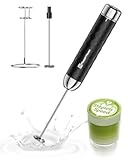
- 【Stepless Speed Control Design】Unlike traditional button-operated milk frother, this LunaFro 2.0 electric milk frother allows you to seamlessly adjust the frothing speed with unparalleled precision, ranging from 4500RPM to 10000RPM, simply by toggling the rotary switch. Experience the ultimate control as you craft the perfect froth for different beverages. Say goodbye to splashes and lackluster froth
- 【One Charging, 1440 Hours Ready】With a built-in 1200mAh lithium battery, this portable USB-C rechargeable milk frother provides up to 2 months of usage on a single charge(note: if use once per day). Fully charge the battery operated milk foam maker in just 2 hours with the included USB-C cable, eliminating the need for constant battery replacement
- 【Create Rich Creamy Foam in Seconds】Transform your morning coffee routine with our high-speed milk frother. Achieve smooth, creamy foam in just 10-15 seconds, perfect for busy mornings. Elevate your coffee experience with velvety milk foam every time
- 【Versatile for Various Beverages】 Beyond coffee, our LunaFro 2.0 milk frother excels at blending powdered supplements like protein into beverages and preparing mixed drinks. Its versatility makes it an essential tool for all your beverage-making needs, including Latte, Cappuccino, Matcha and cocoa powder
- 【Easy Cleaning and Storage】This Stepless Speed Control milk frother comes with two frothing whisks for easy replacement. Cleaning is straightforward—simply detach the whisk and wash it in water. The included compact stainless steel stand provides convenient storage and organization
Can I make froth without an espresso machine?
Absolutely. You can use a French press – heat milk, pour it into the press, and pump the plunger vigorously for a few minutes. A Mason jar also works: heat milk, pour it in, screw the lid on tight, and shake like crazy.
What kind of milk froths best?
Whole milk is the classic choice because its fat and protein content create the most stable, silky foam. However, barista-edition oat milk, soy milk, and almond milk can also produce excellent froth with practice.
How hot should my milk be for frothing?
You want your milk to reach about 140-150°F. Any hotter, and you risk scalding it, which ruins the flavor and texture. It should be hot to the touch but still comfortable to hold for a second or two.
Does the type of coffee matter for a frothy drink?
Yes, the base coffee does. For drinks like lattes and cappuccinos, espresso is traditional because its concentrated flavor and crema pair well with frothed milk. If you’re just adding froth to regular coffee, it’s less critical, but a good quality brew will always taste better.
How do I get that smooth, glossy microfoam?
It’s all about technique with the steam wand. Start by introducing air with a gentle hiss, then submerge the wand deeper to create a vortex that heats and texturizes the milk evenly. Aim for a paint-like consistency.
My froth disappears too quickly. What am I doing wrong?
This usually means you either introduced too much air initially or didn’t integrate it properly with the milk. Make sure to swirl and tap your pitcher after steaming to create a stable microfoam.
What this page does NOT cover (and where to go next)
- Detailed instructions for specific espresso machine models. (Check your machine’s manual.)
- Advanced latte art techniques. (Look for dedicated latte art tutorials.)
- The science behind different milk proteins and fat content. (Explore coffee science resources.)
- Troubleshooting specific brewing equipment issues beyond general cleaning. (Consult manufacturer support.)
- Recipes for other coffee drinks that don’t involve milk froth. (Search for specific drink recipes.)