
How to Make Espresso-Like Coffee With Instant Coffee
Quick answer
- You can achieve a concentrated, espresso-like coffee using instant coffee granules.
- The key is to use a higher ratio of instant coffee to water than you would for regular coffee.
- Aim for a paste-like consistency before adding the rest of your hot water.
- Use high-quality instant coffee specifically marketed for espresso or strong brews.
- Experiment with water temperature to find your preferred strength and flavor.
- Proper mixing is crucial to avoid clumps and ensure even extraction.
Who this is for
- Coffee drinkers who want a quick, strong coffee without an espresso machine.
- Those who enjoy the intensity of espresso but only have instant coffee on hand.
- Individuals looking for a base for coffee drinks like lattes or cappuccinos made with instant coffee.
What to check first
Brewer type and filter type
While this method doesn’t use a traditional brewer or filter, the concept of extraction still applies. Think of your mug as the vessel. The “filter” in this case is the granule itself, and how well it dissolves. Using a fine-mesh sieve to add the hot water can help prevent any undissolved particles from reaching your cup, mimicking a cleaner brew.
Water quality and temperature
The quality of your water significantly impacts the final taste. Use filtered or bottled water if your tap water has a strong taste. For an espresso-like result, water that is just off the boil is ideal, typically around 195-205°F (90-96°C). Water that is too cool won’t extract the full flavor from the instant coffee, while boiling water can scorch the granules, leading to a bitter taste.
Grind size and coffee freshness
For this method, we’re working with instant coffee granules, which are already processed. However, the “freshness” of your instant coffee matters. Store your instant coffee in an airtight container away from light and heat to preserve its flavor. If you have a choice, opt for instant coffee that is labeled for espresso or strong coffee, as these are often formulated for a more robust flavor profile.
Coffee-to-water ratio
This is the most critical factor for achieving an espresso-like intensity. For regular instant coffee, you might use 1-2 teaspoons per 6-8 oz of water. To mimic espresso, you’ll need a much higher concentration. Start with a ratio of roughly 1:1 or 1:2 (coffee granules to water) for the initial paste. For example, try 2 tablespoons of instant coffee to 2-3 tablespoons of hot water to form a thick paste.
Cleanliness/descale status
Even without a complex machine, a clean mug is essential. Any residue from previous drinks can alter the flavor of your carefully crafted instant coffee. Ensure your mug is thoroughly washed and rinsed. If you use a kettle, make sure it’s free from limescale buildup, as this can affect water taste and heating efficiency.
Step-by-step (brew workflow)
1. Measure your instant coffee: Scoop 2-3 tablespoons of high-quality instant coffee granules into your mug.
- What “good” looks like: You have the desired amount of granules measured out.
- Common mistake: Over-measuring, which can lead to an overly bitter and concentrated drink. Avoid this by using a measuring spoon and leveling it off.
For the best results, start with high-quality instant coffee granules. We recommend trying instant coffee granules for a consistently good brew.

- Iced Coffee Plus Protein
- Added Benefits
- Naturally Flavorful
- Incredibly Convenient
- Your Goals, Made Easy
2. Add a small amount of hot water: Pour about 2-3 tablespoons of hot water (just off the boil, around 195-205°F or 90-96°C) into the mug with the coffee granules.
- What “good” looks like: The water is just enough to start dissolving the granules.
- Common mistake: Adding too much water at this stage, preventing the formation of a thick paste. Use only a small amount to start.
3. Stir to form a paste: Use a spoon to vigorously stir the coffee granules and hot water. Continue stirring until you achieve a thick, glossy paste with no dry clumps.
- What “good” looks like: A smooth, thick paste similar in consistency to chocolate ganache or thick syrup.
- Common mistake: Not stirring enough, leaving undissolved clumps of coffee. Stir until completely smooth.
4. Add remaining hot water: Slowly pour in the rest of your hot water, typically 4-6 oz, while gently stirring.
- What “good” looks like: The paste dissolves into a rich, dark liquid with a foamy crema on top.
- Common mistake: Pouring the water too quickly, which can dissipate the crema and create a less concentrated flavor. Pour slowly and stir gently.
5. Stir to combine: Continue to stir gently until the coffee is fully incorporated and the crema is evenly distributed.
- What “good” looks like: A uniform, dark coffee beverage with a noticeable layer of foam.
- Common mistake: Over-stirring, which can break down the crema. Stir just enough to combine.
6. Let it settle (optional): Allow the coffee to sit for about 30 seconds to a minute. This allows the flavors to meld and the crema to stabilize.
- What “good” looks like: The crema has settled slightly, and the aroma is prominent.
- Common mistake: Drinking immediately without allowing any settling time, which might result in a less developed flavor profile.
7. Serve immediately: Your espresso-like coffee is ready to be enjoyed as is or used as a base for other drinks.
- What “good” looks like: A hot, aromatic, and intensely flavored coffee.
- Common mistake: Letting it sit for too long, which can cause the crema to dissipate and the flavor to degrade.
Common mistakes (and what happens if you ignore them)
| Mistake | What it causes | Fix |
|---|---|---|
| Using too little instant coffee | Weak, watery coffee that lacks intensity and crema. | Increase the amount of instant coffee granules used for the initial paste. |
| Using too much instant coffee | Overly bitter, undrinkable coffee with a harsh aftertaste. | Reduce the amount of instant coffee; start with the recommended ratio and adjust to your taste. |
| Not stirring enough to form a paste | Gritty texture, undissolved coffee clumps, and uneven flavor extraction. | Stir vigorously until a smooth, thick paste is achieved before adding the rest of the water. |
| Using boiling water | Scorched coffee granules, resulting in a bitter and unpleasant flavor. | Let the water cool slightly after boiling, aiming for 195-205°F (90-96°C). |
| Using too much water initially | Prevents the formation of a concentrated paste, leading to a weaker brew. | Use only a small amount of water (2-3 tablespoons) to create the initial paste. |
| Over-stirring after adding water | Destroys the delicate crema, resulting in a flat, less appealing appearance. | Stir gently and only as much as needed to combine the paste with the rest of the water. |
| Using stale or low-quality instant coffee | Flat, dull flavor, or off-notes that cannot be masked by technique. | Store instant coffee in an airtight container and purchase fresh, reputable brands, especially those marketed for espresso or strong brews. |
| Not using filtered water | Unpleasant mineral or chlorine tastes from tap water can affect the final brew. | Use filtered or bottled water for a cleaner, more neutral base flavor. |
| Serving too late | Crema dissipates, and flavor can become stale or oxidized. | Serve and consume your espresso-like coffee immediately after preparation. |
| Incorrect water temperature (too cool) | Insufficient extraction, leading to a weak and underdeveloped flavor. | Ensure water is heated to the optimal range of 195-205°F (90-96°C) for proper flavor extraction. |
Decision rules (simple if/then)
- If your coffee tastes weak, then add more instant coffee granules next time because a higher coffee-to-water ratio is key to intensity.
- If your coffee tastes bitter, then use slightly cooler water because water that is too hot can scorch the coffee.
- If you have undissolved clumps, then stir more vigorously when forming the paste because thorough mixing is essential for even extraction.
- If the crema disappears too quickly, then stir less after adding the main volume of water because over-stirring can break down the foam.
- If your coffee has an off-taste, then check your water quality because tap water can impart unwanted flavors.
- If you want a smoother texture, then ensure you’re using a high-quality instant coffee because some brands dissolve more completely than others.
- If you’re making a milk-based drink, then prepare the concentrated coffee first and let it cool slightly before adding milk because adding cold milk to very hot coffee can affect the texture.
- If you’re new to this method, then start with a 1:1 ratio of coffee to water for the paste and adjust from there because personal preference varies greatly.
- If you notice sediment at the bottom of your mug, then try adding the hot water through a fine-mesh sieve because this can catch any undissolved particles.
- If your instant coffee has been open for a long time, then consider replacing it because freshness significantly impacts flavor.
FAQ
Can I really make espresso with instant coffee?
You can create a concentrated coffee beverage that resembles espresso in intensity and texture. It won’t be true espresso, which is made by forcing hot water through finely-ground coffee beans under high pressure, but it can offer a similar strong flavor profile.
What kind of instant coffee is best for this?
Look for instant coffee labeled “espresso,” “intense,” or “bold.” These are often formulated with robust beans and processing methods designed for a stronger flavor that holds up well in concentrated brews.
When choosing your instant coffee, look for options specifically labeled ‘espresso,’ ‘intense,’ or ‘bold.’ For a superior flavor, consider high quality instant coffee designed for robust brews.
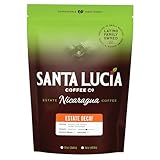
- REFINED ESTATE DECAF - Santa Lucia Coffee’s Estate Decaf Roast is naturally decaffeinated using a gentle process that preserves the bean's integrity. This smooth, full-bodied roast reveals layers of rich cocoa, toasted almond, and soft citrus. Crafted from shade-grown beans harvested on small, family-owned farms in Nicaragua’s high-altitude mountains, it delivers depth without the caffeine.
- LOW ACID, SMOOTH & GENTLE - Expertly roasted to reduce acidity while enhancing natural flavor, this decaf coffee is exceptionally smooth and easy on the stomach. Perfect for coffee lovers seeking a bold yet gentle cup, it provides everyday enjoyment without the sharpness or discomfort found in high-acid blends.
- VOLCANIC SOIL, HIGH-ALTITUDE GROWN - Our Strictly High Grown (SHG) beans mature slowly in mineral-rich volcanic soil, developing dense structure, refined acidity, and complex layers of flavor for a truly elevated coffee experience.
- SMALL-BATCH ROASTED TO PERFECTION - Expertly roasted to reduce acidity while enhancing natural flavor, this decaf coffee is exceptionally smooth and easy on the stomach. Perfect for coffee lovers seeking a bold yet gentle cup, it provides everyday enjoyment without the sharpness or discomfort found in high-acid blends.
- ETHICALLY SOURCED, WOMEN & LATIN OWNED TRADITION - Roasted by a family-run, Latin and women owned business with over 30 years of specialty coffee heritage. Santa Lucia supports sustainable practices that empower Nicaraguan farming communities.
How much instant coffee should I use?
For an espresso-like result, start with a ratio of roughly 1:1 to 1:2 (instant coffee granules to water) for the initial paste. For example, 2 tablespoons of coffee to 2-3 tablespoons of water. You can then add 4-6 oz of hot water for your beverage.
Will it have a crema like real espresso?
Yes, if done correctly, you can achieve a foamy layer on top, often called crema, by vigorously stirring the initial paste and then gently incorporating the remaining hot water. The quality and persistence of the crema will vary by brand and technique.
Can I use this for lattes or cappuccinos?
Absolutely. This concentrated instant coffee makes an excellent base for milk-based drinks. Just prepare it as usual, then add steamed or frothed milk.
What if my instant coffee doesn’t dissolve well?
Ensure your water is hot enough (around 195-205°F or 90-96°C) and stir vigorously when forming the initial paste. Some brands may dissolve better than others, so experimenting with different types might be necessary.
How do I avoid a bitter taste?
Use water that is just off the boil, not actively boiling, as this can scorch the coffee. Also, avoid using too much instant coffee, as this can lead to bitterness. Stirring thoroughly but gently is key.
Is this healthier than regular coffee?
The health benefits and effects are largely similar, as both are derived from coffee beans. Instant coffee may have slightly different antioxidant levels due to processing, but the difference is generally minimal for moderate consumption.
What this page does NOT cover (and where to go next)
- True espresso extraction methods using espresso machines.
- Detailed comparisons of specific instant coffee brands.
- Advanced latte art techniques.
- The science behind coffee bean roasting and grinding.