
How to Make Coffee Cake in a Crock-Pot
Quick answer
- Yes, you can make coffee cake in a Crock-Pot, but it requires specific adjustments and a different approach than traditional oven baking.
- The Crock-Pot method is ideal for moist, dense cakes and can be a convenient way to bake without a full-sized oven.
- You’ll need to prepare your Crock-Pot by greasing and lining it, often with parchment paper, to prevent sticking and ensure even cooking.
- Cooking times will be significantly longer than oven recipes, often several hours on low heat.
- Expect a cake with a moister, perhaps slightly denser texture compared to an oven-baked version.
- It’s best to use a recipe specifically adapted for slow cookers or to significantly adjust a standard recipe.
Who this is for
- Home bakers who want to experiment with alternative baking methods and utilize their slow cooker.
- Individuals who may not have access to a conventional oven or prefer a more hands-off baking process.
- Those looking for a unique way to prepare a moist and flavorful coffee cake, perhaps for a special occasion or a cozy weekend treat.
What to check first
- Recipe suitability: Ensure you are using a recipe specifically designed for a slow cooker or that you understand how to adapt a standard coffee cake recipe. Many traditional recipes rely on dry heat for crisping and browning, which a Crock-Pot cannot replicate.
- Crock-Pot size and liner: Confirm your Crock-Pot is large enough for the batter. Most standard 6-quart slow cookers are suitable for a single-layer cake. Consider using a slow cooker liner or parchment paper to prevent sticking and make cleanup easier.
- Lining material: If using parchment paper, ensure it’s cut to fit the bottom and sides of your Crock-Pot insert, extending up the sides to help lift the cake out once baked. This is crucial for easy removal.
- Moisture balance: Slow cookers trap moisture. Recipes adapted for Crock-Pots often have slightly less liquid or adjust ingredients to account for this. If adapting a recipe, you might need to reduce wet ingredients slightly or increase dry ingredients.
When preparing your Crock-Pot, having the right baking supplies on hand is essential. Parchment paper is particularly useful for lining the insert to prevent sticking and ensure easy removal.
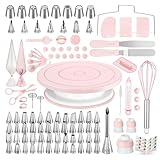
- All-in-One Cake Decorating Supplies Kit: Total 158pcs baking accessories, includes everything you need to start decorating your cakes: a revolving cake stand, 3 scrapers, angled & straight spatulas, 49 standard-size piping tips, 8 Russian tips, 7 Korean nozzles, tips cleaning brush, 3 couplers, 50 disposable pastry bags, 2 reusable piping bags, 2 bag ties, 2 flower nails, flower lifter, cake pen and 3 cake pen top, cake leveler, 14 fondant molds, smoother, 5 measuring spoons, egg separator, and whisk.
- 360° Spinning Cake Turntable: This essential baking supplies tool features a cake stand with an 11-inch diameter in a macaron color that spins smoothly on a hidden ball bearing, allowing you to achieve stunningly consistent patterns and gorgeous designs. With 360° clockwise and counterclockwise rotation, you can decorate like a PRO. The light color design makes you enjoy your cake decorating projects.
- Piping Bags and Tips Set: 49 standard-sized, 8 Russian, and 7 Korean numbered piping tips, 50 disposable piping bags, 2 pink reusable pastry bags, 3 couplers, and 2 bag ties. With this frosting set, you can design different patterns for your cakes. Don’t worry, we have a pattern chart to help you eliminate guesswork by providing outcomes for each tip. Besides, a tips cleaning brush for easy cleaning of the nozzles after use.
- Angled and Straight Icing Spatulas: Made from high-quality stainless steel, these exceptional frosting spatulas simplify the process of achieving evenly frosted layers and working on layered cakes. With a 12.5-inch angled spatula and a 10.6-inch straight spatula, you can effortlessly create smooth surfaces and crumb-free layers.
- E-Book Guide to Use: Come with a pattern chart that serves as a guide for the numbered icing tips. Furthermore, a detailed and professional E-Book is available, providing advanced guidance on using Kootek baking tools and creating exquisite cakes or cupcakes. This valuable resource is ideal for beginners as well as for professionals, making our set the perfect choice for those seeking to improve their baking skills. Also a thoughtful gift for Mother's Day, a wedding, or a party.
Step-by-step (Crock-Pot coffee cake workflow)
1. Prepare the Crock-Pot: Thoroughly grease the inside of your slow cooker insert with butter or cooking spray. For easier removal and cleanup, line the insert with parchment paper, ensuring it covers the bottom and extends up the sides.
- What “good” looks like: The insert is fully coated with a non-stick barrier, and the parchment paper creates a cradle for the cake.
- Common mistake: Not greasing or lining adequately, leading to a cake that sticks and is difficult to remove.
- How to avoid: Be generous with grease and ensure the parchment paper is fitted snugly.
2. Mix the dry ingredients: In a large bowl, whisk together flour, sugar, baking powder, baking soda, cinnamon, and salt.
- What “good” looks like: All ingredients are evenly distributed, with no clumps of leavening agents or spices.
- Common mistake: Not whisking thoroughly, resulting in pockets of unmixed ingredients and uneven texture or flavor.
- How to avoid: Use a whisk and ensure you break up any clumps.
3. Mix the wet ingredients: In a separate bowl, cream together softened butter and sugar until light and fluffy. Beat in eggs one at a time, followed by vanilla extract and any other liquid flavorings.
- What “good” looks like: A smooth, emulsified mixture where the butter and sugar are well combined, and the eggs are fully incorporated.
- Common mistake: Overmixing after adding eggs, which can toughen the cake.
- How to avoid: Mix wet ingredients until just combined.
4. Combine wet and dry ingredients: Gradually add the dry ingredients to the wet ingredients, alternating with any liquid (like milk or sour cream) called for in the recipe. Mix until just combined; do not overmix.
- What “good” looks like: A smooth batter with no dry streaks of flour remaining.
- Common mistake: Overmixing the batter, which develops gluten and results in a tough cake.
- How to avoid: Mix until you no longer see dry flour, then stop.
5. Prepare the streusel topping: In a small bowl, combine flour, brown sugar, cinnamon, and melted butter until crumbly.
- What “good” looks like: A coarse, crumbly mixture that holds together when squeezed lightly.
- Common mistake: Making the streusel too wet or too dry, affecting its texture.
- How to avoid: Adjust butter amount slightly to achieve a crumbly consistency.
6. Layer the batter and topping: Pour about half of the batter into the prepared Crock-Pot. Sprinkle half of the streusel topping over the batter. Add the remaining batter, then top with the rest of the streusel.
- What “good” looks like: Even layers of batter and topping, ensuring a balanced cake.
- Common mistake: Not creating distinct layers, leading to a less visually appealing and textured cake.
- How to avoid: Distribute batter and topping as evenly as possible.
7. Cover and cook: Place the Crock-Pot lid on top. For optimal steam management, place a clean kitchen towel or paper towels between the insert and the lid to catch condensation. Cook on LOW for 3-4 hours, or on HIGH for 1.5-2.5 hours, or until a toothpick inserted into the center comes out clean.
- What “good” looks like: The cake is set, cooked through, and a toothpick comes out clean.
- Common mistake: Opening the lid too frequently, which releases heat and steam and prolongs cooking time.
- How to avoid: Resist the urge to check the cake until the minimum cooking time has passed.
8. Cool and serve: Once cooked, carefully remove the Crock-Pot insert from the base. Let the cake cool in the insert for about 10-15 minutes before using the parchment paper to lift it out onto a wire rack to cool completely.
- What “good” looks like: The cake releases easily and cools without collapsing.
- Common mistake: Trying to remove the cake while it’s too hot or too soon, leading to breakage.
- How to avoid: Allow for adequate cooling time in the insert before attempting to remove.
Common mistakes (and what happens if you ignore them)
| Mistake | What it causes | Fix |
|---|---|---|
| Using a standard oven recipe | Undercooked center, dry edges, dense texture, poor browning. | Use a recipe specifically for slow cookers or adapt with caution (reduce liquid, adjust cook time). |
| Not greasing/lining the Crock-Pot | Cake sticks to the insert, making it impossible to remove cleanly. | Thoroughly grease and line with parchment paper, extending up the sides. |
| Overmixing the batter | Tough, dense cake with a gummy texture. | Mix until just combined; stop as soon as dry flour disappears. |
| Opening the lid too often | Significantly longer cooking time, uneven cooking, potential sogginess. | Keep the lid on as much as possible; use a towel to absorb condensation. |
| Not using a condensation-absorbing towel | Excess moisture drips back onto the cake, making it soggy. | Place a clean kitchen towel or paper towels between the insert and lid. |
| Incorrect grind size for coffee (if used) | Bitter or weak coffee flavor, or gritty texture in the cake. | If adding coffee grounds, use finely ground coffee suitable for the recipe’s intent. |
| Using cold ingredients | Batter may not emulsify properly, leading to a less tender cake. | Ensure butter is softened, and eggs and dairy are at room temperature. |
| Not testing for doneness properly | Undercooked cake with a wet center. | Insert a toothpick into the thickest part of the cake; it should come out clean or with a few moist crumbs. |
| Removing the cake too soon | Cake may fall apart or be difficult to handle. | Allow the cake to cool in the insert for 10-15 minutes before attempting to remove. |
Decision rules (Crock-Pot coffee cake brewing)
- If your Crock-Pot is smaller than 6 quarts, then you may need to halve the recipe or use a smaller baking dish inside the Crock-Pot to avoid overflow.
- If the cake seems to be browning too quickly on the sides, then it might be cooking too hot; try reducing the heat setting if available or ensure the towel is effectively absorbing condensation.
- If a toothpick comes out with wet batter, then continue cooking on LOW for another 30 minutes and test again, as slow cookers can vary significantly.
- If your recipe calls for a liquid like milk or buttermilk, and you’re adapting a standard recipe, then consider reducing it by 1-2 tablespoons to account for the moist environment of the Crock-Pot.
- If you want a firmer cake, then cooking on HIGH for a shorter duration might achieve this, but be very careful not to burn the bottom.
- If you notice a lot of condensation dripping from the lid, then ensure the towel is absorbent and properly placed to catch the moisture.
- If the cake seems dense, then it’s likely due to overmixing; for future attempts, focus on minimal mixing of the batter.
- If you’re using a dark-colored Crock-Pot, then it may heat more intensely, so you might need to reduce cooking time slightly compared to a lighter-colored model.
- If you want to ensure a more even bake, then consider turning the Crock-Pot insert halfway through the cooking time, if possible without disturbing the cake too much.
- If the streusel topping seems to be sinking excessively, then it might be too fine or the batter too wet; ensure a good crumbly texture for the topping.
FAQ
Can I use a regular coffee cake recipe in my Crock-Pot?
You can adapt a regular recipe, but it’s best to start with one specifically designed for slow cookers. If adapting, you may need to reduce liquids, adjust leavening, and significantly increase cooking time. Expect a denser, moister result.
How do I prevent my Crock-Pot coffee cake from getting soggy?
The key is managing moisture. Use a clean kitchen towel or paper towels between the Crock-Pot insert and the lid to absorb condensation. Avoid opening the lid frequently, as this releases trapped moisture.
What is the best heat setting to use for baking coffee cake in a Crock-Pot?
Most recipes recommend using the LOW setting for 3-4 hours for a more even bake. Some recipes might suggest HIGH for 1.5-2.5 hours, but LOW generally yields better results without risking burning.
Will my Crock-Pot coffee cake brown like one baked in an oven?
No, Crock-Pot cakes will not develop the same golden-brown crust as oven-baked cakes. The cooking method is moist and steamy, leading to a lighter color on top, even with a streusel.
How do I know when my Crock-Pot coffee cake is done?
Insert a toothpick into the center of the cake. If it comes out clean or with a few moist crumbs attached, the cake is done. If it has wet batter on it, it needs more time.
Can I make a layered coffee cake in a Crock-Pot?
It’s challenging to make a true layered cake in a standard round Crock-Pot. Most Crock-Pot coffee cake recipes are designed for a single layer with a streusel topping.
What if my Crock-Pot cooks too hot?
If your Crock-Pot tends to run hot, you might need to reduce the cooking time or use a lower heat setting if available. Always check for doneness earlier than the recipe suggests.
How do I get the coffee cake out of the Crock-Pot easily?
Generously grease the insert and line it with parchment paper, ensuring the paper extends up the sides. This creates handles to lift the cake out once it has cooled slightly.
What this page does NOT cover (and where to go next)
- Specific recipes for Crock-Pot coffee cake (this guide focuses on the method).
- Detailed troubleshooting for advanced baking issues like cake sinking or crumbly texture beyond common mistakes.
- Variations on coffee cake fillings or frostings that are not suitable for slow cooker preparation.
Next, you might want to search for Crock-Pot specific coffee cake recipes, explore techniques for adapting standard cake recipes for slow cookers, or learn about different types of coffee cake toppings.