
How to Make a Perfect Single Cup of Black Coffee
Quick answer
- Use fresh, quality whole bean coffee and grind just before brewing for optimal flavor.
- Select a brew method suited for a single serving, like a pour-over or AeroPress.
- Ensure your water is filtered and heated to the ideal temperature range (195-205°F).
- Measure your coffee and water precisely using a kitchen scale for consistency.
- Pay attention to your coffee-to-water ratio; a good starting point is 1:15 or 1:16.
- Brew for the correct duration, typically 2-4 minutes, depending on the method.
- Keep your brewing equipment clean to prevent off-flavors.
Who this is for
- Anyone who wants to consistently brew a delicious single cup of coffee at home.
- Coffee lovers looking to refine their brewing technique for a better daily experience.
- Individuals seeking practical, actionable advice on achieving optimal flavor without complex equipment.
What to check first
Brewer type and filter type
The type of brewer you use significantly impacts your single cup of black coffee. Common options for single servings include pour-over cones (like Hario V60 or Chemex), AeroPress, and French presses. Each has a distinct filter type: paper for pour-overs and AeroPress (often), or a mesh screen for French presses. Paper filters tend to produce a cleaner cup with less sediment, while mesh filters allow more oils and fines through, resulting in a fuller body.
Another fantastic option for single servings is the AeroPress coffee maker. Its unique design and versatility allow for a quick and flavorful brew, often with less sediment than other methods.

- The Brewer That Started It All – AeroPress Original was the first single cup coffee maker to combine 3 brew methods in one compact, portable device for a faster brew and better extraction giving coffee lovers a smooth, rich cup bursting with coffee bean flavor—without the bitterness or acidity found in other methods.
- A New Standard in Coffee Flavor – Equal parts French press, pour-over, and espresso, AeroPress patented 3 in 1 technology distills the best of all three brewing methods into one sleek, portable device. The result? A rich, full-bodied cup in under two minutes—free of bitterness and grit, and full of delicious coffee bean flavor.
- The Secret to AeroPress Superior Flavor – Air Pressure and micro-filtration work together to speed up extraction for less bitterness than other methods, so you can finally enjoy the full spectrum of coffee bean flavor, from smooth tasting notes to level of roast and country of origin
- Brew and Clean in 2 Minutes – To brew, simply add coffee and water, wait 30 seconds, then press for a clean, well-balanced cup. The AeroPress coffee maker includes 50 paper micro-filters, ensuring smooth, grit-free coffee. To clean, just pop out the grinds and rinse! Fast, easy brewing at home or on the go.
- Brew Like a Pro, Wherever You Go – One of the only coffee makers that offers full control over brew time, temperature and grind size so you can personalize your favorites faster - from classics to cold brew and iced coffee to espresso-style drinks like cappuccino and lattes. Built for travel, AeroPress is compact, lightweight and shatterproof. Fits in your backpack, carry-on or bag, so you can make exceptional coffee on the road, at the office, while camping or wherever your brew takes you.
For those who enjoy a hands-on approach and a cleaner cup, a pour over coffee maker is an excellent choice. These devices, often paired with paper filters, allow for precise control over the brewing process.

- Pour Over Coffee: Manual Pour Over Coffee Maker allows you to brew an excellent cup of Coffee in minutes
- Stainless steel: Includes a new and improved permanent, stainless steel mesh filter that helps extract your coffee's aromatic oils and subtle flavors instead of being absorbed by a paper filter
- Coffee Carafe: Made of durable, heat-resistant borosilicate glass with Cork Band detailing that is both functional and elegant; single wall
- Quick and Easy: Simply add coarse ground Coffee to filter, pour a small amount of water in a circular motion over ground Coffee until soaked then add the remaining water and let drip
- Servings: Pour Over Coffee Maker makes 8 cups of Coffee, 4 oz each; dishwasher safe
Water quality and temperature
Water makes up over 98% of your coffee, so its quality is paramount. Filtered water is ideal, free from chlorine, odors, and excessive minerals that can negatively affect taste. Avoid distilled water, which lacks the minerals needed to extract flavor properly. The optimal brewing temperature is between 195-205°F. Water that is too cold will under-extract, leading to a sour taste, while water that is too hot can over-extract and burn the coffee, resulting in bitterness.
Grind size and coffee freshness
Grind size is crucial for proper extraction. For most single-cup methods like pour-over, a medium-fine grind resembling table salt is a good starting point. French presses typically require a coarser grind, while AeroPress can be more flexible. Grinding coffee just before brewing is essential for freshness. Whole beans retain their volatile aromatics and flavors much longer than ground coffee. Once ground, coffee stales rapidly.
Coffee-to-water ratio
The coffee-to-water ratio is one of the most critical factors for a balanced brew. A common starting point is a 1:15 or 1:16 ratio (coffee to water by weight). This means for every 1 gram of coffee, you use 15 or 16 grams of water. Using a kitchen scale for both coffee and water ensures accuracy and consistency, leading to repeatable results.
Cleanliness/descale status
Regular cleaning of your brewing equipment is vital. Coffee oils can build up over time, becoming rancid and imparting off-flavors to your fresh brew. Descaling is also important, especially if you have hard water. Mineral deposits can clog heating elements and affect water flow, impacting temperature stability and extraction. Follow your brewer’s instructions for descaling frequency and method.
Step-by-step how to make 1 cup black coffee (brew workflow)
1. Heat water: Measure and heat fresh, filtered water to 195-205°F.
- Good looks like: A precise temperature, often achieved with an electric kettle with temperature control.
- Common mistake: Using water straight from the tap without filtering or heating it to the correct temperature. This leads to poor extraction and off-flavors. Avoid by using a thermometer or a temperature-controlled kettle.
2. Measure coffee: Weigh out your whole bean coffee according to your desired ratio (e.g., 15-20 grams for a single serving).
- Good looks like: Using a digital kitchen scale for accuracy.
- Common mistake: Using scoops instead of a scale, which can lead to inconsistent measurements and varying brew strength. Avoid by investing in a scale.
3. Grind coffee: Grind your coffee beans just before brewing to the appropriate fineness for your chosen method (e.g., medium-fine for pour-over).
- Good looks like: A consistent grind size, resembling coarse sand or table salt for most single-cup methods, achieved with a quality burr grinder.
- Common mistake: Using pre-ground coffee or an inconsistent blade grinder. This causes uneven extraction. Avoid by using a burr grinder and grinding fresh.
4. Prepare brewer and filter: Place your filter in your brewer (e.g., pour-over cone, AeroPress).
- Good looks like: Filter seated correctly and, for paper filters, rinsed thoroughly with hot water.
- Common mistake: Skipping the filter rinse for paper filters. This can impart a papery taste to your coffee. Avoid by always rinsing paper filters until the water runs clear.
5. Pre-heat and rinse: Pour some hot water through the filter and brewer to pre-heat them and remove any paper taste (if using a paper filter). Discard the rinse water.
- Good looks like: The brewer is warm to the touch, and any paper taste is washed away.
- Common mistake: Forgetting to discard the rinse water, diluting your coffee. Avoid by emptying the vessel before adding ground coffee.
6. Add coffee: Transfer the freshly ground coffee into the prepared brewer. Gently tap or shake to level the bed.
- Good looks like: An even bed of coffee grounds, ready for brewing.
- Common mistake: Leaving an uneven bed, which can lead to channeling and inconsistent extraction. Avoid by gently tapping the brewer.
7. Bloom (if applicable): For pour-over, pour just enough hot water (about twice the weight of the coffee) to saturate all the grounds. Wait 30-45 seconds.
- Good looks like: The coffee grounds expand and release CO2, indicating freshness.
- Common mistake: Pouring too much water during the bloom or not waiting long enough. This prevents proper degassing and even saturation. Avoid by using a scale and timer.
8. Begin main pour/plunge: Continue pouring water slowly and evenly in concentric circles for pour-over, or add the remaining water and plunge for AeroPress/French press.
- Good looks like: A controlled, steady pour that keeps the coffee bed evenly saturated, or a smooth, consistent plunge.
- Common mistake: Pouring too quickly or unevenly, creating channels in the coffee bed. This leads to under-extraction in some areas and over-extraction in others. Avoid by pouring slowly and deliberately.
9. Monitor brew time: Aim for a total brew time appropriate for your method (e.g., 2-4 minutes for pour-over, 1-2 minutes for AeroPress).
- Good looks like: The water fully drains, and the brew time falls within the ideal range.
- Common mistake: Letting the coffee brew for too long or too short. This results in bitterness (too long) or sourness (too short). Adjust grind size to control brew time.
10. Serve immediately: Remove the brewer and serve your freshly brewed single cup of black coffee.
- Good looks like: A hot, aromatic, and perfectly extracted cup of coffee.
- Common mistake: Letting the coffee sit and cool in the brewer, which can lead to it becoming bitter or stale. Avoid by serving and enjoying immediately.
Common mistakes (and what happens if you ignore them)
| Mistake | What it causes | Fix |
|---|---|---|
| Using stale, pre-ground coffee | Flat, dull, and lifeless flavor; loss of aromatic compounds. | Buy whole beans and grind just before brewing. |
| Incorrect water temperature | Under-extraction (sour, weak) if too cold; over-extraction (bitter, burnt) if too hot. | Use a thermometer or temperature-controlled kettle for 195-205°F. |
| Inconsistent grind size | Uneven extraction, leading to a mix of sourness and bitterness; clogging. | Invest in a quality burr grinder and dial in the correct setting. |
| Incorrect coffee-to-water ratio | Too weak or too strong coffee; unbalanced flavor. | Use a digital kitchen scale to measure coffee and water precisely (e.g., 1:15 or 1:16). |
| Skipping filter rinse (paper filters) | Papery or cardboard taste in your coffee. | Always rinse paper filters thoroughly with hot water before brewing. |
| Uneven pouring/saturation | Channeling in the coffee bed, leading to uneven extraction. | Pour slowly and evenly in concentric circles, ensuring all grounds are saturated. |
| Not cleaning equipment regularly | Rancid coffee oils build up, imparting off-flavors to fresh brews. | Wash brewer thoroughly after each use; descale periodically. |
| Letting coffee sit after brewing | Coffee cools and can become bitter or stale. | Serve and enjoy your coffee immediately after brewing. |
| Using tap water without filtering | Unpleasant tastes (chlorine, minerals) in your coffee. | Use filtered water for all your brewing. |
| Not blooming the coffee (pour-over) | Incomplete degassing, leading to uneven extraction and a less flavorful cup. | Pour a small amount of water to saturate grounds and wait 30-45 seconds. |
Decision rules for how to make 1 cup black coffee
- If your coffee tastes too sour or weak, then your extraction was likely too low because the water didn’t spend enough time with the grounds or wasn’t hot enough. Try a finer grind or hotter water.
- If your coffee tastes too bitter or astringent, then your extraction was likely too high because the water spent too much time with the grounds or was too hot. Try a coarser grind or slightly cooler water.
- If your brew time is too fast, then your grind is likely too coarse because water flows through too quickly. Adjust to a finer grind.
- If your brew time is too slow, then your grind is likely too fine because water is getting held up. Adjust to a coarser grind.
- If you notice a papery taste, then you probably skipped rinsing your paper filter because it contains cellulose fibers. Always rinse paper filters with hot water.
- If your coffee lacks aroma, then your beans might be stale or you ground them too far in advance because volatile compounds dissipate quickly. Use fresh, whole beans and grind just before brewing.
- If your coffee tastes muddy or gritty, then your grind is likely too fine for your filter type (especially French press) or your filter isn’t sealing properly because fines are passing through. Adjust grind coarser or check filter placement.
- If your coffee is inconsistent from day to day, then you’re likely not measuring precisely because small variations in coffee or water weight have a big impact. Use a digital scale for consistency.
- If your coffee tastes like chlorine, then your water quality is poor because tap water often contains additives. Use filtered water.
- If your pour-over bed looks uneven after brewing, then your pouring technique might be inconsistent because channeling occurred. Focus on slow, even, circular pours.
FAQ
What’s the best coffee-to-water ratio for a single cup?
A good starting point for a single cup is a 1:15 or 1:16 ratio of coffee to water by weight. For example, 15 grams of coffee to 225-240 grams (or ml) of water. You can adjust this slightly to your personal preference for strength.
Can I use a regular coffee maker for a single cup?
While you can, many drip coffee makers are designed for larger batches and may not heat water consistently or extract optimally for a single serving. Methods like pour-over, AeroPress, or a small French press often yield better results for individual cups.
While many drip coffee makers are designed for larger batches, if you’re specifically looking for a dedicated single cup coffee maker, there are many excellent options available that can offer more consistent results for individual servings.
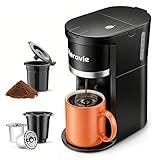
- Brew in Two Ways: Horavie single serve coffee maker supports both k pod and ground coffee, offering flexible brew sizes from 6 to 12oz to meet your varying coffee needs. Whether you want a quick cup or to savor a slow drink, it handles both with ease
- Safe and High-Quality Materials: Made from BPA-free and heat-resistant materials, this single cup coffee maker ensures durability and safety. The built-in water tank with view window allows you to monitor the water level at any time, preventing issues during brewing
- One-Touch Quick Brewing: This coffee machine combines fast brewing technology with one button operation mode that is simple and fast for any user. Simply press the button and enjoy hot coffee in just 120s, perfect for busy mornings or office use
- Compact Size fits Anywhere: Whether at home, in the office, or while traveling, the Horavie small coffee maker seamlessly fits into your lifestyle. Its compact design and light weight make it ideal for small kitchens, office or RVs, especially in space-limited environments
- Descaling Reminder & Self-Cleaning: The mini one cup coffee maker features an automatic descaling reminder that illuminates in red when cleaning is needed. Simply add a descaling solution and press the buttons for 2 seconds to initiate the self-cleaning process. This feature helps prevent clogging and ensures optimal performance, significantly extending the lifespan of your K-Pod coffee maker
How important is water quality for black coffee?
Extremely important! Water makes up most of your coffee. Filtered water free from impurities and harsh minerals allows the true flavors of the coffee to shine. Avoid distilled water, which lacks minerals needed for good extraction.
Should I grind my coffee beans every time?
Yes, absolutely. Grinding coffee beans just before brewing preserves the delicate aromatics and flavors that quickly dissipate once coffee is ground. This is one of the easiest ways to significantly improve your coffee’s taste.
What is “blooming” coffee and why do I need to do it?
Blooming is the initial pour of hot water over coffee grounds, allowing them to degas (release CO2). This prepares the grounds for even extraction, preventing sourness and bitterness, and is particularly important for pour-over methods.
How can I tell if my coffee is under-extracted or over-extracted?
Under-extracted coffee often tastes sour, thin, or weak. Over-extracted coffee typically tastes bitter, hollow, or astringent (like dry tea). Adjusting grind size or brew time can correct these issues.
Is a kitchen scale really necessary for making one cup of coffee?
While not strictly mandatory, a digital kitchen scale is highly recommended. It allows for precise measurement of both coffee and water, which is crucial for consistency and replicating a great cup of coffee every time.
What this page does NOT cover (and where to go next)
- Specific brand recommendations for coffee beans or brewing equipment
- Advanced latte art techniques or milk frothing
- In-depth chemical analysis of coffee extraction
- Cold brew coffee methods
- Espresso machine operation and maintenance
- Roasting your own coffee beans at home