
How McDonald’s Prepares Their Iced Coffee Drinks
Quick answer
- McDonald’s iced coffee uses a specific blend of 100% Arabica beans, brewed hot.
- The hot-brewed coffee is then chilled rapidly, often over ice, before being mixed with other ingredients.
- Key ingredients include cream or milk, liquid sugar (syrup), and sometimes flavor shots.
- The standard recipe aims for consistency in sweetness and creaminess across locations.
- Preparation involves precise measurements of coffee, ice, dairy, and syrup.
- Quality control focuses on freshness of ingredients and proper chilling to avoid dilution.
- You can replicate a similar experience at home by brewing strong coffee, chilling it, and using a simple syrup with your preferred dairy.
To replicate McDonald’s iced coffee at home, you’ll need to brew strong coffee and chill it rapidly. An efficient iced coffee maker can help streamline this process.

- BREW BY THE CUP OR CARAFE: Brews both K-Cup pods and coffee grounds.
- MULTISTREAM TECHNOLOGY: Saturates the grounds evenly to extract full flavor and aroma in every cup, hot or cold.
- BREW OVER ICE: Adjusts temperature for maximum flavor and less ice melt for single-cup iced coffees and teas.
- STRONG BREW & EXTRA HOT FUNCTIONALITY: Brews a stronger, more intense-flavored cup and the extra hot feature brews a hotter single cup.
- MULTIPLE BREW SIZES: Brew 6, 8, 10, or 12oz single cups or 6, 8, 10, or 12-cup carafes. 12-cup glass carafe specially designed to limit dripping.
Who this is for
- Anyone curious about the consistent taste of fast-food iced coffee.
- Home brewers looking to replicate popular iced coffee styles.
- Coffee enthusiasts interested in the mechanics of large-scale beverage preparation.
What to check first
Brewer type and filter type
McDonald’s uses commercial-grade automatic drip brewers designed for high volume. These typically employ large, flat-bottom paper filters to ensure a clean brew without sediment. For home brewing, a standard automatic drip coffee maker or a pour-over setup with a paper filter will work well to achieve a similar clean profile. Avoid French presses if you want to minimize fines in your iced coffee.
Water quality and temperature
High-quality, filtered water is crucial. McDonald’s likely uses advanced filtration systems to ensure consistent water taste, free from chlorine or mineral off-notes. For home brewing, use filtered water. The brewing temperature should be between 195-205°F for optimal extraction. Too cold, and your coffee will be under-extracted and weak; too hot, and it can taste burnt or bitter.
Grind size and coffee freshness
McDonald’s uses a medium grind, suitable for their commercial drip brewers. This provides a good balance between extraction efficiency and avoiding over-extraction. The coffee beans are likely pre-ground and delivered fresh to each location. For home, use fresh whole beans ground just before brewing. A medium grind, similar to table salt, is ideal for drip coffee. Stale coffee, even when iced, will taste flat and lack vibrancy.
McDonald’s uses a medium grind for their coffee, and for the best flavor at home, grinding your beans fresh just before brewing is key. A quality coffee bean grinder will make all the difference.
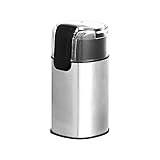
- Electric coffee bean grinder appliance for home use
- Can grind 30 grams/1 ounce of beans for drip coffee brewing in 10 seconds
- Grind coffee beans, herbs, spices, grains, nuts, and more
- Clear safety lid allows you to easily see the results in progress
- Heavy-duty stainless steel grind blade
Coffee-to-water ratio
For iced coffee, a slightly stronger brew ratio is often preferred to account for dilution from melting ice. While McDonald’s exact ratio is proprietary, a common starting point for home iced coffee is 1:15 or even 1:12 (coffee to water by weight). This means for every 1 gram of coffee, you use 12-15 grams of water. For example, 30 grams of coffee to 360-450 grams (12-15 oz) of water.
Cleanliness/descale status
Regular cleaning and descaling of brewing equipment are paramount for consistent taste. Mineral buildup and coffee oils can impart off-flavors. McDonald’s has strict cleaning protocols. At home, clean your coffee maker daily and descale it every 1-3 months, depending on your water hardness, to ensure pure-tasting coffee.
Step-by-step (brew workflow)
1. Prepare your brewing equipment.
- Good: Ensure your drip coffee maker or pour-over device is clean and ready. Insert a fresh paper filter.
- Mistake: Using a dirty brewer or old filter can introduce off-flavors. Always start with clean equipment.
2. Measure your coffee beans.
- Good: Use a digital scale to measure your whole beans precisely. For a stronger brew suitable for iced coffee, aim for a coffee-to-water ratio of around 1:12 to 1:15.
- Mistake: Guessing or using a scoop can lead to inconsistent strength. Weighing ensures repeatability.
3. Grind your coffee.
- Good: Grind your beans to a medium consistency, similar to table salt, just before brewing.
- Mistake: Grinding too fine can lead to over-extraction and bitterness; too coarse results in weak coffee. Pre-ground coffee loses freshness quickly.
4. Add water to the brewer.
- Good: Fill your brewer’s reservoir with fresh, filtered water. Ensure the water temperature reaches 195-205°F during brewing.
- Mistake: Using tap water can introduce unwanted tastes. Cold water in the reservoir will result in a poor brew temperature.
5. Brew the coffee.
- Good: Start the brewing cycle. The hot water should evenly saturate the coffee grounds, extracting their flavor.
- Mistake: Uneven saturation or “channeling” can lead to under-extraction. Ensure your grounds bed is level.
6. Chill the brewed coffee rapidly.
- Good: Once brewed, immediately transfer the hot coffee to a heat-safe container and chill it over an ice bath or refrigerate it quickly.
- Mistake: Letting coffee sit at room temperature for a long time can lead to oxidation and a stale taste.
7. Prepare your serving glass.
- Good: Fill your serving glass with plenty of ice. This helps chill the coffee further and prevents excessive dilution if the coffee isn’t fully cold.
- Mistake: Using too little ice will result in a warm, watery drink.
8. Add sweeteners and dairy.
- Good: Pour in your desired amount of simple syrup (liquid sugar) and cream or milk. McDonald’s uses specific liquid sugar and creamers for consistency.
- Mistake: Adding granulated sugar to cold coffee won’t dissolve properly. Use simple syrup for smooth integration.
9. Combine coffee and other ingredients.
- Good: Pour the chilled, strong coffee over the ice, syrup, and dairy. Stir gently to combine all ingredients thoroughly.
- Mistake: Not stirring properly can leave layers of unmixed ingredients.
10. Serve and enjoy.
- Good: Your homemade iced coffee, mimicking the fast-food style, is ready to drink.
- Mistake: Letting it sit too long will lead to significant ice melt and a diluted drink.
Common mistakes when making iced coffee (and what happens if you ignore them)
| Mistake | What it causes | Fix |
|---|---|---|
| Using weak coffee | Watery, flavorless iced coffee once ice melts. | Brew coffee stronger than usual (1:12-1:15 ratio). |
| Using hot coffee over ice | Rapid ice melt, leading to immediate dilution and a warm drink. | Chill brewed coffee completely before adding to ice in the serving glass. |
| Not using filtered water | Off-flavors from chlorine or minerals. | Always use filtered water for brewing. |
| Using stale coffee beans | Flat, dull, and unappealing taste. | Grind fresh whole beans just before brewing. Store beans properly. |
| Incorrect grind size | Over-extraction (bitter) or under-extraction (sour/weak). | Use a medium grind for drip coffee. Adjust as needed. |
| Not cleaning equipment | Bitter, dirty-tasting coffee due to old oils and mineral buildup. | Clean your brewer daily; descale regularly. |
| Adding granulated sugar to cold coffee | Sugar won’t dissolve, leaving gritty texture and uneven sweetness. | Use simple syrup (equal parts sugar and hot water, dissolved and cooled). |
| Too little ice in the serving glass | Coffee warms up too quickly, becoming watery. | Fill your serving glass generously with ice. |
| Not stirring ingredients | Uneven taste with layers of coffee, syrup, and dairy. | Stir your iced coffee thoroughly after combining all ingredients. |
| Using too much or too little syrup/dairy | Unbalanced sweetness or creaminess, not matching desired taste. | Start with smaller amounts and add to taste, or follow a specific recipe. |
Decision rules (simple if/then)
- If your iced coffee tastes watery, then brew with a higher coffee-to-water ratio (more coffee per water) because ice dilution is likely the culprit.
- If your iced coffee is bitter, then check your grind size and brewing temperature because over-extraction can cause bitterness; try a coarser grind or slightly lower temperature.
- If your iced coffee tastes sour or weak, then try a finer grind or higher brewing temperature because under-extraction is often the cause.
- If granulated sugar doesn’t dissolve in your iced coffee, then use simple syrup instead because it dissolves instantly in cold liquids.
- If your coffee cools too slowly in the fridge, then use an ice bath to chill it rapidly because slow cooling can lead to oxidation.
- If you notice a film or off-taste, then clean and descale your coffee maker because mineral buildup and old coffee oils can affect flavor.
- If your iced coffee lacks vibrancy, then check the freshness of your coffee beans because stale beans lose their aromatic compounds quickly.
- If you want a creamier texture without heavy cream, then try half-and-half or a milk alternative with higher fat content because they add richness.
- If your iced coffee is consistently too sweet, then reduce the amount of simple syrup or use a less concentrated syrup because personal preference varies.
- If you prefer a stronger coffee flavor without bitterness, then try a cold brew concentrate because it naturally has less acidity and is brewed strong.
FAQ
Q: What kind of coffee beans does McDonald’s use for their iced coffee?
A: McDonald’s states they use 100% Arabica beans for their coffee, including the coffee used for iced beverages. These beans are known for their smoother, less bitter flavor profile compared to Robusta beans.
Q: Is McDonald’s iced coffee brewed hot or cold?
A: McDonald’s brews their coffee hot, just like their regular hot coffee. This hot-brewed coffee is then chilled rapidly, typically over ice, before being mixed with other ingredients to create their iced coffee drinks.
Q: How do they make their iced coffee sweet without sugar granules?
A: McDonald’s uses a liquid sugar, often referred to as simple syrup, which is a solution of sugar dissolved in water. This liquid form integrates smoothly into cold beverages without leaving a grainy texture.
Q: Can I make something similar at home without special equipment?
A: Yes, you can. Brew a strong batch of your favorite coffee, chill it completely in the refrigerator or over an ice bath, and then combine it with ice, simple syrup, and your preferred milk or cream.
Q: What’s the best way to chill hot coffee for iced drinks quickly?
A: The most effective way is to use an ice bath. Place your container of hot coffee into a larger bowl filled with ice and a little water, stirring the coffee occasionally until it’s cold. This prevents excessive dilution later.
Q: Why does my homemade iced coffee taste watery?
A: This is a common issue. It usually means your initial coffee brew wasn’t strong enough to begin with, or you didn’t chill it sufficiently before adding it to ice, leading to rapid melting and dilution. Brew stronger coffee and ensure it’s fully cold.
What this page does NOT cover (and where to go next)
- Specific McDonald’s proprietary recipes or ingredient sourcing details.
- Detailed comparisons of various fast-food iced coffee brands.
- Advanced cold brew techniques or recipes.
- In-depth discussions on coffee bean varietals or roast levels.
- Commercial coffee machine maintenance or repair.
- The history of iced coffee or coffee culture.