
Homemade Sweet Foam For Coffee
Quick answer
- Use a whisk, frother, or shaker to combine heavy cream, milk, and a sweetener like simple syrup or granulated sugar.
- Aim for a ratio of about 2 parts heavy cream to 1 part milk for the richest foam.
- For a lighter foam, increase the milk ratio or use half-and-half.
- Sweeteners like simple syrup or powdered sugar dissolve best. Granulated sugar may leave a gritty texture if not fully dissolved.
- Cold ingredients and a vigorous mixing method produce the best, stable foam.
- Experiment with flavorings like vanilla extract or cinnamon for added complexity.
Who this is for
- Coffee enthusiasts who enjoy the creamy, sweet topping on their favorite coffee drinks.
- Home baristas looking to recreate cafe-style beverages without specialized equipment.
- Anyone seeking to add a touch of indulgence and texture to their morning or afternoon coffee.
What to check first
Brewer type and filter type
While this guide focuses on making sweet foam, the type of coffee you brew underneath it matters. Are you using a drip coffee maker, a French press, an espresso machine, or something else? The strength and flavor profile of your base coffee will interact with the sweet foam. Ensure your coffee maker is clean and functioning correctly for the best overall beverage. If using a paper filter, make sure it’s rinsed to avoid any papery taste.
Water quality and temperature
The quality of your water significantly impacts the taste of your coffee, which is the foundation for your sweet foam creation. Use filtered water if your tap water has a strong taste or is hard. For the coffee itself, the ideal brewing temperature is typically between 195°F and 205°F. Too cool, and you’ll get weak coffee; too hot, and you risk bitterness. For the sweet foam itself, using cold cream and milk is crucial for achieving a stable, voluminous foam.
Grind size and coffee freshness
The grind size should match your brewing method. For drip coffee, a medium grind is common. For espresso, it’s fine. For a French press, it’s coarse. Freshly roasted and ground coffee beans will always yield the best flavor. Pre-ground coffee can lose its aromatic qualities quickly. Ensure your coffee beans are stored in an airtight container away from light and heat.
Coffee-to-water ratio
The standard starting point for drip coffee is often around 1-2 tablespoons of coffee grounds for every 6 oz of water. Adjust this to your preference for strength. A stronger coffee base will better stand up to the richness of the sweet foam. Too weak a coffee and the foam might overpower it, while too strong might be bitter.
Cleanliness/descale status
A clean coffee maker is essential for good-tasting coffee. Mineral buildup from water can affect both the performance of your brewer and the flavor of your coffee. Regularly descale your coffee maker according to the manufacturer’s instructions. Similarly, ensure any containers or tools used for making your sweet foam are clean to prevent off-flavors or spoilage.
Step-by-step (how to make sweet foam coffee)
1. Prepare your coffee: Brew your coffee using your preferred method. Aim for a strong, hot cup.
- What “good” looks like: A flavorful, hot coffee that’s brewed to your desired strength.
- Common mistake: Brewing coffee too weak or too cool.
- Avoid it by: Using the correct coffee-to-water ratio and ensuring your water is at the optimal brewing temperature (195°F-205°F).
2. Gather sweet foam ingredients: You’ll need heavy cream, milk (whole milk or half-and-half works best), and your chosen sweetener.
- What “good” looks like: All necessary ingredients are measured and ready to go.
- Common mistake: Not having enough of one ingredient or choosing a sweetener that won’t dissolve well.
- Avoid it by: Pre-measuring your ingredients and selecting a sweetener like simple syrup or powdered sugar.
3. Combine cream and milk: In a bowl or a jar, combine about 2 parts heavy cream to 1 part milk. For a lighter foam, you can increase the milk ratio or use half-and-half.
- What “good” looks like: A well-balanced mixture of cream and milk ready for sweetening and frothing.
- Common mistake: Using only milk, which won’t create a stable, rich foam.
- Avoid it by: Ensuring you have a significant portion of heavy cream in your mixture.
4. Add sweetener: Stir in your sweetener. Simple syrup is ideal as it’s already liquid and dissolves instantly. Powdered sugar also works well. If using granulated sugar, add it and stir vigorously until it’s completely dissolved before frothing.
- What “good” looks like: The sweetener is fully incorporated into the cream and milk mixture, with no gritty texture.
- Common mistake: Granulated sugar not dissolving, leaving a gritty foam.
- Avoid it by: Stirring thoroughly until dissolved, or opting for liquid sweeteners like simple syrup or flavored syrups.
5. Add flavorings (optional): If desired, add a splash of vanilla extract, a pinch of cinnamon, or other flavorings at this stage.
- What “good” looks like: Any added flavorings are evenly distributed throughout the mixture.
- Common mistake: Adding too much flavoring, which can overpower the cream and coffee.
- Avoid it by: Starting with a small amount and tasting before adding more.
6. Froth the mixture: Use your chosen method to froth.
- Whisk: Vigorously whisk the mixture in a bowl until it thickens and forms soft peaks. This takes effort.
- Handheld frother: Submerge the frother head and run it for 30-60 seconds until the mixture is foamy and increased in volume.
- French press: Pour the mixture into a clean French press and rapidly pump the plunger up and down for 30-60 seconds.
- Jar and shake: Pour the mixture into a lidded jar and shake vigorously for 1-2 minutes.
- What “good” looks like: A light, airy, and voluminous foam that holds its shape reasonably well.
- Common mistake: Not frothing long enough, resulting in a thin, unstable foam.
- Avoid it by: Being patient and continuing to froth until the desired consistency is reached.
For the best results when frothing your sweet foam mixture, consider using a handheld electric frother like this one. It makes achieving that perfect airy texture quick and effortless.
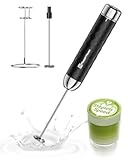
- 【Stepless Speed Control Design】Unlike traditional button-operated milk frother, this LunaFro 2.0 electric milk frother allows you to seamlessly adjust the frothing speed with unparalleled precision, ranging from 4500RPM to 10000RPM, simply by toggling the rotary switch. Experience the ultimate control as you craft the perfect froth for different beverages. Say goodbye to splashes and lackluster froth
- 【One Charging, 1440 Hours Ready】With a built-in 1200mAh lithium battery, this portable USB-C rechargeable milk frother provides up to 2 months of usage on a single charge(note: if use once per day). Fully charge the battery operated milk foam maker in just 2 hours with the included USB-C cable, eliminating the need for constant battery replacement
- 【Create Rich Creamy Foam in Seconds】Transform your morning coffee routine with our high-speed milk frother. Achieve smooth, creamy foam in just 10-15 seconds, perfect for busy mornings. Elevate your coffee experience with velvety milk foam every time
- 【Versatile for Various Beverages】 Beyond coffee, our LunaFro 2.0 milk frother excels at blending powdered supplements like protein into beverages and preparing mixed drinks. Its versatility makes it an essential tool for all your beverage-making needs, including Latte, Cappuccino, Matcha and cocoa powder
- 【Easy Cleaning and Storage】This Stepless Speed Control milk frother comes with two frothing whisks for easy replacement. Cleaning is straightforward—simply detach the whisk and wash it in water. The included compact stainless steel stand provides convenient storage and organization
7. Pour coffee into your mug: Fill your mug about two-thirds to three-quarters full with your freshly brewed hot coffee.
- What “good” looks like: A mug of hot coffee ready to receive the sweet foam.
- Common mistake: Filling the mug too full, leaving no room for the foam.
- Avoid it by: Leaving adequate space at the top of your mug.
8. Spoon or pour foam on top: Gently spoon or pour the sweet foam over the hot coffee.
- What “good” looks like: A beautiful layer of sweet foam resting on top of your coffee.
- Common mistake: Pouring too aggressively, which can cause the foam to collapse or mix too quickly.
- Avoid it by: Spooning it on gently or pouring slowly from the side of your container.
9. Serve immediately: Enjoy your homemade sweet foam coffee right away.
- What “good” looks like: A delicious, decadent coffee drink ready to be savored.
- Common mistake: Letting the foam sit too long, causing it to deflate.
- Avoid it by: Drinking your creation as soon as it’s assembled.
Common mistakes (and what happens if you ignore them)
| Mistake | What it causes | Fix |
|---|---|---|
| Using only milk for foam | Thin, unstable foam that dissipates quickly. | Use a mixture with heavy cream (e.g., 2 parts cream to 1 part milk). |
| Not dissolving sweetener | Gritty texture in the foam; uneven sweetness. | Use liquid sweeteners (simple syrup) or ensure granulated/powdered sugar is fully dissolved before frothing. |
| Using warm ingredients | Foam won’t hold its shape; may not form properly. | Ensure cream and milk are cold before frothing. |
| Over-frothing | Foam can become too stiff or buttery. | Stop frothing when soft to medium peaks form; avoid overworking. |
| Not frothing long enough | Foam is thin, airy, and collapses quickly. | Froth for at least 30-60 seconds, or until desired volume and texture are achieved. |
| Using a dirty frothing tool/container | Off-flavors in the foam; potential for spoilage. | Always use clean equipment. |
| Brewing weak or cool coffee | Foam overpowers the coffee flavor; coffee is not enjoyable on its own. | Brew strong coffee at the correct temperature (195°F-205°F). |
| Pouring foam too aggressively | Foam deflates quickly or mixes into the coffee prematurely. | Spoon or pour foam gently onto the coffee’s surface. |
| Using old or stale coffee beans | Flat coffee flavor that doesn’t complement the sweet foam. | Use freshly roasted and ground coffee beans. |
| Not leaving enough space in the mug | Foam spills over the sides of the mug. | Fill your coffee mug about two-thirds to three-quarters full before adding foam. |
Decision rules (simple if/then)
- If your foam is too thin, then add more heavy cream to your mixture because heavy cream provides the necessary fat content for stable foam.
- If your foam has a gritty texture, then you likely didn’t dissolve your sweetener fully, so next time use simple syrup or ensure granulated sugar is completely melted.
- If your foam collapses immediately, then your ingredients were likely too warm, so ensure your cream and milk are chilled before frothing.
- If you want a richer, more decadent foam, then increase the proportion of heavy cream in your mixture because fat content is key to foam stability.
- If you want a lighter, less rich foam, then increase the proportion of milk or use half-and-half because these have lower fat content.
- If your coffee tastes bitter, then your brewing temperature might be too high or your grind too fine, so check your brewer and adjust accordingly.
- If your coffee tastes weak, then you may need more coffee grounds or a finer grind for your brew method because under-extraction leads to a watery taste.
- If your foam isn’t sweet enough, then add more sweetener, preferably a liquid one like simple syrup, because it’s easy to incorporate and adjust.
- If you’re struggling to froth with a whisk, then try a handheld frother or a French press because they offer more consistent and vigorous agitation.
- If your foam has an unpleasant taste, then ensure all your utensils and containers are thoroughly cleaned because residual flavors can easily transfer.
FAQ
What kind of milk is best for sweet foam?
Whole milk or half-and-half will give you the best results for a rich and stable foam due to their higher fat content. Skim milk can be used for a lighter foam, but it will be less stable.
What’s the best sweetener for sweet foam?
Simple syrup (equal parts sugar and water, heated until sugar dissolves, then cooled) is ideal because it’s liquid and incorporates instantly. Powdered sugar also dissolves well. Granulated sugar can work, but it must be fully dissolved to avoid grittiness.
Can I make sweet foam ahead of time?
It’s best to make sweet foam just before you plan to use it. While it might hold for a short period, it will gradually deflate. Freshly frothed foam offers the best texture and volume.
How do I make flavored sweet foam?
Add flavorings like vanilla extract, almond extract, cinnamon, or a flavored syrup (like caramel or mocha) to your cream and milk mixture before frothing. Start with a small amount and adjust to your taste.
What if I don’t have a frother?
You can effectively make sweet foam using a whisk in a bowl, a clean jar with a tight-fitting lid (shake vigorously), or a French press (pump the plunger rapidly). These methods require a bit more effort but yield good results.
How much foam should I add to my coffee?
This is entirely up to personal preference. Some people like a thick layer of foam, while others prefer just a light topping. Start with a small amount and add more as desired.
Why is my foam not holding its shape?
This is usually due to the fat content of your dairy. Ensure you’re using heavy cream and milk with sufficient fat. Also, make sure your ingredients are cold and that you’ve frothed long enough for it to thicken properly.
What this page does NOT cover (and where to go next)
- Specific recipes for coffee drinks that incorporate sweet foam.
- Detailed explanations of the science behind foam formation.
- Comparisons of different types of coffee brewers.
- Advanced latte art techniques.
If you’re interested in exploring these topics, consider researching popular coffee drink recipes, delving into the chemistry of emulsions and aeration, or looking for guides on home espresso machine operation.