
Homemade Coffee-Infused Maple Syrup Recipe
Quick Answer
- Use good quality maple syrup. It’s the base, after all.
- Choose a coffee you actually like drinking. The flavor transfers.
- Infuse gently. Don’t boil the syrup to death.
- Strain well. Nobody wants coffee grounds in their pancakes.
- Store it right. Keep it cool and it’ll last.
- Experiment with roast levels. Light roasts give different notes than dark.
Who This Is For
- Home cooks who love both coffee and maple syrup.
- Anyone looking for a unique breakfast or dessert topping.
- Folks who want to elevate their pancake game with a gourmet twist.
What to Check First
Maple Syrup Quality
This is your canvas. A cheap, artificial syrup won’t give you the depth of flavor you want. Look for 100% pure maple syrup. Grade A is standard, but don’t shy away from Grade B (now often called “Dark Color, Robust Taste”). It has a stronger maple flavor that can stand up to the coffee. I usually grab a dark one for this.
Coffee Choice
What kind of coffee are you using? Freshly roasted whole beans are best. Pre-ground stuff loses its punch fast. Think about the flavor profile you want. A bright, fruity Ethiopian might give a different result than a smoky Sumatran. For a classic coffee flavor, a medium to dark roast often works well.
Equipment Cleanliness
This is crucial. Any old coffee residue or syrup gunk can mess with your final flavor. Make sure your saucepan, strainer, and storage container are spotless. A clean slate means pure flavor.
Step-by-Step: How to Make Coffee-Infused Maple Syrup
1. Gather Your Ingredients: You’ll need pure maple syrup and your chosen coffee beans. A good starting point is about 2 cups of syrup and 1/4 cup of whole coffee beans.
- What “good” looks like: Everything is measured out and ready to go.
- Common mistake: Grabbing the wrong syrup or using stale coffee. Avoid this by double-checking your pantry before you start.
2. Prepare the Coffee: Lightly crush or coarsely grind the coffee beans. You don’t want a fine powder, more like cracked peppercorns. This helps release the oils and flavor without making it hard to strain.
- What “good” looks like: Beans are noticeably broken up, not finely ground.
- Common mistake: Grinding the beans too fine, like for espresso. This will make straining a nightmare and can lead to bitter flavors. Use a coarse grind or a mortar and pestle.
3. Combine Syrup and Coffee: Pour the maple syrup into a medium saucepan. Add the crushed coffee beans.
- What “good” looks like: Beans are submerged in the syrup.
- Common mistake: Overfilling the saucepan. Syrup can bubble up, so give it some breathing room.
4. Gentle Heating: Place the saucepan over low heat. You want to warm the syrup, not boil it. Aim for a temperature around 140-160°F (60-71°C). A thermometer is helpful here, but you can also watch for gentle wisps of steam.
- What “good” looks like: Syrup is warm and releasing a subtle aroma. No vigorous bubbling.
- Common mistake: Turning the heat up too high. Boiling can degrade the delicate maple flavor and make the syrup too thin or too thick. Patience is key.
To ensure you don’t overheat the syrup, a reliable candy thermometer like this one is incredibly helpful for maintaining the ideal temperature range.
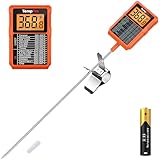
- 【Backlit 90° Rotating Display】The large 90-degree rotating screen enables effortless angle adjustment for optimal visibility, while the backlight ensures precise food temperature readings even in dimly lit environment
- 【More Accurate Reading】Food thermometer delivers precise temperature readings in 1 second with an accuracy of ±0.9 ℉, making it much faster and more reliable than traditional analog thermometers
- 【Easier to Clean】With IPX5 rated waterproof design, this kitchen thermometer probe cleans up in seconds, just rinse it under running water with no worries
- 【Durable to Use】Candy thermometer digital includes 1 AAA battery, made of sturdy plastic and food-grade stainless steel, features large capacity that enables long-lasting usage without requiring frequent battery replacement
- 【Temperature Chart】Featuring a printed temperature reference chart, this cooking thermometer covers a wide range from -58°F to 572°F, making it ideal for candy making, frying oil, meat, baking and liquids
5. Infusion Time: Let the mixture steep on low heat for 15-30 minutes. Stir occasionally. The longer it steeps, the stronger the coffee flavor will be. Taste a tiny bit (carefully!) to gauge the strength.
- What “good” looks like: The syrup has taken on a deeper color and a noticeable coffee aroma.
- Common mistake: Forgetting about it and letting it boil or scorch. Keep an eye on it.
6. Remove from Heat: Once you’re happy with the coffee flavor, take the saucepan off the heat.
- What “good” looks like: Pan is safely off the burner.
- Common mistake: Leaving it on the heat too long, leading to over-extraction or burning.
7. Steep Further (Optional): For an even more intense coffee flavor, you can let the mixture sit, covered, off the heat for another 30 minutes to an hour.
- What “good” looks like: The coffee flavor continues to deepen without any further cooking.
- Common mistake: Not allowing enough time for the flavors to meld.
8. Strain the Syrup: Place a fine-mesh sieve lined with cheesecloth (if you have it) over a clean bowl or jar. Carefully pour the infused syrup through the strainer.
- What “good” looks like: Syrup flows through smoothly, leaving the coffee grounds behind.
- Common mistake: Rushing the straining process. Let gravity do its work. Pressing too hard can push fine particles through.
9. Discard Grounds: Once strained, discard the coffee grounds. They’ve done their job.
- What “good” looks like: Grounds are collected and ready for composting.
- Common mistake: Trying to reuse the grounds. They’re spent.
10. Cool and Store: Let the coffee-infused maple syrup cool completely. Pour it into a clean, airtight container.
- What “good” looks like: Syrup is at room temperature and ready for storage.
- Common mistake: Storing it while still warm. This can create condensation and affect shelf life.
11. Chill: Store the finished syrup in the refrigerator. This keeps it fresh and preserves the flavor.
- What “good” looks like: Syrup is in the fridge, ready for its debut.
- Common mistake: Leaving it on the counter. It’s best refrigerated for longevity.
Common Mistakes (and What Happens If You Ignore Them)
| Mistake | What it Causes | Fix |
|---|---|---|
| Using stale or low-quality coffee | Weak, flat, or off-flavors in the syrup. | Use freshly roasted, whole bean coffee. |
| Grinding coffee too fine | Cloudy syrup, difficult straining, bitter taste. | Coarsely grind beans or use a mortar and pestle. |
| Boiling the syrup | Burnt flavor, thin syrup, loss of maple sweetness. | Heat gently on low, aim for 140-160°F. |
| Over-infusing | Bitter, harsh coffee taste that overpowers the maple. | Taste periodically during steeping and remove from heat when desired flavor is reached. |
| Not straining thoroughly | Gritty texture, grounds in your final product. | Use a fine-mesh sieve, optionally lined with cheesecloth. Be patient with straining. |
| Storing warm syrup | Condensation, reduced shelf life, potential spoilage. | Let the syrup cool completely before bottling and refrigerating. |
| Using dirty equipment | Off-flavors, contamination. | Ensure all tools and containers are thoroughly cleaned and dried. |
| Not using enough coffee | Syrup tastes like plain maple, coffee flavor is lost. | Start with the recommended ratio (e.g., 1/4 cup beans to 2 cups syrup) and adjust next time. |
| Using flavored coffee | Conflicting flavors, muddy taste. | Stick to unflavored, single-origin or blend coffees for the cleanest infusion. |
| Not stirring during infusion | Uneven flavor extraction. | Stir gently a few times during the low-heat steeping period. |
Decision Rules
- If your syrup tastes too weak, then increase the amount of coffee beans or the infusion time next batch because you need more coffee flavor extraction.
- If your syrup is bitter, then reduce the infusion time or use a lighter roast coffee because over-extraction leads to bitterness.
- If you have trouble straining, then ensure your coffee is coarsely ground next time because fine grounds clog the sieve.
- If your syrup seems too thin, then you likely boiled it too vigorously, so be more gentle with the heat next time.
- If you want a more robust coffee flavor, then try a darker roast coffee bean because they generally have more intense flavor profiles.
- If you want a brighter, fruitier note, then experiment with a light roast or a specific origin known for those characteristics because different beans offer different flavor nuances.
- If you notice any off-smells or tastes, then discard the batch and start over because it might be contaminated or spoiled.
- If you want to store it for longer than a few weeks, then ensure your container is absolutely sterile and the syrup is fully cooled before refrigerating because proper storage is key to longevity.
FAQ
How long does coffee-infused maple syrup last?
Stored properly in the refrigerator, it should last for several weeks, often up to a month or even longer. Always check for any signs of spoilage before using.
Can I use instant coffee?
It’s not recommended. Instant coffee is processed differently and won’t provide the rich, nuanced flavor you get from whole coffee beans. Stick to actual coffee beans for the best results.
What’s the best type of coffee bean to use?
This is personal preference! Medium to dark roasts are popular for a classic coffee flavor. For something brighter, try a light roast. Experiment to find your favorite.
Do I need to use a special coffee maker for this?
Nope. You just need whole coffee beans. No brewing equipment is involved in the infusion process itself.
Can I make this with decaf coffee?
Absolutely. If you want the coffee flavor without the caffeine kick, decaf beans work just fine. Just make sure they are good quality beans.
What if I don’t have cheesecloth?
A very fine-mesh sieve is usually sufficient. You might get a slightly less clear syrup, but it will still be delicious. Just be patient with the straining.
Can I add sugar or other sweeteners?
This recipe is designed to use pure maple syrup as the base. Adding other sweeteners can alter the flavor balance and texture significantly.
What This Page Does NOT Cover (And Where to Go Next)
- Detailed scientific explanations of flavor extraction in syrups.
- Advanced syrup-making techniques like candy making.
- Recipes for specific coffee origins or flavor pairings.
Where to go next:
- Explore different coffee bean origins and roasts.
- Learn about other gourmet syrup infusion techniques.
- Find recipes that use coffee-infused maple syrup as an ingredient.