
Homemade Coffee Chews: A Sweet Treat
Quick Answer
- Gather your ingredients: coffee, sugar, butter, and cream.
- Combine sugar, butter, and cream in a saucepan and heat until dissolved.
- Stir in your brewed coffee and any desired flavorings.
- Cook the mixture to the soft-ball stage (around 235-245°F) for a chewy texture.
- Pour onto a greased baking sheet or into a candy mold.
- Let cool completely before cutting or unmolding.
- Store in an airtight container to maintain chewiness.
Who This Is For
- Coffee lovers seeking a unique way to enjoy their favorite flavor.
- Home bakers looking for a simple, no-bake treat.
- Anyone wanting to impress guests with a homemade, coffee-infused candy.
What to Check First for Your Coffee Chews
Coffee Strength and Type
The coffee you use will significantly impact the flavor of your chews. A strong, robust brew will yield a more intense coffee taste.
- Check: Are you using a strong coffee? Consider a dark roast or espresso for a bolder flavor.
- What good looks like: Your brewed coffee should have a rich aroma and a deep color, indicating a concentrated flavor.
- Common mistake: Using weak or diluted coffee. This will result in a muted coffee flavor in your finished chews.
- How to avoid: Brew your coffee extra strong, or even use a concentrated coffee extract if you have it.
Sugar and Sweetener Type
The type and amount of sugar will affect the chewiness and sweetness of your candy. Granulated sugar is standard, but brown sugar can add a caramel note.
- Check: Are you using granulated sugar? Do you want to add a hint of caramel?
- What good looks like: Granulated sugar dissolves easily, creating a smooth base.
- Common mistake: Not ensuring the sugar is fully dissolved before proceeding.
- How to avoid: Stir the sugar and butter mixture consistently over low heat until no sugar crystals are visible.
Fat Source (Butter)
Butter provides richness and contributes to the chewy texture. Ensure it’s fresh for the best flavor.
- Check: Is your butter fresh and unsalted?
- What good looks like: Melted butter should be smooth and not browned or separated.
- Common mistake: Using salted butter if you want to control the saltiness precisely.
- How to avoid: Opt for unsalted butter and add salt separately if the recipe calls for it.
For the best flavor and texture, ensure you’re using fresh, unsalted butter. This allows you to control the saltiness precisely, and unsalted butter is a key ingredient for rich, chewy candies like these.

- UNSALTED BUTTER: Each package comes with 4 sticks of Vital Farms Unsalted Butter made with cream from cows raised on family farms.
- 90% GRASS-FED: The girls enjoy a diet of 90% grass, while the remaining 10% is nutritionally balanced feed to ensure a well-rounded diet.
- PASTURE-RAISED: The farmers we work with raise their four-legged ladies with care and respect on family farms where cows enjoy outdoor access 200 days per year on average.
- HIGH BUTTERFAT: The girls supply a rich cream that’s churned into creamy, melt-in-your mouth butter
- CONSCIOUS CAPITALISM: Vital Farms is a Certified B Corporation with a purpose to improve the lives of people, animals, and the planet through food.
Dairy Component (Cream or Milk)
The dairy component, typically heavy cream or evaporated milk, adds moisture and contributes to the chewy consistency.
- Check: Are you using heavy cream or evaporated milk?
- What good looks like: The mixture should be smooth and well-emulsified.
- Common mistake: Using a dairy product with too low a fat content, which can affect texture.
- How to avoid: Stick to recipes that specify heavy cream or evaporated milk for optimal results.
Cooking Temperature (Candy Stage)
This is crucial for achieving the desired chewiness. Too low, and they’ll be too soft; too high, and they’ll be hard.
- Check: Do you have a candy thermometer?
- What good looks like: The mixture bubbles and thickens consistently as it heats.
- Common mistake: Not using a candy thermometer and guessing the temperature.
- How to avoid: Invest in a reliable candy thermometer and calibrate it if necessary.
A candy thermometer is essential for achieving the perfect chewy texture. It ensures you cook the mixture to the precise soft-ball stage, preventing your chews from being too hard or too soft.
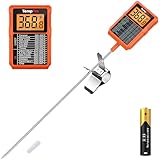
- 【Backlit 90° Rotating Display】The large 90-degree rotating screen enables effortless angle adjustment for optimal visibility, while the backlight ensures precise food temperature readings even in dimly lit environment
- 【More Accurate Reading】Food thermometer delivers precise temperature readings in 1 second with an accuracy of ±0.9 ℉, making it much faster and more reliable than traditional analog thermometers
- 【Easier to Clean】With IPX5 rated waterproof design, this kitchen thermometer probe cleans up in seconds, just rinse it under running water with no worries
- 【Durable to Use】Candy thermometer digital includes 1 AAA battery, made of sturdy plastic and food-grade stainless steel, features large capacity that enables long-lasting usage without requiring frequent battery replacement
- 【Temperature Chart】Featuring a printed temperature reference chart, this cooking thermometer covers a wide range from -58°F to 572°F, making it ideal for candy making, frying oil, meat, baking and liquids
Step-by-Step: How to Make Your Own Coffee Chew
1. Prepare Your Equipment: Lightly grease a baking sheet with butter or cooking spray, or prepare candy molds. Have all your ingredients measured and ready.
- What “good” looks like: Your workspace is organized, and equipment is ready to go to avoid rushing.
- Common mistake: Not having everything prepped, leading to rushed steps and potential errors.
- How to avoid: Measure everything out before you start heating anything.
2. Combine Base Ingredients: In a medium saucepan, combine the granulated sugar, butter, and heavy cream (or evaporated milk).
- What “good” looks like: A smooth mixture of sugar, butter, and cream.
- Common mistake: Using a pan that’s too small, which can cause boil-overs.
- How to avoid: Use a saucepan that’s at least 2-3 quarts in size.
3. Heat and Dissolve: Place the saucepan over medium-low heat. Stir constantly until the butter is melted and the sugar is completely dissolved. Do not let it boil vigorously at this stage.
- What “good” looks like: A clear, smooth liquid with no visible sugar crystals.
- Common mistake: Not stirring enough, leading to sugar crystallization or scorching on the bottom.
- How to avoid: Stir continuously with a heat-resistant spatula or wooden spoon.
4. Add Coffee: Stir in your strongly brewed coffee (or coffee extract). Ensure it’s fully incorporated into the sugar mixture.
- What “good” looks like: The mixture is uniform in color and texture.
- Common mistake: Adding cold coffee to a hot sugar mixture, which can cause it to seize or crystallize.
- How to avoid: Gently warm your brewed coffee before adding it, or ensure your sugar mixture isn’t boiling when you add it.
5. Attach Candy Thermometer: Clip a candy thermometer to the side of the saucepan, ensuring the tip is submerged in the mixture but not touching the bottom.
- What “good” looks like: The thermometer is securely attached and accurately reads the temperature of the mixture.
- Common mistake: Not attaching the thermometer properly, or having it touch the bottom of the pan.
- How to avoid: Follow the manufacturer’s instructions for your specific candy thermometer.
6. Cook to Temperature: Increase the heat to medium and bring the mixture to a boil. Continue to cook, stirring occasionally, until the thermometer reaches the soft-ball stage, typically between 235°F and 245°F.
- What “good” looks like: The mixture boils steadily and the temperature climbs gradually.
- Common mistake: Stirring too vigorously or too often once it reaches a boil, which can disrupt crystal formation and affect texture.
- How to avoid: Stir only when necessary to prevent sticking or scorching, especially around the edges.
7. Test the Soft-Ball Stage (Optional but Recommended): If you don’t have a thermometer, you can test the soft-ball stage by dropping a small amount of the mixture into a glass of cold water. It should form a soft, pliable ball that flattens when removed from the water.
- What “good” looks like: The dropped mixture forms a distinct, soft ball.
- Common mistake: Dropping the mixture into lukewarm water, which won’t give an accurate reading.
- How to avoid: Always use very cold water for the drop test.
8. Remove from Heat: Once the target temperature is reached, immediately remove the saucepan from the heat.
- What “good” looks like: The boiling stops promptly after removing the pan.
- Common mistake: Leaving the mixture on the heat too long, causing it to overcook.
- How to avoid: Be vigilant and ready to remove the pan as soon as the thermometer hits the desired temperature.
9. Add Flavorings (Optional): If using any extracts like vanilla or a touch of espresso powder for extra coffee punch, stir them in now.
- What “good” looks like: Flavorings are evenly distributed throughout the mixture.
- Common mistake: Adding flavorings too early, as heat can dissipate some volatile aromas.
- How to avoid: Add delicate flavorings only after removing the candy from the heat.
10. Pour Mixture: Carefully and quickly pour the hot mixture onto your prepared baking sheet or into your candy molds. Work swiftly, as the mixture will start to set.
- What “good” looks like: The mixture spreads evenly, or fills the molds without excessive air bubbles.
- Common mistake: Pouring too slowly, allowing the candy to harden in the pan.
- How to avoid: Have your pouring vessel (like a heat-resistant measuring cup) ready to go.
11. Cool Completely: Let the coffee chews cool undisturbed at room temperature for at least 2-4 hours, or until completely firm. Do not refrigerate, as this can affect the texture.
- What “good” looks like: The chews are firm to the touch and no longer sticky.
- Common mistake: Trying to cut or unmold them while still warm.
- How to avoid: Patience is key; allow them ample time to set properly.
12. Cut or Unmold: Once fully cooled, cut the chews into bite-sized squares using a sharp, oiled knife, or carefully unmold them from their candy forms.
- What “good” looks like: Cleanly cut pieces or perfectly formed candies.
- Common mistake: The chews sticking to the knife or mold.
- How to avoid: Lightly oiling your knife or the molds beforehand helps immensely.
Common Mistakes (and What Happens If You Ignore Them)
| Mistake | What It Causes | Fix |
|---|---|---|
| Using weak coffee | Muted, barely-there coffee flavor | Brew coffee extra strong or use coffee extract. |
| Not dissolving sugar completely | Gritty texture, potential crystallization | Stir constantly over low heat until no sugar crystals remain. |
| Using a pan that’s too small | Boil-overs, messy cleanup, uneven cooking | Use a saucepan at least 2-3 quarts in size. |
| Adding cold coffee to hot sugar mixture | Seizing, crystallization, lumpy texture | Gently warm coffee before adding, or ensure mixture isn’t boiling. |
| Stirring too much after boiling starts | Can lead to crystallization, affecting chewiness | Stir only occasionally to prevent sticking; avoid vigorous stirring. |
| Not using a candy thermometer | Inaccurate cooking temperature, wrong texture | Invest in and properly use a candy thermometer. |
| Not letting chews cool completely | Sticky, soft, unmanageable pieces | Allow at least 2-4 hours at room temperature until fully firm. |
| Cutting or unmolding while still warm | Chews stick to tools, lose their shape | Wait until the chews are completely cooled and firm. |
| Storing improperly (e.g., uncovered) | Chews become hard and brittle or too soft from humidity | Store in an airtight container at room temperature. |
| Using low-fat dairy | Chews may not set properly or have a less rich texture | Use heavy cream or evaporated milk as specified in most recipes. |
Decision Rules for Coffee Chews
- If your coffee tastes weak, then brew it stronger or use coffee extract because a concentrated coffee flavor is essential.
- If you see sugar crystals after heating the butter and sugar, then continue heating and stirring until they fully dissolve because undissolved sugar creates a gritty texture.
- If your mixture boils over, then reduce the heat slightly and stir gently because too high a heat can cause this issue.
- If you don’t have a candy thermometer, then use the cold water drop test because it’s a reliable indicator of the soft-ball stage.
- If the chews are too hard after cooling, then they were likely cooked to too high a temperature, and you should aim for a lower temperature next time.
- If the chews are too soft and sticky, then they were likely undercooked, and you need to cook them to a higher temperature (closer to 245°F).
- If you want a caramel-like undertone, then consider using a portion of brown sugar in place of some granulated sugar, but be aware it might slightly alter the set time.
- If your chews are sticking to the knife when cutting, then lightly oil the blade with butter or cooking spray because this prevents sticking.
- If you want to avoid crystallization, then avoid stirring the mixture vigorously once it reaches a rolling boil because this can disrupt the sugar molecules.
- If you notice separation in the mixture while cooking, then stir gently to re-emulsify, ensuring consistent texture.
- If you want to store them for longer than a week, then consider wrapping individual chews in wax paper before placing them in an airtight container because this helps maintain freshness.
FAQ
How can I make my coffee chews chewier?
To achieve a chewier texture, ensure you cook the mixture to the higher end of the soft-ball stage (around 240-245°F). Also, using heavy cream instead of milk will contribute to a richer, chewier result.
Can I use instant coffee instead of brewed coffee?
Yes, you can use instant coffee. Dissolve the instant coffee granules in a small amount of hot water or directly in the hot sugar mixture according to your recipe’s liquid amount. Use a strong concentration for best flavor.
What happens if I don’t use a candy thermometer?
Without a candy thermometer, it’s difficult to accurately gauge the cooking temperature, which is critical for texture. You risk making chews that are too hard, too soft, or grainy. Relying on the cold water test is the best alternative.
How do I prevent my coffee chews from becoming grainy?
Graininess often results from undissolved sugar or crystallization during cooking. Ensure all sugar is fully dissolved before reaching a boil, and avoid vigorous stirring once the mixture is boiling.
Can I add nuts or other mix-ins to my coffee chews?
Yes, you can add chopped nuts, chocolate chips, or other small mix-ins. Stir them in after removing the mixture from the heat, just before pouring, to prevent them from sinking to the bottom.
How should I store homemade coffee chews?
Store your coffee chews in an airtight container at room temperature. If you live in a very humid climate, you may want to wrap each chew individually in wax paper or parchment paper to prevent them from sticking together or becoming too soft.
Why are my coffee chews too hard?
They are likely too hard because they were cooked to a temperature higher than the soft-ball stage, possibly reaching the hard-ball or soft-crack stage. Next time, aim for a lower temperature.
Can I make coffee chews without butter?
While butter adds richness and helps with texture, some recipes might offer alternatives. However, butter is a key component for the classic chewy candy texture and flavor.
What This Page Does Not Cover (and Where to Go Next)
- Advanced candy-making techniques like tempering chocolate for coatings.
- Specific flavor pairings beyond basic coffee and vanilla.
- Detailed troubleshooting for highly specific ingredient issues or equipment malfunctions.
To learn more, explore resources on general candy making, sugar science, and coffee flavor profiles.