
DIY Flavored Coffee Beans: Enhance Your Brew
Quick answer
- Infuse whole coffee beans with desired flavors using extracts or spices.
- Start with fresh, high-quality whole beans.
- Use small amounts of flavorings to avoid over-saturation.
- Allow beans to dry completely before grinding.
- Store flavored beans in an airtight container.
- Experiment with different flavor combinations.
Who this is for
- Coffee enthusiasts looking to customize their morning cup.
- Home baristas interested in unique flavor profiles.
- Anyone seeking a creative way to enjoy their favorite coffee.
What to check first
Brewer type and filter type
Your brewing method and the filter you use can significantly impact the final taste of your coffee, even before adding flavors. For instance, a French press will allow more oils and fine particles through, potentially carrying more of your added flavor, while a paper filter will yield a cleaner cup.
Water quality and temperature
The water you use is a major component of your coffee. Filtered water is ideal, as tap water can contain minerals or chlorine that interfere with flavor extraction and mask your DIY infusions. Water temperature is also critical; too hot can scorch the grounds, while too cool leads to under-extraction. Aim for 195-205°F (90-96°C) for most brewing methods, but always check your brewer’s recommendations.
Grind size and coffee freshness
Freshly roasted, whole bean coffee is essential for the best results. Pre-ground coffee loses its volatile aromatics quickly. The grind size should match your brewing method – coarse for French press, medium for drip, fine for espresso. Grinding right before brewing preserves the most flavor.
Coffee-to-water ratio
A common starting point for drip coffee is a ratio of 1:15 to 1:18 (coffee to water by weight). For example, 20 grams of coffee to 300 grams (or ml) of water. Adjust this ratio based on your preference for strength. Too little coffee can result in a weak, watery brew, while too much can lead to over-extraction and bitterness.
Cleanliness/descale status
A dirty coffee maker or kettle can impart stale, bitter, or off-flavors that will overpower any subtle notes you’ve added to your beans. Regularly clean your grinder, brewer, and any storage containers. Descaling your machine according to the manufacturer’s instructions is also crucial for optimal performance and taste.
Step-by-step (brew workflow)
1. Select your coffee beans: Choose fresh, high-quality whole beans. Lighter roasts tend to absorb flavors more readily and allow their original characteristics to shine through.
- What “good” looks like: Beans that are recently roasted (within 2-3 weeks) and free from visible defects.
- Common mistake: Using stale or pre-ground coffee. This will result in a flat flavor profile that won’t benefit from flavoring.
- How to avoid: Purchase whole beans from a reputable roaster and check the roast date.
Starting with fresh, high-quality whole beans is key to successful DIY flavoring. If you’re serious about coffee, consider investing in a coffee bean roaster to ensure ultimate freshness and control over your bean’s profile.
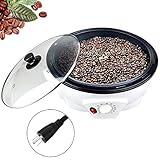
- 【Premium Quality】Operating at 110V and 800W, this electric coffee bean roaster features a non-stick chassis for easy cleaning. Equipped with a stirring rod, it ensures even roasting by continuously agitating the beans during the process. The professional thermostat provides automatic, constant temperature heating, and allows for adjustable temperature settings, enabling you to roast a variety of cereals to perfection.
- 【Honeycomb Non-Stick Bottom】The roasting chamber features a honeycomb-shaped design with a black food-grade Teflon coating. This ensures safe, easy cleaning and provides even, uniform heating for consistently perfect roasts.
- 【Professionally designed】The roaster features a heat-resistant, durable transparent cover with a four-hole ventilation system. This allows you to monitor the roasting process and observe changes in the coffee beans effortlessly while maintaining optimal ventilation.
- 【Large Capacity】Featuring an 800g tank, this roaster can accommodate a substantial amount of coffee beans, allowing you to roast in larger batches quickly and conveniently. For optimal results, we recommend roasting between 300g and 500g of beans at a time.
- 【Multifunction Use】This versatile machine is not only perfect for roasting coffee beans but also for baking a variety of other items, including beans, peanuts, chestnuts, barley, dried fruit, and popcorn. Ideal for home use, coffee shops, or restaurants, it allows you to craft and customize your unique coffee flavors to your preference.
2. Prepare your flavoring agent: Decide on your desired flavor. This could be a high-quality food-grade extract (like vanilla, almond, or hazelnut) or ground spices (cinnamon, cardamom, nutmeg).
- What “good” looks like: A pure extract or finely ground, aromatic spice.
- Common mistake: Using artificial flavorings or extracts with added sugars or alcohol that can negatively impact the beans or brewing process.
- How to avoid: Opt for pure extracts and fresh, high-quality spices.
3. Combine beans and flavoring (Extract Method): Place your whole beans in a clean, dry bowl. Drizzle a very small amount of your chosen extract over the beans. For example, start with just a few drops per 8 oz of beans.
- What “good” looks like: Beans are lightly coated, not visibly wet or saturated.
- Common mistake: Over-saturating the beans with extract, leading to clumping and an overly strong, artificial taste.
- How to avoid: Add flavorings incrementally, stirring gently to distribute. You can always add more, but you can’t take it away.
4. Combine beans and flavoring (Spice Method): Place whole beans in a bowl. Add a small amount of finely ground spice. For 8 oz of beans, start with about 1/4 to 1/2 teaspoon of spice.
- What “good” looks like: Spices are evenly distributed throughout the beans.
- Common mistake: Using coarse or clumpy spices, or too much spice, which can lead to uneven flavor and bitter notes.
- How to avoid: Ensure spices are finely ground and add them gradually while stirring.
5. Stir and coat: Gently stir the beans to ensure the flavoring is evenly distributed. Use a spoon or your hands (ensure hands are clean and dry).
- What “good” looks like: Each bean has a light coating of the flavoring.
- Common mistake: Insufficient stirring, resulting in pockets of concentrated flavor or unflavored beans.
- How to avoid: Stir for at least a minute, ensuring all beans come into contact with the flavoring.
6. Allow to air dry: Spread the flavored beans in a single layer on a clean plate, baking sheet, or parchment paper. Let them air dry in a well-ventilated area for at least 12-24 hours, or until completely dry to the touch.
- What “good” looks like: Beans are completely dry and no longer feel sticky or oily.
- Common mistake: Grinding beans that are still moist, which can clog your grinder and lead to a gummy extraction.
- How to avoid: Patience is key. Test a few beans; they should feel completely dry and hard.
7. Optional: Second infusion (for extracts): If you desire a stronger flavor, you can repeat steps 3-6 after the first drying period. Be cautious not to overdo it.
- What “good” looks like: A subtle, yet noticeable, aroma and flavor enhancement.
- Common mistake: Adding too much flavoring in a second round, leading to an unbalanced and artificial taste.
- How to avoid: Use even less flavoring in the second round than the first, and always test a small batch.
8. Grind your flavored beans: Once completely dry, grind the beans just before brewing, using the appropriate grind size for your chosen brewing method.
- What “good” looks like: A consistent grind size that matches your brewer.
- Common mistake: Grinding too fine or too coarse, which will negatively impact extraction.
- How to avoid: Use a quality burr grinder and adjust settings based on your brewer.
For the best results, especially when working with DIY flavored beans, a quality burr coffee bean grinder is essential for achieving the right consistency. This will help ensure your flavors are evenly extracted.
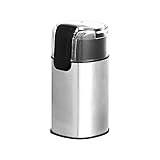
- Electric coffee bean grinder appliance for home use
- Can grind 30 grams/1 ounce of beans for drip coffee brewing in 10 seconds
- Grind coffee beans, herbs, spices, grains, nuts, and more
- Clear safety lid allows you to easily see the results in progress
- Heavy-duty stainless steel grind blade
9. Brew your coffee: Use your preferred brewing method with your freshly ground, flavored coffee beans.
- What “good” looks like: Aromatic coffee with the desired subtle flavor notes.
- Common mistake: Using incorrect water temperature or coffee-to-water ratio, which can mask or over-extract the added flavors.
- How to avoid: Stick to best practices for your brewing method.
10. Taste and adjust: Sip your coffee and evaluate the flavor. Note what you like and what you might change for your next batch.
- What “good” looks like: A delicious cup of coffee that highlights the added flavor without being overpowering.
- Common mistake: Expecting intense, syrupy flavors like those found in some commercial flavored coffees. DIY methods aim for subtlety.
- How to avoid: Manage expectations and appreciate the nuanced flavors you create.
Common mistakes (and what happens if you ignore them)
| Mistake | What it causes | Fix |
|---|---|---|
| Using stale or pre-ground coffee | Flat, muted flavors; added flavors won’t integrate well. | Use fresh, whole bean coffee roasted within the last 2-3 weeks. |
| Over-saturating beans with extract | Beans clump, become gummy; overly strong, artificial, or bitter taste. | Use extracts sparingly, a few drops at a time, and stir well. Allow to dry completely. |
| Using too much spice | Bitter notes, chalky texture, overpowering flavor, uneven extraction. | Start with small amounts of finely ground spices (e.g., 1/4 tsp per 8 oz beans) and adjust upwards gradually. |
| Not letting beans dry completely | Grinder clogs, gummy extraction, mold growth if stored improperly. | Spread beans in a single layer and air dry for at least 12-24 hours until completely dry. |
| Using low-quality or artificial flavorings | Unpleasant chemical taste, off-aroma, potential health concerns. | Use pure, food-grade extracts and high-quality, fresh spices. |
| Improper storage of flavored beans | Flavor dissipates quickly, beans absorb ambient odors, potential mold. | Store dried, flavored beans in an airtight container away from light, heat, and moisture. |
| Grinding flavored beans too early | Flavor and aroma loss before brewing; beans may still be slightly moist. | Grind only the amount needed immediately before brewing, after beans have fully dried. |
| Expecting commercial-level intensity | Disappointment with subtle, nuanced DIY flavors. | Understand that DIY methods create more natural, subtle enhancements, not syrupy, artificial tastes. |
| Not cleaning equipment thoroughly | Stale flavors from old coffee oils masking or clashing with new flavors. | Clean grinders, bowls, and storage containers thoroughly between batches. |
| Using extracts with alcohol/sugar | Can affect bean texture, extraction, and introduce unwanted sweetness. | Opt for pure flavor extracts without added ingredients. |
Decision rules (simple if/then)
- If you want a subtle hint of flavor, use a single drop of extract per 4 oz of beans.
- If you are using ground spices, ensure they are finely ground to prevent unevenness because coarse particles won’t distribute well.
- If your beans feel even slightly damp after 24 hours, extend the drying time because moisture can ruin your grinder and lead to poor extraction.
- If you notice clumping during the flavoring process, you’ve likely used too much liquid flavoring. Add more dry beans to absorb excess moisture, or let them air dry longer.
- If you want to add a second layer of flavor, use half the amount of flavoring you used the first time because flavors can become too intense quickly.
- If you are using a French press, consider adding flavors that complement the oils and sediment that will be present in the cup.
- If you are using a paper filter brewer, subtle flavors will be more apparent because the cup will be cleaner.
- If you’re unsure about a flavor combination, test it with a very small batch of beans first because you can waste a lot of coffee if the flavor doesn’t work out.
- If your flavored beans have a strong, artificial smell, you’ve likely used too much flavoring or a low-quality extract.
- If you want to store flavored beans for longer than a week, consider vacuum-sealing them to preserve freshness and flavor.
- If you are using a dark roast, be aware that the inherent strong flavors of the bean might overpower lighter DIY infusions.
FAQ
How long do flavored coffee beans last?
Properly dried and stored flavored coffee beans can last for about 2-3 weeks. Beyond that, their flavor and aroma will begin to diminish.
Can I use essential oils to flavor coffee beans?
No, it is not recommended to use essential oils. Essential oils are highly concentrated and not intended for consumption. Stick to food-grade extracts and spices.
What is the best way to store flavored coffee beans?
Store your dried, flavored beans in an airtight container away from direct sunlight, heat, and moisture. This helps preserve their flavor and prevent them from absorbing other odors.
How much flavoring should I use?
Start conservatively. For extracts, a few drops per 8 oz of beans is a good starting point. For spices, try about 1/4 to 1/2 teaspoon per 8 oz. You can always add more, but you can’t take it away.
Will flavoring my beans affect my coffee maker?
If the beans are not dried completely, the residual moisture and oils could potentially affect your grinder or brewer over time. Ensure thorough drying to minimize this risk.
Can I re-flavor beans that have already been brewed?
No, once coffee beans have been brewed, they are spent and cannot be flavored or re-used for brewing.
What kind of coffee beans are best for flavoring?
Fresh, high-quality whole beans are best. Lighter to medium roasts tend to absorb flavors more readily and allow the added notes to be more distinct.
How do I know if my beans are dry enough?
Your beans should feel completely dry to the touch, with no stickiness or residual oiliness. They should be hard and brittle, similar to their original state.
What this page does NOT cover (and where to go next)
- Specific recipes for flavor combinations. (Next: Explore online recipe blogs for inspiration.)
- Detailed analysis of different coffee roasting profiles and their impact on flavor absorption. (Next: Research coffee roasting guides.)
- Commercial flavoring techniques and industrial equipment. (Next: Look into coffee industry resources.)
- Advanced sensory analysis for identifying subtle flavor notes. (Next: Consider coffee tasting workshops or courses.)