
Create Rich Iced Coffee At Home Without Creamer
Quick Answer
- Brew stronger: Aim for a higher coffee-to-water ratio.
- Chill fast: Brew hot coffee directly over ice.
- Use quality beans: Freshly roasted, whole beans make a difference.
- Grind right: Medium to medium-fine is usually a good bet.
- Water matters: Filtered water tastes better.
- Experiment: Adjust variables until it’s perfect for you.
Who This Is For
- Anyone who loves iced coffee but wants to avoid dairy or artificial creamers.
- Home brewers looking to elevate their cold coffee game beyond just dumping hot coffee over ice.
- People who want a rich, flavorful iced coffee without extra calories or ingredients.
What to Check First
Before you even think about brewing, let’s cover the basics. Getting these right is half the battle for good iced coffee.
Brewer Type and Filter Type
What are you using to brew your coffee? Drip machine? Pour-over? French press? Each has its own quirks. The filter matters too – paper filters can trap oils that add flavor, while metal or cloth filters let more through. For iced coffee, a method that brews a concentrated hot coffee is usually best.
Water Quality and Temperature
Your coffee is mostly water, so good water is key. If your tap water tastes funky, your coffee will too. Use filtered water if you can. For brewing hot coffee that you’ll chill, standard brewing temperatures (around 195-205°F) are what you want. Don’t boil the water – it’ll scorch the grounds.
Grind Size and Coffee Freshness
This is huge. Freshly roasted beans, ground just before brewing, are always best. For iced coffee, a grind that’s a touch finer than you might use for a regular hot cup can help extract more flavor when brewing concentrated. Think medium to medium-fine. Too coarse, and it’ll be weak. Too fine, and it might clog or over-extract, making it bitter.
Coffee-to-Water Ratio
This is where you build that rich flavor without creamer. You need to brew your coffee stronger than usual. For a standard hot cup, you might use a 1:15 ratio (1 gram of coffee to 15 grams of water). For iced coffee, try going closer to 1:8 or 1:10. This makes a concentrate that can stand up to melting ice.
Cleanliness/Descale Status
Seriously, clean your gear. Old coffee oils go rancid and make everything taste like a dirty sock. If you have a drip machine, descale it regularly. For pour-over or French press, just give it a good scrub after each use. It’s a simple step that pays off big time.
Step-by-Step: Brewing Concentrated Iced Coffee
This workflow focuses on brewing hot coffee that’s strong enough to stand up to ice.
1. Gather your gear. You’ll need your brewer, filter (if applicable), fresh coffee beans, grinder, kettle, filtered water, and a heat-safe container filled with ice.
- Good looks like: Everything clean and ready to go. No last-minute scrambling.
- Common mistake: Forgetting a key piece of equipment. Avoid this by setting everything out beforehand.
To best enjoy your freshly brewed iced coffee, consider serving it in dedicated iced coffee glasses. These are designed to keep your drink colder for longer and enhance the visual appeal.
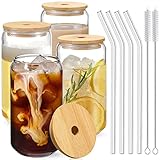
- PRODUCT CONFIGURATION: Drinking glass set includes 4 glass cups [ Diameter - 3 inches, Height - 5.6 inches ],4 nature bamboo lids, 4 reusable glass straws and 2 cleaning brushes, Classic design tumbler
- DURABLE and SAFE: The glasses are made of high-quality durable clear glass, Lead-free and BPA-free. It can be used safely for a long time. This thick clear glass can withstand the sudden changes in the temperature difference between -68°F to 212°F, making them dishwasher safe. If you want to decorate this glass, you can do DIY easily without breakage
- MULTI-PURPOSE: The glassware Great for any Occasion, any hot and cold drinks, home essentials. It is widely loved by families, kitchen, breweries, cafes, bars and restaurants. You can use it to make perfect tea, bubble Pearl Milk Tea, soda, water, iced coffee, smoothie, fruit juice or any other interesting holiday drinks
- AMAZING GIFT: This jar is very fashionable, aesthetic and characteristic. Excellent workmanship. Perfect Gifts for Women, House warming gifts, Tea mug Sets, Highball Glasses, Home Bar Accessories, Birthdays, Graduation, Weddings and Christmas Gifts
- SATISFIED SERVICE: This glass set is packaged in the heavy bubble holder and thick carton box to prevent damage while in transport. If the glass set you received was damaged or imperfect or you are not satisfied, we will offer a satisfactory solution
2. Weigh your coffee beans. Use a scale for accuracy. Aim for a higher coffee-to-water ratio. For example, if you plan to brew 8 oz of concentrate, try 2 oz (about 56g) of beans.
- Good looks like: Precise measurements.
- Common mistake: Guessing the amount. This leads to inconsistent strength. Use a scale!
3. Heat your water. Bring filtered water to just off the boil, around 195-205°F.
- Good looks like: Water at the right temperature, not violently boiling.
- Common mistake: Using boiling water. This can scald the coffee grounds and create bitter flavors. Let it sit for 30 seconds after boiling.
4. Grind your beans. Grind them to a medium-fine consistency, similar to coarse sand. Grind right before brewing for maximum freshness.
- Good looks like: Uniformly ground coffee.
- Common mistake: Grinding too far in advance. Pre-ground coffee loses flavor fast. Grind only what you need.
5. Prepare your brewer and filter. If using a pour-over, rinse your paper filter with hot water to remove paper taste and preheat the brewer. Discard the rinse water.
- Good looks like: A clean, preheated brewing setup.
- Common mistake: Not rinsing the paper filter. This can leave a papery taste in your final cup.
6. Add grounds to the brewer. Place the ground coffee into your prepared brewer. Gently shake it to level the bed of grounds.
- Good looks like: An even bed of coffee.
- Common mistake: Leaving a big hump or divot in the grounds. This leads to uneven extraction.
7. Bloom the coffee. Pour just enough hot water (about twice the weight of the coffee) to saturate all the grounds. Let it sit for 30-45 seconds. You’ll see it bubble and expand.
- Good looks like: A gentle rise and degassing of the coffee.
- Common mistake: Pouring too much water or skipping the bloom. The bloom releases CO2, which is crucial for even extraction.
8. Brew your concentrate. Slowly pour the remaining hot water over the grounds in a controlled manner, aiming for a steady stream. Try to hit all the grounds evenly.
- Good looks like: A steady drip or flow of coffee into your container. Aim for your target brew time (e.g., 2-4 minutes for pour-over).
- Common mistake: Pouring too fast or unevenly. This can lead to channeling, where water bypasses some grounds, resulting in weak or bitter coffee.
9. Brew directly over ice. Position your brewer over a container filled with ice. As the hot coffee brews, it will hit the ice and start to chill rapidly. Use a 1:1 ratio of hot coffee concentrate to ice by volume. For example, if you brewed 8 oz of concentrate, have 8 oz of ice ready.
- Good looks like: Hot coffee dripping onto ice, quickly cooling.
- Common mistake: Brewing hot coffee and then chilling it later. This can dilute the flavor and lead to a less vibrant taste. Brewing over ice chills it fast and preserves flavor.
10. Stir and taste. Once brewing is complete, give the iced coffee a good stir to ensure it’s fully chilled and mixed. Taste it.
- Good looks like: A cold, evenly mixed beverage.
- Common mistake: Not stirring enough. This can result in uneven temperatures and flavor distribution.
11. Adjust and enjoy. If it’s too strong, add a little cold water or a few more ice cubes. If it’s too weak, you know what to do next time – brew stronger or grind finer.
- Good looks like: Iced coffee that hits the spot.
- Common mistake: Not tasting and adjusting. Your perfect cup is out there; find it!
Common Mistakes (and What Happens If You Ignore Them)
| Mistake | What It Causes | Fix |
|---|---|---|
| Using stale, pre-ground coffee | Weak, flat, or bitter flavor. Lacks aroma and complexity. | Buy whole beans and grind them fresh just before brewing. |
| Incorrect grind size (too coarse) | Under-extraction, leading to a weak, sour, or watery iced coffee. | Grind finer. Aim for medium-fine for most methods. |
| Incorrect grind size (too fine) | Over-extraction (bitter, harsh) or clogged brewer, slowing down brew time. | Grind coarser. If using a drip machine, it might clog. For pour-over, it’ll take too long to drip. |
| Brewing at the wrong water temperature | Scorched coffee (too hot) or weak flavor (too cool). | Use a thermometer or let boiling water sit for 30 seconds (195-205°F). |
| Not brewing strong enough (low ratio) | Diluted, weak iced coffee that tastes like brown water when ice melts. | Increase the coffee-to-water ratio. Use more coffee or less water for your brew. |
| Brewing hot coffee and chilling later | Flavor loss, potential for bitterness as it cools slowly. | Brew directly over ice to chill it rapidly and lock in flavor. |
| Using poor-quality or tap water | Off-flavors that detract from the coffee’s natural taste. | Use filtered water. If your tap water tastes bad, your coffee will too. |
| Not cleaning your equipment regularly | Rancid oils making your coffee taste stale, bitter, or “off.” | Clean your brewer and grinder after every use. Descale drip machines periodically. |
| Uneven pouring during bloom or brew | Channeling, leading to uneven extraction and a mixed-flavor profile. | Pour water slowly and evenly, ensuring all grounds are saturated. Use a gooseneck kettle for control. |
| Not letting coffee bloom | CO2 trapped in grounds, leading to uneven extraction and less flavor. | Always bloom your coffee for 30-45 seconds before the main pour. |
Decision Rules
- If your iced coffee tastes weak and watery, then increase your coffee-to-water ratio for the next brew because you need a stronger concentrate to balance the ice.
- If your iced coffee tastes bitter or harsh, then try a slightly coarser grind or ensure your water isn’t too hot because over-extraction is likely the culprit.
- If your pour-over is taking too long to drip, then your grind is likely too fine, causing it to clog.
- If your iced coffee tastes dull or flat, then check the freshness of your beans and consider grinding them right before brewing.
- If you’re using a drip machine and want richer iced coffee, then consider brewing a concentrated batch (use more coffee grounds) and pouring it over ice.
- If your iced coffee has an unpleasant aftertaste, then check your water quality and clean your brewing equipment thoroughly.
- If your iced coffee is too strong after brewing over ice, then add a splash of cold water or a few more ice cubes to dilute it to your preference.
- If you notice uneven extraction (some grounds look pale, others dark), then focus on a more even pour and a consistent grind size.
- If your iced coffee is consistently sour, then your brew temperature might be too low, or your grind is too coarse.
- If you want to experiment with flavor without creamer, then try different single-origin beans known for fruity or chocolatey notes.
FAQ
Q: Can I just brew regular hot coffee and put it in the fridge?
A: You can, but it often loses flavor and can develop a stale taste. Brewing it hot and chilling it quickly over ice preserves more of the fresh, vibrant coffee notes.
Q: How much ice should I use?
A: A good starting point is a 1:1 ratio of brewed coffee concentrate to ice by volume. So, if you brew 8 oz of coffee, use about 8 oz of ice. You can adjust this based on how quickly you want it to chill and how strong you like it.
Q: What kind of coffee beans are best for iced coffee?
A: Medium to dark roasts often work well because they have bolder flavors that stand up to ice and dilution. However, lighter roasts with bright, fruity notes can also make for a refreshing iced coffee if brewed correctly. Freshness is key, no matter the roast.
Q: Do I need a special iced coffee maker?
A: Nope. Most standard brewers, like pour-over devices, French presses, or even automatic drip machines, can be used to make a concentrate for iced coffee. The key is brewing it stronger than usual.
Q: How can I make my iced coffee sweeter without sugar?
A: Some people find that brewing with slightly darker roasted beans or beans with naturally sweet flavor profiles (like those from Brazil or Sumatra) can add a perceived sweetness. You can also try adding a tiny bit of vanilla extract to the brew.
Q: Is it okay to use tap water?
A: If your tap water tastes good, it might be fine. But if it has any off-flavors (chlorine, minerals), it will definitely come through in your coffee. Filtered water is always a safer bet for the best taste.
Q: My iced coffee tastes muddy. What did I do wrong?
A: This often happens with French press if you don’t plunge carefully or if your grind is too fine, allowing sediment into the cup. For other methods, it could be an overly fine grind causing over-extraction or simply old, oily beans.
What This Page Does NOT Cover (and Where to Go Next)
- Cold Brew: This page focused on brewing hot coffee over ice. Cold brew uses a long steeping time with cold water, resulting in a different flavor profile and less acidity.
- Flavor Infusions: We didn’t cover adding syrups, spices, or other flavorings directly to the coffee itself.
- Dairy and Non-Dairy Milk Alternatives: This guide assumes you’re drinking your iced coffee black or with water.
- Specific Brewer Recommendations: We discussed types of brewers but didn’t review or recommend specific models.
- Advanced Extraction Theory: For deep dives into bloom phases, drawdown times, and extraction percentages, you’ll want to explore more technical coffee brewing resources.