
Coffee, Tea, and Acid Reflux: What to Know
Quick answer
- Coffee and tea can exacerbate acid reflux symptoms for some individuals.
- The acidity of the beverage, caffeine content, and preparation method all play a role.
- Lower-acid coffee and herbal teas are often better tolerated.
- Adjusting brewing strength and avoiding additions like milk or sugar can help.
- Listening to your body and experimenting with different options is key.
- If reflux is a persistent concern, consult a healthcare professional.
Key terms and definitions
- Acid Reflux: A condition where stomach acid flows back into the esophagus, causing a burning sensation (heartburn) and other symptoms.
- Esophagus: The muscular tube connecting the throat to the stomach.
- Lower Esophageal Sphincter (LES): A muscular ring at the bottom of the esophagus that normally prevents stomach contents from backing up.
- Acidity (pH): A measure of how acidic or alkaline a substance is. Lower pH values indicate higher acidity.
- Caffeine: A stimulant found naturally in coffee beans and tea leaves, known to affect the LES.
- Tannins: Compounds found in tea and coffee that can contribute to bitterness and may irritate the stomach lining.
- GERD (Gastroesophageal Reflux Disease): A more severe and chronic form of acid reflux.
- Trigger Foods: Foods or beverages that commonly cause or worsen acid reflux symptoms for individuals.
- Gastric Emptying: The process by which food moves from the stomach into the small intestine.
- Irritant: A substance that causes inflammation or discomfort.
How it works
- Beverages like coffee and tea can affect the Lower Esophageal Sphincter (LES).
- Caffeine, a common component, can relax the LES, allowing stomach acid to rise.
- The inherent acidity of some coffee beans and tea leaves can directly irritate the esophagus.
- Certain compounds in these drinks might increase stomach acid production.
- The act of drinking any liquid can increase stomach volume, potentially pushing acid upward.
- Hot beverages can sometimes trigger symptoms in sensitive individuals.
- The way coffee and tea are prepared, such as brewing strength, can alter their impact.
- Additives like milk, cream, or sugar can also influence digestion and reflux.
- Some people experience delayed gastric emptying after consuming coffee or tea.
- The overall impact is a combination of beverage properties and individual sensitivity.
What affects the result
- Coffee Bean Type: Darker roasts are generally less acidic than lighter roasts.
- Tea Type: Black and green teas can be acidic, while herbal teas are often a better choice.
- Brewing Method: Drip coffee or cold brew may be less acidic than espresso.
- Water Temperature: Very hot water can sometimes extract more bitter compounds.
- Grind Size: Finer grinds can lead to stronger brews, potentially increasing acidity or irritants.
- Brewing Time: Over-extraction can lead to a more bitter and potentially irritating cup.
- Caffeine Content: Decaffeinated versions may reduce reflux triggers for some.
- Additives: Milk, cream, sugar, and artificial sweeteners can all affect digestion.
- Strength of Brew: A weaker brew is generally less potent and may be better tolerated.
- Freshness of Beans/Leaves: Stale coffee or tea might develop off-flavors that can be irritating.
- Individual Sensitivity: What triggers one person may not affect another.
- Time of Day: Consuming on an empty stomach might be more problematic for some.
Pros, cons, and when it matters
- Pro: Coffee and tea offer alertness and focus due to caffeine.
- Con: Can relax the LES, leading to acid reflux symptoms.
- Pro: Many varieties offer unique flavors and antioxidants.
- Con: Acidity can directly irritate an already inflamed esophagus.
- Pro: Herbal teas are often caffeine-free and soothing.
- Con: Some teas contain tannins, which can be astringent and irritating.
- Pro: Cold brew coffee is significantly less acidic.
- Con: Dark roasts, while less acidic, can still contain irritants for some.
- Pro: Decaf options reduce caffeine’s impact.
- Con: Additives like cream can be high in fat, potentially worsening reflux.
- When it matters: For individuals with diagnosed acid reflux or GERD, careful selection is crucial.
- When it matters: If you experience heartburn, nausea, or chest discomfort after drinking coffee or tea, it’s a sign to adjust.
- When it matters: For those seeking a morning beverage without reflux issues, exploring alternatives is beneficial.
Common misconceptions
- Misconception: All coffee is acidic and will cause reflux.
- Reality: Roast level and brewing method significantly impact acidity. Dark roasts and cold brew are often lower in acid.
- Misconception: Tea is always a safe alternative to coffee for reflux.
- Reality: While many herbal teas are fine, black and green teas can still be acidic and contain caffeine.
- Misconception: Caffeine is the sole cause of reflux from coffee and tea.
- Reality: Acidity, tannins, and other compounds also play a role.
- Misconception: Adding milk or cream neutralizes the acidity.
- Reality: While it might feel soothing, dairy can be a trigger for some due to fat content or lactose.
- Misconception: If you have reflux, you must give up coffee and tea entirely.
- Reality: Many people can find specific types or preparation methods that they tolerate well.
- Misconception: Only hot beverages cause reflux.
- Reality: Temperature can be a factor for some, but the beverage’s composition is often the primary issue.
- Misconception: Decaf coffee and tea are always safe.
- Reality: While caffeine is removed, the acidity and other compounds remain, which can still be triggers.
- Misconception: If a food or drink doesn’t cause immediate heartburn, it’s fine.
- Reality: Reflux symptoms can sometimes be delayed or manifest as other digestive issues.
FAQ
Can coffee cause acid reflux?
Yes, coffee can trigger or worsen acid reflux for many people. This is due to its acidity, caffeine content, and other compounds that can relax the LES or increase stomach acid.
Is tea better for acid reflux than coffee?
It depends on the type of tea. Herbal teas, especially those that are caffeine-free and non-acidic (like chamomile or ginger), are generally better tolerated. Black and green teas can still be acidic and contain caffeine.
For those seeking a soothing beverage, consider using a tea infuser to prepare caffeine-free herbal teas like chamomile or ginger, which are often better tolerated for acid reflux.
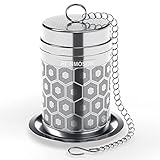
- Upgraded Micron Mesh: loose leaf tea steeper is Ideal to hold tea leaves, particles, or ground coffee. Compared to traditional tea strainer, our tea ball features 50% more ultra fine, half-sized holes for optimal tea flavor and minimal sediment leak. Ideal for rooibos, herbs, green tea, Chai, ground coffee, small tea leaves and etc.
- High-Quality Materials: Made of 304 food-grade stainless steel, tea ball infuser for loose tea is easier to be cleaned. Besides, loose tea steeper ensures no metallic taste on your tea or coffee and never rust for years of use. Money-saving and eco-friendly alternative to disposable tea bags and paper filters.
- Easy to Open and Close: With the design of thread top, the lids screw easily and are much more secure than the traditional twist lid, so the tea leaves will be held tightly and the lid never escapes during the process of brewing.
- Wide Application: tea steeper is not only for loose tea leaves but also a spice filter, infusing spices, herbs, and seasonings in soups, sauce, broths, and stews. Extended 4.3” chain with S-handle makes tea infusers can catch securely on any rim of mugs, cups, teapots, kettles, bottles, and pitchers.
- Package: Comes with 1.5” diameter and 2.2” high tea balls for loose tea and 1 saucer. The saucer is helpful for avoiding making a mess when you take out the loose leaf tea infusers after brewing.
What is the least acidic coffee to drink?
Darker roasts and cold brew coffee tend to be less acidic than lighter roasts and hot-brewed coffee. Look for descriptions indicating a smooth, low-acid profile.
Should I avoid caffeine if I have acid reflux?
Caffeine can relax the LES, which may contribute to reflux. Many people find that reducing or eliminating caffeine from coffee and tea helps manage their symptoms.
Are there specific teas that are good for reflux?
Yes, caffeine-free herbal teas such as chamomile, ginger, licorice root, and marshmallow root are often recommended for their soothing properties.
How does the brewing method affect acidity?
Cold brewing coffee significantly reduces its acidity compared to hot brewing. Over-extraction during hot brewing can also increase bitterness and acidity.
What if I love coffee but it gives me reflux?
Try switching to a low-acid coffee, using a cold brew method, or opting for decaffeinated versions. Experiment with drinking it with a meal rather than on an empty stomach.
Can drinking coffee or tea on an empty stomach worsen reflux?
For some individuals, drinking acidic or caffeinated beverages on an empty stomach can be more irritating and may lead to increased reflux symptoms.
What this page does NOT cover (and where to go next)
- Specific medical advice or diagnosis for acid reflux or GERD. Consult a healthcare provider for personalized treatment plans.
- Detailed nutritional breakdowns of every coffee bean or tea leaf varietal.
- Recommendations for specific brands or products.
- In-depth explanations of the chemical compounds responsible for reflux.
- Dietary plans for managing acid reflux.