
Coffee Making in the 1800s: A Historical Look
Quick Answer
- Coffee brewing in the 1800s was a hands-on affair.
- Boiling was common, often with grounds directly in the pot.
- Early percolators started appearing, but weren’t perfect.
- Filtration was basic, often using cloth or coarse sieves.
- Freshness was a bigger challenge, with beans often roasted at home.
- The goal was simple: a hot, caffeinated beverage.
Key Terms and Definitions: How Coffee Was Made in the 1800s
- Boiling Method: The most straightforward way. Coffee grounds and water were heated together, often to a boil, then allowed to settle.
- Percolator: An early invention designed to cycle hot water through coffee grounds, aiming for a more controlled extraction than simple boiling.
- Decantation: Pouring the brewed coffee off the settled grounds, a common practice before widespread filtering.
- Cloth Filter: Pieces of fabric, like muslin or linen, used to strain out coffee grounds.
- Sieve: A coarse mesh used to separate larger grounds from the liquid.
- Roasting: The process of heating green coffee beans to develop flavor. In the 1800s, this was frequently done at home.
- Grinding: Breaking down roasted beans. Methods varied from mortar and pestle to early hand-cranked grinders.
- Infusion: Allowing coffee grounds to steep in hot water, similar to tea, but often without separate filtering.
- “Cowboy Coffee”: A term that emerged later, but describes the essence of boiling coffee with grounds, a method common in the 1800s.
- Settling: Letting the coffee grounds sink to the bottom of the pot after brewing.
How Coffee Was Made in the 1800s
The 1800s were a time of evolution for coffee brewing. It wasn’t about fancy machines; it was about getting a good cup with the tools at hand.
- Direct Boiling: The most common method. Coffee grounds, often coarsely ground, were tossed directly into a pot with water.
- Heating the Pot: This mixture was then heated, frequently brought to a rolling boil. Some would remove it from the heat just before boiling to avoid over-extraction.
- Settling the Grounds: After heating, the pot was taken off the heat. The goal was to let the grounds settle to the bottom. A splash of cold water was sometimes added to help this process along.
- Pouring Carefully: The brewed coffee was then carefully poured into cups, trying to leave the majority of the grounds behind. This is where decantation came in.
- Early Percolators Emerge: Towards the mid-to-late 1800s, the first percolators began to appear. These were often metal pots with a central tube and a basket for grounds.
- How Percolators Worked (Simply): Hot water would bubble up the tube and then cascade over the grounds in the basket. This cycle repeated, theoretically brewing the coffee.
- Cloth and Sieve Filtration: When filtering was desired, people used simple methods. A piece of clean cloth, like muslin, might be stretched over a cup or pot.
- Coarse Sieves: Metal sieves with larger holes were also used to catch the bulk of the grounds.
- Home Roasting: Green coffee beans were often purchased and roasted at home, usually in a pan over an open fire or stove. This gave folks control over the roast level.
- Grinding by Hand: Beans were ground using a mortar and pestle or early hand-cranked grinders. The grind was usually coarse to suit the brewing methods.
Beans were ground using a mortar and pestle or early hand-cranked grinders. The grind was usually coarse to suit the brewing methods. An antique-style coffee grinder can help you achieve the right consistency for historical brewing methods.
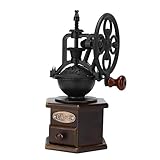
- ☕[THE NEW MANUAL COFFEE GRINDER]: Premium manual coffee grinder is made of high quality pine wood, ceramic core and cast iron, which is no metal smell, durable and it could avoid raw heat affecting flavor. Hand grinding improves taste, acidity and finish.
- ☕[EASY TO USE]: The ergonomically designed cast iron hand crank could provide smooth and easy grind. This coffee mill requires just a few turns on the handle to grind coffee beans, spices, nuts, herbs or other gourmet ingredients. No batteries or electricity is required.
- ☕[FINENESS ADJUSTMENT]: The coffee grinder manual with polygon adjustor (turn it upward or downward) enables you to precisely control the degree of grind to your need. Set coarse grind for making coffee with percolator or French press. Set fine grind for making espresso or using with drip filter.
- ☕[ANTIQUE DESIGN]: Classic and vintage design wooden coffee grinder roller makes great addition to your existing kitchen and home decor, coffee shop, etc. Its pine wood appearance makes it more attractive and gorgeous.
- ☕[SPECIAL GIFT]: This exquisite hand coffee grinder espresso can be used as a special gift for family and friends on Christmas, Thanksgiving, New Year and other festival. It not only allows people to make delicious coffee by themselves, but also makes their lives more fun and surprising.
When filtering was desired, people used simple methods. A piece of clean cloth, like muslin, might be stretched over a cup or pot. For those interested in replicating historical methods, a simple cloth coffee filter can be a great starting point for experimentation.

- PERFECT SIZE FOR SEDIMENT-FREE COFFEE: With a 4” diameter, this strainer is the best solution for removing sediment without altering the taste of your coffee, its size provides efficient straining for traditional coffee, café de olla, and tea
- DURABLE AND EASY TO USE: Made of bleached cotton with a white cloth and wood handle, this colander is easy to clean and features a hanging loop for convenient storage, its reusable design makes it a great alternative to disposable filters
- FUNCTIONALITY AND STYLE COMBINED: This 4” bleached cotton strainer features a wood handle and easy-to-clean surface, plus a hanging loop for practical everyday use
- VERSATILE KITCHEN ESSENTIAL: This versatile mesh strainer is perfect for straining coffee and tea, especially when making several cups at the same time, its efficient design provides quick and easy straining for various beverages
- IDEAL FOR EVERYDAY USE: Ideal for everyday ground-free coffee and much more, this strainer is perfect for enhancing your beverage experience, its stylish design makes it a great addition to any kitchen
What Affected the Result of 1800s Coffee Brewing
A lot went into that cup back then. It wasn’t just about the beans.
- Water Quality: Just like today, the water mattered. If it was hard or had off-flavors, the coffee would too.
- Bean Freshness (or Lack Thereof): Green beans might sit around for a while. Once roasted, they weren’t always used immediately. Oxygen was the enemy.
- Roast Level: Since roasting was often done at home, people experimented. A dark roast might be achieved by just leaving it on the heat a bit too long.
- Grind Size: This was crucial. Too fine a grind with boiling would make a muddy, over-extracted mess. Coarse was usually safer.
- Ratio of Coffee to Water: This was often by feel or habit. Too much coffee meant bitterness, too little meant weak brew.
- Water Temperature: While boiling was common, some learned to pull back before a full boil for a smoother taste.
- Brewing Time: How long the grounds steeped or percolated directly impacted the extraction. Too long meant bitter.
- Settling Time: Giving the grounds enough time to sink was key to avoiding grit.
- Percolator Design: Early percolators could be clunky. Some brewed too hot, others let grounds escape.
- Filter Material: The weave of a cloth filter could affect how much sediment got through.
- Cleanliness of Equipment: Pots and filters needed to be cleaned, though sanitation standards were different.
- Personal Preference: Ultimately, people brewed what they liked. There wasn’t one “right” way.
Pros, Cons, and When It Matters: 1800s Coffee Brewing
Let’s break down the good, the bad, and the ugly of making coffee back in the day.
- Pro: Simplicity: No complicated machines. Just a pot, water, and coffee. Easy to grasp.
- Con: Sediment: Expect grounds in your cup. It was part of the experience for many.
- Pro: Control over Roasting: Home roasting meant you could achieve a roast profile you preferred, if you were careful.
- Con: Inconsistent Roasts: Over-roasting or uneven roasting was common with basic home methods.
- Pro: Accessibility: Coffee was becoming more widespread, and brewing methods were adaptable to common household items.
- Con: Over-Extraction Risk: Boiling coffee grounds directly often led to a bitter, harsh taste.
- Pro: Hearty Brew: Some people actually liked that strong, bold, almost muddy flavor.
- Con: Difficult to Replicate: Getting the same cup twice could be a challenge due to variables.
- Pro: Early Innovation: The development of percolators showed a drive for improvement and a better cup.
- Con: Percolator Issues: Early percolators could be inefficient, leading to weak or bitter coffee, and sometimes grounds in the cup.
- When It Matters: This approach mattered for anyone wanting a hot, stimulating drink without access to modern equipment. It was the everyday coffee for most.
- When It Matters Less: If you were looking for a clean, nuanced, single-origin cup, this was likely not your best bet.
Common Misconceptions About 1800s Coffee
People sometimes picture something fancier than what was common. Let’s clear some things up.
- Myth: Everyone had a fancy coffee pot. Nope. Most used simple pots, kettles, or even skillets.
- Myth: Coffee was always filtered perfectly. Far from it. Sediment was often just part of drinking coffee.
- Myth: They only boiled coffee. While boiling was common, steeping and early percolators existed.
- Myth: Coffee was always bitter. It could be, but people adjusted methods to suit taste. Some preferred it strong.
- Myth: Freshness wasn’t a concern. It was, but the understanding and technology to preserve freshness were limited.
- Myth: Grinding was always done with a machine. Mortars and pestles were very common for a long time.
- Myth: Everyone drank espresso-like coffee. The methods produced a much different, usually coarser, brew.
- Myth: Percolators were instant hits. They took time to develop and gain widespread acceptance.
- Myth: Coffee was a luxury item. It was becoming more accessible, though still not cheap for everyone.
- Myth: They knew all the “rules” of brewing. Brewing was often learned through trial and error.
FAQ: 1800s Coffee Brewing
Got questions? We’ve got answers. Keep ’em short and sweet.
Q: Did people drink coffee grounds?
A: Often, yes. Grounds would settle, but some inevitably ended up in the cup. It was just how it was.
Q: Were early percolators good?
A: They were an improvement, but often inconsistent. Some brewed too hot, making coffee bitter.
Q: How did they keep coffee hot?
A: They’d often keep the pot near the fire or on a low stove setting. Sometimes it was just drunk as it cooled.
Q: Was home roasting common?
A: Very common. People bought green beans and roasted them in pans at home.
Q: What kind of coffee beans did they use?
A: Primarily Arabica beans, which were the most common imports.
Q: Did they add milk and sugar?
A: Absolutely. Milk and sugar were popular additions, often used to mask any bitterness.
Q: Was it a slow process?
A: Brewing itself could be quick, but roasting and grinding added time. It was more involved than pushing a button.
Q: Did they have specific coffee makers?
A: Beyond basic pots and kettles, early percolators were the main specialized items.
What This Page Does NOT Cover (and Where to Go Next)
This look is historical, not a how-to guide for today.
- Detailed recipes for specific historical brews: We touched on methods, not precise measurements for recreating a specific 1800s cup.
- The social impact of coffee houses in the 1800s: This focused on the brewing, not the culture around it.
- Comparative taste tests of historical vs. modern coffee: We’re talking history, not a blind tasting.
- The evolution of coffee roasting technology beyond the 1800s: This is a snapshot in time.
- Specific brand names or manufacturers of early coffee equipment: The focus is on the general methods.