
Coffee Maker Differences: Does It Really Matter?
Quick Answer
- The type of coffee maker you choose significantly impacts the flavor, convenience, and overall experience of your daily brew.
- Different brewing methods extract coffee solubles at varying rates and temperatures, leading to distinct taste profiles.
- Factors like water quality, coffee bean freshness, and grind size also play crucial roles, but the brewer is a primary determinant.
- For those prioritizing nuanced flavor, manual methods or high-end automatic brewers may be worth the investment.
- If convenience and speed are paramount, simpler drip machines or single-serve brewers might be the better fit.
- Ultimately, “does it matter what coffee maker” depends on your personal priorities for taste, time, and budget.
Key Terms and Definitions
- Extraction: The process of dissolving soluble compounds from coffee grounds into water.
- Bloom: The initial release of CO2 gas from fresh coffee grounds when hot water is first introduced.
- Grind Size: The coarseness or fineness of ground coffee beans, which affects extraction rate.
- Brew Ratio: The proportion of coffee grounds to water used in brewing.
- Total Dissolved Solids (TDS): A measure of the concentration of soluble compounds in brewed coffee.
- Acidity: A desirable bright, tangy flavor in coffee, not to be confused with sourness.
- Bitterness: An often undesirable taste in coffee, typically caused by over-extraction or stale beans.
- Body: The perceived weight or thickness of coffee in the mouth.
- Specialty Coffee: Coffee that has achieved a certain score from the Specialty Coffee Association, indicating high quality.
- Single-Origin: Coffee from a specific geographical location, showcasing unique regional flavors.
How It Works
- Coffee makers utilize hot water to dissolve soluble compounds from roasted coffee beans.
- The water acts as a solvent, carrying flavor, aroma, and body into the final beverage.
- Different brewers control variables like water temperature, contact time, and pressure differently.
- Drip coffee makers rely on gravity to pass hot water through a bed of coffee grounds.
- French presses use immersion, allowing grounds to steep directly in hot water before being filtered.
- Espresso machines use high pressure to force hot water through finely ground coffee, creating a concentrated shot.
- Pour-over methods give the user manual control over water flow and saturation, influencing extraction.
- Single-serve machines often use pressure and a specific capsule design to brew a single cup quickly.
- The interaction between water, coffee grounds, and the brewing mechanism is key to the final cup.
Drip coffee makers are a popular choice for their ease of use and ability to brew multiple cups at once. If you’re looking for a reliable option, consider a quality drip coffee maker like this one.
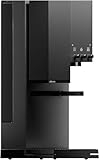
- 1. Three Levels of Automation for Any Skill Level: Choose from Autopilot, Copilot, or Free Solo mode. Autopilot handles the entire brewing process automatically. Copilot provides step-by-step guidance. Free Solo gives you full manual control. This coffee machine works for beginners and professional baristas alike.
- 2. Intuitive User Interface with Tactile Knobs and LED Matrix: The Studio features physical control knobs and a clear LED Matrix display. You can adjust grind size, water temperature, and flow rate in real time without navigating complicated touchscreen menus.
- 3. Full Customization via the xBloom App: Use the xBloom app to create, adjust, save, and share your favorite coffee recipes. Every brewing parameter can be fine-tuned and synced to the machine instantly. Your perfect cup is saved and repeatable.
- 4. Compostable xPod System for Minimal Waste and Maximum Flavor: Each xPod contains carefully selected whole beans and a built-in filter. Tap the recipe card, pour the beans into the grinder, place the pod into the dock, and press start. No capsules, no extra paper filters, no unnecessary waste.
- 5. What Is Included in the Box: The package includes the xBloom Studio, Omni Dripper 2 with Hyperflow Bottom, 10 paper filters, xPod Dock, Magnetic Dosing Cup, default recipe card, quick start guide, cleaning brush, and universal power cord. Everything you need is included.
What Affects the Result
- Water Quality: Tap water with high mineral content or off-flavors can negatively impact taste. Filtered water is generally recommended.
- Coffee Bean Freshness: Whole beans start to lose volatile aromatics within days of roasting. Grinding just before brewing is ideal.
- Grind Size: Coarser grinds are suitable for longer brew times (like French press), while finer grinds are for shorter times (like espresso). An inconsistent grind can lead to uneven extraction.
- Brew Ratio: The balance of coffee to water is critical. A common starting point is 1:15 to 1:18 (e.g., 1 gram of coffee to 15-18 grams of water).
- Water Temperature: Optimal brewing temperatures are typically between 195°F and 205°F. Water that is too cool results in under-extraction (sourness), while water that is too hot can lead to over-extraction (bitterness).
- Brew Time: The duration water is in contact with coffee grounds. This varies greatly by method, from seconds for espresso to minutes for immersion brewers.
- Turbulence/Agitation: Stirring or agitating coffee grounds during brewing can increase extraction, but too much can lead to bitterness.
- Filtration Method: Paper filters absorb some oils, leading to a cleaner cup, while metal or cloth filters allow more oils through, resulting in a fuller body.
- Brewer Design: The physical structure of the coffee maker influences how water flows through the grounds and how evenly the extraction occurs.
- Pressure: Espresso machines use significant pressure, a factor absent in most other brewing methods, which fundamentally changes extraction.
- Pre-infusion/Bloom: Allowing fresh coffee grounds to degas for 30-45 seconds before full saturation can improve extraction and flavor.
- Consistency of the Brewer: A reliable coffee maker will consistently deliver the same water temperature and flow rate, allowing for reproducible results.
Pros, Cons, and When It Matters
- Drip Coffee Makers:
- Pros: Convenient for brewing multiple cups, generally easy to use, wide range of prices.
- Cons: Can produce a less nuanced flavor compared to manual methods, temperature control can be inconsistent in cheaper models.
- When it matters: Ideal for busy mornings, households that drink a lot of coffee, and when a simple, reliable brew is desired.
- French Press:
- Pros: Produces a full-bodied, rich cup with more oils, simple design, no paper filters needed.
- Cons: Can result in sediment in the cup, requires a coarser grind and careful timing to avoid over-extraction.
- When it matters: For those who enjoy a robust, textured coffee and don’t mind a bit of sediment.
- Pour-Over (e.g., V60, Chemex):
- Pros: Offers precise control over brewing variables, allows for highlighting delicate flavor notes, produces a clean and bright cup.
- Cons: Requires more attention and technique, can be time-consuming, needs specific equipment (kettle, scale).
- When it matters: For coffee enthusiasts who want to explore the subtle flavors of high-quality beans and enjoy the ritual of brewing.
- Espresso Machines:
- Pros: Produces concentrated espresso shots, the base for many popular drinks (lattes, cappuccinos), can achieve complex flavor profiles.
- Cons: High initial cost, requires a very fine and consistent grind, steep learning curve for manual machines.
- When it matters: For those who love espresso-based drinks or enjoy the intense flavor of a well-pulled espresso shot.
- Moka Pot:
- Pros: Produces a strong, espresso-like coffee without a machine, relatively inexpensive, durable.
- Cons: Can be prone to bitterness if overheated, requires attention during brewing.
- When it matters: A good option for a strong, concentrated coffee at home without the expense of an espresso machine.
- Single-Serve Pod Machines:
- Pros: Extremely convenient, fast, minimal cleanup, wide variety of flavors.
- Cons: Can be expensive per cup, environmental concerns with pods, flavor quality can be inconsistent and often less nuanced.
- When it matters: For ultimate convenience and speed, especially for individuals or when only one cup is needed at a time.
- Cold Brew Makers:
- Pros: Produces a smooth, low-acid concentrate, easy to make large batches.
- Cons: Requires long steeping times (12-24 hours), different flavor profile (less aromatic, more chocolatey/nutty notes).
- When it matters: For those who prefer a less acidic, smoother coffee, especially in warmer months.
- Automatic Espresso/Super-Automatic Machines:
- Pros: Combines convenience with espresso-based drinks, often grinds beans automatically.
- Cons: Very expensive, can be complex to maintain, flavor can still vary.
- When it matters: For those who want the convenience of espresso drinks at home with minimal effort and have a significant budget.
If you’re a coffee enthusiast who loves to experiment and highlight delicate flavor notes, a pour-over coffee maker offers precise control. This method is perfect for those who appreciate the ritual and nuance of brewing.

- Pour Over Coffee: Manual Pour Over Coffee Maker allows you to brew an excellent cup of Coffee in minutes
- Stainless steel: Includes a new and improved permanent, stainless steel mesh filter that helps extract your coffee's aromatic oils and subtle flavors instead of being absorbed by a paper filter
- Coffee Carafe: Made of durable, heat-resistant borosilicate glass with Cork Band detailing that is both functional and elegant; single wall
- Quick and Easy: Simply add coarse ground Coffee to filter, pour a small amount of water in a circular motion over ground Coffee until soaked then add the remaining water and let drip
- Servings: Pour Over Coffee Maker makes 8 cups of Coffee, 4 oz each; dishwasher safe
For those who enjoy a richer, full-bodied cup with more oils, a French press is an excellent choice. This classic brewing method allows you to experience the coffee’s texture and robust flavors.

- Wash in warm, soapy water before first use and dry thoroughly
- Not for stovetop use
- Turn lid to close spout
- Easy-to-clean glass carafe
Common Misconceptions
- “All coffee makers brew the same coffee.” This is false. Different methods extract different compounds at different rates, leading to vastly different flavor profiles.
- “Expensive coffee makers are always better.” While quality materials and precise engineering can improve consistency, a well-used, simpler brewer can still make excellent coffee. Technique matters greatly.
- “Grinding beans is unnecessary if you have a good machine.” Grinding fresh, whole beans right before brewing is one of the most significant factors in achieving great coffee flavor, regardless of the machine.
- “Water temperature doesn’t matter that much.” Water temperature is critical for proper extraction. Too cool leads to sourness; too hot leads to bitterness.
- “Dark roasts are always stronger.” “Strong” can refer to flavor intensity or caffeine content. Dark roasts have bolder flavors but often less caffeine than lighter roasts due to longer roasting times.
- “You need special coffee for special brewers.” While some brewers excel at highlighting specific bean characteristics, good quality beans will taste better brewed with almost any method.
- “Paper filters remove all the flavor.” Paper filters remove oils and fine particles, leading to a cleaner cup. This isn’t necessarily removing “flavor” but rather altering the mouthfeel and clarity.
- “Once coffee is brewed, it stays fresh for hours.” Coffee begins to degrade rapidly after brewing. For best taste, consume within 30-60 minutes.
- “Espresso is just strong coffee.” Espresso is made under high pressure, which extracts different compounds and creates a distinct flavor profile and texture not achievable by other methods.
- “All coffee makers are hard to clean.” While some require more detailed cleaning, most modern coffee makers have straightforward cleaning routines recommended in their manuals.
FAQ
- Q: Does the type of coffee maker really affect the taste of my coffee?
A: Yes, absolutely. Different brewing methods expose coffee grounds to water for different durations, at different temperatures, and sometimes under pressure. This fundamentally changes which soluble compounds are extracted, leading to distinct flavor profiles, body, and aroma.
- Q: Is a French press better than a drip coffee maker?
A: “Better” is subjective. A French press typically yields a richer, fuller-bodied coffee because it allows more oils to pass through its metal filter. A drip coffee maker, especially one with a good paper filter, often produces a cleaner, brighter cup with less sediment.
- Q: Can I use the same coffee grind size for all coffee makers?
A: No, grind size is crucial and depends on the brewing method. Espresso machines require a very fine grind, while French presses need a coarse grind. Drip machines usually use a medium grind. Using the wrong grind size will result in under- or over-extraction.
- Q: How important is water temperature for brewing?
A: Very important. The ideal brewing temperature range is typically between 195°F and 205°F. Water that is too cool will result in under-extracted coffee (sour), and water that is too hot can over-extract the coffee, leading to bitterness.
- Q: What’s the difference between a coffee maker and an espresso machine?
A: The primary difference is pressure. Espresso machines force hot water through finely-ground coffee at high pressure (around 9 bars), creating a concentrated shot with a distinct crema. Most coffee makers use gravity or immersion with much lower pressure.
- Q: Are single-serve pod machines bad for coffee quality?
A: They often sacrifice nuanced flavor for convenience. While they can produce a decent cup, the pre-ground coffee in pods and the brewing mechanism are typically not optimized for the same level of flavor complexity as freshly ground beans brewed with other methods.
- Q: Does it matter if my coffee maker is clean?
A: Yes, a clean coffee maker is essential for good taste. Coffee oils can build up and become rancid, imparting off-flavors to your brew. Regular cleaning and descaling (as per the manual) will ensure your coffee tastes as it should.
What This Page Does Not Cover (and Where to Go Next)
- Specific recommendations for brands or models of coffee makers. For this, consider reading reviews from reputable coffee publications or consumer testing sites.
- Detailed guides on dialing in espresso or advanced latte art techniques. These topics are best explored in specialized resources for espresso enthusiasts.
- The intricate science of coffee roasting profiles and their impact on flavor. This is a deep dive into the origins of coffee flavor.
- Comparisons of specific coffee bean origins and varietals. Understanding regional differences is a separate, extensive subject.
- Maintenance and repair guides for specific coffee maker models. Always refer to your coffee maker’s user manual for detailed instructions.