
Can Coffee Cause Swelling? Exploring Potential Side Effects
Quick answer
- For most people, coffee doesn’t cause significant swelling.
- Dehydration is a more likely culprit for mild swelling.
- Some individuals might have sensitivities to caffeine or other coffee compounds.
- Underlying health conditions are a more common cause of persistent swelling.
- Focus on balanced hydration and overall health if you experience swelling.
- If you’re worried, chat with your doctor.
Key terms and definitions
- Edema: The medical term for swelling caused by excess fluid trapped in the body’s tissues.
- Caffeine: A natural stimulant found in coffee beans, known for its energizing effects.
- Diuretic: A substance that promotes the production of urine, potentially leading to fluid loss.
- Dehydration: A condition where the body loses more fluid than it takes in.
- Inflammation: The body’s response to injury or infection, which can sometimes cause swelling.
- Electrolytes: Minerals like sodium and potassium that help balance fluids in the body.
- Blood Pressure: The force of blood pushing against the walls of your arteries.
- Kidney Function: The role of your kidneys in filtering waste and excess fluid from your blood.
- Allergies/Sensitivities: Adverse reactions your body might have to certain food or drink components.
- Cortisol: A stress hormone that can be temporarily elevated by caffeine.
How it works
- Coffee contains caffeine, a natural diuretic.
- Diuretics can increase urine output.
- Increased urine output can lead to fluid loss if not compensated.
- If fluid loss outpaces intake, dehydration can occur.
- Dehydration can sometimes signal the body to retain water, paradoxically leading to mild swelling.
- Caffeine can also temporarily increase heart rate and blood pressure.
- Some people might experience a mild inflammatory response to coffee compounds.
- The body’s hormonal balance can be briefly affected by caffeine intake.
- For most healthy individuals, these effects are minor and temporary.
- Your individual physiology plays a big role in how you react.
To counteract potential fluid loss, consider keeping a reusable water bottle handy to ensure you’re staying hydrated throughout the day.

- 30-ounce insulated stainless steel water bottle with extra features: includes a 2-in-1 spout that lets you choose how you drink; push-button, leak-proof lid that locks for all your adventures
- Choose your sip style—straw or swig: Patented 2-in-1 FreeSip spout is one of a kind; it lets you sip upright through the built-in straw or swig by tilting back the spout
- Hygienic push-button lid and easy carry handle: closed lid keeps spout covered and clean between sips; ergonomic bucket handle makes transport easy for sports, campsites, road trips, school, and work
- Keeps water cold and fits where you need: Triple-layer insulation keeps drinks colder up to 24 hours; wide opening for easy cleaning and extra ice; cupholder friendly base fits most car cupholders
- Safe materials and simple care instructions: BPA, lead, and phthalate-free for safe drinking; hand wash the cup,lid is dishwasher safe and can be easily disassembled; not for use with hot liquids
What affects the result
- Your hydration levels: Are you drinking enough water throughout the day?
- Your caffeine sensitivity: Some folks are more sensitive than others.
- The amount of coffee you drink: More coffee means more caffeine.
- Your overall diet: High sodium intake can contribute to water retention.
- Your kidney health: Kidneys are key to fluid balance.
- Your heart health: Cardiovascular issues can cause swelling.
- Medications you’re taking: Some drugs can affect fluid balance.
- Your activity level: Exercise helps circulation.
- How your body metabolizes caffeine: Genetics matter here.
- Any underlying medical conditions: Things like liver or thyroid issues can play a role.
- Other beverages and foods consumed: What else is in your system?
- The brewing method: While less direct, it can affect the final composition.
Pros, cons, and when it matters
- Pro: Coffee is a popular beverage with many enjoying its taste and energy boost.
- Con: Caffeine is a diuretic, potentially leading to dehydration if fluid intake isn’t balanced.
- When it matters: If you’re already prone to dehydration or live in a hot climate, be mindful of your water intake.
- Pro: For many, coffee has no noticeable negative effects on fluid balance.
- Con: In rare cases, caffeine or other coffee compounds might trigger a mild inflammatory response.
- When it matters: If you have a known sensitivity or a condition like IBS, pay attention to your body’s signals.
- Pro: Coffee can be part of a balanced diet for most healthy individuals.
- Con: Excessive caffeine intake can disrupt sleep patterns, which indirectly affects overall health.
- When it matters: If you struggle with sleep, consider your coffee timing and amount.
- Pro: Moderate coffee consumption is linked to some health benefits.
- Con: If you have certain health conditions (e.g., severe hypertension, certain arrhythmias), you might need to limit intake.
- When it matters: Always consult your doctor about dietary changes if you have pre-existing health issues.
- Pro: Coffee can be a ritual and a social connector.
- Con: Relying solely on coffee for energy can mask underlying fatigue or health problems.
- When it matters: Listen to your body; don’t just power through with caffeine.
Enjoying your coffee from a favorite coffee mug can be a comforting ritual, but remember to balance it with plenty of water.
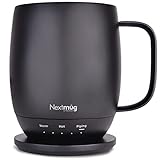
- ALWAYS THE PERFECT TEMPERATURE – The Nextmug will keep your hot coffee, tea or preferred beverage at the perfect temperature wherever you are. Simply select Warm (130° F), Hot (140° F), or Piping (150° F) and enjoy for hours.
- SMART MUG TECHNOLOGY – Long-lasting battery maintains your ideal temperature. LED lights display battery life & real-time temperature. Includes Spill-Resistant Lid & Charging Coaster.
- SUPER SIMPLE – On-board Control Button easily turns mug On/Off & sets the temperature. Takes only seconds to set the mug to your perfect temperature. No app required - no passwords, re-booting or security concerns.
- THE PERFECT GIFT - Give the gift for him and the gift for her that is certain to delight. Perfect for everyone on your list…moms, dads, grandmas, grandpas, teachers, birthdays, graduations and more!
- NEXTMUG CARES - Nextmug cares about our communities and our customers. We care by donating Nextmugs to teachers and first responders . We’re also committed to sustainable packaging by using 100% recyclable materials with all our products. Our dedicated customer service agents are based in the USA and always ready to help.
Common misconceptions
- Myth: Coffee always causes dehydration and swelling.
- Reality: For most, moderate coffee intake doesn’t lead to significant dehydration, especially if you drink water.
- Myth: Swelling after coffee is a direct sign of a serious coffee allergy.
- Reality: It’s more often related to fluid balance or other factors, not usually a true allergy.
- Myth: Dark roast coffee is less likely to cause issues than light roast.
- Reality: Roast level has minimal impact on caffeine content or diuretic properties.
- Myth: Adding milk or cream negates the diuretic effect.
- Reality: While it adds fluid, the caffeine’s effect on urine production remains.
- Myth: If you swell, you must stop drinking coffee forever.
- Reality: Adjusting intake, improving hydration, or consulting a doctor is usually the better path.
- Myth: All swelling is caused by what you eat or drink.
- Reality: Swelling can be a symptom of many underlying medical conditions unrelated to diet.
- Myth: Caffeine is the only active compound in coffee that matters.
- Reality: Coffee has hundreds of compounds, though caffeine is the most well-known.
- Myth: Coffee causes long-term fluid retention.
- Reality: Any potential retention effect is usually temporary and related to dehydration response.
FAQ
Q: Can drinking coffee make my ankles swell?
A: For most people, no. If you notice ankle swelling after coffee, it’s more likely due to general dehydration, high sodium intake, or an underlying health issue rather than the coffee itself. Make sure you’re drinking enough water.
Q: Is it the caffeine or something else in coffee that might cause swelling?
A: Caffeine is a mild diuretic, which is the most commonly cited reason. However, individual sensitivities to other compounds in coffee could theoretically play a role, though this is less common.
Q: How much coffee is too much if I’m worried about swelling?
A: There’s no single magic number, as it varies by person. Generally, if you’re experiencing swelling, reducing your intake and focusing on hydration is a good first step. Listen to your body.
Q: What should I do if I consistently swell after drinking coffee?
A: The best course of action is to consult a healthcare professional. They can help rule out any underlying medical conditions and provide personalized advice.
Q: Does decaf coffee have the same effect on swelling?
A: Decaf coffee has significantly less caffeine, so its diuretic effect is greatly reduced. If caffeine is the culprit for you, decaf might be a better option.
Q: Can coffee interact with medications to cause swelling?
A: Some medications can affect fluid balance. If you’re on medication and notice new swelling, discuss it with your doctor or pharmacist.
Q: Should I stop drinking coffee altogether?
A: Not necessarily. For most healthy individuals, moderate coffee consumption is fine. Focus on overall hydration and a balanced lifestyle.
Q: Is drinking water after coffee enough to prevent swelling?
A: It’s a great start! Staying well-hydrated is key, especially when consuming diuretics like caffeine. It helps offset potential fluid loss.
What this page does NOT cover (and where to go next)
- Specific medical diagnoses for edema.
- Detailed comparisons of different coffee brewing equipment.
- Nutritional breakdowns of coffee beans from various regions.
- Recommendations for specific brands or types of coffee.
- Advanced caffeine tolerance testing methods.
- Treatment plans for chronic medical conditions that cause swelling.