
Brewing Coffee From Whole Beans: A Step-By-Step Guide
Quick answer
- Grind your whole beans right before you brew.
- Use fresh, good-tasting whole beans.
- Filtered water is your friend.
- Get the grind size right for your brewer.
- Measure your coffee and water accurately.
- Keep your gear clean. Seriously.
- Dial in your brew time.
Who this is for
- Anyone tired of stale, pre-ground coffee.
- Home brewers looking to level up their daily cup.
- Folks who just bought a grinder and want to use it right.
What to check first
Brewer type and filter type
What kind of magic maker are you using? Drip machine? French press? Pour-over? AeroPress? Each needs a slightly different approach. And what kind of filter? Paper, metal, cloth? This matters for flow and what gets into your cup. Don’t guess. Check the manual or the box.
If you’re considering a pour-over, a good pour over coffee maker can offer exceptional control over your brew.

- Pour Over Coffee: Manual Pour Over Coffee Maker allows you to brew an excellent cup of Coffee in minutes
- Stainless steel: Includes a new and improved permanent, stainless steel mesh filter that helps extract your coffee's aromatic oils and subtle flavors instead of being absorbed by a paper filter
- Coffee Carafe: Made of durable, heat-resistant borosilicate glass with Cork Band detailing that is both functional and elegant; single wall
- Quick and Easy: Simply add coarse ground Coffee to filter, pour a small amount of water in a circular motion over ground Coffee until soaked then add the remaining water and let drip
- Servings: Pour Over Coffee Maker makes 8 cups of Coffee, 4 oz each; dishwasher safe
Water quality and temperature
Your coffee is mostly water, so good water makes good coffee. Tap water can have weird tastes. Filtered is usually best. And temperature? Too hot burns it, too cool under-extracts. Aim for 195-205°F (90-96°C) for most methods. Some brewers heat it for you; others you gotta do yourself.
Grind size and coffee freshness
This is huge. Whole beans are best within a few weeks of their roast date. Look for it on the bag. Once ground, coffee stales fast. Get a burr grinder – blade grinders are crude. The grind size is critical. Too fine clogs things up, too coarse makes weak coffee.
For the best flavor, always start with high-quality whole beans. Look for freshly roasted whole coffee beans to truly elevate your brew.
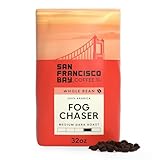
- Our iconic Fog Chaser is a blend of dark and medium roasted beans which results in a enjoyable medium dark roast coffee. It's a great combination of flavor, balance and smoothness that will chase away even the thickest morning fog.
- For finest taste, store in a cool, dark place and grind beans just berfore brewing
- QUALITY COFFEE: San Francisco Bay Coffee uses only 100% arabica coffee and certified Kosher coffee beans. Hand picked and grown in high altitude. We're so confident you'll love it, we back it with a satisfaction guarantee.
- SUSTAINABLY AND ECO- FARMED COFFEE: We offer a wide selection of sustainably grown, sourced, and packaged coffee from whole bean to ground, flavored to decaf, and much more.
- SF BAY COFFEE is a family owned, American made company with a rich tradition. Our reputation reflects on us as a family so if you're ever not happy with your purchase, call us and we'll make it right.
Coffee-to-water ratio
This is about balance. Too much coffee means a bitter punch. Too little, and it’s watery disappointment. A good starting point is 1:15 to 1:18. That means 1 gram of coffee for every 15-18 grams of water. Use a scale. Trust me on this.
Cleanliness/descale status
Gunk builds up. Old coffee oils turn rancid. This ruins even the best beans. Clean your grinder, brewer, and carafe regularly. Descale your machine if it’s an automatic drip. It’s not glamorous, but it’s essential.
Step-by-step (brew workflow)
1. Weigh your whole beans.
- What “good” looks like: You’ve got the precise amount of beans ready for your chosen ratio. Example: For a 12oz mug, aim for about 20-23 grams of beans.
- Common mistake: Eyeballing it. This leads to inconsistent cups.
- Avoid it by: Using a digital kitchen scale.
2. Heat your water.
- What “good” looks like: Water is between 195-205°F (90-96°C). If you don’t have a thermometer, let boiling water sit for about 30-60 seconds.
- Common mistake: Using boiling water straight from the kettle. This can scorch the grounds.
- Avoid it by: Letting it rest briefly or using a temperature-controlled kettle.
3. Grind your beans.
- What “good” looks like: A consistent grind size appropriate for your brewer. Coarse for French press, medium for drip, fine for espresso (though we’re not covering espresso here).
- Common mistake: Grinding too fine or too coarse. This messes with extraction.
- Avoid it by: Knowing your brewer and using a burr grinder. Adjust your grinder settings.
4. Prepare your brewer and filter.
- What “good” looks like: Your filter is in place, and if it’s paper, it’s rinsed with hot water. This removes paper taste and preheats the brewer.
- Common mistake: Skipping the filter rinse for paper filters.
- Avoid it by: Always rinsing paper filters. Discard the rinse water.
5. Add ground coffee to the brewer.
- What “good” looks like: All your freshly ground coffee is evenly distributed in the filter or chamber.
- Common mistake: Leaving grounds stuck to the side of the grinder or brewer.
- Avoid it by: Gently tapping the grinder or brewer to settle the grounds.
6. Bloom the coffee (for pour-overs and some drip).
- What “good” looks like: Pour just enough hot water to saturate all the grounds. You’ll see them puff up and release CO2. Let it sit for 30 seconds.
- Common mistake: Pouring all the water at once, skipping the bloom.
- Avoid it by: Starting with a small amount of water, then waiting. This is key for fresh coffee.
7. Begin the main pour/brew.
- What “good” looks like: Slow, steady pouring in a circular motion (for pour-overs) or consistent flow (for drip machines). Aim for your target brew time.
- Common mistake: Pouring too fast, too erratically, or not pouring enough water.
- Avoid it by: Pouring gently and evenly, watching the water level.
8. Complete the brew.
- What “good” looks like: All the water has passed through the grounds, and your carafe or mug is full. Total brew time is within the recommended range for your method (e.g., 3-5 minutes for drip, 4 minutes for French press).
- Common mistake: Stopping the brew too early or letting it drip too long.
- Avoid it by: Timing your pour and observing the flow.
9. Serve immediately.
- What “good” looks like: Hot, aromatic coffee in your favorite mug.
- Common mistake: Letting coffee sit on a hot plate for too long. It gets bitter and burnt.
- Avoid it by: Transferring coffee to a thermal carafe or drinking it fresh.
10. Clean your gear.
- What “good” looks like: All parts are rinsed or washed, ready for the next brew.
- Common mistake: Putting it off until later.
- Avoid it by: Cleaning right after you’re done. It takes two minutes.
Common mistakes (and what happens if you ignore them)
| Mistake | What it causes | Fix |
|---|---|---|
| Using stale, pre-ground coffee | Flat, lifeless flavor, lack of aroma. You’re missing the peak. | Buy whole beans and grind them just before brewing. Look for roast dates. |
| Incorrect grind size | Too fine: bitter, clogged brewer, slow drip. Too coarse: weak, sour, watery. | Use a burr grinder. Match grind to brewer type (coarse for French press, medium for drip, fine for espresso). |
| Poor water quality | Off-flavors, mineral buildup in machines. | Use filtered water. Avoid distilled water (lacks minerals for flavor). |
| Wrong water temperature | Too hot: burnt, bitter coffee. Too cool: sour, under-extracted coffee. | Aim for 195-205°F (90-96°C). Let boiling water sit for 30-60 seconds. |
| Inconsistent coffee-to-water ratio | Coffee is too strong or too weak. Flavor is unbalanced. | Use a digital scale to measure both coffee beans and water. Start with 1:15 to 1:18 ratio. |
| Neglecting cleanliness/descaling | Rancid oils make coffee taste bad. Mineral buildup affects performance. | Clean grinder, brewer, and carafe regularly. Descale automatic machines as recommended. |
| Skipping the coffee bloom | Trapped CO2 prevents even extraction, leading to sourness. | For pour-overs and some drip, pour a small amount of water to saturate grounds and let sit for 30 seconds before main pour. |
| Over-extraction (too long brew time) | Bitter, astringent, unpleasant aftertaste. | Time your brew. For drip, aim for 4-6 minutes total. For French press, 4 minutes. Adjust grind if needed. |
| Under-extraction (too short brew time) | Sour, weak, thin body, no sweetness. | Time your brew. If it’s too fast, try a finer grind or a slightly longer pour. |
| Letting coffee sit on a hot plate | Coffee cooks and develops burnt, bitter flavors. | Serve immediately or use a thermal carafe. Avoid machines with continuously active hot plates if possible. |
| Using a blade grinder | Inconsistent particle size, “dust” and boulders. | Invest in a burr grinder for uniform grounds and better extraction. |
| Overfilling the filter basket (drip) | Water can’t flow through properly, leading to overflow or weak coffee. | Measure your coffee and water. Don’t pack the grounds too tightly. |
Decision rules (simple if/then)
- If your coffee tastes bitter, then try a coarser grind because a finer grind can over-extract.
- If your coffee tastes sour, then try a finer grind because a coarser grind can under-extract.
- If your coffee tastes weak, then increase your coffee-to-water ratio (use more coffee) because you might be using too little.
- If your coffee tastes too strong, then decrease your coffee-to-water ratio (use less coffee) because you might be using too much.
- If your automatic drip machine is slow or sputtering, then descale it because mineral buildup is likely the cause.
- If you’re using a French press and get sediment, then ensure your grind is coarse and don’t plunge too hard because fine particles will pass through the filter.
- If your pour-over is channeling (water making tunnels through the grounds), then try a more even pour and a slightly finer grind because channeling leads to uneven extraction.
- If your coffee tastes like old paper, then rinse your paper filter thoroughly with hot water before adding grounds because this removes papery taste.
- If your coffee tastes metallic or off, then check your water quality and clean your equipment thoroughly because contaminants can affect flavor.
- If you’re brewing with very fresh beans (roasted within the last week), then consider a slightly coarser grind because they can release more CO2 and potentially over-extract with a fine grind.
- If your coffee has no aroma when you grind it, then your beans are likely stale, so buy fresher whole beans.
- If your coffee is consistently just “meh,” then start by focusing on the coffee-to-water ratio and grind size, as these are the biggest levers for flavor.
FAQ
How fresh do whole beans need to be?
Ideally, use beans within 1-3 weeks of their roast date. You’ll notice a big difference in aroma and flavor compared to older beans.
What’s the deal with burr vs. blade grinders?
Burr grinders crush beans into consistent particle sizes, leading to even extraction and better flavor. Blade grinders chop them unevenly, creating dust and boulders that cause both over and under-extraction.
Can I reuse coffee grounds?
No. Once brewed, coffee grounds have extracted most of their soluble compounds. Reusing them will result in weak, unpleasant coffee.
How important is the water temperature?
It’s super important. Too hot burns the coffee, making it bitter. Too cool doesn’t extract enough flavor, making it sour and weak. Stick to the 195-205°F (90-96°C) range.
What if I don’t have a scale?
You can use volume measurements (tablespoons), but it’s less precise. A good starting point is about 2 level tablespoons of whole beans per 6 oz of water. However, a scale is a game-changer for consistency.
How often should I clean my coffee maker?
For daily use, rinse parts after each brew and do a deeper clean weekly. Descale automatic machines every 1-3 months, depending on your water hardness and manufacturer recommendations.
Does the type of coffee bean matter?
Absolutely. Different origins, roasts, and varietals have distinct flavor profiles. Experimenting with different beans is part of the fun of brewing from whole beans.
Why does my French press coffee have sludge?
This is usually due to a grind that’s too fine for the filter, or plunging the press too aggressively. A coarser grind and a gentle, steady plunge minimize sediment.
What this page does NOT cover (and where to go next)
- Specific espresso machine techniques.
- Advanced brewing methods like siphon or cold brew concentrate.
- Detailed comparisons of different coffee bean origins and roasts.
- Troubleshooting electrical issues with coffee makers.
- Commercial-grade coffee brewing equipment.