
Brewing a Single Cup of Coffee from Grounds
Quick answer
- Yes, you can absolutely brew a single cup of coffee from ground coffee.
- The key is to adjust your brewing ratio, grind size, and brew time to suit a smaller batch.
- Consider methods like pour-over, Aeropress, or French press for easy single-cup brewing.
- Use fresh, quality coffee beans and filtered water for the best flavor.
- Measure your coffee grounds and water accurately for consistent results.
- Don’t be afraid to experiment to find your perfect single-cup brew.
For ultimate convenience in brewing a single cup, consider a dedicated single cup coffee brewer. These are designed for simplicity and speed, perfect for those who want a quick, quality cup without fuss.
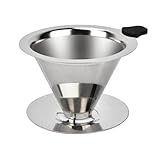
- ✅1. Made of Food-Grade Stainless Steel Crafted from high-quality, food-grade stainless steel. This ensures your coffee is brewed safely and sustainably, giving you peace of mind with every cup.
- ✅2. Flavor-Enhancing Dual-Layer Filter Design The innovative dual-layer filter design allows natural oils from the coffee grounds to infuse into your brew, delivering a fuller, more aromatic flavor profile that paper filters simply can't replicate.
- ✅3. Effortless Cleaning Our stainless steel filters rinse clean in seconds under running water. For a deep clean, simply descale with distilled vinegar and warm water every 3-4 weeks. Comes with a small cleaning brush and cloth for easy maintenance.
- ✅4. Environmentally Friendly Design Our reusable coffee dripper eliminates the need for disposable paper filters, greatly reducing waste.
- ✅5. Cost-Effective Brewing Solution Our durable, reusable coffee dripper means you'll save money over time by avoiding the constant purchase of paper filters.
Who this is for
- Coffee drinkers who only need one cup at a time and want to avoid waste.
- Individuals looking to explore different brewing methods for a single serving.
- Anyone who wants to enjoy freshly brewed coffee without making a full pot.
What to check first
Brewer type and filter type
Your brewing method dictates much of the process. Whether you’re using a pour-over cone, an Aeropress, a small French press, or even a simple mug infuser, understanding its design is crucial.
If you enjoy a hands-on approach and want to control every aspect of your brew, a pour over coffee maker is an excellent choice. They allow for precise pouring and extraction, leading to a clean and nuanced cup.

- Pour Over Coffee: Manual Pour Over Coffee Maker allows you to brew an excellent cup of Coffee in minutes
- Stainless steel: Includes a new and improved permanent, stainless steel mesh filter that helps extract your coffee's aromatic oils and subtle flavors instead of being absorbed by a paper filter
- Coffee Carafe: Made of durable, heat-resistant borosilicate glass with Cork Band detailing that is both functional and elegant; single wall
- Quick and Easy: Simply add coarse ground Coffee to filter, pour a small amount of water in a circular motion over ground Coffee until soaked then add the remaining water and let drip
- Servings: Pour Over Coffee Maker makes 8 cups of Coffee, 4 oz each; dishwasher safe
- Pour-over cones (like Hario V60, Chemex, Kalita Wave) typically use paper filters, though some metal or cloth filters are available. Paper filters absorb more oils, leading to a cleaner cup.
- Aeropress uses small, circular paper filters or a reusable metal filter. It’s known for its versatility and speed.
- French press uses a metal mesh filter built into the plunger. This allows more oils and fine sediment into the cup, creating a richer, fuller-bodied coffee.
- Mug infusers often use a fine mesh basket, similar to a tea infuser, to hold the grounds.
The Aeropress coffee maker is incredibly versatile and forgiving, making it a top pick for single-cup brewing. It’s known for its speed, ease of use, and ability to produce a smooth, rich cup with minimal cleanup.

- The Brewer That Started It All – AeroPress Original was the first single cup coffee maker to combine 3 brew methods in one compact, portable device for a faster brew and better extraction giving coffee lovers a smooth, rich cup bursting with coffee bean flavor—without the bitterness or acidity found in other methods.
- A New Standard in Coffee Flavor – Equal parts French press, pour-over, and espresso, AeroPress patented 3 in 1 technology distills the best of all three brewing methods into one sleek, portable device. The result? A rich, full-bodied cup in under two minutes—free of bitterness and grit, and full of delicious coffee bean flavor.
- The Secret to AeroPress Superior Flavor – Air Pressure and micro-filtration work together to speed up extraction for less bitterness than other methods, so you can finally enjoy the full spectrum of coffee bean flavor, from smooth tasting notes to level of roast and country of origin
- Brew and Clean in 2 Minutes – To brew, simply add coffee and water, wait 30 seconds, then press for a clean, well-balanced cup. The AeroPress coffee maker includes 50 paper micro-filters, ensuring smooth, grit-free coffee. To clean, just pop out the grinds and rinse! Fast, easy brewing at home or on the go.
- Brew Like a Pro, Wherever You Go – One of the only coffee makers that offers full control over brew time, temperature and grind size so you can personalize your favorites faster - from classics to cold brew and iced coffee to espresso-style drinks like cappuccino and lattes. Built for travel, AeroPress is compact, lightweight and shatterproof. Fits in your backpack, carry-on or bag, so you can make exceptional coffee on the road, at the office, while camping or wherever your brew takes you.
Check your brewer’s manual or the manufacturer’s website for specific filter recommendations and how to properly insert them.
Water quality and temperature
Water makes up over 98% of your coffee, so its quality significantly impacts taste.
- Quality: Tap water can contain minerals or chlorine that impart off-flavors. Using filtered water (like from a Brita pitcher or a more advanced system) is highly recommended. Avoid distilled water, as it lacks the minerals needed for proper extraction.
- Temperature: The ideal brewing temperature for coffee is generally between 195°F and 205°F (90.5°C – 96°C). Water that is too cool will result in under-extracted, sour coffee, while water that is too hot can scorch the grounds, leading to a bitter taste.
If you don’t have a temperature-controlled kettle, bring your water to a boil and then let it sit for about 30-60 seconds before pouring.
Grind size and coffee freshness
The grind size directly affects how quickly water extracts flavor from your coffee.
- Grind Size:
- Coarse: Best for French press.
- Medium-coarse: Good for Chemex.
- Medium: Suitable for most drip brewers and some pour-overs.
- Medium-fine: Ideal for V60 and Aeropress.
- Fine: Used for espresso, but generally too fine for single-cup drip methods.
- Freshness: Coffee is best brewed within a few weeks of its roast date. Pre-ground coffee loses flavor and aroma much faster than whole beans. Grinding your beans right before brewing is the best way to ensure freshness.
If your coffee tastes weak or sour, your grind might be too coarse. If it tastes bitter or burnt, your grind might be too fine.
Coffee-to-water ratio
Getting the right ratio is crucial for balanced flavor. A common starting point for a standard cup (8 oz) is a 1:15 to 1:17 ratio of coffee to water by weight.
For a single cup, this means:
- If you want to brew 8 oz of coffee, you’d use approximately 15-17 grams of coffee.
- If you want to brew 12 oz of coffee, you’d use approximately 24-27 grams of coffee.
Using a kitchen scale is the most accurate way to measure both your coffee grounds and water. If you don’t have a scale, a general guideline is about 2 tablespoons of grounds per 6 oz of water, but this can vary greatly depending on the coffee and your preferred strength.
Cleanliness/descale status
A clean brewer is essential for good-tasting coffee. Coffee oils can build up over time, becoming rancid and imparting bitter, unpleasant flavors. Mineral deposits from water (scale) can also affect brewing temperature and flow.
- Daily Cleaning: Rinse your brewer, filter basket, and carafe (if applicable) after each use.
- Weekly/Monthly Cleaning: Deep clean your brewer according to the manufacturer’s instructions. This might involve using a descaling solution or a vinegar-water mixture. For most single-cup brewers, a good rinse and wipe down is usually sufficient for daily maintenance, with occasional deeper cleaning recommended.
If your coffee starts tasting off, even with fresh beans and good water, a dirty brewer is a common culprit.
Step-by-step (brew workflow)
This workflow is for a generic pour-over method, adaptable for other single-cup brewers.
1. Heat your water: Heat filtered water to between 195°F and 205°F (90.5°C – 96°C).
- What good looks like: Water is hot but not boiling, ideal for extraction.
- Common mistake: Using boiling water, which can scorch the grounds and create bitterness. Avoid this by letting boiling water sit for 30-60 seconds.
2. Prepare your filter: Place the paper filter into your pour-over cone or Aeropress.
- What good looks like: The filter is seated correctly and covers the opening.
- Common mistake: Not rinsing the paper filter. This can leave a papery taste in your coffee. Rinse it with hot water before adding grounds.
3. Rinse the filter: Pour hot water over the paper filter, wetting it thoroughly. Discard this rinse water.
- What good looks like: The filter is saturated, and the rinse water is discarded from your mug or carafe.
- Common mistake: Forgetting to discard the rinse water. This dilutes your first coffee pour.
4. Measure and grind your coffee: Weigh out your coffee beans (e.g., 15-20 grams for an 8-10 oz cup) and grind them to a medium-fine consistency.
- What good looks like: Freshly ground coffee with a consistency like coarse sand.
- Common mistake: Using pre-ground coffee or grinding too far in advance. This leads to stale, less flavorful coffee. Grind just before brewing.
5. Add grounds to the brewer: Place the ground coffee into the prepared filter. Gently shake the brewer to level the coffee bed.
- What good looks like: An even bed of coffee grounds.
- Common mistake: Leaving the grounds uneven. This can lead to uneven extraction, with some parts over-extracted and others under-extracted.
6. Bloom the coffee: Pour just enough hot water (about twice the weight of the coffee grounds) over the grounds to saturate them evenly. Let it sit for 30-45 seconds.
- What good looks like: The coffee grounds expand and release CO2 (you’ll see bubbles).
- Common mistake: Pouring too much water or not waiting long enough. This can lead to uneven saturation and a less effective bloom.
7. Begin the main pour: Slowly pour the remaining hot water over the grounds in a controlled, circular motion, starting from the center and moving outwards. Aim to keep the water level consistent.
- What good looks like: A steady stream of water saturating the grounds evenly, with a consistent flow rate.
- Common mistake: Pouring too quickly or unevenly. This can cause water to channel through the grounds, leading to weak or bitter coffee.
8. Control the brew time: Aim for a total brew time of 2 to 3 minutes for most pour-over methods.
- What good looks like: The water has drained through the grounds within the target time.
- Common mistake: Brewing too fast or too slow. Too fast results in under-extraction (sour); too slow results in over-extraction (bitter). Adjust your grind size if the time is off.
9. Remove the brewer: Once all the water has dripped through, carefully remove the brewer and discard the spent grounds.
- What good looks like: The coffee is fully brewed, and the grounds are removed without dripping into the final cup.
- Common mistake: Leaving the brewer on too long, allowing bitter compounds to drip into your coffee.
10. Serve and enjoy: Pour your freshly brewed single cup of coffee into your mug.
- What good looks like: Aromatic, flavorful coffee ready to drink.
- Common mistake: Letting the coffee sit for too long before drinking. Coffee is best enjoyed fresh.
Common mistakes (and what happens if you ignore them)
| Mistake | What it causes | Fix |
|---|---|---|
| Using stale coffee beans | Weak, dull, and uninteresting flavor; lack of aroma. | Buy freshly roasted beans and grind them just before brewing. |
| Incorrect grind size | Too coarse: sour, weak coffee (under-extracted). Too fine: bitter, harsh coffee (over-extracted). | Adjust grind size based on your brewing method and taste. |
| Water temperature too low | Under-extraction, resulting in sour, weak, and thin-bodied coffee. | Heat water to 195°F-205°F (90.5°C-96°C). Use a thermometer or let boiling water sit for 30-60 seconds. |
| Water temperature too high | Over-extraction, leading to bitter, burnt, and harsh flavors. | Avoid using boiling water. Let it cool slightly before brewing. |
| Inaccurate coffee-to-water ratio | Too little coffee: weak, watery. Too much coffee: overly strong, bitter. | Use a kitchen scale for precise measurements or a consistent measuring scoop. |
| Not rinsing paper filters | Papery taste in the coffee, masking the bean’s natural flavors. | Always rinse paper filters with hot water before adding coffee grounds. |
| Uneven coffee bed | Uneven extraction, leading to a mix of sour and bitter flavors in the same cup. | Gently shake or tap the brewer to level the coffee grounds after adding them. |
| Pouring water too quickly or unevenly | Water channels through the coffee bed, leading to under-extraction in some areas and over-extraction in others. | Pour water slowly and in a controlled circular motion, ensuring all grounds are saturated evenly. |
| Not cleaning the brewer regularly | Rancid coffee oils build up, imparting bitter, stale, and unpleasant flavors. Mineral deposits can affect brewing temperature and flow. | Clean your brewer thoroughly after each use and descale periodically according to manufacturer instructions. |
| Brewing too long or too short | Too short: under-extracted, sour. Too long: over-extracted, bitter. | Monitor your brew time and adjust your grind size to achieve the target brew time for your method. |
Decision rules (simple if/then)
- If your coffee tastes sour, then your grind is likely too coarse or your water was too cool because under-extraction occurs when water doesn’t have enough surface area or time to extract solubles.
- If your coffee tastes bitter, then your grind is likely too fine or your brew time was too long because over-extraction pulls out undesirable compounds.
- If your coffee tastes weak, then you may have used too little coffee or too much water because the ratio is off.
- If your coffee tastes muddy or has a lot of sediment, then your filter might be too coarse or your grind too fine for the method (e.g., too fine for French press) because fine particles are passing through the filter.
- If you’re brewing for one person, then use a smaller brewer or scale down your recipe for a full pot because making a full pot for one person can lead to stale coffee or waste.
- If you notice a papery taste, then you likely didn’t rinse your paper filter enough because paper can impart a subtle flavor if not properly pre-wetted.
- If your brewer is slow to drain, then your grind might be too fine or there’s a clog because the water can’t flow through the coffee bed or the brewer itself efficiently.
- If your coffee tastes bland, then your coffee might be stale or your water quality is poor because these are fundamental to good flavor extraction.
- If you want a cleaner cup with less body, then use a paper filter because paper filters absorb more coffee oils than metal filters.
- If you want a richer, fuller-bodied cup, then use a metal filter or a French press because these allow more oils and fine particles into the final brew.
FAQ
Can I use pre-ground coffee to make a single cup?
Yes, you can. However, pre-ground coffee loses its freshness and flavor much faster than whole beans. For the best results, use coffee that was ground as recently as possible.
How much coffee grounds do I need for one cup?
A good starting point is a ratio of 1:15 to 1:17 coffee to water by weight. For an 8 oz cup, this is roughly 15-17 grams of coffee. If you don’t have a scale, use about 2 level tablespoons per 6 oz of water, but this is less precise.
What’s the best brewing method for a single cup?
Pour-over methods (like V60, Kalita Wave), Aeropress, and small French presses are excellent for brewing single cups. They offer control over the brewing process and are easy to clean.
How long should I brew a single cup?
This depends on your brewing method, but for most pour-over and Aeropress methods, a total brew time of 2 to 3 minutes is common. French press typically steeps for about 4 minutes.
Why does my single cup of coffee taste bitter?
Bitterness often indicates over-extraction. This can be caused by a grind that is too fine, water that is too hot, or brewing for too long. Check your grind size and brew time.
Why does my single cup of coffee taste sour?
Sourness usually means under-extraction. This can happen if your grind is too coarse, your water temperature is too low, or your brew time is too short. Ensure your water is hot enough and consider a finer grind.
What if I only have a standard drip coffee maker?
You can still make a single cup. Place a filter in the basket and add grounds for one cup. You’ll need to manually pour hot water into the reservoir, or use a smaller carafe if your machine allows. Be mindful of how much water you add.
Should I use a paper or metal filter for a single cup?
Paper filters produce a cleaner cup by absorbing more oils, while metal filters allow more oils and fine sediment through, resulting in a richer, fuller-bodied coffee. Choose based on your preference.
What this page does NOT cover (and where to go next)
- Specific instructions for every single coffee maker model.
- Advanced techniques like water chemistry manipulation for specialty brewing.
- Detailed comparisons of different coffee bean origins and roast profiles.
- Troubleshooting for espresso machines or commercial brewing equipment.