
Bold & Beautiful: Making Italian Espresso at Home
Quick answer
- Use finely ground, fresh coffee beans.
- Preheat your espresso machine and portafilter.
- Tamp the coffee grounds evenly and firmly.
- Aim for a 25-30 second extraction time.
- Watch for a rich, crema-topped shot.
- Taste and adjust grind, dose, or tamp as needed.
Who this is for
- Anyone dreaming of authentic Italian espresso at home.
- Coffee lovers who want to elevate their morning ritual.
- Home baristas ready to dial in their espresso game.
What to check first
Brewer type and filter type
You’re likely using a semi-automatic or manual espresso machine. These use a portafilter with a basket. The basket size (e.g., 18g, 20g) matters for your dose. Make sure you have the right basket for your portafilter.
Water quality and temperature
Good water makes good coffee. If your tap water tastes funky, it’ll make your espresso taste funky. Filtered water is usually best. Your machine should be heating water to around 195-205°F (90-96°C). Check your machine’s manual for specifics.
Grind size and coffee freshness
This is HUGE for espresso. You need a fine, consistent grind. Think powdered sugar, but not quite. Freshly roasted beans are key. Aim for beans roasted within the last 1-4 weeks. Old beans taste flat.
For the best results, use freshly roasted espresso beans. We recommend these high-quality espresso beans for a rich and authentic Italian flavor.
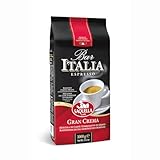
- AUTHENTIC ITALIAN ESPRESSO EXPERIENCE: From Saquella Caffè, family coffee roasters in Italy since 1856 — blending heritage, passion, and quality in every bean.
- FULL-BODIED & CREAMY FLAVOR: A signature Arabica and Robusta blend that delivers a bold espresso with a thick, velvety crema and lingering chocolate notes.
- MEDIUM-DARK ROAST: Carefully roasted for a rich aroma and balanced taste — smooth yet intense, ideal for espresso, cappuccino, or macchiato.
- CONSISTENT QUALITY: Beans are slow-roasted and expertly blended to ensure uniform extraction and a true Italian café-style experience at home.
- MADE IN ITALY: Imported directly from Italy — Saquella Bar Italia Gran Crema is the choice of professional baristas and espresso lovers worldwide.
Coffee-to-water ratio
For espresso, this is usually tight. A common starting point is 1:2. That means for every 1 gram of coffee grounds, you get 2 grams of liquid espresso. So, 18g of coffee might yield 36g of espresso.
Cleanliness/descale status
Gunk builds up. Old coffee oils go rancid. Scale from hard water can clog your machine. Regularly clean your portafilter, basket, and brew head. Descale your machine according to the manufacturer’s instructions. A clean machine makes clean-tasting espresso.
Step-by-step (brew workflow)
1. Grind your coffee. Weigh out your fresh beans. Grind them to a fine, espresso-specific consistency.
- What “good” looks like: A fluffy, uniform mound of coffee grounds.
- Common mistake: Grinding too coarse or too fine. Too coarse, and it’ll be watery. Too fine, and it’ll choke the machine. Use a burr grinder for consistency.
2. Dose the portafilter. Place the ground coffee into your portafilter basket. Aim for an even distribution.
- What “good” looks like: A level bed of grounds, no major humps or valleys.
- Common mistake: Uneven dosing, leading to channeling. Tap the portafilter gently on the counter to settle the grounds.
3. Distribute the grounds. Use a distribution tool or your finger to level the surface of the grounds.
- What “good” looks like: A perfectly flat surface, ready for tamping.
- Common mistake: Leaving clumps or gaps. This causes water to find the easiest path, resulting in uneven extraction.
4. Tamp the coffee. Apply firm, even pressure to compress the grounds.
- What “good” looks like: A polished, level puck of coffee.
- Common mistake: Uneven tamping or inconsistent pressure. This is a major cause of channeling. Aim for a level tamp every time.
5. Clean the portafilter rim. Wipe away any stray grounds from the edge of the portafilter.
- What “good” looks like: A clean rim, free of coffee dust.
- Common mistake: Leaving grounds on the rim. They can interfere with the seal in the group head, causing leaks.
6. Lock in the portafilter. Insert the portafilter into the espresso machine’s group head.
- What “good” looks like: A secure lock, no wiggling.
- Common mistake: Not locking it in tightly enough. This can lead to a messy, explosive failure.
7. Start the brew. Place your preheated cup(s) under the spouts. Engage the brew switch.
- What “good” looks like: Coffee begins to flow within a few seconds, starting as dark drips and turning into a steady stream.
- Common mistake: Starting the brew too soon or too late. This throws off your timing.
8. Monitor the extraction. Watch the flow of espresso. It should look like warm honey.
- What “good” looks like: A steady, syrupy stream, eventually lightening in color.
- Common mistake: Letting it run too long. This leads to bitter, over-extracted coffee.
9. Stop the brew. Stop the flow when you reach your target yield or time.
- What “good” looks like: You’ve hit your desired weight or volume within 25-30 seconds.
- Common mistake: Stopping too early or too late. This results in under-extracted (sour) or over-extracted (bitter) espresso.
10. Serve immediately. Espresso is best enjoyed right away.
- What “good” looks like: A rich, aromatic shot with a beautiful crema.
- Common mistake: Letting it sit. The crema dissipates, and the flavors change quickly.
11. Observe and adjust. Taste your espresso. Note the crema, aroma, and flavor.
- What “good” looks like: A balanced shot with sweetness, acidity, and a pleasant finish.
- Common mistake: Not tasting critically. You need to taste to know what to adjust for the next shot.
12. Clean up. Remove the portafilter. Knock out the puck. Rinse the portafilter and basket. Flush the group head.
- What “good” looks like: A clean workspace and machine, ready for the next brew.
- Common mistake: Leaving grounds in the machine. This leads to stale flavors and potential clogs.
Common mistakes (and what happens if you ignore them)
| Mistake | What it causes | Fix |
|---|---|---|
| Using stale coffee beans | Flat, dull, or bitter taste; no crema | Use beans roasted within the last 1-4 weeks. Grind right before brewing. |
| Grinding too coarse | Water rushes through, weak, sour espresso | Adjust grinder finer. Aim for consistency. |
| Grinding too fine | Water chokes the machine, bitter, burnt taste | Adjust grinder coarser. Ensure your machine can handle the pressure. |
| Uneven dosing/distribution | Channeling, uneven extraction, bitter/sour spots | Distribute grounds evenly before tamping. Use a WDT tool if needed. |
| Inconsistent tamping | Channeling, uneven extraction, weak crema | Tamp with consistent pressure and ensure the puck is level. |
| Using dirty equipment | Rancid oils, off-flavors, poor crema | Clean portafilter, basket, and group head regularly. Descale your machine. |
| Incorrect water temperature | Under-extracted (sour) or over-extracted (bitter) | Check your machine’s manual for recommended temperature range (195-205°F). |
| Wrong coffee-to-water ratio | Too weak or too strong, unbalanced flavor | Weigh your coffee grounds and liquid espresso output. Aim for a 1:2 ratio as a starting point. |
| Not preheating equipment | Temperature fluctuations, poor extraction | Preheat your portafilter, basket, and cup. Run a blank shot through the group head. |
| Over-extracting (running too long) | Bitter, harsh, burnt taste | Stop the shot when you hit your target yield or time (25-30 seconds). |
| Under-extracting (running too short) | Sour, acidic, thin taste, weak crema | Adjust grind finer or increase dose. Ensure proper tamp. |
Decision rules (simple if/then)
- If your espresso tastes sour, then grind finer because the water is moving through too quickly.
- If your espresso tastes bitter, then grind coarser because the water is moving through too slowly.
- If you have little to no crema, then check your coffee freshness and grind size because these are key for crema development.
- If your espresso flows too fast (under 20 seconds), then grind finer because the coffee bed is too porous.
- If your espresso flows too slow (over 35 seconds) or chokes, then grind coarser because the coffee bed is too dense.
- If your shot has visible spurts or uneven flow, then check your distribution and tamping because channeling is likely occurring.
- If your espresso tastes like old coffee, then use fresher beans and clean your equipment because stale oils ruin the flavor.
- If your machine is making strange noises or pressure seems low, then check for scale buildup and descale if necessary because mineral deposits can impede flow.
- If your shot is weak and watery despite a good grind, then increase your coffee dose slightly because you might need more grounds to achieve the right resistance.
- If your shot is too strong or intense, then decrease your coffee dose or increase your water yield because you’re extracting too much.
- If your espresso tastes metallic, then check your water quality and consider filtering your water because minerals can affect taste.
FAQ
What’s the best coffee bean for Italian espresso?
Look for blends specifically roasted for espresso. They often combine Arabica and Robusta beans for body, crema, and a bold flavor. Medium to dark roasts are common.
How fine should my espresso grind be?
It should be very fine, like powdered sugar, but not so fine that it turns into a paste. You’re aiming for resistance that allows a 25-30 second extraction.
How much coffee should I use?
A good starting point is a 1:2 ratio. For example, use 18 grams of coffee grounds to produce about 36 grams of liquid espresso. You can adjust this based on taste.
What is “channeling” and why is it bad?
Channeling happens when water finds paths of least resistance through the coffee puck, leading to uneven extraction. This results in a shot that’s both sour and bitter. Proper distribution and tamping prevent it.
How do I get good crema?
Crema comes from CO2 trapped in the coffee grounds, released during brewing. Freshly roasted beans, a proper grind, and correct pressure/temperature are essential. A touch of Robusta in the blend can also help.
My espresso tastes bitter. What’s wrong?
This usually means it’s over-extracted. Try grinding coarser, stopping the shot sooner, or using slightly cooler water. Ensure your machine is clean.
My espresso tastes sour. What’s wrong?
This usually means it’s under-extracted. Try grinding finer, tamping firmer, or extending the shot time slightly. Ensure your water is hot enough.
How often should I descale my espresso machine?
This depends on your water hardness and how often you use the machine. Check your manual. As a general rule, every 1-3 months is a good starting point.
Can I use pre-ground coffee for espresso?
It’s highly discouraged. Pre-ground coffee loses its freshness and volatile aromatics very quickly. For good espresso, you really need to grind fresh beans right before brewing.
What this page does NOT cover (and where to go next)
- Specific machine maintenance beyond basic cleaning and descaling. (Check your machine’s manual or manufacturer support.)
- Advanced espresso techniques like latte art. (Look for guides on milk steaming and pouring.)
- Dialing in specific single-origin coffees for espresso. (Explore resources on coffee tasting notes and flavor profiles.)
- Commercial-grade espresso equipment. (This guide focuses on home setups.)