
Authentic Greek Style Coffee at Home
Quick answer
- Get a proper briki (or ibrik) for that authentic look and feel.
- Use finely ground coffee, almost like powder.
- Measure your water and sugar precisely for consistency.
- Don’t boil it over; that’s the cardinal sin.
- Serve it in small cups, grounds and all.
- Practice makes perfect with this method.
Who this is for
- Anyone craving that rich, strong, and aromatic Greek coffee experience.
- Home baristas looking to master a traditional brewing technique.
- Those who appreciate a ritualistic approach to their morning cup.
What to check first
Brewer type and filter type
You’re gonna need a briki, also known as an ibrik. It’s that small, long-handled pot. No paper filters here, man. The grounds stay in the cup. Make sure your briki is clean and ready to go.
You’re gonna need a briki, also known as an ibrik. It’s that small, long-handled pot. For an authentic experience, consider getting a quality ibrik like this one.

- Includes: Copper Turkish coffee pot and wooden spoon
- Thick & Durable: Created with passion of talented craftsmen, 2mm thickness (built for maximum durability) 100% hand hammered real copper (food safe tin lined)
- Unique & Traditional: Wooden handle for comfortable use, engraved floral pattern for stylish finish (compatible with gas, electric and ceramic cookers). Coffee lover's choice, high quality and authentic, suitable for long time use
- Size & Capacity: Height 3.35’’ - Top Diameter 2.75’’ - Bottom Diameter 3.95’’ - Handle Length 7’’ - Capacity 12 fl oz
- Copper Authenticity Test: Our product is made of the highest quality real copper material. For any reason, if you suspect it's not real copper, you can simply apply 2 different tests. 1) Genuine copper is non-magnetic, so magnets will not stick to it. 2) You can scrape the body of the pot, you will notice that any sort of covering will not come off since it's pure copper
Water quality and temperature
Start with cold, fresh water. Filtered water is best if your tap water tastes funky. You’re not preheating the water; it all goes in cold to start. Think of it like building the flavor from the ground up.
Grind size and coffee freshness
This is crucial. You need a super-fine grind, like powdered sugar or even finer. Most standard grinders won’t get you there. You might need a burr grinder specifically set for Turkish/Greek coffee. Freshly ground beans make a world of difference. Stale coffee? Forget about it.
This is crucial. You need a super-fine grind, like powdered sugar or even finer. Ensure you’re using finely ground coffee, almost like powder, for the best results.

- THE COFFEE YOU DESIRE - illy’s blend of fine Arabica ground coffee with a distinctive flavor, featuring a bold and full-bodied taste with warm notes of cocoa and dried fruit.
- PREPARE COFFEE WITH EASE - Evoke a classic Italian beverage at any time. Coffee is to be freshly prepared and enjoyed immediately. Create the finest coffee experience in the comfort of your home.
- THE FINEST GROUND COFFEE - We select only the 1% of the finest beans, thanks to a devoted collaboration with growers who place maximum importance on quality and sustainability.
- WE BRING THE TASTE OF ITALY TO YOU - We’ve spent eight decades refining a singular, signature blend celebrated over the world as the pinnacle of what espresso coffee can be.
- SUSTAINABILITY IS OUR VISION - We pride ourselves on the constant focus on our environment and the community. We are part of a global movement with a common goal: to pave the way for a better, more liveable and more enlightened world.
Most standard grinders won’t get you there. You might need a burr grinder specifically set for Turkish/Greek coffee, and a dedicated greek coffee grinder will make all the difference.
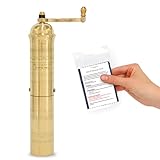
- IMPORTANT NOTE ABOUT ASSEMBLY: The crank handle is stored inside the mill during shipping. To assemble, unscrew the top nut and remove the cap to access the handle. Then, reattach the cap, fit the handle onto the shaft, and tighten the nut securely.
- INCLUDES POLISHING CLOTH: Your mill will develop a natural patina over time. To refresh the shine, polish occasionally with the enclosed treated cloth; use a gentle metal polish as needed (not included).
- EUROPEAN CRAFTSMANSHIP & HERITAGE DESIGN: Inspired by traditional Greek coffee mills once used by soldiers, this mill features a flanged base for added stability and a solid all-metal body. A timeless, functional piece available in elegant brass and copper finishes.
- EFFICIENT GRINDING MECHANISM: Designed with a crank handle for effortless, manual grinding, ensuring you get the freshest coffee grounds for a rich, flavorful cup every time.
- DIMENSIONS: Measuring 10.5 inches tall, this coffee mill grinder offers the perfect balance of convenience for both storage and everyday use.
Coffee-to-water ratio
This is where the magic happens. A common starting point is about 1 to 2 heaping teaspoons of coffee per demitasse cup (around 2-3 oz) of water. Sugar is usually added now too, to taste. We’ll get to ratios more in the steps.
Cleanliness/descale status
Your briki should be spotless. Any residue can mess with the flavor. You’re not really “descaling” a briki like a drip machine, but a good scrub with hot water and maybe a little soap, followed by a thorough rinse, is key.
Step-by-step (brew workflow)
1. Measure your water. Pour cold, fresh water into your briki. The amount of water dictates how many cups you’ll make.
- What “good” looks like: The water level is right for the number of cups you intend to brew.
- Common mistake: Overfilling the briki, leading to boil-overs and weak coffee. Avoid this by leaving headspace.
2. Add sugar (optional). If you take sugar, add it now. The amount is personal preference.
- What “good” looks like: Sugar is measured out and ready to go into the cold water.
- Common mistake: Adding sugar later, when it won’t dissolve properly. Add it with the water.
3. Add coffee. Add your finely ground coffee to the briki. A good starting point is 1-2 heaping teaspoons per 2-3 oz cup.
- What “good” looks like: The coffee grounds are loose and floating in the water/sugar mixture.
- Common mistake: Using too coarse a grind, which won’t extract properly. Stick to powder-fine.
4. Stir gently. Give it a quick, gentle stir to combine the water, sugar, and coffee. Don’t go crazy.
- What “good” looks like: The ingredients are mixed, but no foam has formed yet.
- Common mistake: Stirring too vigorously or for too long, which can break up the delicate foam that’s about to form.
5. Heat slowly. Place the briki on low to medium-low heat. Patience is key here.
- What “good” looks like: The mixture is warming up gradually, and you can see the grounds starting to settle slightly.
- Common mistake: Rushing the process with high heat, which will cause it to boil too quickly and ruin the texture.
6. Watch for foam. As it heats, a dark foam will start to rise. This is called “kaimaki.”
- What “good” looks like: A nice, thick layer of foam begins to form and rise towards the rim.
- Common mistake: Letting the foam boil over. You need to catch it just before it spills.
7. Remove from heat. Just as the foam reaches the brim, lift the briki off the heat immediately. Let the foam subside slightly.
- What “good” looks like: You’ve successfully pulled the briki off the heat to prevent a boil-over, preserving the foam.
- Common mistake: Not reacting fast enough, resulting in a messy boil-over and lost foam.
8. Return to heat (optional, for stronger flavor). Some people return the briki to the heat for a second or third rise, but be careful not to boil.
- What “good” looks like: The foam rises again, and you remove it from heat before it boils over.
- Common mistake: Boiling the coffee, which makes it bitter and ruins the texture.
9. Pour carefully. Pour the coffee slowly into small demitasse cups. Try to distribute the foam evenly among the cups.
- What “good” looks like: Each cup has a good amount of foam on top, and the liquid is dark and rich.
- Common mistake: Pouring too fast, which disturbs the grounds and can lead to less foam in some cups.
10. Let it settle. Allow the coffee to sit for a minute or two in the cup so the grounds can settle to the bottom.
- What “good” looks like: The grounds have settled, leaving a clear-ish liquid on top.
- Common mistake: Drinking immediately, which means you’ll ingest a lot of grounds.
Common mistakes (and what happens if you ignore them)
| Mistake | What it causes | Fix |
|---|---|---|
| Using pre-ground coffee (too coarse) | Weak, watery coffee with poor extraction. | Use a grinder for Turkish/Greek coffee or buy specifically ground beans. |
| Boiling the coffee | Bitter, burnt taste, ruined foam and texture. | Remove from heat <em>before</em> it boils. Watch it like a hawk. |
| Not enough coffee | Under-extracted, weak, flavorless brew. | Use more coffee grounds per cup. |
| Too much coffee | Over-extracted, bitter, muddy taste. | Stick to the recommended ratio; adjust slightly to your preference. |
| Using tap water with bad taste | Off-flavors in your coffee. | Use filtered or bottled water. |
| Not stirring initially | Uneven extraction, some grounds clumped together. | Give it a gentle stir to combine everything before heating. |
| Rushing the heating process | Boil-over, uneven heating, poor foam development. | Use low to medium-low heat and be patient. |
| Drinking too soon | Ingesting too many grounds, gritty texture. | Let the coffee settle for a minute or two in the cup. |
| Using a dirty briki | Off-flavors, metallic taste. | Clean your briki thoroughly after each use. |
| Not measuring water | Inconsistent brew strength and volume. | Measure your water accurately for repeatable results. |
Decision rules (simple if/then)
- If the coffee tastes bitter, then you likely boiled it or used too much coffee. Reduce the heat and check your coffee-to-water ratio.
- If the coffee is too weak, then you need more coffee grounds or a finer grind. Ensure your coffee is powdered.
- If you get no foam, then your heat might be too high, or you stirred too much after the foam started. Try lower heat and minimal stirring.
- If the grounds are still floating excessively after settling, then your grind might be too coarse, or you didn’t let it sit long enough.
- If your briki is giving off a metallic taste, then it needs a good cleaning, or the material might be affecting the flavor.
- If you’re unsure about sugar levels, start with a small amount and add more next time if needed.
- If you want a stronger flavor without boiling, try a second, quick rise, but be extremely cautious.
- If your coffee has an off-flavor, check your water quality first.
- If you want to impress guests, focus on mastering the foam – that’s the visual cue.
- If your coffee is too acidic, a touch more sugar can sometimes balance it out, but it’s usually a grind or extraction issue.
FAQ
What kind of coffee bean should I use?
Traditionally, medium to dark roasts are used. Arabica beans are common. The key is the roast profile and how finely it’s ground.
Can I use a regular coffee grinder?
Most standard grinders won’t achieve the necessary powder-fine consistency. You’ll likely need a specialized Turkish/Greek coffee grinder or a high-quality burr grinder set to its finest setting.
How much sugar is standard?
It varies a lot by preference. A common measure is “sketos” (plain, no sugar), “metrios” (medium sugar, about 1 tsp per cup), or “glykys” (sweet, 2 tsp or more per cup). Add it with the water.
What is the foam on top called?
That desirable foam is called “kaimaki.” It’s a sign of a well-made Greek coffee and adds to the aroma and texture.
Do I drink the grounds?
No, you don’t drink the grounds. They settle at the bottom of the cup. You sip the coffee and leave the sludge at the end.
How is Greek coffee different from Turkish coffee?
They are essentially the same brewing method and beverage. The name often depends on regional preference.
Can I make Greek coffee in a moka pot?
While a moka pot can produce strong coffee, it’s not the traditional method for Greek coffee and won’t yield the same texture or foam. A briki is essential for authenticity.
My coffee tastes sour. What’s wrong?
A sour taste usually indicates under-extraction. This could be due to a grind that’s too coarse, not enough coffee, or water that’s not hot enough (though Greek coffee starts cold).
What this page does NOT cover (and where to go next)
- Specific brand recommendations for briki or grinders. (Look for reputable kitchenware stores or online retailers specializing in coffee gear.)
- Advanced techniques for controlling foam density. (Further research into heat management and ingredient ratios.)
- The cultural significance and history of Greek coffee. (Explore books or articles on coffee culture and traditions.)
- Troubleshooting complex flavor profiles beyond bitterness or weakness. (Consult advanced brewing guides or coffee forums.)