
Achieving Fluffy Whipped Coffee With A Stand Mixer
Quick answer
- Yes, you absolutely can make whipped coffee with a stand mixer for superior fluffiness and ease.
- Use instant coffee, granulated sugar, and hot water in a 1:1:1 ratio for the best results.
- A whisk attachment is essential for incorporating enough air into the mixture.
- Start on low speed to combine ingredients, then increase to medium-high.
- Whip until the mixture is light brown, thick, and holds stiff peaks.
- Serve over cold or hot milk, adjusting sweetness to your preference.
- Clean your stand mixer bowl and whisk immediately after use to prevent sticky residue.
A whisk attachment is essential for incorporating enough air into the mixture, and this stand mixer whisk attachment is designed for optimal aeration.
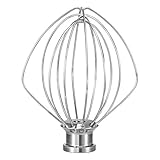
- THICKER 6 WIRES: the whisk consists of six strengthened and thicker wires, which is durable and last an extended life for making fluffy whipped cream, perfect boiled frostings and cakes with whipped egg whites
- DISHWASHER SAFE: the whole whisk is made from premier 18/8 (304) stainless steel, which is rustproof and corrosion resistant. You’ll have no worry to put the whisk into a dishwasher to clean
- PRECISE COMPATIBILITY: the whisk is manufactured up to original standards and it will perfectly fit KitchenAid K45, K45SS, KSM75, KSM90, KSM95, KSM100, KSM103, KSM110 stand mixer models
- REINFORCED: with the solid stainless steel hub the stainless steel wires can be firmly pushed in the hub and avoid that the wires detach from the hub while the mixer spinning
Who this is for
- Home baristas looking for an easier, more consistent way to make whipped coffee.
- Anyone tired of hand-whisking or using a small frother for whipped coffee.
- Coffee enthusiasts who appreciate a perfectly airy and stable whipped coffee topping.
What to check first
Brewer type and filter type
While whipped coffee doesn’t use a traditional coffee brewer or filter, the quality of your instant coffee is key.
- Good looks like: Using a high-quality instant coffee or espresso powder. These dissolve easily and contribute to a rich flavor. Brands like Nescafe Clasico or Bustelo often yield good results.
- Common mistake: Using regular ground coffee. This will not dissolve properly and will result in a gritty, unwhippable mixture. Ensure you’re using instant coffee, not ground beans.
Water quality and temperature
The water you use impacts dissolution and the whipping process.
- Good looks like: Using hot, filtered water. Hot water helps the instant coffee and sugar dissolve quickly and completely, which is crucial for achieving a smooth, stable foam.
- Common mistake: Using cold water or tap water with impurities. Cold water won’t dissolve the ingredients as effectively, leading to a grainy texture. Hard tap water can also affect the taste of your final whipped coffee.
Grind size and coffee freshness
Again, this applies to instant coffee, not ground beans.
- Good looks like: Fresh, finely granulated instant coffee or espresso powder. Even though it’s “instant,” older, clumpy instant coffee might not dissolve as well.
- Common mistake: Using old, hardened, or clumpy instant coffee. This can prevent proper dissolution and lead to an inconsistent whip. Store instant coffee in an airtight container to maintain freshness.
Coffee-to-water ratio
This is fundamental for the success of your whipped coffee.
- Good looks like: A 1:1:1 ratio of instant coffee, granulated sugar, and hot water. For example, 2 tablespoons instant coffee, 2 tablespoons sugar, 2 tablespoons hot water. This ratio provides the ideal balance for whipping.
- Common mistake: Deviating too much from the 1:1:1 ratio. Too much water will make it thin and hard to whip; too little will make it too thick and gritty. Experiment slightly, but start with the classic ratio.
Cleanliness/descale status
Your stand mixer’s bowl and whisk must be perfectly clean.
- Good looks like: A spotless, grease-free stand mixer bowl and whisk attachment. Any residual oils or food particles can inhibit the whipping process and prevent the mixture from aerating properly.
- Common mistake: Using a bowl or whisk that has residual grease or soap. This is a common culprit for failure to whip. Always wash and dry your equipment thoroughly before starting.
Step-by-step (brew workflow)
1. Gather ingredients and equipment.
- Good looks like: You have instant coffee, granulated sugar, hot water, your stand mixer with a whisk attachment, and a clean mixing bowl ready.
- Common mistake: Forgetting an ingredient or realizing your whisk attachment is dirty mid-process. Avoid by prepping everything beforehand.
2. Add instant coffee to the mixer bowl.
- Good looks like: Measure 2 tablespoons (or desired amount, maintaining ratio) of instant coffee granules into the clean stand mixer bowl.
- Common mistake: Using ground coffee instead of instant. Ensure it’s instant coffee for proper dissolution.
3. Add granulated sugar.
- Good looks like: Measure 2 tablespoons of granulated sugar into the bowl with the instant coffee.
- Common mistake: Using powdered sugar or a sugar substitute that doesn’t dissolve well. Granulated sugar provides the necessary structure.
4. Pour in hot water.
- Good looks like: Add 2 tablespoons of hot (not boiling) water to the coffee and sugar. The water should be hot enough to dissolve but not so hot it “cooks” the coffee.
- Common mistake: Using cold water, which prevents proper dissolution, or boiling water, which can scald the coffee.
5. Attach the whisk and start on low speed.
- Good looks like: Secure the whisk attachment to your stand mixer and start mixing on the lowest speed for about 30 seconds. This gently combines the ingredients without splashing.
- Common mistake: Starting on high speed immediately, which can cause the dry ingredients to fly out of the bowl.
6. Increase speed to medium-high.
- Good looks like: Once combined, increase the mixer speed to medium-high (e.g., setting 6-8 on a KitchenAid). This is where the magic happens, incorporating air rapidly.
- Common mistake: Not increasing the speed enough, leading to a long whipping time and potentially less airy results.
7. Whip until light, thick, and fluffy.
- Good looks like: Continue whipping for 3-5 minutes, or until the mixture transforms from a dark liquid to a light brown, thick, and airy foam that holds stiff peaks when you lift the whisk.
- Common mistake: Stopping too early (mixture is still runny) or whipping for too long (can become slightly grainy, though less common with stand mixers).
8. Prepare your milk.
- Good looks like: Fill a glass with your choice of cold or hot milk (dairy or non-dairy). Add ice if desired for a cold drink.
- Common mistake: Forgetting to prepare the milk, leading to your whipped coffee sitting and potentially deflating slightly.
9. Spoon whipped coffee over milk.
- Good looks like: Gently spoon generous dollops of the fluffy whipped coffee mixture over your prepared milk.
- Common mistake: Stirring the whipped coffee into the milk immediately. The idea is for it to sit on top and be slowly incorporated as you drink.
10. Serve and enjoy!
- Good looks like: Enjoy your perfectly fluffy whipped coffee. You can gently stir it into the milk as you drink.
- Common mistake: Not appreciating your hard work! Take a moment to savor the texture and taste.
Common mistakes (and what happens if you ignore them)
| Mistake | What it causes | Fix |
|---|---|---|
| Using regular ground coffee | Gritty texture, won’t whip, undissolved solids | Use instant coffee or espresso powder only. |
| Cold water | Ingredients don’t dissolve, grainy texture, takes longer to whip | Use hot (but not boiling) water to aid dissolution. |
| Incorrect coffee-to-sugar-to-water ratio | Mixture is too thin/thick, won’t whip or collapses quickly | Stick to a 1:1:1 ratio as a starting point. |
| Dirty/greasy mixer bowl or whisk | Prevents aeration, mixture won’t whip or stays flat | Ensure all equipment is spotlessly clean and grease-free. |
| Not whipping long enough | Mixture is runny, collapses quickly, lacks fluffiness | Whip until stiff peaks form and the color lightens significantly. |
| Whipping too fast too soon | Splashing of dry ingredients, uneven mixing | Start on low speed to combine, then increase gradually. |
| Using a paddle attachment | Won’t incorporate enough air, resulting in a dense mixture | Always use the whisk attachment for maximum aeration. |
| Old or clumpy instant coffee | Poor dissolution, inconsistent texture | Use fresh, free-flowing instant coffee for best results. |
| Not adding sugar | Lack of structure, mixture won’t hold its shape | Sugar is crucial for stabilizing the foam; don’t omit it. |
| Over-whipping (less common with stand mixers) | Can sometimes lead to a slightly grainy or separated texture | Stop once stiff peaks are achieved and the mixture is fluffy. |
Decision rules (simple if/then)
- If your whipped coffee isn’t getting fluffy, then check your mixer bowl and whisk for any grease because oil inhibits foam formation.
- If your whipped coffee is too runny, then add a tiny bit more instant coffee and sugar (maintaining the ratio) and whip longer because it needs more solids and air.
- If your whipped coffee tastes too bitter, then add a little more sugar to the mixture before whipping or to your milk because bitterness can be balanced by sweetness.
- If your whipped coffee is gritty, then ensure you used instant coffee and hot water because ground coffee won’t dissolve, and cold water hinders dissolution.
- If your stand mixer is splashing ingredients, then start on a lower speed to combine before increasing because this prevents mess and ensures even mixing.
- If you’re running short on time, then use a stand mixer over hand whisking because it’s significantly faster and less effort.
- If you want a thicker, more stable foam, then ensure you’re using the 1:1:1 ratio and whipping until very stiff peaks form because these factors contribute to stability.
- If your whipped coffee collapses quickly, then you likely didn’t whip it long enough or your ratio was off because proper aeration and sugar are key to stability.
- If you prefer a less sweet drink, then reduce the amount of sugar in the initial mix or use unsweetened milk because the sugar is vital for the whip, but overall sweetness can be adjusted.
- If you want to make a larger batch, then a stand mixer is ideal because it handles larger volumes much more efficiently than a hand whisk or small frother.
FAQ
Can I use decaf instant coffee for whipped coffee?
Yes, absolutely! Decaf instant coffee works just as well as regular instant coffee for making whipped coffee. The whipping process relies on the physical properties of the instant coffee, sugar, and water, not the caffeine content.
How long does whipped coffee last in the refrigerator?
Whipped coffee is best enjoyed fresh. While it can be stored in an airtight container in the refrigerator for a day or two, it may lose some of its fluffiness and become slightly denser over time. A quick re-whip might help revive it.
Can I make whipped coffee with a hand mixer instead of a stand mixer?
Yes, a hand mixer with whisk attachments works very well for making whipped coffee, often just as effectively as a stand mixer. The process and ratios remain the same. It’s a great alternative if you don’t own a stand mixer.
What’s the best type of sugar to use?
Granulated white sugar is generally recommended because it dissolves well and provides the necessary structure for the foam. While other sugars might work, they may alter the texture or flavor. Avoid powdered sugar as it can make the mixture clumpy.
Can I make whipped coffee without sugar?
Technically, you can try, but the results will be significantly different. Sugar plays a crucial role in stabilizing the foam and giving it volume and body. Without it, the mixture will likely be much thinner and collapse quickly.
Why is my whipped coffee still runny after whipping for a long time?
This is often due to an incorrect ratio (too much water), greasy equipment, or not using hot enough water to dissolve the ingredients properly. Ensure your bowl and whisk are spotless, your water is hot, and your 1:1:1 ratio is precise.
What kind of milk is best for whipped coffee?
Any type of milk works well, whether dairy (whole, 2%, skim) or non-dairy (almond, oat, soy, coconut). Choose based on your personal preference for flavor and richness. It can be served hot or cold.
Can I add flavorings to my whipped coffee?
Yes, you can! A tiny dash of vanilla extract, a pinch of cinnamon, or a drizzle of chocolate syrup can be added to the whipped coffee mixture before or during whipping. Start with small amounts and adjust to taste.
What this page does NOT cover (and where to go next)
- Detailed comparisons of instant coffee brands for whipped coffee.
- Recipes for coffee cocktails using whipped coffee as an ingredient.
- How to make frothed milk for other coffee drinks.
- In-depth reviews of specific stand mixer models.
- The history and cultural origins of Dalgona coffee.
- Advanced latte art techniques for coffee.