
Understanding Coffee Maker Numbers: What Do They Mean?
Quick answer
- The numbers on coffee makers, often referring to “cups,” typically do not represent standard 8-ounce measuring cups.
- These “cups” are usually a smaller brewing unit, often around 5 to 6 ounces.
- The actual volume brewed can vary based on the coffee maker model and its design.
- To get a precise amount, measure your water before brewing or check the maker’s specifications.
- For consistency, using a scale to measure coffee grounds and water is recommended.
Key terms and definitions
- Brewing Unit: A standard measure used by coffee maker manufacturers, often smaller than a typical US measuring cup.
- Standard US Measuring Cup: A unit of volume equal to 8 fluid ounces.
- Carafe: The pot that collects brewed coffee.
- Water Reservoir: The tank where you pour water for brewing.
- Coffee Grounds: Roasted coffee beans that have been ground for brewing.
- Ratio: The proportion of coffee grounds to water used in brewing.
- Extraction: The process of dissolving soluble compounds from coffee grounds into water.
- Brew Cycle: The complete process from starting the coffee maker to finishing brewing.
- Drip Coffee Maker: A common type of coffee maker that heats water and drips it over coffee grounds.
- Specialty Coffee: Coffee that is of exceptionally high quality, often with distinct flavor profiles.
When understanding coffee maker numbers, it’s helpful to know the basics of how a drip coffee maker works. This common type heats water and drips it over grounds, with the advertised ‘cup’ size being a smaller brewing unit.
Related: our complete Coffee-to-Water Ratio Reference.
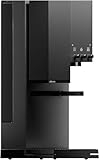
xBloom Studio Coffee Machine – Drip Coffee Maker with Built-in Grinder and Scale, 3 Automation Levels, App Connected Pour Over Coffee Maker for Home and Office, Midnight Black
- 1. Three Levels of Automation for Any Skill Level: Choose from Autopilot, Copilot, or Free Solo mode. Autopilot handles the entire brewing process automatically. Copilot provides step-by-step guidance. Free Solo gives you full manual control. This coffee machine works for beginners and professional baristas alike.
- 2. Intuitive User Interface with Tactile Knobs and LED Matrix: The Studio features physical control knobs and a clear LED Matrix display. You can adjust grind size, water temperature, and flow rate in real time without navigating complicated touchscreen menus.
- 3. Full Customization via the xBloom App: Use the xBloom app to create, adjust, save, and share your favorite coffee recipes. Every brewing parameter can be fine-tuned and synced to the machine instantly. Your perfect cup is saved and repeatable.
- 4. Compostable xPod System for Minimal Waste and Maximum Flavor: Each xPod contains carefully selected whole beans and a built-in filter. Tap the recipe card, pour the beans into the grinder, place the pod into the dock, and press start. No capsules, no extra paper filters, no unnecessary waste.
- 5. What Is Included in the Box: The package includes the xBloom Studio, Omni Dripper 2 with Hyperflow Bottom, 10 paper filters, xPod Dock, Magnetic Dosing Cup, default recipe card, quick start guide, cleaning brush, universal power cord, and a 2-Year xbloom brand warranty. Everything you need is included—along with long-term peace of mind.
How it works
- Coffee makers heat water to a specific temperature, typically between 195°F and 205°F.
- The heated water is then released, often through a showerhead or a similar mechanism, over coffee grounds held in a filter.
- As the hot water passes through the grounds, it dissolves soluble flavor compounds, caffeine, and oils.
- This flavored water then drips down through the filter into a carafe or directly into a mug.
- The process relies on gravity to pull the water through the coffee bed.
- Some advanced machines may have features to control water flow rate or temperature for better extraction.
- The “number of cups” advertised usually refers to how many of these smaller brewing units the machine is designed to produce.
- For example, a 12-cup coffee maker might be intended to brew about 60 to 72 ounces of coffee, not 96 ounces.
- The water reservoir is calibrated to hold enough water for the specified number of brewing units.
- The brewing cycle continues until all the water from the reservoir has passed through the grounds.
What affects the result
- Water Quality: Tap water with impurities or strong flavors can negatively impact the taste of your coffee. Filtered or spring water is often preferred.
- Coffee Bean Freshness: Whole beans lose their aroma and flavor rapidly after roasting. Grinding beans just before brewing is ideal.
- Grind Size: The fineness or coarseness of your coffee grounds significantly affects extraction. Too fine can lead to over-extraction and bitterness; too coarse can result in under-extraction and weak coffee.
- Coffee-to-Water Ratio: The amount of coffee grounds used relative to the amount of water is crucial for balanced flavor. A common starting point is a ratio of 1:15 to 1:18 (coffee to water by weight).
- Water Temperature: Water that is too cool won’t extract enough flavor, while water that is too hot can scorch the grounds, leading to a bitter taste. The ideal range is 195°F to 205°F.
- Brewing Time: The duration water is in contact with coffee grounds influences extraction. This is affected by grind size and the coffee maker’s design.
- Coffee Maker Type: Different brewing methods (drip, pour-over, French press, espresso) have unique characteristics that influence the final cup.
- Filter Type: Paper filters can absorb some oils, leading to a cleaner cup, while metal or cloth filters allow more oils through, potentially resulting in a richer mouthfeel.
- Cleanliness of Equipment: Coffee oils and residue can build up in your coffee maker, leading to stale or off-flavors. Regular cleaning is essential.
- Altitude: At higher altitudes, water boils at a lower temperature, which can affect brewing temperatures and extraction.
- Water Hardness: The mineral content of your water can affect both the taste of the coffee and the performance of your coffee maker.
- Roast Level: Lighter roasts may require slightly hotter water or longer brew times for optimal extraction compared to darker roasts.
Pros, cons, and when it matters
- “Cup” Size Inconsistency:
- Pro: Manufacturers use these numbers for marketing convenience, suggesting a capacity.
- Con: It’s not a standard measurement, leading to confusion about actual volume.
- Matters: When you need to know precisely how much coffee you’ll get for guests or if you’re following a specific recipe.
- Automatic Drip Coffee Makers:
- Pro: Convenient, easy to use, and can brew large batches.
- Con: May offer less control over brewing variables compared to manual methods.
- Matters: For busy mornings or when brewing for multiple people quickly.
- Manual Brewing Methods (Pour-over, French Press):
- Pro: Offers greater control over water temperature, pour rate, and brew time, allowing for nuanced flavor extraction.
- Con: Requires more time, attention, and practice.
- Matters: For coffee enthusiasts who enjoy the ritual and want to explore specific flavor profiles.
- Grinder Quality:
- Pro: A good burr grinder produces consistent particle sizes for even extraction.
- Con: Blade grinders create uneven grounds, leading to inconsistent results.
- Matters: If you’re serious about improving the taste of your coffee, as grind consistency is key.
- Water Temperature Control:
- Pro: Precise temperature control ensures optimal extraction without scorching.
- Con: Many basic coffee makers don’t offer this feature.
- Matters: Especially for lighter roasts or when trying to achieve specific flavor notes.
- Coffee Freshness:
- Pro: Freshly roasted and ground beans provide the most vibrant flavors and aromas.
- Con: Pre-ground coffee or beans that have been sitting for weeks will lack complexity.
- Matters: For anyone who appreciates the full spectrum of coffee flavor.
- Scales for Measuring:
- Pro: Ensures accurate and repeatable coffee-to-water ratios, leading to consistent brews.
- Con: Adds an extra step to the brewing process.
- Matters: When you want to eliminate guesswork and achieve predictable results cup after cup.
- Regular Cleaning:
- Pro: Prevents the buildup of stale coffee oils and mineral deposits that can ruin taste.
- Con: Requires a small amount of effort.
- Matters: For maintaining the quality of your coffee and the longevity of your equipment.
Common misconceptions
- “Cups” on a coffee maker always mean 8 ounces: This is rarely true. The “cup” is a smaller brewing unit, often 5 to 6 ounces.
- More coffee grounds always make a stronger taste: While more grounds can make a stronger brew, too many can lead to an unbalanced, bitter taste if not properly extracted.
- Any water is fine for brewing coffee: The quality of your water significantly impacts the final taste. Impurities and off-flavors in tap water can be detrimental.
- Darker roasts are always stronger: “Stronger” can refer to bitterness or caffeine. Darker roasts often have a bolder, more bitter flavor but may have less caffeine than lighter roasts.
- Boiling water is best for coffee: Water that is too hot (boiling) can scorch coffee grounds, resulting in a bitter taste. The ideal temperature is just below boiling.
- Pre-ground coffee is just as good as freshly ground: Pre-ground coffee loses its volatile aromatics and flavors much faster than whole beans.
- Expensive coffee makers automatically make better coffee: While some high-end machines offer precise control, good coffee can be made with simpler equipment if other factors like grind, ratio, and water are managed well.
- Espresso is a type of bean: Espresso is a brewing method that uses pressure to create a concentrated coffee shot, not a specific type of coffee bean.
- You need a special coffee maker to make “good” coffee: While specialized equipment can enhance the experience, fundamental principles of brewing (fresh beans, proper grind, correct ratio, good water) are more critical.
- Adding milk or sugar hides bad coffee: While they can mask flavors, they don’t fix underlying brewing issues. It’s better to brew good coffee and then add enhancements if desired.
FAQ
Q: What does the number of cups on my coffee maker actually mean?
A: The number of “cups” on a coffee maker typically refers to a brewing unit that is smaller than a standard 8-ounce measuring cup. These units are often around 5 to 6 ounces.
Q: How much water should I use for a 12-cup coffee maker?
A: A 12-cup coffee maker usually brews between 60 and 72 ounces of coffee. Always check your specific model’s manual or measure the water you pour into the reservoir to be sure.
Q: Does the type of coffee maker affect the taste?
A: Yes, different coffee makers use different brewing methods that can significantly alter the taste and body of the coffee. For example, a French press will produce a richer, fuller-bodied coffee than a paper-filter drip machine.
Q: Is it important to use filtered water for my coffee?
A: Absolutely. Tap water can contain minerals and chlorine that affect the flavor of your coffee. Using filtered or spring water can lead to a cleaner, more nuanced taste.
Q: How can I make my coffee taste less bitter?
A: Bitterness often comes from over-extraction. Try using a coarser grind, a lower coffee-to-water ratio, or ensuring your water temperature is not too high.
Q: What is the best coffee-to-water ratio?
A: A good starting point is a ratio of 1:15 to 1:18, meaning for every 1 gram of coffee, you use 15 to 18 grams of water. Many people use a tablespoon of grounds per 6 ounces of water as a rough guide.
Q: Why does my coffee taste weak?
A: Weak coffee is usually a sign of under-extraction. This can happen if your grind is too coarse, your water temperature is too low, or you’re not using enough coffee grounds.
Q: How often should I clean my coffee maker?
A: It’s recommended to clean your coffee maker regularly. Rinse the carafe and brew basket after each use, and perform a deeper cleaning (descaling) every 1-3 months, depending on water hardness and usage.
What this page does NOT cover (and where to go next)
- Specific recommendations for coffee maker brands or models.
- Detailed troubleshooting guides for specific coffee maker malfunctions.
- Advanced brewing techniques for methods like espresso or siphon coffee.
- The history of coffee or the cultivation of coffee beans.