
Whipped Cream Frosting Using Pre-Made Coffee
Quick Answer
- Yes, you can use pre-made coffee to make whipped cream frosting, but the results will vary based on the coffee’s strength and flavor.
- For best results, use a strong, concentrated coffee or espresso.
- Ensure the coffee is completely cooled before adding it to the cream.
- Avoid using decaffeinated or overly watery coffee, as it can dilute the frosting and affect its texture.
- Start with a small amount of coffee and add more to achieve your desired flavor intensity.
- Consider using instant espresso powder for a more controlled and potent coffee flavor.
Who This Is For
- Home bakers looking for a quick and easy way to add a coffee flavor to their whipped cream frosting.
- Individuals who want to experiment with coffee-infused desserts without brewing fresh coffee specifically for the recipe.
- Those who have leftover strong coffee or espresso and want to find a creative use for it in baking.
What to Check First
Coffee Type and Strength
Before you begin, assess the pre-made coffee you plan to use. Is it a standard drip coffee, an espresso shot, or something else? The concentration is key. A weak, watery coffee might dilute your whipped cream, leading to a less stable frosting. Espresso or a very strong brew will provide a more robust coffee flavor without adding too much liquid.
Coffee Temperature
It’s crucial that your pre-made coffee is completely cooled. Adding warm or hot coffee to heavy cream will prevent it from whipping properly and can even cause the cream to curdle. Always let your coffee cool down to room temperature or chill it in the refrigerator before incorporating it into your frosting.
Sweetener and Flavor Profile
Consider any existing sweeteners or flavors in your pre-made coffee. If you’re using a sweetened coffee beverage, you’ll need to adjust the amount of sugar in your whipped cream frosting accordingly. If the coffee has an undesirable flavor (e.g., too bitter or artificial), it will negatively impact the final frosting.
Amount of Liquid
The amount of liquid coffee you add will directly affect the consistency of your whipped cream frosting. Too much liquid can make the frosting too thin and difficult to spread. It’s best to add the coffee gradually, tasting as you go, to achieve both the desired flavor and texture.
Step-by-Step: Whipped Cream Frosting Workflow
1. Prepare Your Coffee: Brew a strong batch of coffee or espresso, or use a high-quality instant espresso powder mixed with a minimal amount of water. For best flavor, aim for a concentrated coffee.
- What “good” looks like: A small amount of intensely flavored coffee liquid or a thick paste if using espresso powder.
- Common mistake: Using weak, watery coffee. This can dilute the cream and result in a frosting that doesn’t hold its shape.
- How to avoid: Brew coffee on a stronger setting, use less water, or opt for espresso. If using instant powder, ensure it’s fully dissolved.
For a potent and controlled coffee flavor without adding too much liquid, consider using a high-quality instant espresso powder mixed with a minimal amount of water. This is often preferable for achieving a strong coffee taste in whipped cream frosting.

- Award-winning espresso powder - Named Best Espresso Powder by America's Test Kitchen. Premium Colombian coffee expertly roasted and finely ground for rich espresso flavor.
- Fine powder - Blends easily into batters, frostings, beverages, and recipes for consistent coffee flavor.
- Instant convenience - No brewing, grinding, or coffee grounds required.
- Versatile applications - Ideal for brownies, cakes, cookies, desserts, smoothies, mochas, and coffee creations.
- Rich espresso flavor - Adds deep coffee flavor with roasted notes that complement chocolate and baked goods.
2. Cool the Coffee: Allow the coffee to cool completely to room temperature or chill it in the refrigerator. Warm coffee will prevent the cream from whipping.
- What “good” looks like: Cold coffee that won’t warm the cream when mixed.
- Common mistake: Adding warm or hot coffee to the cream.
- How to avoid: Patience is key. Test the temperature with your finger or a thermometer; it should feel cool to the touch.
3. Chill Your Equipment: Place your mixing bowl and whisk (or beaters) in the freezer for at least 15-20 minutes. Cold equipment helps the cream whip faster and more effectively.
- What “good” looks like: Frosty bowl and whisk that will keep the cream cold.
- Common mistake: Using room temperature equipment.
- How to avoid: Make this a standard practice for all whipped cream recipes.
4. Measure the Cream: Pour chilled heavy whipping cream into the cold mixing bowl. For a standard frosting, start with 1 to 2 cups of heavy cream.
- What “good” looks like: Fresh, cold heavy whipping cream ready to be whipped.
- Common mistake: Using cream that is not cold enough or is close to its expiration date.
- How to avoid: Always use very cold, fresh heavy whipping cream.
5. Add Stabilizer (Optional but Recommended): For a more stable frosting that holds up better, consider adding a stabilizer like powdered sugar (which also sweetens) or a small amount of cornstarch or gelatin. Start with about 1-2 tablespoons of powdered sugar per cup of cream.
- What “good” looks like: A fine powder that will help the cream maintain its structure.
- Common mistake: Forgetting a stabilizer, leading to a runny frosting.
- How to avoid: Include powdered sugar, or consider a dedicated stabilizer if you need extra firmness.
For a more stable frosting that holds up better, especially for decorating, consider adding a stabilizer like powdered sugar. You can find a variety of essential baking supplies, including powdered sugar, to ensure your frosting has the perfect consistency.
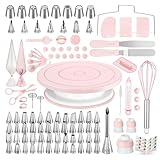
- All-in-One Cake Decorating Supplies Kit: Total 158pcs baking accessories, includes everything you need to start decorating your cakes: a revolving cake stand, 3 scrapers, angled & straight spatulas, 49 standard-size piping tips, 8 Russian tips, 7 Korean nozzles, tips cleaning brush, 3 couplers, 50 disposable pastry bags, 2 reusable piping bags, 2 bag ties, 2 flower nails, flower lifter, cake pen and 3 cake pen top, cake leveler, 14 fondant molds, smoother, 5 measuring spoons, egg separator, and whisk.
- 360° Spinning Cake Turntable: This essential baking supplies tool features a cake stand with an 11-inch diameter in a macaron color that spins smoothly on a hidden ball bearing, allowing you to achieve stunningly consistent patterns and gorgeous designs. With 360° clockwise and counterclockwise rotation, you can decorate like a PRO. The light color design makes you enjoy your cake decorating projects.
- Piping Bags and Tips Set: 49 standard-sized, 8 Russian, and 7 Korean numbered piping tips, 50 disposable piping bags, 2 pink reusable pastry bags, 3 couplers, and 2 bag ties. With this frosting set, you can design different patterns for your cakes. Don’t worry, we have a pattern chart to help you eliminate guesswork by providing outcomes for each tip. Besides, a tips cleaning brush for easy cleaning of the nozzles after use.
- Angled and Straight Icing Spatulas: Made from high-quality stainless steel, these exceptional frosting spatulas simplify the process of achieving evenly frosted layers and working on layered cakes. With a 12.5-inch angled spatula and a 10.6-inch straight spatula, you can effortlessly create smooth surfaces and crumb-free layers.
- E-Book Guide to Use: Come with a pattern chart that serves as a guide for the numbered icing tips. Furthermore, a detailed and professional E-Book is available, providing advanced guidance on using Kootek baking tools and creating exquisite cakes or cupcakes. This valuable resource is ideal for beginners as well as for professionals, making our set the perfect choice for those seeking to improve their baking skills. Also a thoughtful gift for Mother's Day, a wedding, or a party.
6. Begin Whipping: Start whipping the cream on low speed, gradually increasing to medium-high.
- What “good” looks like: The cream begins to thicken and show soft peaks.
- Common mistake: Whipping too fast initially, which can lead to uneven texture.
- How to avoid: Start slow and build up speed as the cream thickens.
7. Add Sweetener and Vanilla: Once soft peaks form, gradually add your sweetener (e.g., granulated sugar or more powdered sugar) and vanilla extract to taste.
- What “good” looks like: Sweetener and vanilla are incorporated, and the cream is starting to form medium peaks.
- Common mistake: Adding sugar too early, which can weigh down the cream.
- How to avoid: Wait for soft peaks before adding sweeteners and flavorings.
8. Incorporate Coffee Flavor: Begin adding the cooled coffee, a teaspoon at a time, while the mixer is on low speed.
- What “good” looks like: The cream is thickening into stiff peaks, and the coffee flavor is subtly present.
- Common mistake: Adding too much coffee at once.
- How to avoid: Add coffee very slowly, tasting after each addition to control flavor and consistency.
9. Continue Whipping to Stiff Peaks: Continue whipping until stiff peaks form – the cream should hold its shape firmly when the beaters are lifted. Be careful not to over-whip, or you’ll end up with butter.
- What “good” looks like: The frosting is thick, glossy, and holds its shape perfectly.
- Common mistake: Over-whipping, which turns cream into butter.
- How to avoid: Watch closely as the frosting reaches stiff peaks and stop immediately.
10. Taste and Adjust: Taste the frosting and add more sweetener or a tiny bit more coffee if needed, whipping briefly to combine.
- What “good” looks like: A perfectly balanced coffee flavor and sweetness with a stable, spreadable texture.
- Common mistake: Not tasting and adjusting, resulting in a frosting that’s too sweet, not sweet enough, or lacking coffee flavor.
- How to avoid: Always taste and adjust seasonings and flavorings before it’s too late.
11. Chill Before Use: For best results, chill the finished frosting for at least 30 minutes before frosting cakes or cupcakes. This allows it to firm up further.
- What “good” looks like: A firm, chilled frosting ready to be applied.
- Common mistake: Using the frosting immediately when it’s still soft.
- How to avoid: Allow adequate chilling time for optimal consistency.
Common Mistakes (and What Happens If You Ignore Them)
| Mistake | What It Causes | Fix |
|---|---|---|
| Using warm or hot coffee | Cream won’t whip; frosting is thin and may curdle. | Ensure coffee is completely cooled to room temperature or chilled. |
| Using weak or watery pre-made coffee | Dilutes the cream, resulting in a less stable and flavorful frosting. | Use strong coffee, espresso, or instant espresso powder for concentrated flavor. |
| Adding too much coffee at once | Over-liquefies the cream, making it impossible to achieve stiff peaks. | Add coffee a teaspoon at a time, whipping and tasting between additions. |
| Not chilling equipment | Cream whips slower and is less stable, potentially leading to a softer frosting. | Chill your mixing bowl and whisk/beaters in the freezer for at least 15-20 minutes. |
| Using non-heavy whipping cream | Cream won’t whip to stiff peaks; results in a thin, unworkable frosting. | Always use heavy whipping cream (at least 30-35% butterfat). |
| Over-whipping the cream | Turns whipped cream into butter and buttermilk, ruining the frosting. | Stop whipping as soon as stiff peaks form; watch closely during the final stages. |
| Adding coffee too early in the process | The liquid can prevent the cream from reaching proper whipping stages. | Wait until soft peaks form before gradually incorporating cooled coffee. |
| Using sweetened coffee without adjustment | Frosting will be too sweet; difficult to balance flavors. | Taste your pre-made coffee and adjust the amount of added sugar in the frosting accordingly. |
| Not tasting and adjusting | Frosting may be too bland, too sweet, or lack sufficient coffee flavor. | Taste the frosting throughout the process and adjust sweeteners and coffee intensity as needed. |
| Using stale or low-quality coffee | Imparts an off-flavor to the frosting. | Use fresh, good-quality coffee or espresso for the best flavor profile. |
Decision Rules
- If your pre-made coffee is very strong and concentrated (like espresso), then start with only 1 teaspoon of coffee per cup of cream because it has intense flavor.
- If your pre-made coffee is weaker (like drip coffee), then you might be able to use up to 1 tablespoon per cup of cream, but always add it slowly.
- If you want a very pronounced coffee flavor, then consider using instant espresso powder mixed with a minimal amount of water instead of liquid coffee because it’s more concentrated.
- If your pre-made coffee is already sweetened, then reduce or omit the added sugar in your frosting recipe because you don’t want the frosting to be overly sweet.
- If the cream starts to look curdled or grainy while whipping, then stop immediately because you may have over-whipped it or added liquid too quickly.
- If your frosting seems too soft after whipping, then chill it in the refrigerator for at least 30 minutes because it will firm up as it cools.
- If you are concerned about the frosting’s stability for decorating, then add 1-2 tablespoons of powdered sugar per cup of cream at the beginning of whipping because it acts as a stabilizer.
- If you notice your frosting is becoming too thin after adding coffee, then try adding a bit more powdered sugar or a small amount of cornstarch (dissolved in a tiny bit of cold liquid first) to help thicken it.
- If you are unsure about the coffee’s flavor impact, then start with a very small amount of coffee and gradually increase it until you reach your desired taste because you can always add more, but you can’t take it away.
- If your whipped cream frosting is separating slightly, then try whisking it gently on low speed again for a few seconds to re-emulsify, but be careful not to over-whip.
- If you want to avoid a watery frosting, then ensure your coffee is very cold and add it very gradually, allowing the cream to thicken between additions.
FAQ
Can I use cold brew coffee for whipped cream frosting?
Yes, cold brew coffee can work well, especially if it’s brewed strong. Its smooth flavor profile often complements sweet desserts. Ensure it’s well-chilled and add it slowly to avoid diluting the cream.
What happens if I use decaf coffee?
Decaf coffee will provide a coffee flavor without the caffeine, but the results are similar to regular coffee. The main concern remains the strength and concentration of the brew; weak decaf will yield weak flavor and potentially a less stable frosting.
How much coffee should I add?
Start with a very small amount, like 1 teaspoon per cup of cream, and gradually increase. The exact amount depends on the strength of your coffee and your personal preference for coffee intensity. Always taste as you go.
Will using pre-made coffee affect the texture of the frosting?
Yes, the liquid content of the coffee can affect the texture. Too much liquid will make the frosting thinner. Using a concentrated coffee and adding it slowly helps maintain a desirable whipped cream consistency.
Can I make coffee whipped cream frosting ahead of time?
You can make it a few hours ahead and store it in the refrigerator. However, whipped cream frosting is best used the same day it’s made for optimal freshness and texture.
What if my frosting isn’t stiff enough after adding coffee?
If your frosting is too soft, it might be due to adding too much liquid coffee or not whipping long enough. Try chilling it for 30-60 minutes. If it’s still too soft, you might need to add a bit more powdered sugar or a stabilizer and whip briefly again.
Is it better to use instant coffee or brewed coffee?
Instant coffee (especially espresso powder) can offer a more controlled and potent coffee flavor without adding much liquid, which is often preferable for whipped cream. Brewed coffee can work if it’s very strong and cooled.
How do I get a strong coffee flavor without making the frosting runny?
The key is concentration. Use espresso, a very strong brew, or instant espresso powder mixed with just enough water to dissolve it. Add it in tiny increments, tasting frequently.
What This Page Does Not Cover (and Where to Go Next)
- Detailed recipes for specific cakes or pastries that use this frosting.
- Advanced pastry techniques for stabilizing whipped cream beyond basic methods.
- Comparisons of different brands of pre-made coffee for their suitability in frosting.
- Information on making homemade whipped cream from scratch (if you prefer not to use pre-made coffee as a base).
- Troubleshooting for dairy-free or vegan whipped cream frosting alternatives.