
Which Coffee Maker Brews The Strongest Coffee?
Quick answer
- Look for brewers with precise temperature control.
- Consider a larger coffee-to-water ratio for a bolder cup.
- Drip machines with a bloom phase can extract more flavor.
- French presses offer full immersion for maximum body.
- Avoid under-extraction; it leads to weak, sour coffee.
- Freshly ground beans are non-negotiable for strength.
Who this is for
- Anyone who likes their coffee with a serious kick.
- Folks tired of watery brews that just don’t cut it.
- Home baristas looking to dial in their perfect strong cup.
What to check first
Brewer type and filter type
Different brewers pull out different stuff. Drip machines with paper filters can sometimes strip away oils, making coffee taste lighter. French presses let those oils through, giving you more body and perceived strength. Pour-overs offer control, but paper filters are common here too.
For a richer, more full-bodied cup that can often be perceived as stronger, consider a French press. This method allows more of the coffee’s natural oils to pass through the metal filter, contributing to a bolder flavor profile.

- Wash in warm, soapy water before first use and dry thoroughly
- Not for stovetop use
- Turn lid to close spout
- Easy-to-clean glass carafe
Water quality and temperature
Bad water makes bad coffee, plain and simple. If your tap water tastes funky, your coffee will too. Aim for clean, filtered water. Temperature is huge for extraction. Too cool, and you get weak, sour coffee. Too hot, and you can burn it. Most experts say 195-205°F is the sweet spot.
Grind size and coffee freshness
This is massive. Stale beans? Forget about it. You need fresh, whole beans, ground right before you brew. Grind size matters for extraction speed. Too coarse, and water rushes through, leading to weak coffee. Too fine, and you risk over-extraction, which can taste bitter. For drip, medium is usually good. For French press, coarser.
Coffee-to-water ratio
This is your main lever for strength. More coffee grounds for the same amount of water equals a stronger brew. A common starting point is 1:15 or 1:16 (grams of coffee to grams of water). For stronger coffee, you might push this to 1:14 or even 1:13. Don’t be afraid to experiment.
Cleanliness/descale status
A dirty brewer is a flavor killer. Old coffee oils build up and go rancid. Scale from hard water can mess with temperature and flow. Regularly cleaning and descaling your machine is crucial for consistent, strong, and clean-tasting coffee. Check your manual for specific instructions.
Step-by-step (brew workflow)
1. Heat your water.
- What “good” looks like: Water is between 195-205°F. An electric kettle with temperature control makes this easy.
- Common mistake: Using water straight off a boil or water that’s too cool. This messes with extraction. Avoid guessing; use a thermometer or a temp-control kettle.
2. Grind your beans.
- What “good” looks like: Freshly ground beans, the right size for your brewer (e.g., medium for drip, coarse for French press). A burr grinder is best for consistency.
- Common mistake: Using pre-ground coffee or a blade grinder. Pre-ground loses flavor fast, and blade grinders give uneven particle sizes.
3. Measure your coffee and water.
- What “good” looks like: Using a scale for both coffee and water. A ratio around 1:15 (coffee:water) is a good start. For stronger, try 1:14.
- Common mistake: Using scoops or volume measurements. These are inconsistent. Scales are your friend for repeatable results.
4. Prepare your filter (if applicable).
- What “good” looks like: Paper filters are rinsed with hot water to remove papery taste and preheat the brewer. Metal or cloth filters are clean.
- Common mistake: Not rinsing paper filters. This leaves a papery taste that can weaken the coffee’s perceived strength.
5. Add coffee grounds to the brewer.
- What “good” looks like: Grounds are evenly distributed.
- Common mistake: Tapping or compacting the grounds too much, which can lead to uneven water flow.
6. Bloom the coffee (for drip/pour-over).
- What “good” looks like: Just enough hot water (about twice the weight of the coffee) is poured over the grounds to wet them. Wait 30-45 seconds as the coffee degasses (puffs up).
- Common mistake: Skipping the bloom or drowning the grounds immediately. This traps CO2, preventing even extraction later.
7. Begin the main pour/immersion.
- What “good” looks like: For drip, water is poured slowly and steadily, keeping the grounds saturated. For French press, all the water is added after blooming.
- Common mistake: Pouring too fast or unevenly, which can create channels and lead to under-extraction.
8. Allow brew time.
- What “good” looks like: For drip, this is typically 4-6 minutes. For French press, about 4 minutes of immersion.
- Common mistake: Rushing the brew or letting it go too long. Too short is weak; too long can be bitter.
9. Press the plunger (French press).
- What “good” looks like: A slow, steady press all the way down.
- Common mistake: Pressing too hard or too fast, which can force fine particles through the filter and make the coffee muddy.
10. Serve immediately.
- What “good” looks like: Coffee is poured into your mug right after brewing.
- Common mistake: Leaving coffee sitting on a hot plate. This cooks the coffee, making it bitter and stale.
Common mistakes (and what happens if you ignore them)
| Mistake | What it causes | Fix |
|---|---|---|
| Using stale coffee beans | Weak, flat, flavorless coffee | Buy whole beans and grind them right before brewing. |
| Incorrect grind size | Under-extracted (sour, weak) or over-extracted (bitter) | Use a burr grinder and adjust based on your brew method. |
| Inconsistent water temperature | Under-extraction (too cool) or over-extraction (too hot) | Use a temperature-controlled kettle or thermometer. Aim for 195-205°F. |
| Incorrect coffee-to-water ratio | Weak coffee (too little coffee) or too strong/bitter | Use a scale to measure both coffee and water. Start around 1:15 and adjust. |
| Not rinsing paper filters | Papery taste, weaker coffee flavor | Rinse paper filters with hot water before adding grounds. |
| Skipping the bloom phase (drip/pour-over) | Trapped CO2, uneven extraction, weaker cup | Wet grounds with a small amount of water and wait 30-45 seconds before continuing the pour. |
| Brewing on a dirty machine | Rancid oils, off-flavors, weak coffee | Clean your brewer regularly and descale as needed. |
| Using tap water with off-flavors | Unpleasant taste in your coffee | Use filtered water. |
| Leaving coffee on a hot plate | “Cooked” coffee, bitter, stale taste | Serve coffee immediately after brewing or transfer to a thermal carafe. |
Decision rules (simple if/then)
- If your coffee tastes sour, then you likely under-extracted, because the water wasn’t hot enough, the grind was too coarse, or the brew time was too short.
- If your coffee tastes bitter, then you likely over-extracted, because the water was too hot, the grind was too fine, or the brew time was too long.
- If you want a bolder cup without adding more coffee, then try a longer brew time (within reason), because more contact time can extract more solubles.
- If you’re using a French press and it tastes muddy, then your grind is likely too fine, because fine particles are getting through the metal filter.
- If you’re using a drip machine and it tastes weak, then check your coffee-to-water ratio and ensure you’re using enough grounds.
- If your coffee consistently tastes “off,” then clean your brewer thoroughly, because old coffee oils can ruin the flavor.
- If you’re using a pour-over and the water drains too fast, then your grind is likely too coarse, because the water is finding channels.
- If your coffee lacks aroma and flavor, then your beans are probably stale, because freshness is key to a strong, vibrant cup.
- If you’re struggling to get a consistent cup, then invest in a good burr grinder and a scale, because precision matters.
- If your coffee is weak even after adjusting ratio and grind, then consider a different brewing method like French press, because immersion brewing can yield a fuller body.
FAQ
What’s the best coffee maker for strong coffee?
There isn’t one single “best.” It depends on your preferences. French presses offer full immersion and body. Some high-end drip machines offer precise temp and bloom control. The key is controlling extraction variables.
How can I make my drip coffee stronger?
Use a coarser grind if it tastes bitter, or a finer grind if it tastes sour. Also, increase your coffee-to-water ratio, meaning more grounds for the same amount of water. Make sure your machine reaches the correct temperature.
Does a French press make stronger coffee than a drip machine?
Generally, yes, in terms of body and richness. French presses use a metal filter, allowing more oils to pass through. Drip machines with paper filters can remove some of these oils, leading to a cleaner but potentially less robust cup.
If you prefer the convenience of a drip machine but still crave a stronger brew, look for models that offer precise temperature control and a bloom phase. These features help ensure optimal extraction, leading to a more robust flavor.
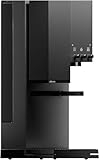
- 1. Three Levels of Automation for Any Skill Level: Choose from Autopilot, Copilot, or Free Solo mode. Autopilot handles the entire brewing process automatically. Copilot provides step-by-step guidance. Free Solo gives you full manual control. This coffee machine works for beginners and professional baristas alike.
- 2. Intuitive User Interface with Tactile Knobs and LED Matrix: The Studio features physical control knobs and a clear LED Matrix display. You can adjust grind size, water temperature, and flow rate in real time without navigating complicated touchscreen menus.
- 3. Full Customization via the xBloom App: Use the xBloom app to create, adjust, save, and share your favorite coffee recipes. Every brewing parameter can be fine-tuned and synced to the machine instantly. Your perfect cup is saved and repeatable.
- 4. Compostable xPod System for Minimal Waste and Maximum Flavor: Each xPod contains carefully selected whole beans and a built-in filter. Tap the recipe card, pour the beans into the grinder, place the pod into the dock, and press start. No capsules, no extra paper filters, no unnecessary waste.
- 5. What Is Included in the Box: The package includes the xBloom Studio, Omni Dripper 2 with Hyperflow Bottom, 10 paper filters, xPod Dock, Magnetic Dosing Cup, default recipe card, quick start guide, cleaning brush, and universal power cord. Everything you need is included.
Is it bad to use more coffee grounds for a stronger brew?
Not at all! Adjusting the coffee-to-water ratio is the most straightforward way to control strength. Just ensure you don’t go so high that the coffee becomes overwhelmingly bitter or unbalanced.
How do I know if my coffee is under-extracted or over-extracted?
Under-extracted coffee tastes sour, thin, and lacks sweetness. Over-extracted coffee tastes bitter, harsh, and can have a dry, chalky finish.
Can I just use less water to make my coffee stronger?
Technically, yes, but it’s not ideal. Using significantly less water can lead to uneven extraction and a poorly balanced cup, even if it tastes “strong.” It’s better to increase the coffee grounds or adjust grind/time.
What’s the ideal water temperature for strong coffee?
The sweet spot is generally between 195°F and 205°F. Water below this range won’t extract enough, leading to weak coffee. Water much hotter can scorch the grounds, making it bitter.
Should I use a burr grinder or a blade grinder for stronger coffee?
A burr grinder is highly recommended. It produces consistent particle sizes, which is crucial for even extraction and a balanced, strong cup. Blade grinders create uneven grounds, leading to both under and over-extraction simultaneously.
What this page does NOT cover (and where to go next)
- Specific brand recommendations or comparisons. (Look for reviews focused on brew quality.)
- Deep dives into the chemistry of coffee extraction. (Explore coffee science blogs.)
- Espresso machine techniques and settings. (Search for espresso brewing guides.)
- Alternative brewing methods like Aeropress or Moka Pot. (Find dedicated articles on those methods.)
- The nuances of different coffee bean origins and roast profiles. (Read up on coffee tasting notes.)