
Using K-Cup Pods Without A Coffee Maker: Creative Ideas
Quick Answer
- K-Cup pods are designed for specific single-serve brewers and are generally not meant to be used without one.
- The pods are sealed to maintain freshness and control water flow for optimal brewing.
- Attempting to use K-Cups without a compatible machine will likely result in a mess and poor coffee quality.
- While you can’t brew the coffee from the pod directly, you can repurpose the grounds or the pod itself in other ways.
- Consider emptying the grounds for cold brew or composting, or reusing the plastic pod for small storage.
- For a quick cup without a dedicated K-Cup machine, explore pour-over or French press methods with regular ground coffee.
Who This Is For
- Individuals who have a stash of K-Cup pods but no compatible coffee maker.
- People looking for ways to reduce waste or repurpose K-Cup pods and their contents.
- Anyone curious about alternative brewing methods when their usual single-serve machine is unavailable.
What To Check First
Brewer Type and Filter Type
- What to check: If you have a K-Cup pod, it is designed for a Keurig or compatible single-serve brewer. These machines use a piercing mechanism to puncture the pod and force hot water through it.
- Why it matters: Standard K-Cup pods are not designed to be opened and brewed like loose grounds. Their sealed nature and internal filter system are integral to the brewing process within the specific machine. Trying to force water through them manually without the correct pressure and flow will not yield drinkable coffee.
Water Quality and Temperature
- What to check: For any coffee brewing, using filtered water is recommended. The ideal brewing temperature for coffee is typically between 195°F and 205°F.
- Why it matters: Even if you were to attempt an unconventional method with K-Cup contents, using poor-quality water or water at the wrong temperature will negatively impact the taste. Cold water will result in weak, sour coffee, while overly hot water can scald the grounds, leading to bitterness.
Grind Size and Coffee Freshness
- What to check: K-Cup pods contain finely ground coffee, optimized for the pressure and flow rate of single-serve brewers. The coffee is sealed inside to maintain freshness until use.
- Why it matters: The pre-portioned and ground coffee inside K-Cups is not ideal for most manual brewing methods. If you were to empty the pod, the fine grind might be too dense for a pour-over or French press, leading to over-extraction and bitterness, or under-extraction and weakness, depending on the method. Freshly ground beans are always preferred for optimal flavor.
Coffee-to-Water Ratio
- What to check: K-Cup pods contain a pre-measured amount of coffee designed for a specific volume of water (typically 6-8 oz).
- Why it matters: This ratio is calibrated for the brewing system. If you were to try and brew the contents manually, you’d need to guess the correct amount of coffee and water, which is difficult without opening the pod and measuring. The sealed nature prevents this.
Cleanliness/Descale Status
- What to check: If you have a K-Cup brewer, ensure it is clean and descaled according to the manufacturer’s instructions.
- Why it matters: While this is primarily for using the machine, it highlights that proper brewing relies on well-maintained equipment. If you’re considering alternative methods, you’re likely trying to get a good cup of coffee, and clean equipment is always a prerequisite, regardless of the brewing tool.
Step-by-Step (Brew Workflow) – Repurposing K-Cup Contents
Since using K-Cup pods without their intended brewer is not feasible for making a hot cup of coffee, this workflow focuses on repurposing the contents of the pod.
1. Gather Supplies: You’ll need a K-Cup pod you wish to empty, scissors or a sharp knife, a container for the grounds, and your chosen repurposing method (e.g., a French press, a jar for cold brew, or a compost bin).
- What “good” looks like: Having all necessary items readily available.
- Common mistake: Forgetting a tool or container, leading to a messy process. Avoid this by laying everything out beforehand.
2. Carefully Open the Pod: Place the K-Cup pod on a stable surface. Using scissors or a knife, carefully cut off the top foil lid.
- What “good” looks like: A clean cut exposing the coffee grounds.
- Common mistake: Ripping the foil haphazardly, spilling grounds. Avoid this by making deliberate cuts.
3. Remove the Filter: Once the lid is off, you’ll see a paper or plastic filter containing the coffee grounds. Gently pull this filter out of the plastic pod.
- What “good” looks like: The filter containing the grounds is intact and easily removed.
- Common mistake: Tearing the filter, causing grounds to fall into the plastic pod or onto your work surface. Avoid this by lifting gently.
4. Empty the Grounds: Carefully tip the filter and its contents into your designated container for repurposing.
- What “good” looks like: All coffee grounds are transferred cleanly to your container.
- Common mistake: Leaving grounds stuck in the filter or spilling them. Avoid this by tapping the filter gently.
5. Prepare for Cold Brew (Example Repurposing): If making cold brew, place the emptied grounds into a jar or pitcher. Add cold, filtered water, typically a 1:4 ratio of grounds to water (e.g., 1/4 cup grounds to 1 cup water). Stir gently.
- What “good” looks like: The grounds are evenly saturated with water.
- Common mistake: Using too much or too little water, or not stirring. Avoid this by measuring and stirring to ensure all grounds are wet.
6. Steep Cold Brew: Cover the container and let it steep in the refrigerator for 12-24 hours.
- What “good” looks like: The mixture has darkened significantly, indicating extraction.
- Common mistake: Steeping for too short or too long a time. Avoid this by setting a timer and tasting after the minimum time.
7. Strain Cold Brew: After steeping, strain the concentrate through a fine-mesh sieve lined with cheesecloth or a coffee filter into another container.
- What “good” looks like: A clear, dark coffee concentrate with minimal sediment.
- Common mistake: Inadequate straining, leaving grit in the final product. Avoid this by using a double layer of cheesecloth or a clean coffee filter.
8. Dilute and Serve Cold Brew: Dilute the cold brew concentrate with water or milk to your preferred strength. Serve over ice.
- What “good” looks like: A smooth, flavorful, and refreshing beverage.
- Common mistake: Not diluting enough, resulting in a too-strong brew, or diluting too much, making it weak. Avoid this by starting with a 1:1 ratio of concentrate to water and adjusting.
9. Compost the Grounds (Alternative Repurposing): If not making cold brew, the coffee grounds are excellent for composting. Transfer them directly to your compost bin.
- What “good” looks like: Grounds are added to a healthy compost pile.
- Common mistake: Adding only coffee grounds without balancing them with “brown” materials (like dried leaves or cardboard). Avoid this by ensuring your compost has a good mix of nitrogen-rich “green” and carbon-rich “brown” materials.
10. Clean Up: Rinse the K-Cup pod and filter holder if you plan to reuse the pod for storage. Dispose of the outer plastic casing responsibly if not reusing.
- What “good” looks like: Your workspace is clean and all materials are put away or disposed of properly.
- Common mistake: Leaving coffee grounds scattered or not cleaning tools. Avoid this by wiping down surfaces immediately.
Common Mistakes (and What Happens If You Ignore Them)
| Mistake | What It Causes | Fix |
|---|---|---|
| Attempting to puncture a K-Cup pod with a sharp object to force water through it. | Messy explosion of hot water and grounds; scalding hazard; ruined coffee. | Do not attempt this. K-Cup pods are designed for specific brewers. Use a compatible machine or an alternative brewing method with loose grounds. |
| Emptying K-Cup grounds and brewing them in a standard drip coffee maker. | Weak, under-extracted coffee due to the fine grind, or clogged filter if too fine. | Empty grounds and use them for cold brew or composting. For drip coffee makers, use medium to coarse ground coffee specifically for that brewing method. |
| Emptying K-Cup grounds and brewing them in a French press. | Silty, bitter coffee. The fine grind will pass through the metal filter. | Empty grounds and use them for cold brew or composting. For French press, use a coarse grind. If using K-cup grounds, you may need to double-filter or accept some silt. |
| Trying to re-seal an opened K-Cup pod for later use. | Coffee will be stale, flavorless, and potentially exposed to moisture or contaminants. | K-Cup pods are single-use for freshness. Once opened, use the grounds immediately or discard. |
| Using the plastic K-Cup casing for something other than small item storage. | Inefficient repurposing; potential for contamination if not cleaned thoroughly. | If reusing the plastic pod, clean it thoroughly. Consider its limited utility and opt for more appropriate storage solutions if possible. |
| Assuming the coffee inside a K-Cup is suitable for any brewing method. | Poor taste, texture, and extraction. The grind is specific to its intended machine. | Understand that K-Cup coffee is pre-ground for a specific purpose. For other methods, buy coffee beans and grind them appropriately for your chosen brewer. |
| Discarding the plastic K-Cup pods without considering recycling or repurposing. | Increased landfill waste. | Check local recycling guidelines for K-Cup pods (many are not recyclable as-is). Consider repurposing the plastic for small storage or composting the grounds. |
| Not cleaning the K-Cup pod after emptying if intending to reuse it for storage. | Unpleasant odors or residues affecting stored items. | Wash and dry the pod thoroughly with soap and water before storing anything inside. |
Decision Rules
- If you have K-Cup pods and no Keurig machine, then you cannot brew a hot cup of coffee directly from the pod.
- If you want to brew coffee using K-Cup contents, then you must empty the grounds and use them in an alternative brewing method like cold brew or compost them.
- If you attempt to force water through a K-Cup pod without a machine, then expect a messy failure and a potential safety hazard due to hot water.
- If the K-Cup grounds are used in a French press, then expect a silty and potentially bitter cup because the grind is too fine for the press’s filter.
- If you are looking for a quick cup of coffee without a K-Cup machine, then consider pour-over, AeroPress, or a French press with freshly ground beans.
- If you have a K-Cup pod and want to avoid waste, then empty the grounds for composting or cold brew, and consider reusing the plastic casing for small item storage.
- If the K-Cup pod is opened, then the coffee inside should be used or repurposed immediately to maintain freshness.
- If you are concerned about the environmental impact of K-Cups, then explore reusable K-Cup filters or alternative brewing methods that use whole beans.
- If you are curious about the flavor profile of a specific K-Cup coffee, then you would need a compatible machine to experience it as intended.
- If you want to make cold brew from K-Cup contents, then ensure you have a method to strain the grounds thoroughly after steeping.
- If you are unsure about the recyclability of K-Cup pods in your area, then check with your local waste management provider or look for specialized recycling programs.
If you want to make a hot cup of coffee without a Keurig or K-Cup pods, then you have many excellent options! Consider a pour-over brewer, a French press, an AeroPress, or a simple moka pot.

- Pour Over Coffee: Manual Pour Over Coffee Maker allows you to brew an excellent cup of Coffee in minutes
- Stainless steel: Includes a new and improved permanent, stainless steel mesh filter that helps extract your coffee's aromatic oils and subtle flavors instead of being absorbed by a paper filter
- Coffee Carafe: Made of durable, heat-resistant borosilicate glass with Cork Band detailing that is both functional and elegant; single wall
- Quick and Easy: Simply add coarse ground Coffee to filter, pour a small amount of water in a circular motion over ground Coffee until soaked then add the remaining water and let drip
- Servings: Pour Over Coffee Maker makes 8 cups of Coffee, 4 oz each; dishwasher safe
If you are concerned about the environmental impact of K-Cups, then explore reusable K-Cup filters or alternative brewing methods that use whole beans.
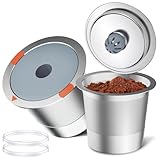
- K cup reusable fully fested for compatibility - The Cafe Save k cup reusable coffee filters work with K-Express Kmini, K-Classic, K-Elite, K-Latte, K-Cafe, K-Select, K-Compact, and Keurig 1.0 and 2.0 coffee machines.Breville K CUP, Mr. Coffee K CUP, Please see compatibility chart for full details of compatible models.(See full detailed list picture)
- NOT compatible with K-iced, K-Duo Plus, and all Multi-Stream Brewers: K-Supreme/Plus/Smart, K-Slim, K-Café, K-Brew Chill, K-Duo Hot & Iced. Using it with incompatible coffee makers may prevent the machine from closing properly.(See full detailed list picture)
- Eco-Friendly:Keurig reusable k cup is made of high-quality stainless steel and 100% BPA, lead, and DEHP free. You know ,paper filters need to cut down 1 billion trees every year,countless discarded plastic coffee capsules flow into the ocean, causing marine life to eat by mistake, and how much pain it brings to them! When using our reusable k-cup, you reduce the use of a large number of paper filters and plastic coffee capsules.(Contribute to the protection of the environment)
- Keurig reusable coffee pods design science: Coffee reusable k cup adopts one-piece design, tightly sealed top cover to prevent coffee overflow during use; 360-degree perforation on the bottom and side walls allows water to fully soak the coffee powder, optimize coffee extraction, and obtain a richer flavor The flavour ensures that delicious coffee is brewed, and the reusable k-cup filter is very useful for coffee lovers.
- Reusable k cups Health and safety -Stainless steel k cup reusable design, preserving the coffee natural oils and flavors entirely. Using stainless steel refillable K Cup brewing coffee, you will taste the great coffee you never have! These Reusable Coffee Pods keep coffee original, Dishwasher safe
FAQ
Can I just poke holes in a K-Cup and pour hot water through it?
No, this is not a viable or safe method. K-Cup pods are designed with internal structures and a specific brewing mechanism that controls water flow and pressure. Poking holes will likely result in a mess of grounds and water, and the coffee will be poorly extracted.
What happens if I try to brew K-Cup coffee in a regular coffee maker?
The fine grind inside K-Cups is usually too fine for standard drip coffee makers. This can lead to over-extraction, resulting in bitter coffee, or it can clog the filter, causing the coffee maker to overflow.
Can I reuse a K-Cup pod?
While the original purpose of K-Cup pods is single-use for freshness, the plastic casing can sometimes be cleaned and reused for storing small items like beads, screws, or craft supplies. The internal filter is not designed for reuse.
How do I get the coffee grounds out of a K-Cup?
Carefully cut off the foil lid with scissors or a knife. Then, gently remove the internal filter containing the coffee grounds. Be mindful of potential spills.
Is the coffee inside K-Cups fresh?
Yes, K-Cup pods are sealed to preserve the freshness of the coffee grounds until they are brewed. Once opened, the coffee will begin to lose its freshness more rapidly.
What’s the best way to use K-Cup coffee grounds if I don’t have a Keurig?
The most recommended method is to empty the grounds and use them for making cold brew coffee. They can also be added to a compost bin, as coffee grounds are rich in nitrogen.
Are K-Cup pods recyclable?
The recyclability of K-Cup pods varies significantly by location and the specific type of pod. Many are made of mixed materials that are not easily separated by standard recycling facilities. It’s best to check with your local recycling program for guidance.
What if I want to make a hot cup of coffee without a Keurig or K-Cup pods?
You have many excellent options! Consider a pour-over brewer, a French press, an AeroPress, or a simple moka pot. All of these require whole coffee beans that you grind yourself for optimal flavor.
What This Page Does NOT Cover (And Where to Go Next)
- Detailed instructions for specific manual brewing methods: This page focuses on repurposing K-Cup contents. For in-depth guides on pour-over, French press, or AeroPress, consult resources dedicated to those techniques.
- The environmental impact and recycling solutions for K-Cup pods: While mentioned, a comprehensive analysis of K-Cup waste and solutions is beyond the scope here. Look for articles specifically addressing sustainable coffee practices.
- Recommendations for specific K-Cup coffee brands or flavors: This article is about the use of K-Cup pods, not a review of their contents. Explore coffee blogs and review sites for brand recommendations.
- Modifying K-Cup pods for use with other brewers: Attempting to adapt K-Cup pods for machines they weren’t designed for is not recommended and can be ineffective or unsafe.