
Understanding Coffee Shop Profitability
Quick answer
- Coffee shop profits vary wildly. Location, concept, and management are huge.
- Gross profit margins on drinks can be 70-80%. But that’s before rent, labor, and everything else.
- Net profit margins typically land between 5-15% for well-run shops.
- Some shops might break even or even lose money, especially in the first year.
- Higher volume and efficient operations are key to boosting earnings.
- Don’t forget about the cost of good beans and skilled baristas.
Key terms and definitions
- Gross Profit: Revenue minus the cost of goods sold (like beans, milk, cups). This is the money left after paying for what you sell.
- Net Profit: What’s left after all expenses are paid – rent, labor, utilities, marketing, etc. This is the real bottom line.
- Cost of Goods Sold (COGS): The direct costs of producing your product. For coffee, this includes beans, milk, sugar, syrups, and disposable cups.
- Operating Expenses: The day-to-day costs of running the business. Think rent, salaries, utilities, insurance, and marketing.
- Break-Even Point: The sales volume needed to cover all your costs. No profit, no loss.
- Revenue: The total amount of money earned from sales.
- Average Ticket Size: The average amount a customer spends per visit.
- Foot Traffic: The number of people passing by your location. Crucial for visibility.
- Customer Lifetime Value (CLV): The total revenue a single customer is expected to generate over their relationship with your shop.
- Prime Cost: COGS + Labor Costs. Often the biggest expenses.
How it works
- Coffee shops make money by selling beverages and food items.
- The primary revenue stream is drinks: espresso, drip coffee, lattes, etc.
- Food items like pastries, sandwiches, and snacks add to the total sales.
- Profitability hinges on managing both revenue generation and cost control.
- High-margin items, like specialty drinks, can significantly boost overall profit.
- Efficient operations mean faster service and more customers served.
- Building customer loyalty encourages repeat business and higher CLV.
- Location plays a massive role in attracting consistent foot traffic.
- Understanding your costs down to the penny is non-negotiable.
- Marketing and branding help attract new customers and retain existing ones.
To truly optimize operations and track sales, consider investing in a robust coffee shop POS system. This can help streamline orders and manage inventory efficiently.
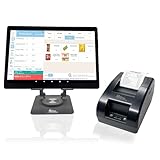
- 10.1" 8-core tablet with Wi-Fi and Bluetooth support, equipped with a 2" Bluetooth receipt printer and a stable aluminum alloy tablet stand that rotates 360°. Compatible with optional label printers, receipt printers, kitchen ticket printers, order ticket printers, barcode scanners, and electronic scales. Runs on a reliable Android operating system with built-in POS software. Hardware comes with a 1-year limited warranty
- You can download our mobile app in iOS and Android for settings, charts, reports, and storage management. We provide a online food ordering system. You or your customers can simply scan a QR code to place food orders via phone for to go delivery dine in
- LIFETIME SOFTWARE - Fast checkout, easy ordering and setup. User-friendly interface. The POS APP comes pre-installed and configured. The software is available for life and includes 1 year of customer service, 3 months of remote support, and 3 months of iCloud. No contract required, no mandatory fees
- We support payment terminals and Visa, Mastercard, Google Pay, and Apple Pay. If you sign up for our merchant services and begin accepting credit card payments after three months, we will refund you $200 for your business. Once your application is approved, you will receive a free EMV & credit card terminal
- Multifunctional-POS system, inventory management, tip tracking, membership system, reporting app, multi-region tax rate calculation, and more
What affects how much money does a coffee shop make
- Location, Location, Location: High-traffic areas cost more but bring more customers. A quiet side street might be cheaper but kill your sales.
- Rent and Lease Terms: This can be your biggest fixed cost. A bad lease can sink you.
- Labor Costs: Staffing levels, wages, and benefits add up fast. Good baristas are worth it, though.
- Cost of Beans and Ingredients: Quality coffee isn’t cheap. Same goes for fresh milk, pastries, etc.
- Menu Pricing Strategy: Too high and people go elsewhere. Too low and you leave money on the table.
- Operational Efficiency: How quickly can you make drinks? How well is your inventory managed?
- Brand Reputation and Marketing: A strong brand brings people in. Word-of-mouth is powerful.
- Competition: How many other coffee shops are nearby? What are they offering?
- Customer Volume: More customers generally means more revenue. Simple math.
- Average Ticket Size: Encouraging add-ons like pastries or larger drinks increases revenue per customer.
- Seasonality and Day of the Week: Sales can fluctuate. Weekends and mornings are usually king.
- Waste and Spoilage: Minimizing wasted ingredients and unsold food is key.
Equipping your staff with high-quality barista tools is crucial for both efficiency and drink quality, directly impacting customer satisfaction and repeat business.
No products found.
Pros, cons, and when it matters
- Pro: High Gross Margins on Drinks: Coffee itself is cheap. Milk and syrups add cost but still leave room for profit. This is where you make your money on paper.
- Con: High Overhead Costs: Rent, utilities, and wages are killers. These fixed costs need to be covered regardless of sales volume.
- Pro: Potential for Strong Community Hub: A good coffee shop becomes a neighborhood staple. This builds loyalty and consistent business.
- Con: Intense Competition: Coffee is a crowded market. Standing out requires a unique offering or superior execution.
- Pro: Scalability (to a degree): You can open more locations or expand your menu. But each new shop brings new challenges.
- Con: Dependence on Foot Traffic: If people don’t walk by, they don’t come in. A bad location can be a death sentence.
- Pro: Relatively Low Startup Costs (compared to some businesses): You don’t need massive machinery like a restaurant. But quality equipment isn’t cheap.
- Con: Labor Intensive: You need skilled staff to make good drinks and provide good service. High turnover can hurt.
- Pro: Repeat Business: Coffee drinkers are creatures of habit. They’ll come back if they like your shop.
- Con: Sensitivity to Ingredient Costs: Fluctuations in coffee bean prices or dairy costs directly impact your bottom line.
- Pro: Versatile Business Model: Can be a quick grab-and-go spot or a cozy sit-down cafe.
- Con: Requires Constant Attention: You can’t just “set it and forget it.” Management and quality control are ongoing.
Common misconceptions
- “If I open a coffee shop, I’ll get rich quick.” Nope. Most coffee shops are a grind, pun intended. It takes time and smarts to turn a profit.
- “Coffee is just hot water and beans, so it’s cheap to make.” The beans are a cost, sure. But so is the milk, the cup, the lid, the sleeve, the labor, the rent… it all adds up.
- “Any location will work if the coffee is good.” Location is HUGE. You can have the best coffee in the world, but if no one can find you or access you, you’re toast.
- “I don’t need to worry about food; the coffee will pay the bills.” Food items, especially pastries, can be big profit drivers. They also bring in customers who might not have come just for coffee.
- “I can hire anyone to make coffee.” Bad baristas make bad coffee and give bad service. This drives customers away faster than you can say “double shot.”
- “Once I’m profitable, I can relax.” Running a coffee shop is a marathon, not a sprint. You need to constantly adapt, manage costs, and keep customers happy.
- “Marketing is a waste of money.” You need to tell people you exist and why they should come to your shop. Smart marketing brings in customers.
- “I don’t need to track inventory closely.” Wasted beans, milk, or pastries eat directly into your profit. Inventory management is crucial.
- “All coffee shops make the same profit.” Absolutely not. A shop in a busy downtown core will have different economics than one in a suburban strip mall.
FAQ
- What’s a typical net profit margin for a coffee shop?
Well-run coffee shops usually see net profit margins between 5% and 15%. Some might hit higher, some lower. It really depends on a lot of factors.
- How much revenue does a successful coffee shop generate?
This is all over the place. A small neighborhood spot might do $200,000-$300,000 a year, while a busy downtown cafe could pull in $1 million or more.
- Is it better to focus on drinks or food for profit?
Drinks generally have higher profit margins. But food items can increase the average customer spend and attract a wider audience. A good balance is usually best.
- How important is the “coffee shop experience” for profitability?
It’s incredibly important. People come for the coffee, but they stay for the atmosphere, the service, and the community feel. A great experience builds loyalty.
- How long does it usually take for a coffee shop to become profitable?
It often takes 1-3 years to reach consistent profitability. The first year is usually about establishing the business and covering costs.
- What are the biggest financial risks for a coffee shop owner?
High overhead (especially rent), underestimating startup costs, poor location, and intense competition are major risks.
- Can I make money with just drip coffee and a few pastries?
Yes, it’s possible, especially if you have high volume and keep costs extremely low. But specialty drinks can significantly boost revenue potential.
- Does a drive-thru make a big difference in profitability?
A drive-thru can dramatically increase volume and revenue by serving customers quickly without them needing to park. It’s a significant operational advantage.
What this page does NOT cover (and where to go next)
- Detailed financial projections and startup cost breakdowns. (Look for business plan templates).
- Specific equipment recommendations or brand comparisons. (Research coffee equipment reviews).
- Legal aspects like licensing, permits, and health codes. (Consult local business resources).
- Marketing strategies for attracting and retaining customers. (Explore digital marketing and branding guides).
- Advanced inventory management software or techniques. (Search for supply chain and inventory control resources).