
Top Dual Coffee Makers for the Hottest Coffee
Quick Answer
- Some dual coffee makers are built to hit higher brewing temperatures, crucial for extraction.
- Look for models with precise temperature control, often digital.
- Carafe type matters: thermal carafes keep coffee hot longer than glass.
- Brew strength settings can influence perceived heat and flavor.
- Preheating your mug is a simple trick for hotter coffee.
- Check user reviews specifically mentioning brew temperature.
Buying Priorities for Hotter Coffee
- Brew Temperature Control: This is king. Some machines let you dial in the exact temp, others just have “hot.” Aim for adjustable.
- Carafe Material: Thermal carafes are your best bet for keeping coffee hot without burning it on a warming plate. Glass carafes are fine if you drink it fast.
- Brewing Technology: Look for terms like “SCA Certified” or mention of specific brewing cycles designed for optimal temperature.
- Water Reservoir Capacity: A larger reservoir means you can brew more, but it doesn’t directly impact heat. Still, good to know.
- Pre-infusion/Bloom Function: This helps extract more flavor, which can make the coffee taste hotter and richer.
- Filter Type: Paper filters can sometimes absorb heat. Metal filters let more oils through, which can contribute to a fuller body and perceived heat.
- Ease of Cleaning: Even the hottest coffee is no good if the machine is a pain to maintain. Check for dishwasher-safe parts.
- Footprint: How much counter space will it hog? Some dual units can be chunky.
- Durability: A well-built machine will last longer and likely maintain performance better over time.
Dual Coffee Maker Feature Comparison
- Brew Method: Most dual units offer drip coffee on one side and single-serve pods or grounds on the other. Some might have espresso capabilities.
- Capacity (Drip): Varies wildly, from 4-cup to 12-cup pots.
- Capacity (Single-Serve): Usually a single mug, but some allow for different mug sizes.
- Temperature Control (Drip): Ranges from basic “hot” settings to programmable digital controls with specific temperature ranges (e.g., 195-205°F).
- Temperature Control (Single-Serve): Often less precise than drip side, relying on the pod or machine’s default.
- Filter Type (Drip): Cone or basket style, typically using paper filters. Some come with reusable metal filters.
- Filter Type (Single-Serve): Relies on the pod itself or a reusable filter basket for grounds.
- Carafe Type: Glass with a warming plate, or thermal stainless steel. Thermal is usually better for sustained heat.
- Brew Strength Settings: Common on drip side, allowing for bolder brews.
- Programmable Timer: Lets you set it and forget it for morning coffee.
- Cleaning Features: Removable filter baskets, drip trays, and descaling indicators.
- Footprint: Can be significant due to the two brewing systems.
How to Choose Step-by-Step: What Dual Coffee Maker Makes the Hottest Coffee
1. Identify Your Primary Need: Do you need a full pot for the week and single cups on demand, or vice-versa?
- Good: You know which side you’ll use most.
- Mistake: Buying a dual unit when you only ever make one cup or one pot. You’re paying for features you won’t use.
2. Prioritize Brew Temperature Control: For the hottest coffee, look for machines that explicitly state precise temperature control or a wide temperature range (195-205°F is ideal).
- Good: The specs mention digital temperature adjustment or SCA certification.
- Mistake: Assuming “hot” means “hottest.” Many basic machines brew too cool, leading to weak, sour coffee.
For the hottest coffee, prioritize a drip coffee maker with precise temperature control, like this model which allows for adjustable settings to ensure optimal extraction.
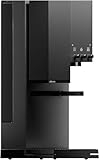
- 1. Three Levels of Automation for Any Skill Level: Choose from Autopilot, Copilot, or Free Solo mode. Autopilot handles the entire brewing process automatically. Copilot provides step-by-step guidance. Free Solo gives you full manual control. This coffee machine works for beginners and professional baristas alike.
- 2. Intuitive User Interface with Tactile Knobs and LED Matrix: The Studio features physical control knobs and a clear LED Matrix display. You can adjust grind size, water temperature, and flow rate in real time without navigating complicated touchscreen menus.
- 3. Full Customization via the xBloom App: Use the xBloom app to create, adjust, save, and share your favorite coffee recipes. Every brewing parameter can be fine-tuned and synced to the machine instantly. Your perfect cup is saved and repeatable.
- 4. Compostable xPod System for Minimal Waste and Maximum Flavor: Each xPod contains carefully selected whole beans and a built-in filter. Tap the recipe card, pour the beans into the grinder, place the pod into the dock, and press start. No capsules, no extra paper filters, no unnecessary waste.
- 5. What Is Included in the Box: The package includes the xBloom Studio, Omni Dripper 2 with Hyperflow Bottom, 10 paper filters, xPod Dock, Magnetic Dosing Cup, default recipe card, quick start guide, cleaning brush, and universal power cord. Everything you need is included.
3. Consider Carafe Type: If sustained heat is your main goal, a thermal carafe is superior to a glass one with a warming plate.
- Good: You see “thermal carafe” in the description.
- Mistake: Buying a glass carafe model and then complaining the coffee gets cold. The warming plate can also scorch coffee.
If you need both a full pot and single servings, a dual coffee maker with a thermal carafe is ideal for keeping your coffee hot without scorching it.

- 2 WAYS TO BREW: SINGLE CUP OR FULL POT. The included single-serve scoop makes it easy to just scoop, place and brew. You can brew up to 14 oz. into a cup or travel mug on the single-serving side or make up to 12 cups on the carafe side with ground coffee.
- SIMPLE SINGLE-SERVE BREWING: With the included mesh scoop, adding your favorite ground coffee to the single cup coffee maker couldn’t be easier: just scoop, place and brew. (Not compatible with K-Cup* pods.)
- ECO-FRIENDLY AND EASY ON YOUR WALLET. For fresh flavor and less waste, skip the plastic pods. Since this Hamilton Beach coffee maker doesn't use K-Cup* pods, there's less to buy and throw away.
- HAMILTON BEACH PROGRAMMABLE COFFEE MAKER WITH MULTIPLE BREW SETTINGS: Choose whether to make a single cup or full pot, select bold or regular brew strength options, and program the coffee maker up to 24 hours in advance for wake-up ready coffee.
- GET YOUR FIRST CUP FAST WITH AN AutoPause & Pour COFFEE MACHINE: Enjoy a quick cup while your coffee is still brewing. There's no need to wait for the full pot, thanks to the AutoPause & Pour feature on this carafe and single-serve coffee maker.
4. Check Brew Strength Options: A stronger brew setting can sometimes lead to a more robust flavor that feels hotter.
- Good: Buttons for “Bold” or “Rich” are available.
- Mistake: Ignoring this, especially if you like a strong cup.
5. Evaluate Filter Systems: While not the primary driver of heat, the filter can affect extraction and flavor.
- Good: The machine offers a reusable metal filter option or you plan to use quality paper filters.
- Mistake: Relying solely on a cheap, flimsy paper filter that might collapse or under-extract.
6. Read Reviews on Temperature: Search user reviews specifically for comments on how hot the coffee brews and stays.
- Good: Multiple users confirm the coffee is piping hot right out of the machine.
- Mistake: Relying only on manufacturer claims; real-world experience is key.
7. Assess Cleaning and Maintenance: A complex machine that’s hard to clean won’t get used.
- Good: Removable parts are dishwasher-safe, and there’s a descaling indicator.
- Mistake: Buying a unit with hidden nooks and crannies that are impossible to scrub clean.
8. Measure Your Counter Space: Dual units can be surprisingly large.
- Good: You’ve measured your counter and checked the machine’s dimensions.
- Mistake: Buying a coffee maker that barely fits, or worse, doesn’t fit at all.
Common Mistakes (and What Happens If You Ignore Them)
| Mistake | What it Causes | Fix |
|---|---|---|
| Brewing too cool | Under-extracted coffee: sour, weak, lacking depth. | Choose a machine with precise temperature control (195-205°F). |
| Using a glass carafe on a hot plate too long | Scorched, bitter coffee. | Use a thermal carafe, or drink glass-potted coffee within 30-60 minutes. |
| Not preheating your mug | Coffee cools down instantly upon contact with a cold ceramic. | Run hot water in your mug for a minute before brewing, or use a preheated mug. |
| Using stale beans | Flat, lifeless coffee, regardless of temperature. | Buy fresh, whole beans and grind them just before brewing. |
| Grinding too fine for drip | Over-extraction on the drip side, leading to bitterness. | Use a medium grind for drip coffee; adjust based on your machine and taste. |
| Ignoring descaling | Slow brewing, inconsistent temperatures, mineral buildup affecting taste. | Descale your machine regularly according to the manufacturer’s instructions. |
| Overfilling the water reservoir | Can lead to inconsistent brewing and potential leaks. | Stick to the marked fill lines on the reservoir. |
| Using the wrong pod type | Can damage the single-serve mechanism or lead to poor extraction. | Always use pods recommended for your specific machine model. |
| Not cleaning the drip spout/showerhead | Clogged spouts lead to uneven saturation and stale coffee drips. | Clean these parts regularly with a brush or descaling solution. |
| Assuming all “hot” settings are equal | You end up with lukewarm coffee that’s not enjoyable. | Look for specific temperature ranges or certifications (like SCA) when buying. |
Decision Rules (Simple If/Then)
- If you prioritize keeping coffee hot for hours, then choose a machine with a thermal carafe because glass carafes on warming plates can scorch the coffee.
- If you frequently make both full pots and single cups, then a dual coffee maker is a good investment because it consolidates two machines into one.
- If your main goal is the hottest possible cup, then look for models advertising precise digital temperature control in the 195-205°F range because this is the optimal brewing temperature for extraction.
- If you’re sensitive to bitter coffee, then opt for a machine with a brew strength selector because it allows for a bolder, less bitter extraction.
- If counter space is limited, then measure carefully and consider a more compact dual unit, or perhaps a single-serve brewer and a separate small drip pot.
- If you hate cleaning, then prioritize models with dishwasher-safe components and easy-to-access parts because maintenance is key to longevity and taste.
- If you primarily drink single-serve coffee but occasionally need a pot, then look for a dual unit where the single-serve side is highly rated for quality and temperature.
- If you want the simplest, most straightforward hot coffee, then a thermal carafe drip machine might be all you need, and skip the dual complexity.
- If budget is a major concern, then be aware that advanced temperature control often comes at a higher price point.
- If you’re a coffee enthusiast who cares about specific extraction profiles, then look for SCA Certified brewers, as they meet rigorous standards for temperature and brew time.
- If you often forget to turn off your coffee maker, then a thermal carafe model is safer and more energy-efficient than a glass pot on a warming plate.
FAQ
- What’s the ideal brewing temperature for coffee?
The Specialty Coffee Association (SCA) recommends between 195°F and 205°F for optimal extraction. Anything significantly below this can lead to under-extracted, sour coffee.
- Do dual coffee makers really make hotter coffee than single units?
Not necessarily. The “dual” aspect refers to having two brewing systems. The quality of the heating element and temperature control system within that specific model determines the brew temperature, whether it’s single or dual.
- What’s the difference between a glass carafe and a thermal carafe?
Glass carafes sit on a warming plate that keeps the coffee hot, but can also scorch it over time. Thermal carafes use double-walled insulation to keep coffee hot for hours without a warming plate, preserving flavor better.
- Can I use any K-Cup in a dual coffee maker?
Most dual makers designed for pods use standard K-Cup compatible systems, but it’s always best to check the manual or product description to be sure. Some machines might have proprietary pod systems.
- How often should I descale my coffee maker?
This depends on your water hardness and how often you use the machine. A general rule of thumb is every 1-3 months. Many machines have a descaling indicator light.
- Will a reusable metal filter affect the coffee’s heat?
A metal filter allows more oils and fine sediment into the cup, which can contribute to a fuller body and a perception of hotter, richer coffee. It doesn’t directly increase brew temperature, though.
- Is it worth it to get a dual coffee maker if I mostly drink one type of coffee?
If you consistently make full pots or only ever single cups, a dedicated machine for that might be simpler and cheaper. Dual units shine when you genuinely need both capabilities.
- What does “SCA Certified” mean for a coffee maker?
SCA Certified brewers have been tested and meet strict standards for brewing temperature, brew time, and consistency, ensuring a high-quality cup of coffee.
What This Page Does Not Cover (and Where to Go Next)
- Specific brand reliability ratings or long-term durability tests.
- Detailed comparisons of espresso extraction capabilities (if applicable to a specific dual model).
- Reviews of specific coffee bean types and their optimal brewing methods.
- Advanced water filtration systems for coffee brewing.
- Manual pour-over techniques or other non-automatic brewing methods.