
The Paradox of Coffee: Can It Make You Sleepy?
Quick answer
- Coffee’s caffeine is a stimulant, usually waking you up.
- Too much caffeine can lead to a crash, making you feel tired.
- Dehydration from coffee can also cause fatigue.
- Poor sleep quality due to late-day coffee is a major sleepiness culprit.
- Your individual tolerance plays a big role.
What this problem usually is (and is not)
- This is about the after-effects of coffee, not coffee itself being a sedative.
- It’s not about a magic “sleepy coffee” phenomenon for most people.
- We’re talking about the rebound effect or physiological responses to excess.
- This isn’t about the rare instances of caffeine sensitivity causing paradoxical reactions.
- It’s generally about how your body processes caffeine and its impact on your sleep cycle.
Likely causes (triage list)
Caffeine Overload:
- Too much caffeine intake: Did you have several cups back-to-back, or a super-sized one? This is the most common culprit for a later crash. Confirm by tracking your daily intake.
- Timing of consumption: Drinking coffee too late in the day can disrupt your sleep architecture, leading to feeling unrested the next day. Check your last cup’s time.
Dehydration:
- Not enough water intake: Caffeine is a mild diuretic. If you’re not balancing it with water, you can become dehydrated, which often manifests as fatigue. Notice if you’re drinking less water than usual.
Sleep Disruption:
- Interrupted sleep cycle: Caffeine blocks adenosine, a chemical that promotes sleep. If you’ve had caffeine too close to bedtime, even if you fall asleep, your sleep quality might be poor. Consider your sleep patterns after coffee consumption.
Individual Tolerance & Metabolism:
- Your unique genetics: Some people metabolize caffeine faster or slower than others. This affects how long the stimulant effect lasts and when the crash might hit. This is harder to “confirm” without testing, but consider your history.
Other Factors:
- Underlying fatigue: Coffee might be masking an already existing tiredness. The “sleepiness” is just your body’s original state catching up. Assess your general energy levels.
Fix it step-by-step (brew workflow)
This isn’t a “brew” problem, but a “consumption and lifestyle” one. Here’s how to manage your coffee intake to avoid the sleepy paradox:
1. Assess your total daily intake:
- What to do: Honestly count how many cups and what size you’re having, plus any other sources of caffeine.
- What “good” looks like: You have a clear picture of your caffeine load.
- Common mistake: Underestimating hidden caffeine in sodas or teas. Avoid this by checking labels.
To accurately assess your daily intake, consider using a dedicated caffeine tracker. This can help you visualize your consumption patterns and identify potential overload.

- Inc., Moderation (Author)
- English (Publication Language)
- 100 Pages - 04/23/2025 (Publication Date) - DJW Gold (Publisher)
2. Set a caffeine cut-off time:
- What to do: Decide on a time, typically early afternoon (e.g., 2 PM), after which you won’t consume caffeinated coffee.
- What “good” looks like: You stick to your cut-off time consistently.
- Common mistake: “Just one more cup” after the cut-off. Avoid this by brewing decaf or switching to herbal tea.
3. Hydrate diligently:
- What to do: Drink a full glass of water for every cup of coffee you have.
- What “good” looks like: You feel adequately hydrated throughout the day.
- Common mistake: Forgetting to drink water because you’re focused on the coffee. Keep a water bottle handy.
To make hydration easier, keep a reliable water bottle with you throughout the day. This simple habit can significantly counteract the diuretic effect of coffee.

- 30-ounce insulated stainless steel water bottle with extra features: includes a 2-in-1 spout that lets you choose how you drink; push-button, leak-proof lid that locks for all your adventures
- Choose your sip style—straw or swig: Patented 2-in-1 FreeSip spout is one of a kind; it lets you sip upright through the built-in straw or swig by tilting back the spout
- Hygienic push-button lid and easy carry handle: closed lid keeps spout covered and clean between sips; ergonomic bucket handle makes transport easy for sports, campsites, road trips, school, and work
- Keeps water cold and fits where you need: Triple-layer insulation keeps drinks colder up to 24 hours; wide opening for easy cleaning and extra ice; cupholder friendly base fits most car cupholders
- Safe materials and simple care instructions: BPA, lead, and phthalate-free for safe drinking; hand wash the cup,lid is dishwasher safe and can be easily disassembled; not for use with hot liquids
4. Listen to your body:
- What to do: Pay attention to how you feel after coffee. Are you jittery? Then crashing?
- What “good” looks like: You can identify your personal caffeine threshold.
- Common mistake: Ignoring signs of overstimulation or impending fatigue. Don’t push through it; adjust your intake.
5. Consider portion sizes:
- What to do: Opt for standard-sized cups (8-12 oz) instead of giant mugs or “venti” sizes.
- What “good” looks like: You’re enjoying your coffee without overwhelming your system.
- Common mistake: Thinking a bigger cup means better value. It often means too much caffeine.
Opt for standard-sized coffee mugs (8-12 oz) to help manage your caffeine intake. This makes it easier to track your consumption and avoid accidental overload.
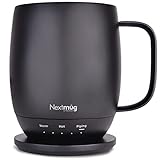
- ALWAYS THE PERFECT TEMPERATURE – The Nextmug will keep your hot coffee, tea or preferred beverage at the perfect temperature wherever you are. Simply select Warm (130° F), Hot (140° F), or Piping (150° F) and enjoy for hours.
- SMART MUG TECHNOLOGY – Long-lasting battery maintains your ideal temperature. LED lights display battery life & real-time temperature. Includes Spill-Resistant Lid & Charging Coaster.
- SUPER SIMPLE – On-board Control Button easily turns mug On/Off & sets the temperature. Takes only seconds to set the mug to your perfect temperature. No app required - no passwords, re-booting or security concerns.
- THE PERFECT GIFT - Give the gift for him and the gift for her that is certain to delight. Perfect for everyone on your list…moms, dads, grandmas, grandpas, teachers, birthdays, graduations and more!
- NEXTMUG CARES - Nextmug cares about our communities and our customers. We care by donating Nextmugs to teachers and first responders . We’re also committed to sustainable packaging by using 100% recyclable materials with all our products. Our dedicated customer service agents are based in the USA and always ready to help.
6. Know your caffeine sources:
- What to do: Be aware that caffeine is in more than just coffee – tea, soda, energy drinks, chocolate.
- What “good” looks like: You’re accounting for all caffeine sources in your daily total.
- Common mistake: Only counting coffee and being surprised by a caffeine overload from other drinks.
7. Prioritize sleep hygiene:
- What to do: Ensure you have a consistent sleep schedule and a relaxing bedtime routine, regardless of coffee intake.
- What “good” looks like: You wake up feeling naturally refreshed most mornings.
- Common mistake: Blaming coffee for sleepiness when poor sleep habits are the real issue.
8. If you crash, rest:
- What to do: If you feel a caffeine-induced crash, take a short break, stretch, or even a brief power nap (20 mins max).
- What “good” looks like: You feel a bit more alert without relying on more caffeine.
- Common mistake: Trying to power through the crash with more coffee, creating a vicious cycle.
Prevent it next time
- Track your caffeine: Know your total daily intake from all sources.
- Set an afternoon cut-off: No caffeine after 2 PM, for instance.
- Hydrate, hydrate, hydrate: Water is your best friend.
- Mind your portions: Stick to standard cup sizes.
- Listen to your body: Recognize your personal limits.
- Prioritize sleep: Good sleep hygiene is crucial.
- Be aware of hidden caffeine: Sodas, teas, chocolate add up.
- Don’t use coffee to mask exhaustion: Address the root cause of fatigue.
- Consider decaf: Enjoy the ritual without the buzz.
- Space out your cups: Don’t chug multiple espressos back-to-back.
Common mistakes (and what happens if you ignore them)
| Mistake | What it causes | Fix |
|---|---|---|
| Drinking coffee too late | Disrupted sleep quality, feeling tired the next day | Set a strict afternoon cut-off time (e.g., 2 PM). Switch to decaf or herbal tea in the afternoon. |
| Consuming excessive amounts | Caffeine crash, jitters, anxiety, followed by profound fatigue | Track your total daily intake. Stick to 1-3 standard cups (8-12 oz) for most people. Understand your personal tolerance. |
| Forgetting to hydrate | Dehydration, which mimics fatigue, headaches, and can worsen a caffeine crash | Drink a glass of water for every cup of coffee. Carry a water bottle. |
| Ignoring early signs of overstimulation | Escalating anxiety, jitters, and a more severe subsequent crash | Stop drinking coffee as soon as you feel jittery or anxious. Switch to water or herbal tea. |
| Relying on coffee to mask fatigue | Worsening underlying sleep debt, dependency on caffeine | Address the root cause of your tiredness. Improve sleep hygiene, check diet, and consult a doctor if fatigue is chronic. |
| Drinking from giant mugs daily | Consuming a much higher dose of caffeine than intended | Opt for standard 8-12 oz mugs. Be mindful of “large” or “extra large” servings at cafes. |
| Not accounting for other caffeine sources | Unintentional caffeine overload from a combination of drinks | Be aware of caffeine in tea, soda, energy drinks, and chocolate. Sum up all sources for your daily total. |
| Continuing to drink when feeling tired | Reinforcing a cycle of dependency and poor sleep quality | If you’re tired, assess why. If it’s sleep debt, try to rest. If it’s a caffeine crash, drink water and wait it out. |
| Not considering individual tolerance | Experiencing negative effects that others don’t, leading to confusion | Pay attention to how <em>you</em> feel. What’s fine for one person might be too much for another. Adjust based on your personal experience. |
Decision rules (simple if/then)
- If you feel jittery or anxious after coffee, then reduce your intake because you’ve likely had too much caffeine for your system.
- If you’re feeling tired mid-afternoon, then check if you had coffee late in the day because it could be disrupting your sleep quality.
- If you drank coffee after 3 PM and are having trouble sleeping, then consider switching to decaf or herbal tea for the rest of the day because caffeine significantly impacts sleep onset and quality.
- If you feel a sudden wave of fatigue after your usual coffee, then it might be a caffeine crash, so drink water and rest because your body is processing the stimulant.
- If you’re consuming more than 400 mg of caffeine daily (about 4 cups of brewed coffee), then you are at higher risk for sleep disturbances and crashes, so consider reducing your intake.
- If you’re experiencing persistent fatigue, then it’s unlikely to be solely a coffee issue, so consult a healthcare professional because underlying health problems could be the cause.
- If you feel sleepy after your morning coffee, then you might have a very high tolerance or a paradoxical reaction, so observe your body’s response and consider a smaller dose or a different brew method.
- If you’re not drinking enough water, then the diuretic effect of coffee can worsen dehydration and fatigue, so make sure to balance your coffee with plenty of water.
- If you’ve had coffee within 6 hours of bedtime, then your sleep quality is likely compromised, even if you fall asleep, so aim for an earlier cut-off time to improve rest.
- If you’re feeling tired but have had coffee recently, then it’s probably not the caffeine; it’s likely your body’s natural need for rest catching up, so try to get some sleep.
FAQ
Can coffee make you feel tired immediately?
For most people, no. Caffeine is a stimulant. However, some individuals have a paradoxical reaction, or the body’s natural sleep drive might be so strong it briefly overrides the stimulant effect before it kicks in.
What is a “caffeine crash”?
It’s the feeling of profound tiredness that can occur after the stimulant effects of caffeine wear off. Your body’s adenosine receptors, which were blocked, become active again, leading to a sudden onset of fatigue.
How much coffee is too much?
The FDA suggests up to 400 mg of caffeine per day (about 4 cups of brewed coffee) is generally safe for most adults. However, “too much” is highly individual and depends on your tolerance, metabolism, and sensitivity.
Does drinking coffee late at night always ruin sleep?
It significantly increases the likelihood of disrupted sleep. Even if you fall asleep, the quality of your deep sleep can be reduced, leaving you feeling unrested.
Is dehydration from coffee a real thing?
Yes, caffeine is a mild diuretic, meaning it can increase urine production. If you don’t compensate with extra water, you can become mildly dehydrated, which can cause fatigue.
What if I drink coffee and still feel sleepy?
This often means you’re either experiencing a caffeine crash later, your sleep quality was poor due to late-day caffeine, or you have underlying fatigue that coffee isn’t fully masking.
Can I build up a tolerance to coffee?
Yes, regular caffeine consumption leads to tolerance. This means you might need more caffeine to achieve the same alertness, which can increase your risk of negative side effects.
Should I drink coffee on an empty stomach?
Some people experience jitters or stomach upset. While it doesn’t directly cause sleepiness, it can lead to discomfort that distracts from alertness.
Is decaf coffee a good option if I get sleepy from regular?
Yes, decaf coffee still contains small amounts of caffeine but significantly less. It allows you to enjoy the coffee ritual and flavor without the strong stimulant effects that might lead to a crash.
What’s the best time of day to drink coffee?
For most people, mid-morning is ideal. This allows your natural cortisol levels (which are high in the morning) to do their job first, and then coffee can provide a boost without interfering with evening sleep.
What this page does NOT cover (and where to go next)
- Specific caffeine content of every coffee drink: This varies wildly by bean, roast, and brewing method.
- Medical advice for chronic fatigue: If you’re always tired, see a doctor.
- Detailed sleep science: This page focuses on caffeine’s impact, not the full spectrum of sleep disorders.
- The chemistry of paradoxical caffeine reactions: This is a complex, less common phenomenon.
- How to brew coffee to minimize caffeine: Brewing methods affect extraction, but the bean’s caffeine is mostly fixed.
Next, you might want to explore:
- Understanding your personal caffeine sensitivity.
- Improving your overall sleep hygiene.
- Exploring different types of coffee and their caffeine levels.
- Learning about the benefits of hydration for energy levels.