
Tea vs. Coffee: Which Is More Likely To Affect Your Digestion?
Quick answer
- Coffee is a well-known stimulant that can get your digestive system moving.
- Tea, especially certain types, can also have a mild laxative effect.
- The caffeine content in both drinks plays a role, but other compounds are involved too.
- Acidity in coffee can sometimes irritate the stomach lining.
- Individual sensitivity varies greatly. What affects one person might not affect another.
- Your brewing method and what you add to your drink matter too.
Key terms and definitions
- Caffeine: A natural stimulant found in coffee beans and tea leaves. It can increase muscle contractions in your digestive tract.
- Acidity: The pH level of a beverage. Coffee tends to be more acidic than most teas.
- Tannins: Compounds found in tea (and wine) that can sometimes affect digestion. They can bind to proteins.
- Diuretic: A substance that promotes the production of urine. Both caffeine and some teas can have this effect.
- Laxative effect: The tendency to stimulate bowel movements. Coffee is famous for this.
- Gut microbiome: The community of microorganisms living in your digestive tract. What you consume can influence it.
- Gastric acid: Stomach acid that helps break down food. Coffee can sometimes increase its production.
- Irritable Bowel Syndrome (IBS): A common disorder that affects the large intestine. Certain foods and drinks can trigger symptoms.
How it works
- Both coffee and tea contain caffeine. Caffeine is a stimulant. It tells your colon to get moving. Think of it like a gentle nudge for your bowels.
- Coffee’s effect is often stronger. It’s not just the caffeine. Coffee can stimulate the release of gastrin. That’s a hormone that speeds up digestion. It also increases bile acid secretion, which helps break down fats.
- Tea, particularly black and green tea, also has caffeine. So, it can have a similar, though usually milder, effect.
- Some teas contain compounds called catechins. These are antioxidants. They might also play a role in how tea affects your gut.
- The acidity of coffee is another factor. For some people, the higher acidity can irritate the stomach lining. This can lead to discomfort or a faster trip to the bathroom.
- Herbal teas are a different story. Many are naturally caffeine-free. They might have soothing effects rather than stimulating ones. Chamomile, for example, is often used to calm an upset stomach.
- The process of roasting coffee beans can create compounds that affect digestion. This is less of a factor with tea processing.
- Basically, it’s a combination of stimulants, hormones, acidity, and unique compounds in each drink.
If you’re looking for soothing options, consider exploring a variety of herbal teas. Many are naturally caffeine-free and can offer gentle digestive support.

- Organic Tea Bags: Boost immunity with these Yogi Tea favorites; every Yogi Tea in the Get Well sampler gift box is blended for both delicious flavor and healthful benefit
- Yogi Tea Get Well Gift Set: Tea sample variety pack box includes 9 of Yogi's most popular wellness teas: Bedtime, Blueberry Sage Stress Relief, Breath Deep, Cinnamon Horchata Sleep and Stress, Echinacea Immune Support, Elderberry Lemon Balm Immune and Stress, Sweet Lemon Everyday Immune, and Throat
- 9 Flavors, 45 Total Tea Bags: Our teas come thoughtfully packaged in a special, giftable Yogi tea sample box that you can enjoy yourself or gift to a friend
- Organic Tea Ingredients: This Yogi tea is vegan, USDA Organic, and NON-GMO, so you can be sure you're getting the best in every cup
- Uniquely Yogi: We believe in using the highest quality spices and botanicals, complementing them with intriguing, delightful flavors, qualities that make all of our teas uniquely Yogi
What affects the result
- Coffee Roast Level: Darker roasts tend to be less acidic. This might be easier on some stomachs. Lighter roasts can be more acidic.
- Type of Tea: Black tea and green tea have caffeine. Herbal teas (like peppermint or ginger) are usually caffeine-free and can be soothing.
- Caffeine Content: Higher caffeine levels in either drink will generally lead to a stronger digestive response. Check labels if you’re sensitive.
- Acidity of the Brew: Coffee is naturally more acidic than most teas. This can be a major factor for sensitive individuals.
- Brewing Method: How you brew your coffee or tea can affect the extraction of compounds. A long steep time might pull out more of certain elements.
- Additives: Milk, cream, sugar, or artificial sweeteners can all impact your digestion differently. Dairy can be an issue for lactose-intolerant folks.
- Freshness of Beans/Leaves: Older coffee beans or tea leaves might lose some of their volatile compounds. This could subtly alter their effect.
- Water Temperature: Too hot or too cold water can affect how compounds are extracted from coffee grounds or tea leaves.
- Individual Sensitivity: This is huge. Some people are just more sensitive to caffeine or the acids in coffee.
- Gut Health: Your existing gut microbiome and overall digestive health play a big part. What works for one person might not work for you.
- Amount Consumed: Drinking a large mug of coffee will likely have a bigger effect than a small cup. Same goes for tea.
- Time of Day: Your body’s natural rhythms can influence how you react to stimulants.
To fully enjoy the benefits of loose leaf teas, a quality tea infuser can make all the difference in your brewing experience.
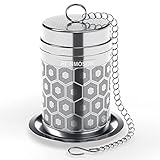
- Upgraded Micron Mesh: loose leaf tea steeper is Ideal to hold tea leaves, particles, or ground coffee. Compared to traditional tea strainer, our tea ball features 50% more ultra fine, half-sized holes for optimal tea flavor and minimal sediment leak. Ideal for rooibos, herbs, green tea, Chai, ground coffee, small tea leaves and etc.
- High-Quality Materials: Made of 304 food-grade stainless steel, tea ball infuser for loose tea is easier to be cleaned. Besides, loose tea steeper ensures no metallic taste on your tea or coffee and never rust for years of use. Money-saving and eco-friendly alternative to disposable tea bags and paper filters.
- Easy to Open and Close: With the design of thread top, the lids screw easily and are much more secure than the traditional twist lid, so the tea leaves will be held tightly and the lid never escapes during the process of brewing.
- Wide Application: tea steeper is not only for loose tea leaves but also a spice filter, infusing spices, herbs, and seasonings in soups, sauce, broths, and stews. Extended 4.3” chain with S-handle makes tea infusers can catch securely on any rim of mugs, cups, teapots, kettles, bottles, and pitchers.
- Package: Comes with 1.5” diameter and 2.2” high tea balls for loose tea and 1 saucer. The saucer is helpful for avoiding making a mess when you take out the loose leaf tea infusers after brewing.
Pros, cons, and when it matters
- Coffee Pro: Gets things moving. Great for that morning “wake-up call” for your bowels.
- Coffee Con: Can cause jitters or stomach upset due to acidity. Not for everyone, especially first thing.
- Coffee Pro: Can boost alertness and focus thanks to caffeine. Handy for a productive morning.
- Coffee Con: Can lead to acid reflux or heartburn for some. A definite downside if you’re prone.
- Coffee Pro: Rich flavor and aroma. Many people just love the ritual and taste.
- Coffee Con: Can be dehydrating if you don’t balance it with water. Keep that water bottle handy.
- Tea Pro: Generally less acidic than coffee. Often a gentler option for the stomach.
- Tea Con: Some teas can stain your teeth over time. Worth considering if that bothers you.
- Tea Pro: Wide variety of flavors and potential health benefits (antioxidants in green tea). Explore away!
- Tea Con: Caffeine in black and green teas can still cause digestive effects. It’s not always a gentle ride.
- Tea Pro: Herbal teas can be very soothing. Peppermint tea for digestion, chamomile for relaxation.
- Tea Con: Tannins in some teas can interfere with iron absorption. If you have iron deficiency, be mindful.
- When it matters: If you’re dealing with constipation, coffee might be your go-to. If you have a sensitive stomach or IBS, a milder tea might be better.
- When it matters: For a gentle morning boost without the stomach drama, a lightly brewed green tea could be the ticket.
- When it matters: If you need a strong kickstart and your stomach can handle it, coffee is king.
Common misconceptions
- Myth: Only coffee makes you poop.
- Reality: Many teas, especially those with caffeine, can also stimulate bowel movements.
- Myth: All tea is good for your stomach.
- Reality: While some herbal teas are soothing, caffeinated teas can still have a laxative effect.
- Myth: Black coffee is always better for digestion than coffee with cream.
- Reality: For lactose-intolerant individuals, black coffee is definitely better. For others, cream might buffer acidity. It’s personal.
- Myth: Decaf coffee has no effect on digestion.
- Reality: Decaf still contains some compounds that can stimulate the digestive tract, though generally less than regular.
- Myth: The “poop effect” is solely due to caffeine.
- Reality: Other compounds in coffee, like chlorogenic acids and the stimulation of gastrin, also contribute significantly.
- Myth: You should avoid all hot drinks if you have a sensitive stomach.
- Reality: Often, it’s the specific compounds or acidity, not just the temperature, that cause issues. Experiment with different types.
- Myth: Tea is always a diuretic.
- Reality: While caffeinated teas can be, many herbal teas are not significantly diuretic.
- Myth: Adding sugar to coffee or tea negates its digestive effects.
- Reality: Sugar can affect gut bacteria, but it doesn’t typically cancel out the stimulant effects of caffeine or other compounds.
- Myth: Cold brew coffee is always gentler on the stomach.
- Reality: Cold brew is often less acidic, which helps many people. But it can still be potent due to high caffeine concentration.
FAQ
- Does tea make you poop like coffee?
Sometimes, yes. Caffeinated teas like black and green tea can stimulate your bowels, similar to coffee, though often less intensely.
- Is coffee or tea worse for an upset stomach?
Generally, coffee is more likely to cause upset due to its higher acidity and stronger stimulant effects. Many teas, especially herbal ones, are gentler.
- Can drinking tea help with constipation?
Yes, especially caffeinated teas. They can encourage bowel movements. Herbal teas like senna are specifically known for their laxative properties.
- How quickly does coffee affect digestion?
For many people, the effect can be felt within 15 to 30 minutes after drinking coffee. This is due to caffeine and other stimulants.
- Does decaf coffee still affect digestion?
Decaf coffee still contains some compounds that can stimulate the digestive system, though the effect is usually milder than with regular coffee.
- What kind of tea is best for digestion?
Herbal teas like peppermint, ginger, or chamomile are often recommended for soothing digestion. Caffeinated teas can aid regularity.
- Can I drink coffee and tea on the same day?
You can, but be mindful of your total caffeine intake and how your body reacts. Too much can lead to digestive distress or jitters.
- Does the temperature of tea or coffee matter for digestion?
While extreme temperatures can sometimes affect sensitive stomachs, the compounds within the beverage are usually the primary factor.
What this page does NOT cover (and where to go next)
- Specific medical advice for digestive disorders like IBS or Crohn’s. Consult a healthcare professional for diagnosis and treatment.
- Detailed nutritional breakdowns of every tea and coffee variety. Explore dedicated food and nutrition resources.
- The effects of various additives (milks, sweeteners, spices) on digestion in detail. Look into specific ingredient guides.
- Recommendations for specific brands or types of coffee makers or tea brewers. Check reviews and manufacturer information.
- Advanced brewing techniques for optimizing flavor and minimizing digestive impact. Dive into specialty coffee or tea brewing forums.