
Simple Iced Coffee Recipe To Try
Quick answer
- Use cold brew concentrate or double-strength hot coffee for the best iced coffee base.
- Chill your coffee base completely before pouring over ice to prevent dilution.
- Start with a 1:1 coffee to milk/water ratio and adjust to your taste.
- Use fresh, good quality ice cubes that melt slowly.
- Consider a simple syrup for sweetness, as sugar dissolves poorly in cold liquids.
- Don’t skimp on coffee quality; it’s the star of the show.
- Experiment with different milks and flavorings to find your perfect cup.
Who this is for
- Anyone looking for a refreshing, easy-to-make iced coffee at home.
- Coffee drinkers who want to avoid watery or weak iced coffee.
- Those who enjoy customizing their coffee drinks to their personal preference.
What to check first
Brewer type and filter type
The type of brewer you use will influence your coffee concentrate. For iced coffee, a French press, pour-over, or even a standard drip coffee maker can work. Consider a cold brew maker for a smoother, less acidic concentrate. The filter type (paper, metal mesh, cloth) affects clarity and body; paper filters yield a cleaner cup, while metal filters allow more oils through.
Water quality and temperature
Good coffee starts with good water. Filtered water is ideal, as tap water can contain impurities that affect taste. For hot brewing, ensure your water is heated to the optimal temperature range of 195-205°F for proper extraction. For cold brew, cold filtered water is used throughout the steeping process.
Grind size and coffee freshness
For hot brewed iced coffee, use a grind size appropriate for your brewing method (e.g., medium for drip, medium-fine for pour-over). For cold brew, a coarse grind is essential to prevent over-extraction and bitterness. Always use freshly roasted coffee beans, ground just before brewing for the best flavor. Stale coffee leads to flat, uninspired drinks.
Coffee-to-water ratio
This is crucial for a strong iced coffee that won’t taste watered down. For hot brewing, aim for a stronger concentrate (e.g., 1:8 or 1:10 coffee to water by weight) that will be diluted by ice and milk. For cold brew, a common ratio is 1:4 or 1:5 coffee to water for a concentrate.
Cleanliness/descale status
A clean brewer is vital for good-tasting coffee. Residue from old coffee oils can impart a stale, bitter flavor. Regularly clean your brewing equipment with soap and water, and descale your hot coffee maker every 1-3 months, depending on your water hardness, to remove mineral buildup.
Step-by-step (how to make a iced coffee recipe)
1. Choose your coffee base method.
- Good: Decide between brewing a strong hot coffee, making a cold brew concentrate, or using leftover chilled coffee. Cold brew offers a smoother, less acidic profile.
- Mistake: Brewing regular strength hot coffee and immediately pouring it over ice. This results in weak, watery iced coffee.
2. Prepare your coffee concentrate (if hot brewing).
- Good: Brew your coffee at double strength (e.g., use twice the amount of coffee grounds for the same amount of water, or half the water for the same amount of grounds).
- Mistake: Using a standard coffee-to-water ratio. The ice will dilute it too much.
3. Chill your coffee base completely.
- Good: Allow hot brewed coffee to cool to room temperature, then refrigerate for at least 2-3 hours, or preferably overnight. Cold brew concentrate should already be cold.
- Mistake: Pouring warm or hot coffee over ice. This melts the ice quickly, leading to instant dilution and a less enjoyable drink.
4. Gather your ingredients and tools.
- Good: Have your chilled coffee concentrate, ice, milk (or milk alternative), sweetener (if desired), and any flavorings ready.
- Mistake: Realizing you’re out of ice or milk mid-preparation. Plan ahead!
5. Prepare your serving glass.
- Good: Fill your glass generously with fresh, quality ice cubes. Larger ice cubes melt slower.
- Mistake: Using too little ice, or ice that’s been sitting out and is already partially melted.
6. Add sweetener (if using).
- Good: If using sugar, dissolve it in a small amount of warm coffee concentrate before chilling, or use a simple syrup (equal parts sugar and water, heated until dissolved, then cooled).
- Mistake: Adding granulated sugar directly to cold iced coffee. It won’t dissolve properly and will settle at the bottom.
7. Pour coffee over ice.
- Good: Slowly pour the chilled coffee concentrate over the ice-filled glass, leaving room for milk and any additions.
- Mistake: Pouring too quickly, which can cause splashes and an uneven mix.
8. Add milk and flavorings.
- Good: Pour your desired amount of milk or milk alternative. Stir gently to combine. Add any syrups or flavorings now.
- Mistake: Overfilling the glass, or adding too much milk without tasting first. Start with less and add more if needed.
9. Stir and enjoy.
- Good: Give it a final stir to ensure everything is well mixed.
- Mistake: Not stirring, which can leave layers of unmixed coffee, milk, and sweetener.
10. Adjust to taste.
- Good: Take a sip and adjust sweetness, milk, or coffee strength as desired.
- Mistake: Assuming the first mix is perfect. Personal preference is key!
Make sure you have the right glassware to serve your creation. These stylish iced coffee glasses are perfect for enjoying your homemade brew.
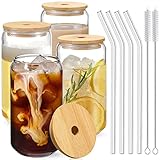
- PRODUCT CONFIGURATION: Drinking glass set includes 4 glass cups [ Diameter - 3 inches, Height - 5.6 inches ],4 nature bamboo lids, 4 reusable glass straws and 2 cleaning brushes, Classic design tumbler
- DURABLE and SAFE: The glasses are made of high-quality durable clear glass, Lead-free and BPA-free. It can be used safely for a long time. This thick clear glass can withstand the sudden changes in the temperature difference between -68°F to 212°F, making them dishwasher safe. If you want to decorate this glass, you can do DIY easily without breakage
- MULTI-PURPOSE: The glassware Great for any Occasion, any hot and cold drinks, home essentials. It is widely loved by families, kitchen, breweries, cafes, bars and restaurants. You can use it to make perfect tea, bubble Pearl Milk Tea, soda, water, iced coffee, smoothie, fruit juice or any other interesting holiday drinks
- AMAZING GIFT: This jar is very fashionable, aesthetic and characteristic. Excellent workmanship. Perfect Gifts for Women, House warming gifts, Tea mug Sets, Highball Glasses, Home Bar Accessories, Birthdays, Graduation, Weddings and Christmas Gifts
- SATISFIED SERVICE: This glass set is packaged in the heavy bubble holder and thick carton box to prevent damage while in transport. If the glass set you received was damaged or imperfect or you are not satisfied, we will offer a satisfactory solution
Common mistakes (and what happens if you ignore them)
| Mistake | What it causes | Fix |
|---|---|---|
| Brewing regular strength coffee | Weak, watery, and bland iced coffee | Brew coffee at double strength or use cold brew concentrate. |
| Pouring hot coffee over ice | Rapid ice melt, instant dilution, warm coffee | Chill brewed coffee completely in the refrigerator before using. |
| Using too little ice | Coffee warms up quickly, becomes diluted as remaining ice melts | Fill glass generously with ice; use larger cubes for slower melt. |
| Adding granulated sugar to cold coffee | Sugar doesn’t dissolve, settles at the bottom, gritty texture | Use simple syrup, or dissolve sugar in warm coffee concentrate before chilling. |
| Using stale coffee beans | Flat, dull, and uninspired flavor profile | Always use freshly roasted beans, ground just before brewing. |
| Incorrect grind size for cold brew | Over-extraction (bitter) or under-extraction (weak) | Use a coarse grind for cold brew; avoid fine grinds. |
| Poor water quality | Off-flavors in your iced coffee | Use filtered water for brewing and for ice cubes. |
| Not cleaning equipment | Bitter, sour, or stale taste from old coffee oils | Regularly clean all brewing equipment and descale as needed. |
| Rushing the chilling process | Still-warm coffee, leading to rapid dilution | Plan ahead and allow ample time for coffee to chill thoroughly. |
| Not stirring thoroughly | Uneven flavor, layers of coffee, milk, and sweetener | Stir well after adding all ingredients to ensure a consistent taste. |
Decision rules (simple if/then)
- If your iced coffee tastes weak, then brew your coffee concentrate stronger next time because ice will dilute it.
- If your iced coffee is too acidic, then try making cold brew concentrate because it naturally has lower acidity.
- If your granulated sugar isn’t dissolving, then use simple syrup or dissolve sugar in warm coffee because sugar doesn’t dissolve well in cold liquids.
- If your iced coffee becomes watery quickly, then ensure your coffee concentrate is fully chilled before adding ice because warm liquid melts ice faster.
- If you prefer a smoother taste, then use a coarse grind for your coffee and make cold brew because it extracts fewer bitter compounds.
- If your coffee tastes stale, then buy freshly roasted beans and grind them just before brewing because oxygen degrades coffee flavor over time.
- If you want a creamier texture, then try using a full-fat milk or a barista-blend oat milk because they emulsify better with coffee.
- If you’re sensitive to caffeine, then consider a decaf cold brew concentrate because the cold brewing process is still effective with decaf beans.
- If you want to experiment with flavors, then add a pump of flavored syrup (like vanilla or caramel) after pouring the coffee over ice because it’s easy to mix in.
- If your iced coffee consistently tastes off, then check your water quality because it significantly impacts the final taste.
- If you’re short on time, then make a large batch of cold brew concentrate once a week because it stores well in the refrigerator for up to 7-10 days.
- If your hot brewed coffee tastes burnt or bitter, then check your water temperature and grind size because over-extraction can lead to these flavors.
FAQ
Can I use instant coffee for iced coffee?
Yes, you can use instant coffee for iced coffee, but the flavor won’t be as rich or complex as freshly brewed coffee. Dissolve the instant coffee in a small amount of hot water first to create a concentrate, then chill it before pouring over ice.
How long does cold brew concentrate last in the fridge?
Cold brew concentrate typically lasts for about 7 to 10 days when stored in an airtight container in the refrigerator. Its low acidity helps preserve its flavor for longer than hot brewed coffee.
What’s the best type of ice to use for iced coffee?
Large, dense ice cubes are best because they melt slower than smaller, hollow cubes, helping to prevent your iced coffee from becoming diluted too quickly. You can also make coffee ice cubes for zero dilution!
Can I make a large batch of iced coffee ahead of time?
It’s best to make a large batch of coffee concentrate (either cold brew or strong hot brew) and chill it. Then, assemble individual servings of iced coffee as needed, adding ice and milk just before drinking for the freshest taste.
What kind of milk works best for iced coffee?
This is a matter of personal preference! Whole milk provides a rich, creamy texture. Oat milk and almond milk are popular dairy-free alternatives that offer different flavor profiles. Experiment to find your favorite.
Why does my iced coffee taste bitter?
Bitterness can be caused by several factors, including over-extraction (too fine a grind, too long a brew time for hot coffee), using too hot water, or stale coffee beans. For cold brew, an overly fine grind can also lead to bitterness.
Is there a difference between iced coffee and cold brew?
Yes, there’s a significant difference. Iced coffee is typically hot brewed coffee that has been chilled and then served over ice. Cold brew is coffee that has been steeped in cold water for an extended period (12-24 hours), resulting in a concentrate that is naturally lower in acidity and smoother.
What this page does NOT cover (and where to go next)
- Advanced latte art techniques for iced drinks
- Specific brand recommendations for coffee beans or equipment
- Detailed chemistry of coffee extraction
- Commercial-scale iced coffee production
- Health benefits or drawbacks of coffee consumption
- In-depth comparisons of various coffee processing methods