
Popular Iced Coffee Methods Shared on Reddit
Quick answer
- Reddit loves a good cold brew for its smooth, low-acid profile.
- Many Redditors swear by Japanese iced coffee for its bright, nuanced flavor.
- Over-ice brewing is a quick and easy method that’s popular for its simplicity.
- Using high-quality, freshly roasted beans is non-negotiable for good iced coffee.
- Experimenting with different coffee-to-water ratios is key to dialing in your perfect cup.
- Don’t forget to chill your brewing vessel and serving glass for the best results.
Who this is for
- Anyone looking to level up their homemade iced coffee game.
- Redditors who want to replicate cafe-quality drinks at home.
- Coffee enthusiasts eager to explore popular brewing techniques discussed online.
What to check first
Brewer type and filter type
This is your foundation. Are you using a French press, pour-over, Aeropress, or even a dedicated cold brew maker? Each has its quirks. For pour-overs and some cold brew makers, the filter type (paper, metal, cloth) significantly impacts the final taste. Paper filters catch more oils, leading to a cleaner cup. Metal filters let more oils through, adding body.
If you’re looking to simplify the cold brew process, a dedicated cold brew maker can be a great investment for consistent results.

- BREW BY THE CUP OR CARAFE: Brews both K-Cup pods and coffee grounds.
- MULTISTREAM TECHNOLOGY: Saturates the grounds evenly to extract full flavor and aroma in every cup, hot or cold.
- BREW OVER ICE: Adjusts temperature for maximum flavor and less ice melt for single-cup iced coffees and teas.
- STRONG BREW & EXTRA HOT FUNCTIONALITY: Brews a stronger, more intense-flavored cup and the extra hot feature brews a hotter single cup.
- MULTIPLE BREW SIZES: Brew 6, 8, 10, or 12oz single cups or 6, 8, 10, or 12-cup carafes. 12-cup glass carafe specially designed to limit dripping.
Water quality and temperature
Tap water can mess with flavor. If yours tastes off, filtered or bottled water is a good move. For hot brewing methods that you’ll then chill, water temperature matters. Aim for that sweet spot between 195-205°F (90-96°C). For cold brew, the temperature is less critical, but room temperature water is common.
Grind size and coffee freshness
This is HUGE. For cold brew, you want a coarse grind, like sea salt. For Japanese-style iced coffee (hot coffee brewed directly over ice), a medium to medium-fine grind works well, similar to drip coffee. Freshness is king. Whole beans roasted within the last few weeks will give you the best aroma and flavor. Grind right before you brew.
Coffee-to-water ratio
This is where you find your sweet spot. A common starting point for iced coffee, especially cold brew, is a 1:8 ratio (coffee to water by weight). For a stronger concentrate, you might go 1:4 or 1:5. For Japanese iced coffee, you’ll use a higher coffee dose than for hot drip, as some coffee will melt the ice. Don’t be afraid to tweak this. I usually start with 1:5 for cold brew and adjust from there.
Cleanliness/descale status
Old coffee oils turn rancid and will ruin your brew. Regularly clean your brewer, grinder, and carafe. If you have hard water, scale can build up in machines, affecting temperature and flow. Descaling your equipment periodically is a good practice, especially for automatic brewers. Check your brewer’s manual for descaling instructions.
Step-by-step (brew workflow)
Here’s a common workflow for Japanese-style iced coffee, a favorite on Reddit:
For those who love the bright, nuanced flavors of Japanese iced coffee, a specialized brewer can help you achieve that perfect cup every time.
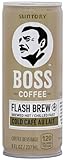
- NO.1 CANNED COFFEE BRAND IN JAPAN – BOSS Coffee is the No.1 canned coffee brand in Japan (2021, Intage). Beans sourced from the best Brazilian grow regions are brewed and canned in Japan by Award Winning company, Suntory - the makers of the No.1 bourbon (Jim Beam) and other fine whiskies.
- READY TO DRINK COFFEE – For the on-the-go professional who demands high quality coffee. Enjoy when you rise, in a mug or straight out the can. Enjoy your way - in travel or pour over ice, to create a crisp iced coffee.
- MEET THE NEW FLASH BREW – Temperature is high when we brew then chilled rapidly to create an authentic 'flash brew' coffee. This allows for a bolder flavor with a smoother aftertaste without negative bitterness.
- COFFEE, THE ORIGINAL ENERGY DRINK – Leave sugar-filled sodas and soft drinks behind. BOSS coffee is a great alternative to nitro cold brew coffee and sodas.
- NATURALLY BREWED CAFFEINE – 130mg of naturally brewed caffeine - the equivalent of a doubleshot of espresso.
1. Gather your gear. You’ll need your pour-over brewer (like a V60 or Chemex), a filter, your coffee beans, a grinder, a kettle, a scale, and your serving vessel (a carafe or a glass).
- What “good” looks like: Everything is clean and ready to go.
- Common mistake: Not having everything prepped. You end up rushing the bloom or missing a step. Avoid this by setting everything up before you start heating water.
2. Weigh your coffee. Decide on your ratio. For Japanese iced coffee, you’ll use more coffee than for hot drip. Let’s say you want 16 oz of coffee. You might start with 30-35 grams of coffee.
- What “good” looks like: Precise measurement using a scale.
- Common mistake: Scooping coffee. This is inconsistent. Use a scale for repeatable results.
3. Grind your coffee. Grind the beans to a medium-fine consistency, similar to table salt.
- What “good” looks like: Evenly ground coffee, no powder or huge chunks.
- Common mistake: Grinding too fine or too coarse. Too fine makes it bitter and cloggy; too coarse makes it weak.
4. Heat your water. Bring fresh, filtered water to just off the boil, around 200-205°F (93-96°C).
- What “good” looks like: Water at the correct temperature.
- Common mistake: Using boiling water. This can scorch the coffee grounds. Let it sit for 30-60 seconds after boiling.
5. Prepare your brewer. Place the filter in your pour-over cone. Rinse the paper filter with hot water to remove paper taste and preheat the brewer and carafe. Discard the rinse water.
- What “good” looks like: A clean, preheated brewer.
- Common mistake: Forgetting to rinse the filter. This leaves a papery taste.
6. Add ice to your serving vessel. This is crucial for Japanese iced coffee. Fill your carafe or glass with roughly half the volume of ice you want in your final drink. For 16 oz of coffee, aim for about 8 oz of ice (by weight or volume).
- What “good” looks like: Plenty of ice to chill the coffee quickly.
- Common mistake: Not enough ice. Your coffee will be lukewarm and diluted too fast.
7. Add ground coffee to the brewer. Place the brewer with the filter and coffee grounds over the ice-filled carafe.
- What “good” looks like: Grounds evenly distributed in the filter.
- Common mistake: Uneven bed of grounds. This leads to uneven extraction. Give the brewer a gentle shake.
8. Bloom the coffee. Start your timer. Pour just enough hot water (about double the weight of the coffee) to saturate all the grounds. Let it sit for 30-45 seconds.
- What “good” looks like: The coffee bed swells and bubbles, releasing CO2.
- Common mistake: Skipping the bloom or pouring too much water. This results in a flat, less flavorful brew.
9. Begin pouring. After the bloom, start pouring the remaining hot water slowly and steadily in concentric circles, working from the center outwards, then back in. Avoid pouring directly onto the filter paper. Aim to finish pouring within 2-3 minutes.
- What “good” looks like: A consistent flow, no huge spurts or dry spots. The water should drip through steadily.
- Common mistake: Pouring too fast or too slow. Too fast leads to under-extraction; too slow can lead to over-extraction and clogging.
10. Let it finish dripping. Once you’ve poured all the water, let the coffee finish dripping through the grounds. The total brew time should be around 3-4 minutes.
- What “good” looks like: The brewer is empty, and all the coffee has dripped into the carafe.
- Common mistake: Stopping the brew too early or letting it drip too long. This affects the final taste.
11. Swirl and serve. Remove the brewer. Gently swirl the carafe to mix the coffee and melted ice. Pour into a glass, add more ice if needed, and enjoy.
- What “good” looks like: A perfectly chilled, flavorful iced coffee.
- Common mistake: Not swirling. This can lead to a more concentrated layer at the bottom.
Common mistakes (and what happens if you ignore them)
| Mistake | What it causes | Fix |
|---|---|---|
| Using stale coffee beans | Flat, dull, or even rancid flavor. | Buy freshly roasted beans and store them properly in an airtight container away from light and heat. |
| Incorrect grind size | Bitter (too fine) or weak/sour (too coarse). | Adjust your grinder. For cold brew, think coarse; for Japanese, think medium-fine. |
| Using poor quality water | Off-flavors, chlorine taste, muted aromatics. | Use filtered or bottled water. |
| Incorrect coffee-to-water ratio | Too weak or too strong, unbalanced flavor. | Use a scale and start with a recommended ratio (e.g., 1:8 for cold brew, adjust to taste). |
| Not rinsing paper filters | Papery, unpleasant taste. | Always rinse paper filters with hot water before adding grounds. |
| Brewing with water that’s too hot | Scorched, bitter coffee. | Let boiling water cool for 30-60 seconds before brewing (aim for 195-205°F / 90-96°C). |
| Not cleaning equipment regularly | Rancid oils, off-flavors, clogged brewer. | Clean all parts of your brewer and grinder after each use. |
| Insufficient ice for Japanese iced coffee | Lukewarm coffee, over-dilution, weak flavor. | Use plenty of ice in the serving vessel to chill the coffee rapidly. |
| Rushing the bloom | Flat flavor, poor extraction, less aroma. | Allow 30-45 seconds for the bloom phase to degas the coffee. |
| Inconsistent pouring technique | Uneven extraction, weak spots, or bitterness. | Pour slowly and steadily in concentric circles, avoiding the filter edges. |
Decision rules (simple if/then)
- If your iced coffee tastes bitter, then try a coarser grind because a finer grind can lead to over-extraction.
- If your iced coffee tastes weak, then try a finer grind or increase your coffee dose because a coarser grind or too little coffee leads to under-extraction.
- If your cold brew tastes sour, then try a longer steep time or a slightly warmer water temperature because sourness can indicate under-extraction.
- If your Japanese iced coffee tastes dull, then ensure you’re using freshly roasted beans because stale beans lack vibrancy.
- If you want a cleaner cup with less body, then use a paper filter because metal or cloth filters allow more oils to pass through.
- If you’re short on time and want iced coffee now, then use the over-ice method (brewing hot coffee directly onto ice) because it’s the fastest.
- If you notice off-flavors you can’t pinpoint, then check your water quality because tap water can significantly impact taste.
- If your coffee is brewing too slowly or clogging, then your grind is likely too fine or your filter is clogged, so try a coarser grind or clean your brewer.
- If you want to reduce acidity, then opt for cold brew because the cold water extraction process naturally produces a less acidic beverage.
- If your iced coffee tastes muddy, then ensure you’re using the correct filter type and that it’s seated properly because a poorly seated filter can let fines through.
- If your coffee doesn’t have much aroma, then grind your beans right before brewing because pre-ground coffee loses its volatile aromatics quickly.
FAQ
What’s the difference between cold brew and Japanese iced coffee?
Cold brew steeps coffee grounds in cold water for 12-24 hours, resulting in a smooth, low-acid concentrate. Japanese iced coffee brews hot coffee directly over ice, capturing bright, aromatic notes quickly.
Can I use any coffee maker for iced coffee?
For cold brew, a French press, mason jar, or dedicated cold brew maker works. For Japanese-style, a pour-over setup is ideal. You can also brew strong drip coffee and pour it over ice.
How much coffee should I use for iced coffee?
For cold brew, a common starting point is a 1:8 coffee-to-water ratio. For Japanese iced coffee, you’ll use more coffee than for hot drip, often around a 1:15 to 1:17 ratio of coffee to final beverage volume. Always adjust to your taste.
Does the type of ice matter?
Yes, for Japanese iced coffee, larger, denser ice cubes melt slower, preventing over-dilution. For cold brew, ice is usually added when serving the concentrate.
How do I make my iced coffee less bitter?
Try a coarser grind, ensure your water isn’t too hot for hot brewing methods, or consider cold brew for a naturally less bitter cup. Also, check your coffee-to-water ratio.
What’s the best way to store iced coffee concentrate?
Store cold brew concentrate in an airtight container in the refrigerator for up to a week. Shake well before serving, as separation can occur.
Can I use pre-ground coffee for iced coffee?
While you can, it’s not ideal. Pre-ground coffee loses its freshness and flavor quickly. For the best results, grind whole beans right before brewing.
How do I make iced coffee without a fancy brewer?
You can make a strong batch of hot coffee using a basic drip machine or even instant coffee, then chill it rapidly by pouring it over plenty of ice. This is the “over-ice” method.
What this page does NOT cover (and where to go next)
- Specific brand recommendations for brewers or coffee beans. (Next: Research reviews for specific equipment that fits your budget and brewing style.)
- Advanced latte art or milk steaming techniques for iced coffee drinks. (Next: Explore resources on creating layered iced coffee beverages and milk alternatives.)
- Detailed explanations of coffee bean origins and their impact on flavor profiles. (Next: Dive into coffee tasting notes and single-origin coffee guides.)
- Recipes for specific iced coffee cocktails or mocktails. (Next: Search for dedicated iced coffee recipe blogs and culinary sites.)
- Information on the chemical compounds responsible for coffee flavor extraction. (Next: Look into the science of coffee brewing and extraction principles.)